
I thought I was done writing about nutrition & measles for a bit after my earlier vitamin A post this week but alas, the universe, and RFK Jr, had different plans.
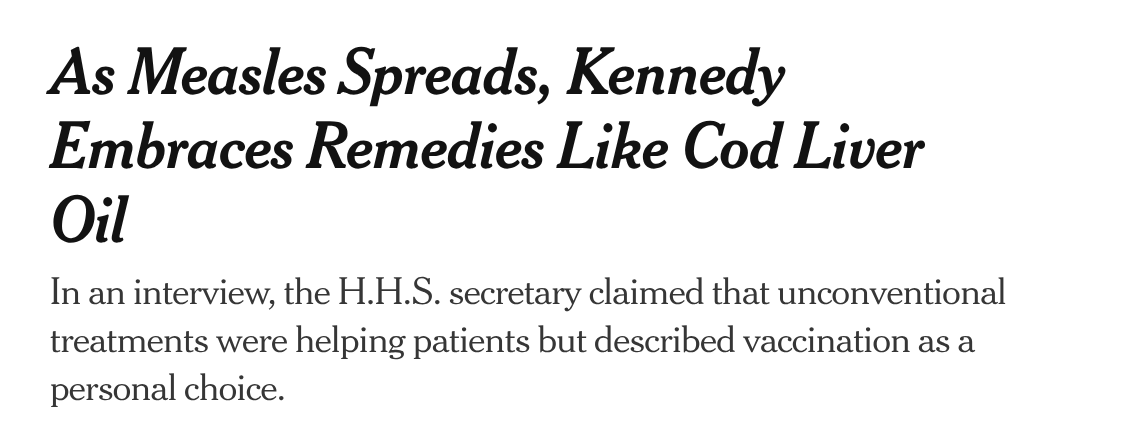
The split media ecosystems are doing their thing with physicians and scientists noting to the media that there’s no data to support cod liver oil for measles and Twitter stans repping it hard. In this back and forth, an old 1932 trial in the BMJ has gone to light and produced some pretty astounding looking graphs that indicate cod liver oil has amazing effects for reducing childhood mortality.
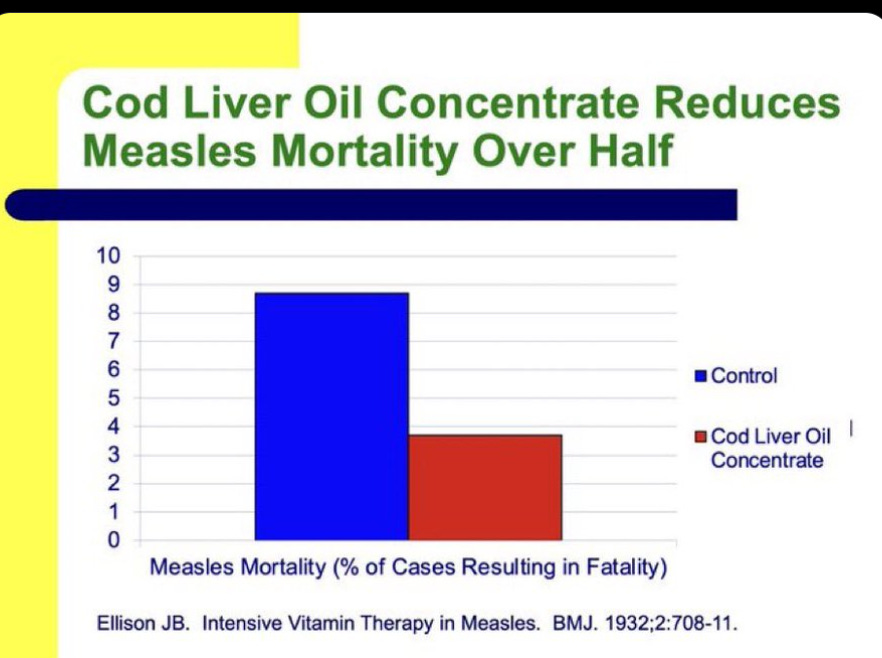
There’s more than a little nuance to this issue and a reason to be skeptical:
The 1932 source paper here is a single author write up of the experience of a hospital in London treating children with measles with a cod liver oil extract. There was early enthusiasm at this point in history for vitamin A’s potential role as a treatment for infectious disease and cod liver oil was a convenient source of the vitamin A used both clinically and in research in the decades prior. Cod liver oil is also a source of longer-chain omega 3 fatty acids that have anti-inflammatory properties as well. With our modern understanding, it contains 3 nutrients that play a role in maintaining the appropriate function of the immune system, though that wasn’t fully appreciated at the time. The cod liver oil used in this study isn’t run of the mill cod liver oil, however - it’s a concentrated ~20X extract providing around 2000IU of vitamin D and an estimated 12000 IU of vitamin A (>5X the estimated daily requirements for infants but still much much lower than vitamin A doses of 100,000-200,000 IU used in the treatment of measles recommended by the WHO as discussed in my vitamin A & measles post).
In a perfect world, to test whether cod liver oil does anything, we’d like to have a double-blind, placebo-controlled, randomized controlled trial to reduce the risk of bias. Randomization ensures balance of measured and unmeasured potential confounders between groups to ensure that the effects are due to the intervention and not differences besides the intervention between the groups. Administration of a placebo and nlinding, particularly of the staff working with the patients, would ensure they received otherwise the same clinical care. In this investigation, we don’t get any of that, unfortunately - the investigation is at extremely high risk of bias and wouldn’t make it into any modern meta-analysis of controlled trials that informs treatment guidelines. This isn’t a wonky science point making a big deal out of nuances - there are pretty serious flaws here.
In this investigation, infants and children admitted to the hospital wards with measles were given ~1mL of adexolin per day or a control. The control is not clearly specified in the paper and it doesn’t appear they received a placebo - the intervention is described in terms of being a large dose of vitamin A and the control is described as the usual intakes of vitamin A in the hospital diet. No description of a placebo oil low is given. The duration of treatment varied and we’re not given much information other than it was a minimum of 7 days for mild cases and a maximum of 3 weeks for complicated patients.
As far as randomization goes, there’s a big problem. The way that folks are describing the trial you’d think that individuals are randomized to either cod liver oil or control. But in reality, individuals weren’t randomized to the treatment. Treatment was assigned at the ward level and patients were admitted to the ward, without much detail on how truly random the assignment of a patient to a ward was. This presents a pretty big concern because this approach ultimately creates a clustering effect that introduces a substantial potential for bias.
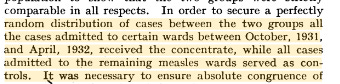
Cluster trials have to account for the cluster design because individuals within a cluster (in this case, the ward) are more likely to have similar outcomes from the shared environment. The statistical power of these interventions is determined by the number of clusters moreso than the number of patients per cluster. If one ignores the clustering effect, you can produce highly inflated effect sizes that are heavily biased. In this study, we are not told how many wards there are but it is easy to see how bias could creep in - any difference in just a couple of the wards - the type of patient admitted, the staff working in the ward and the degree of care they provided, the other types of patients in the ward - could lead to a meaningful difference in the outcomes of the patients. This is of particular concern in the pre-modern era of medicine where standardization of care was not anything like it is today, there weren’t antibiotics, etc.
Amplifying the risk of bias here is that the staff treating patients weren’t blinded - they knew the assignment of the patient because they worked in that ward and either provided the cod liver oil or did nothing (again, there was no placebo). If staff either consciously or unconsciously provided better care to the cod liver oil-receiving patients, this could seriously bias the outcomes here.
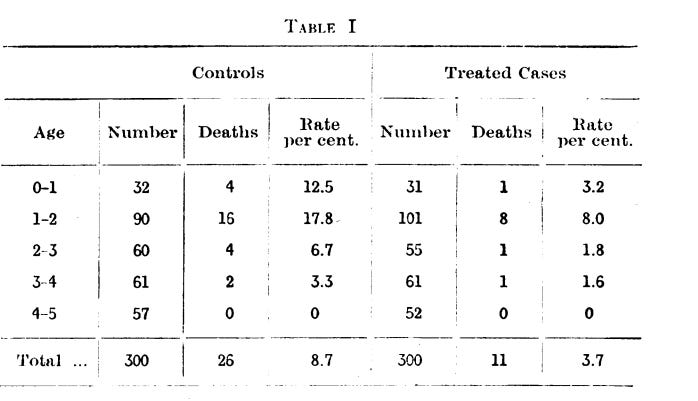
The results that we get in the paper are simple counts of deaths in the groups by age groupings (again this is 1932 so there’s no real rigorous statistical survival analysis). The results match the graphs circulating but ultimately show a difference in 15 deaths between the control and treated group with no accounting for deaths by ward (cluster) breakdown to assess whether there might be a skew towards higher death rates in specific wards. This trial went on for 1.5yrs so the potential that just the 15 deaths here are biased by excess deaths in 1 or 2 control wards and has nothing to do with the effect of cod liver oil is entirely in the realm of reality.
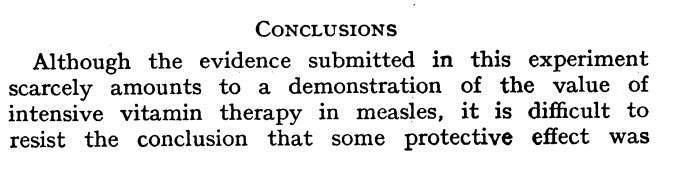
Even without these critiques informed by a more modern understanding of bias in trial design, the author at the time noted caution in the conclusions (yes, a 1932 investigator is a bit more tempered in enthusiasm than our 2025 HHS director)
The last bit of context to consider for this 1932 investigation is who was enrolled in the trial. Unlike modern trials, we don’t get a table 1 with baseline descriptive characteristics telling us anything about these patients. But the authors do describe that children most likely to contract measles in London at the time were those who were the poorest and had poor quality diets, and thus, were likely malnourished/deficient in several nutrients. There is a high potential that this intervention is fixing a mix of vitamin A, D and essential fatty acid deficiencies, all which can impair general immunity, and thus make it of limited relevance to most children in modern America who may be exposed to measles.
As a final note - there might be some temptation to conflate this 1932 trial with modern recommendations from the WHO derived largely data from African trials demonstrating vitamin A’s benefits in treating active measles cases where there is a solid signal for reducing mortality. It’s pretty impossible to compare these types of data, because of differences in dose and duration. The WHO recommendations are recommending 2 back to back doses 10-20X higher than what is in this cod liver oil extract (which is already more concentrated than everyday cod liver oil). The cod liver oil extract in this 1932 trial was a much lower dose but given for a longer duration that we don’t get the exact timeline of (somewhere between 1 and 3 weeks). As described in my vitamin A Substack, we don’t know if the super high dose vitamin A used in modern trials is just working to fix deficiency or has some pharmacological effect, and it’s even less clear whether this lower dose but longer duration vitamin A would be similarly useful. It’d be great if we had more than 1 highly biased cod liver oil trial to go off of but alas, we don’t. I am open to a high dose vitamin A randomized controlled trials in the context of modern measles management in the USA and think it has equal potential to produce mild benefit (e.g. reduced cough duration) as it does to totally flop - but I have limited enthusiasm for cod liver oil. Again, as a dietitian, I’m still most enthusiastic about vaccination.
No posts
Comments
Nothing yet. Say the first thing.
Sign in to join the conversation.