
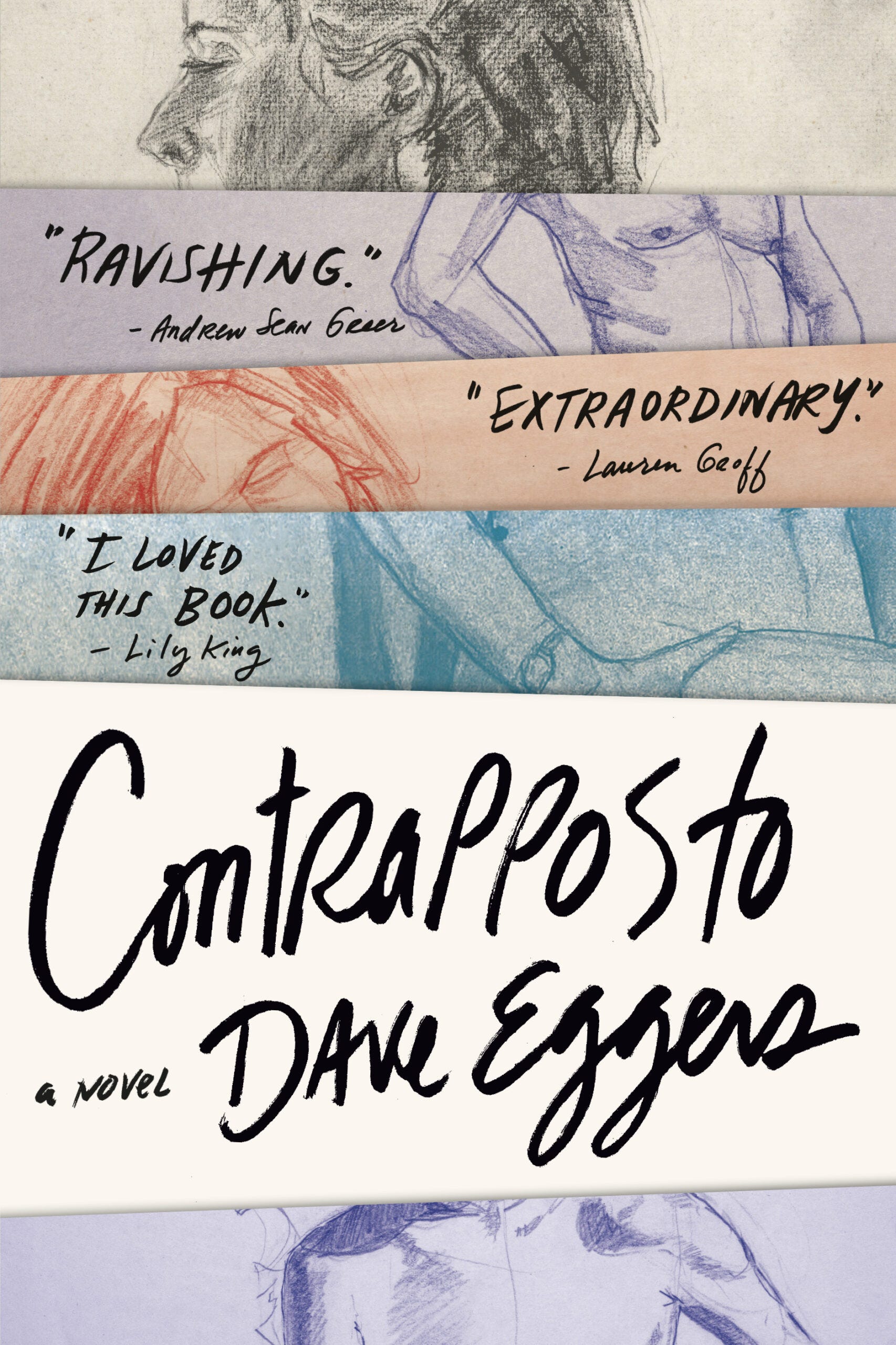
Contrapposto. By Dave Eggers. New York: Knopf, 2026. 432 pp. $32.
One way to describe Contrapposto, Dave Eggers’ 14th and latest novel, is as a version of Somerset Maugham’s Of Human Bondage in which rather than giving up on his art and settling for medicine, and rejecting his inamorata so that he can find his wife, as does Maugham’s Philip Carey, Eggers’ hero holds on to both early dreams. Because he does not mature and settle in his twenties as Philip does, and does not give the story that kind of resolution, he must be followed into his old age. Ambivalence and melancholy persist. At the time of Maugham’s writing in the 1910s, the sensible Victorian conclusion of recent memory would hardly have surprised anyone, but in Eggers’ age it is nearly infeasible. But the mode and much else is the same: a long novel, in a somewhat detached third person, with lots of characters, a few melodramatic incidents, and ample space for reflection; a sensitive young man with a difficult family situation, the promise of an outstanding life in service of artistic values, a restless and beautiful woman. The new spirit in the husk of the bildungsroman suffers as the old one did, but without the same hope of purging and progression. It is a sad book, maybe more than Eggers knows.
Comments
Nothing yet. Say the first thing.
Sign in to join the conversation.