

Dialogue isn’t just characters talking; it’s characters revealing themselves. When done well, dialogue becomes the engine of a story, carrying tension, emotion, and subtext in a way exposition never can. It’s where a story breathes.
A reader may forget a paragraph of description, but they remember a line that lands.
Dialogue Reveals Character Without Explanation
Strong dialogue allows readers to infer who a character is without being told.
Compare:
She was angry and felt betrayed by him.
Versus:
“You rehearsed that, didn’t you?” she said.
He blinked. “Rehearsed what?”
“The apology. You sound like a voicemail.”
No explanation is needed. Her clipped tone, his evasiveness, the accusation embedded in her word choice, this exchange does the work silently. Dialogue trusts the reader to connect the dots.
Characters reveal these through dialogue:
Their emotional state through rhythm and restraint
Their background through diction and syntax
Their power (or lack of it) through who speaks more and who controls the conversation
Dialogue Creates Momentum
Dialogue moves faster than narration. White space invites the reader forward, and short exchanges can accelerate tension in seconds.
A page of internal monologue might describe a conflict. Dialogue enacts it.
This is especially powerful in:
Confrontations
Negotiations
Romantic tension
High-stakes reveals
When dialogue is active, the story feels alive, events aren’t being summarized; they’re unfolding in real time.
What’s Left Unsaid Is Often the Point
The strongest dialogue rarely says exactly what it means.
Subtext, what a character avoids, deflects, or says sideways, creates depth.
Example:
“Did you tell her?”
“She didn’t ask.”
“You didn’t answer my question.”
What matters here isn’t the literal exchange; it’s the avoidance. The tension lives in the gap between the question and the response.
Readers engage more deeply when they have to listen between the lines.
Dialogue Builds Relationships on the Page
How characters talk to each other shows the nature of their relationship better than any label.
Friends interrupt each other
Lovers speak in shorthand
Strangers hedge and over-explain
Enemies circle instead of striking directly
Dialogue patterns become emotional fingerprints. Over time, readers recognize a relationship by how it sounds.
Good Dialogue Is Not Realistic, It’s Intentional
Real conversations are full of filler, repetition, and dead space. Written dialogue shouldn’t be.
Effective dialogue is:
Sharper than real speech
More purposeful
Filtered for meaning
Every line should either:
Reveal character
Advance plot
Increase tension
Ideally, it does more than one at once.
If a line exists only to pass information, it’s likely telling instead of showing.
Dialogue Is Action
Dialogue isn’t a pause from the story; it is the story happening.
An argument changes a relationship.
A confession shifts the stakes.
A lie plants future consequences.
When dialogue matters, it leaves residue. Something is different when the conversation ends.
Where we falter with dialogue
I often find when I’m editing my book that I overuse filler words in my dialogue, which often leaves my dialogue feeling less impactful.
Avoid filler words such as:
More
So
Uh
Um
But
Like
You know
I mean
Sort of
Kind of
Basically
Actually
Well
Maybe
Just
Let Dialogue Do the Heavy Lifting
When writers rely too heavily on narration to explain emotions, they rob dialogue of its power. Trusting dialogue means letting characters speak imperfectly, defensively, indirectly, like real people with something to lose.
The goal isn’t clever lines.
The goal is truth in voice.
When dialogue works, readers don’t notice the craft. They hear the characters. And once that happens, the story no longer feels written; it feels lived.
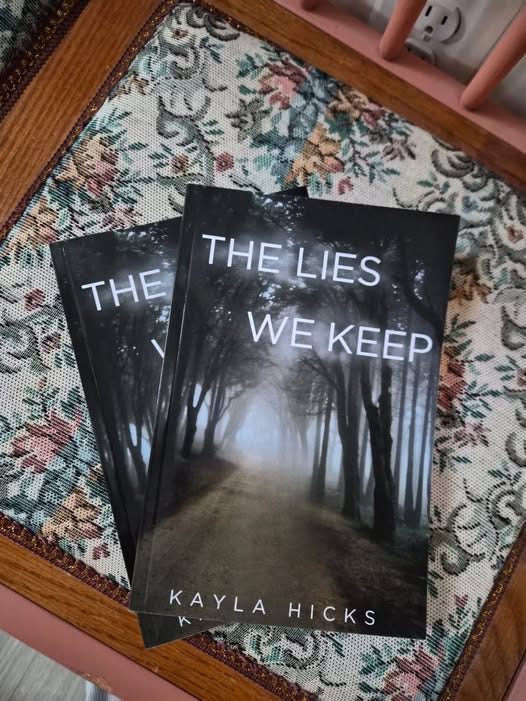
I can’t even believe how well this book launch has gone. As an indie author, I get excited if we make one sale in the first month of a book’s release. And so far, this book has had 14 copies sold in three weeks! It may seem small, but it’s huge.
Thank you to anyone who bought a copy; it truly means the world to me.

Lucky’s life has been anything but ordinary, from her origin story to her present. A life filled with crime as a result of her father teaching her the ins and outs of a dishonest life from a young age.
But just as she begins building a path for a normal life through college and a normal career, she meets Alex, who isn’t who he says he is. And to make matters worse, her father gets arrested after being involved in embezzlement, leaving Lucky on her own.
What happens afterwards for Lucky is just par for the course of a downward spiral of a life she’s endured.
This book was thrilling and a page turner, making me unable to put it down as I tried to figure out how things would turn out for Lucky.
I give this book a five-star review. You can get it here: Lucky
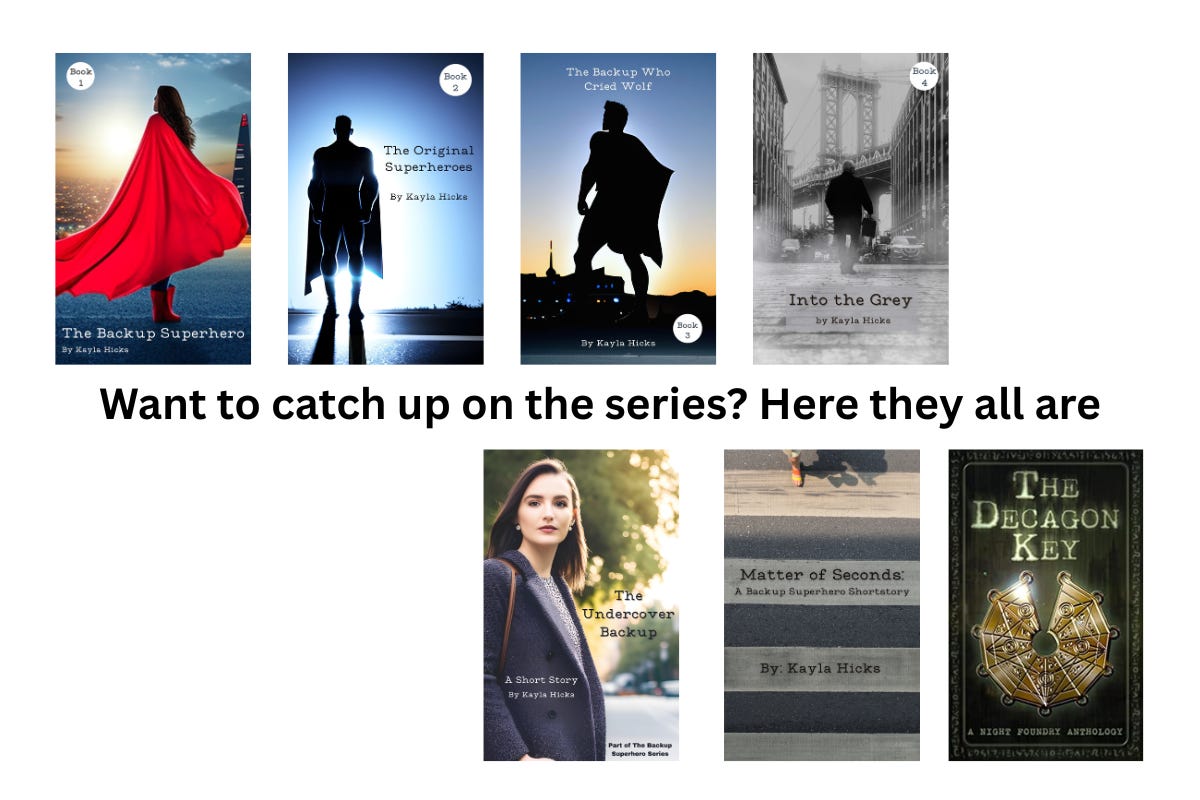
I'm excited about the direction of the next three installments to The Backup Superhero series.
The first installment is from Tanser Girl's perspective and how she handles Goffman's revenge on her and the overarching villain, Grover Pavlov.
The second is on Tanser Girl's superhero origin story, how she gets into the superhero league.
The third will be a spinoff, a different universe type story with Tanser Girl and the League battling zombies.
Ready to take the next step in your writing? I am offering a course for aspiring and new authors where I teach:
Ways to begin your writing process
The different publishing paths to choose from
The beginnings of establishing an author’s platform
Additionally, you will receive worksheets on:
Planning your first steps as an author
A step-by-step guide to creating a book outline and a writing timeline
If you are interested in this, more information will be coming on Monday, January 12th.
No posts
Comments
Nothing yet. Say the first thing.
Sign in to join the conversation.