
Every year, as Navratri arrives, I am reminded that this festival is not just about rituals, fasting, or dancing around a garba lamp. It is a nine-night celebration of Shakti — the eternal feminine power that creates, nurtures, protects, and transforms.
India has always worshipped Shakti in many forms — as Durga who slays Mahishasura, as Lakshmi who sustains abundance, as Saraswati who guides through wisdom. Yet beyond the temples and scriptures, Shakti is not abstract. She is alive, embodied in the women we live with, love, and learn from.
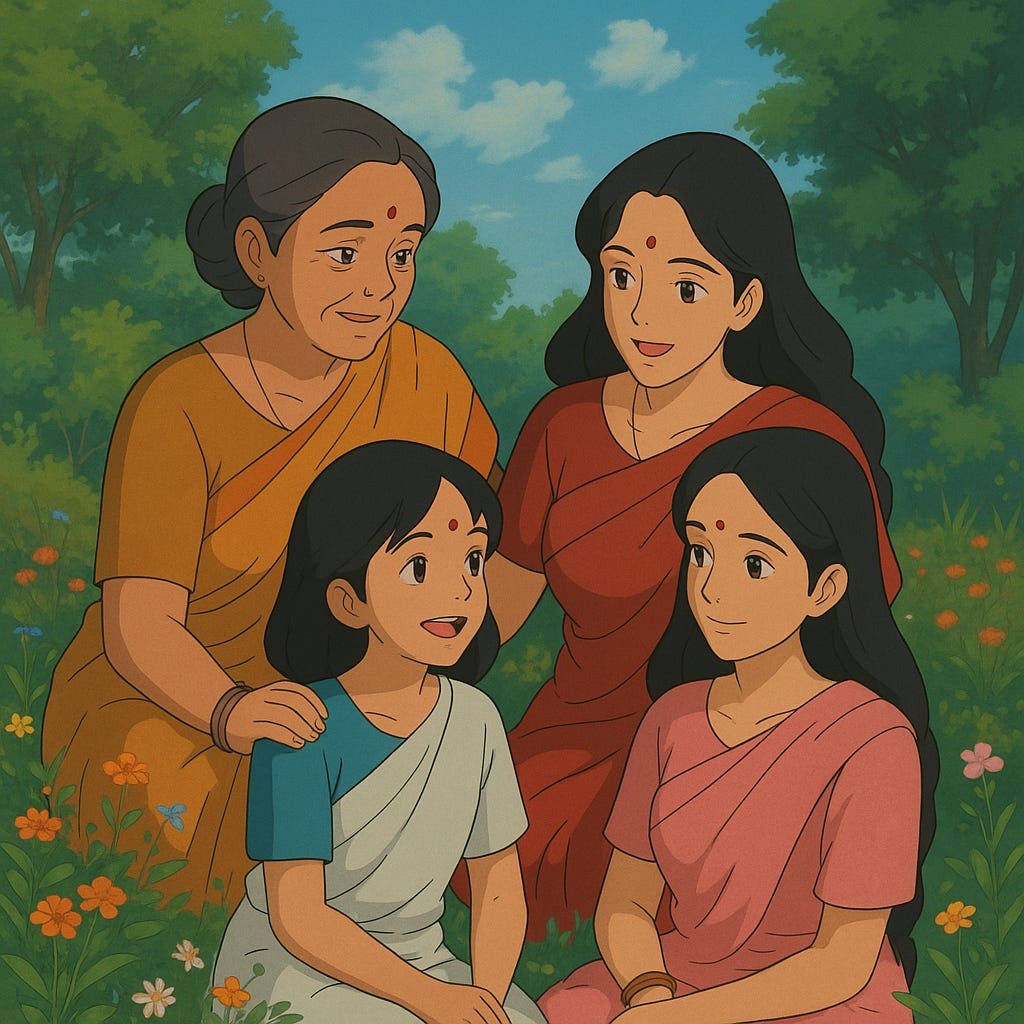
For me, Navratri is deeply personal. My life stands on four unshakable pillars, each a living form of Shakti:
My Mother → She gave me birth — and more recently, a rebirth. Her resilience and unconditional love are reminders of Shailaputri’s grounded strength and Skandamata’s nurturing spirit.
My Wife → My anchor in every storm, my equal in every journey. She is my Katyayani — fierce when needed, soft when not, and always the power behind the power.
My Sister → The one who balances my extremes, stands by me in silence and in storms. She carries the devotion of Brahmacharini and the courage of Chandraghanta.
My Daughter → The future that keeps me rooted in hope. Her innocence is wisdom, her laughter creation itself — she is my Kushmanda and Siddhidatri, carrying both creativity and grace.
When I look at them, I don’t just see family. I see the Navadurga, the nine forms of the Goddess that Navratri celebrates.
While different regions of India mark Navratri in unique ways — Durga Puja in Bengal, Garba in Gujarat, Ayudha Puja in Karnataka, Golu dolls in Tamil Nadu — the essence is the same: celebrating the feminine principle.
There’s even a ritual called Kanya Puja, where young girls are worshipped as living goddesses. The symbolism is powerful — divinity does not reside only in idols but in the everyday lives of women.
And that, to me, is the most urgent message of Navratri: honoring women is not seasonal, it is civilizational.
In a world where women still fight for dignity, opportunity, and safety, Navratri is a reminder that respecting Shakti must go beyond nine nights of devotion. It must reflect in our homes, our workplaces, and our policies.
My four pillars — mother, wife, sister, daughter — keep me grounded in this truth every single day.
So this Navratri, while I bow before the goddess in the temple, I bow even more deeply before the goddesses in my own life. Because in honoring them, I honor the very spirit of Shakti.
🌸 May we all celebrate the women around us — not just in festivals, but in the fabric of our daily lives.
No posts
Comments
Nothing yet. Say the first thing.
Sign in to join the conversation.