
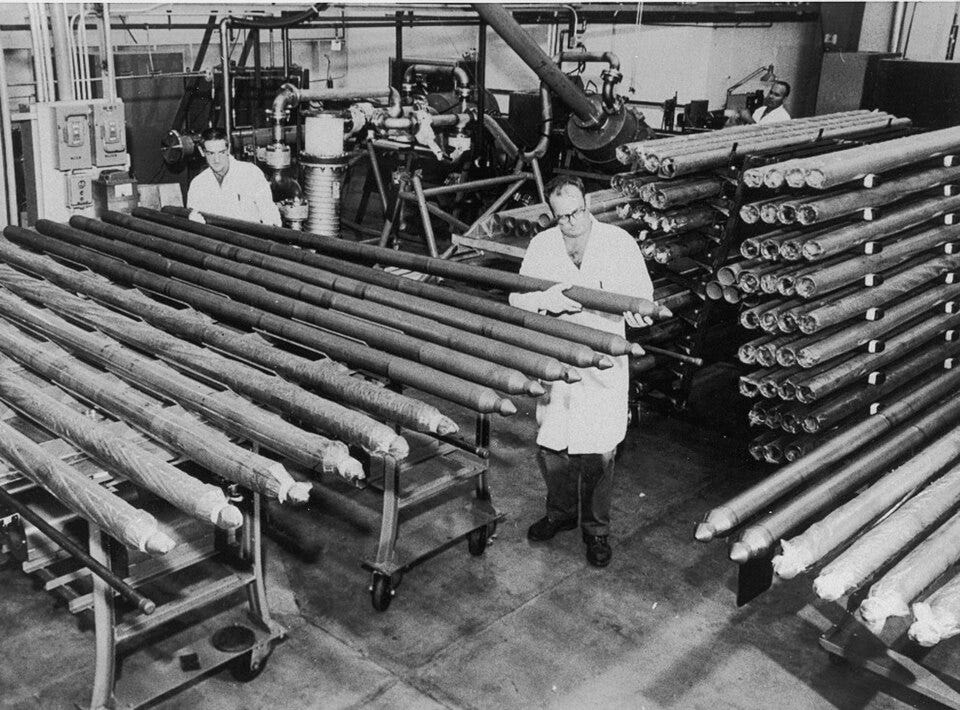
Unlike with uranium, there was never any thorium fever. But the thorium head cold, shall we say, first broke out in the 1950s, when the first fission energy boom spurred fears of uranium running out. Thorium is up to four times more abundant than uranium in the Earth’s crust. As an added bonus, using it as reactor fuel would generate less long-lived, dangerous radioactive waste.
The general slowdown in reactor construction after the 1970s all but cured away any interest in thorium, with two notable exceptions. The first was India, which had few uranium deposits, a growing nuclear industry, and the keen desire of a nation shaking off its colonial yokes for self-sufficient energy supply chains.
The second was China, which last fall marked a breakthrough in its experimental thorium-fueled reactor — the world’s only active such effort to revive thorium’s prospects as a future energy source. The announcement that the Shanghai Institute of Applied Physics’ MSR-LF1 thorium-powered molten salt reactor in inland Gansu Province had successfully reached another milestone in developing the fuel jolted many in the West who lamented that yet another technology pioneered by American and European scientists was on track to be reclaimed by China.
But a Chicago-based company is emerging as a potential champion for thorium with a pragmatic approach to popularizing the fuel.
From my latest scoop for Heatmap:
Now an American startup — which last year became one of the first U.S. companies granted permission to export nuclear materials to India — is taking a major step toward helping India realize its 72-year-old thorium dream. On Thursday, Chicago-based Clean Core Thorium Energy plans to announce a pilot manufacturing deal with the Canadian National Laboratories, Heatmap has learned.
“This is the biggest advance toward commercializing thorium in recent history,” Milan Shah, Clean Core’s chief operating officer, told me.
Thorium is “fertile” but not “fissile,” meaning it cannot sustain a chain reaction on its own, which creates an obvious challenge. But when exposed to neutron radiation, the material converts into fissile uranium-233. Rather than build a new type of reactor designed to run on thorium, as the Chinese government is now doing, Clean Core blends thorium fuel with a small amount of high-assay, low-enriched uranium, or HALEU, the type of fuel many next-generation reactor companies aim to use, which kicks off the reaction.
The proprietary fuel assemblies Clean Core manufactures are made to be used in the reactors that make up the bulk of the Indian and Canadian nuclear fleets without any upgrades or changes needed to go from enriched uranium to this new material. While the company waits for the units — they’re expected to be ready to go sometime around the second quarter of next year — it has begun talks with utilities in Canada, Romania, South Korea, and India about taking one of the assemblies for a test run.
You can read the full story here.
Want to help finance independent, accurate, on-the-ground reporting about energy? Your support for this newsletter makes that work possible. Buying a subscription for $6 per month or $60 per year helps a lot more than you think. Thank you so much!
Signing off from a summery Bay Ridge, Brooklyn, where, a month after we lost a beloved comic book store, we are losing a steakhouse that had some pretty crazy happy hour deals.
No posts
Comments
Nothing yet. Say the first thing.
Sign in to join the conversation.