
Did you know that the largest collections of work by women artists in Europe can be found either at Murray Edwards College, Cambridge (go see!), and at FAMM (Femmes Artistes du Musée de Mougins) in Mougins in the South of France?
The latter has just had a big rehang for summer 2026 – with 75 new works on view. Think masterful paintings, drawings, photographs and collages by the likes of Berthe Morisot, Lee Krasner, Alice Neel, Lee Miller, Leonora Carrington, Leonor Fini, Joana Choumali, Anj Smith and more. I am thrilled that FAMM is the very generous sponsor of the GWA Podcast, and makes all the episodes possible.
FAMM is a must-visit. And if you’re in the area, don’t miss Fondation Maeght, La Colombe d’Or, or a visit to Chagall’s grave and/or Matisse’s chapel. It’s the perfect summer day out.
OK – scroll on for a deep dive of my favourite works from the FAMM collection, all of which are on view at the museum this summer:
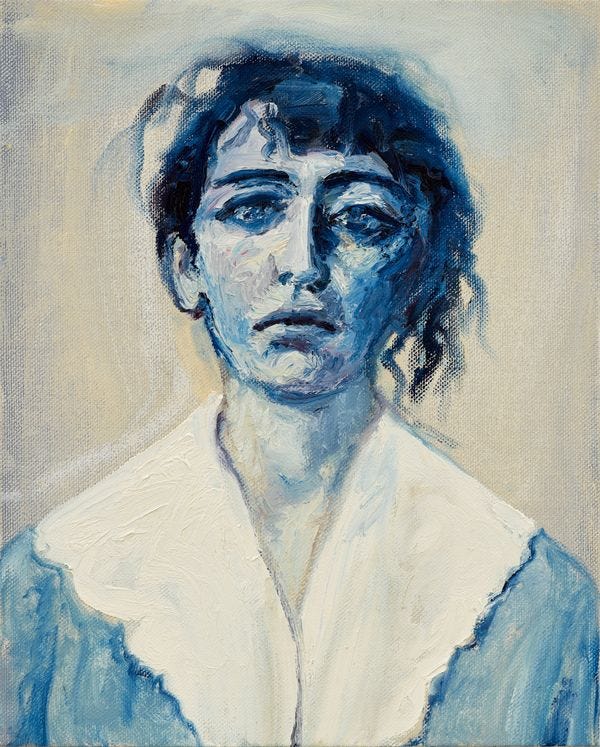
I love it when artists paint portraits of artists no longer here – as if to connect to them through an artistic lineage. Here is Celia Paul’s (b.1959) take on sculptor Camille Claudel. Looking at it, you feel almost pierced by the fierce intensity of Claudel’s gaze – and the extraordinary strength and inner force that seems to radiate from the canvas.
Listen: Celia Paul on the GWA podcast / Emerson Bowyer on Camille Claudel.
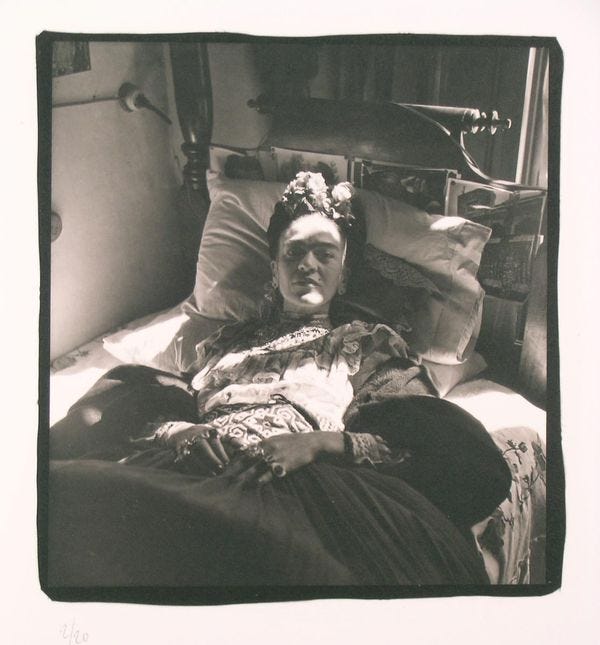
The photographer Bernice Kolko (1905–1970) was a close friend of Frida Kahlo, photographing her many times in the early 1950s, especially the final two years of her life. These photographs are intimate glimpses into the artist’s everyday life: laughing with friends, at work painting, with her husband Diego Rivera, and, eventually, confined in bed as her health deteriorated. This photograph was taken shortly before her death, aged 47.
Listen: Jessie Burton on Frida Kahlo on the GWA Podcast.
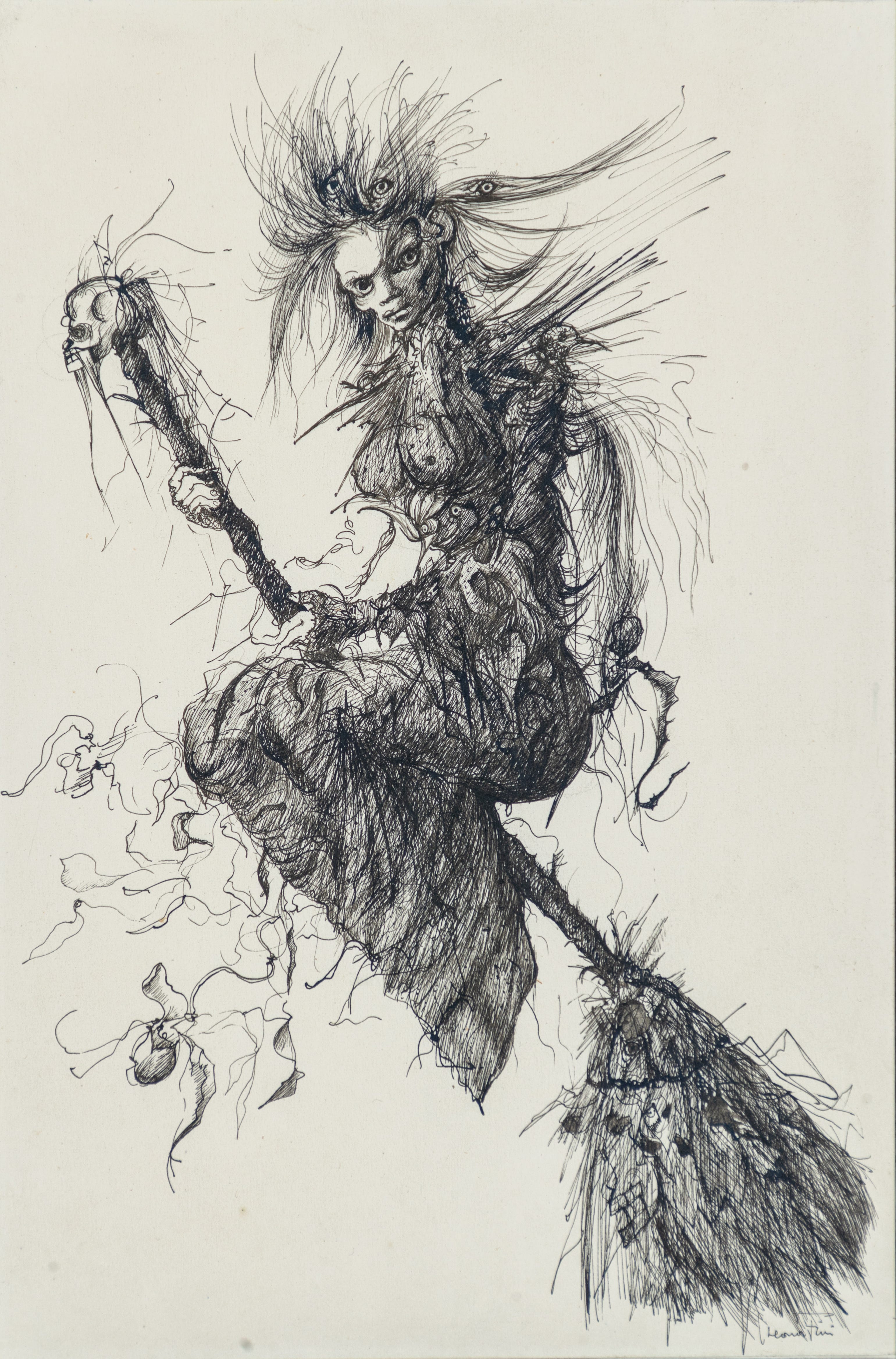
Witches appear throughout Leonor Fini’s work, often as alter egos through which to imagine forms of femininity untethered from male control. Fini (1907–1996) took typical visual tropes of the witch – the broomstick, the long flowing hair – and infused them with power. Her witches are not grotesque or cartoonish (like Hans Baldung Grien’s from the 16th century!), but rather symbols of female autonomy, rebellion and sensuality. She was very inspired by Jules Michelet’s book, La Sorcière (1862) – one of the first publications to position witches as against patriarchal oppression, and instead picture them as representative of spiritual freedom; in touch with the natural world, and the lineage of women!
Listen: Alyce Mahon on Leonor Fini via GWA Podcast!
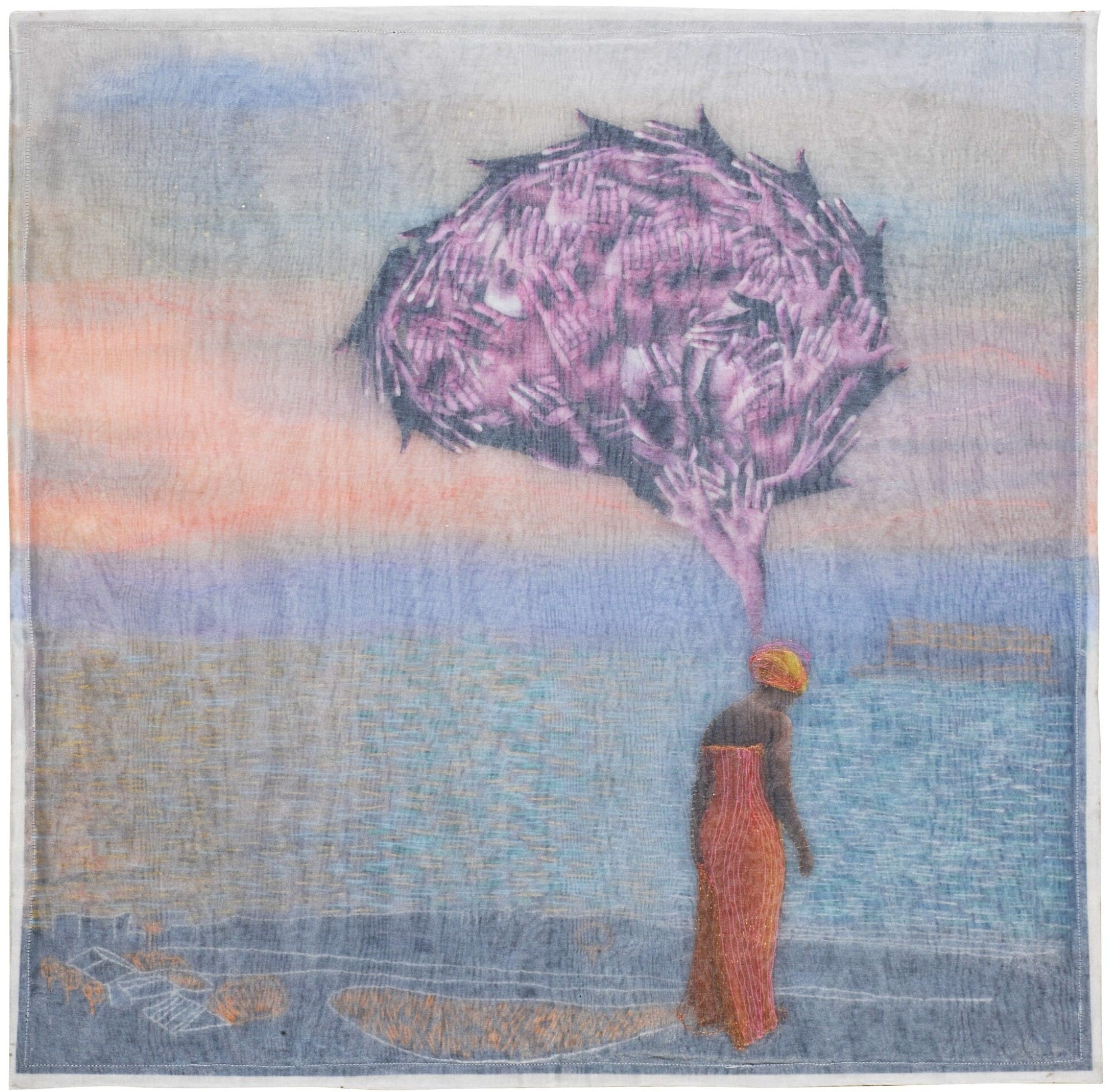
Joana Choumali (b.1974), based in Abidjan, Côte d’Ivoire, is a multidisciplinary artist who often layers embroidery and textiles over her photographs to create totally unique works that feel drenched in emotion. I love how the soft, blurred colours of this work add to a sense of intimacy and interiority, surrounding this lone figure in an almost dreamlike haze.
Choumali likes to work “manually with textiles, thread and needles,” as she has said. “I use multiple layers of sheer fabrics, intertwined and embroidered together with portions of cutout images, collages of photographs, and golden paint. The different layers simultaneously veil and reveal the feelings that coexist in my imagination.”
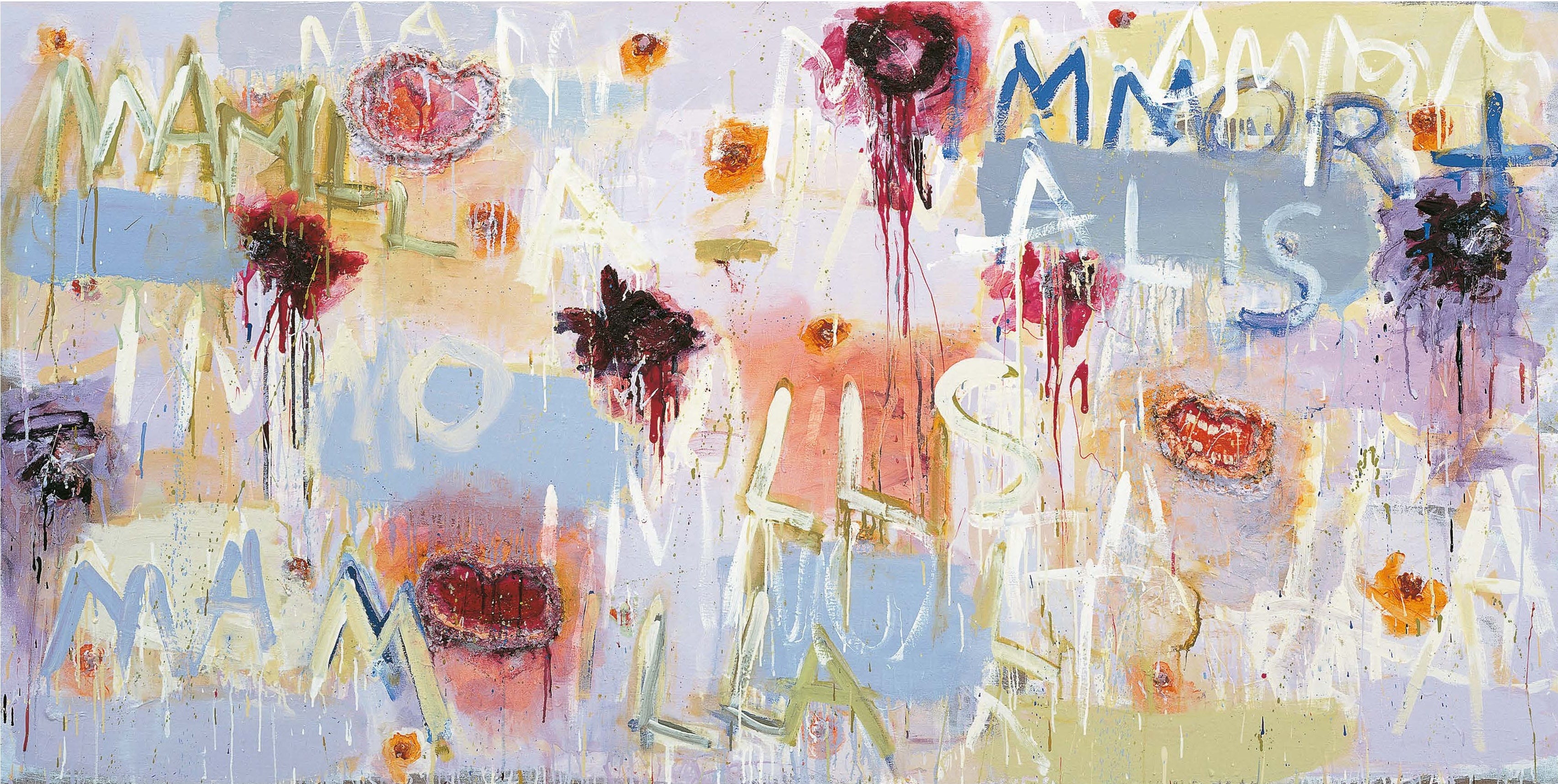
Amongst drips of red and white paint that evoke blood and milk, the painting’s title – Latin for ‘the breast that never stops flowing’ – is repeated across the surface, in scrawled, urgent handwriting, so that it becomes chant-like, an incantation. Joan Snyder (b.1940) often includes text in her paintings and, as she told me on the GWA podcast, these fragments come from a variety of sources – lines from her diaries, quotes from Virgil and Virginia Woolf, or scribbled phrases found in old sketchbooks.
Listen: Joan Snyder on the GWA Podcast
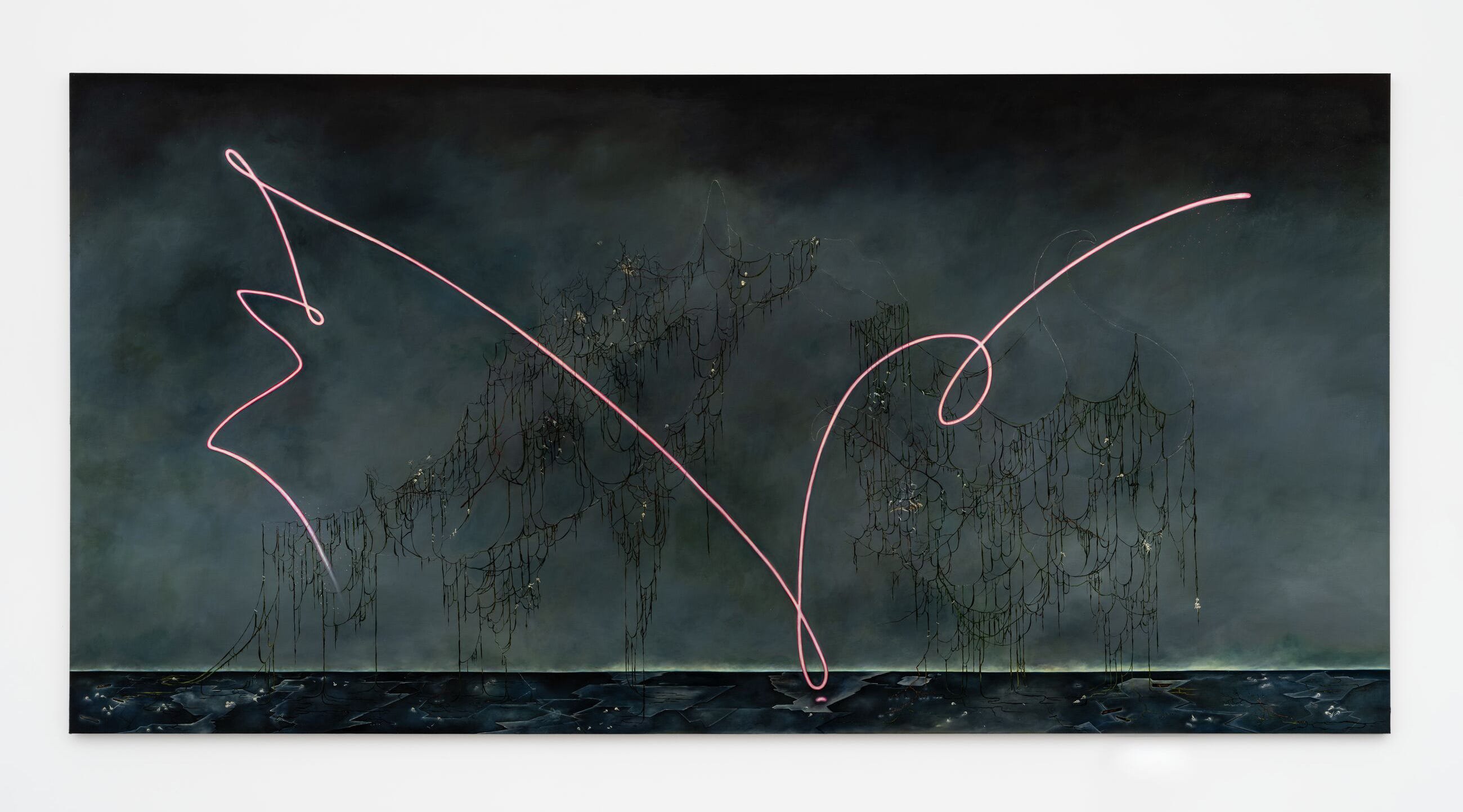
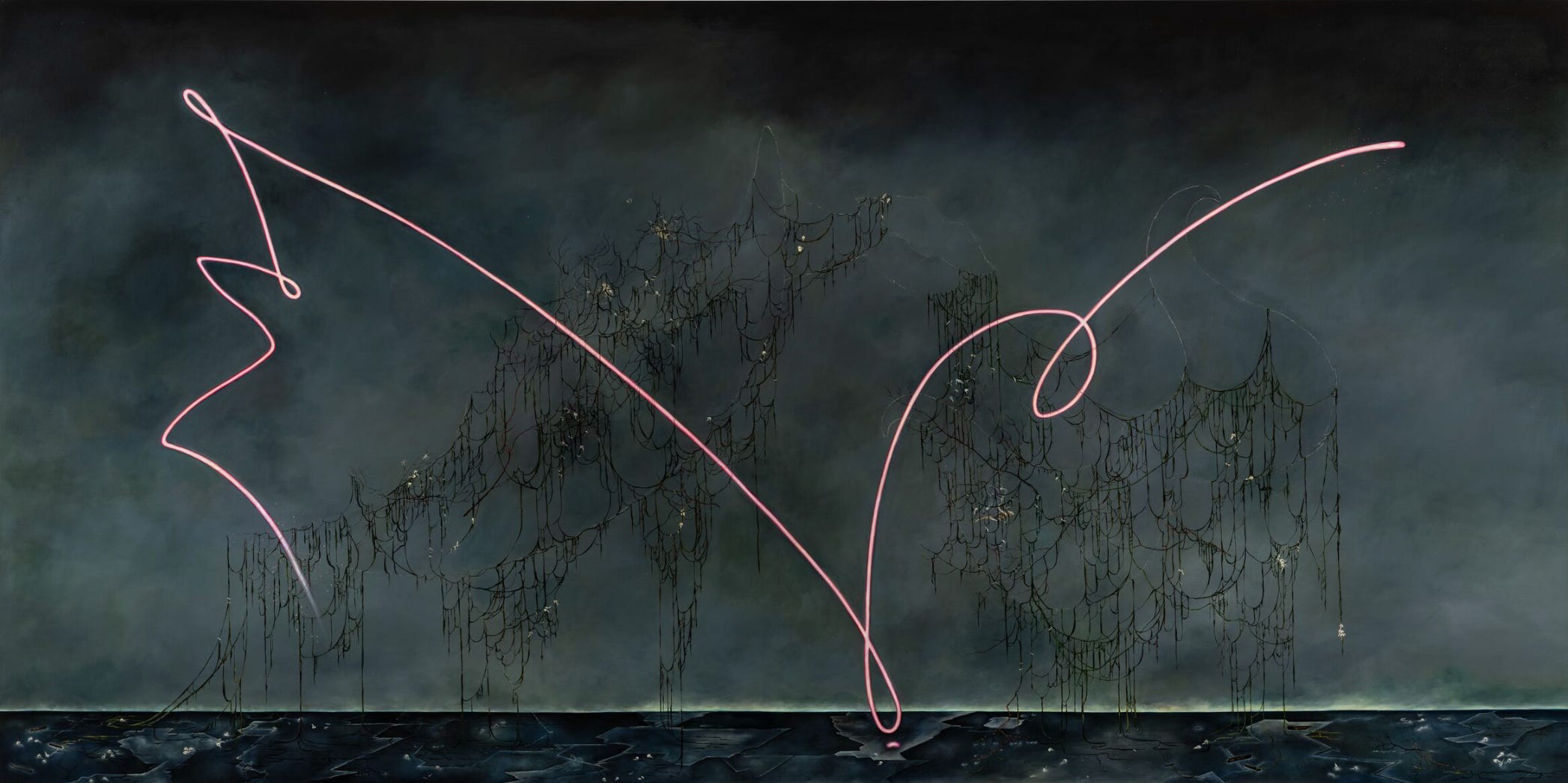
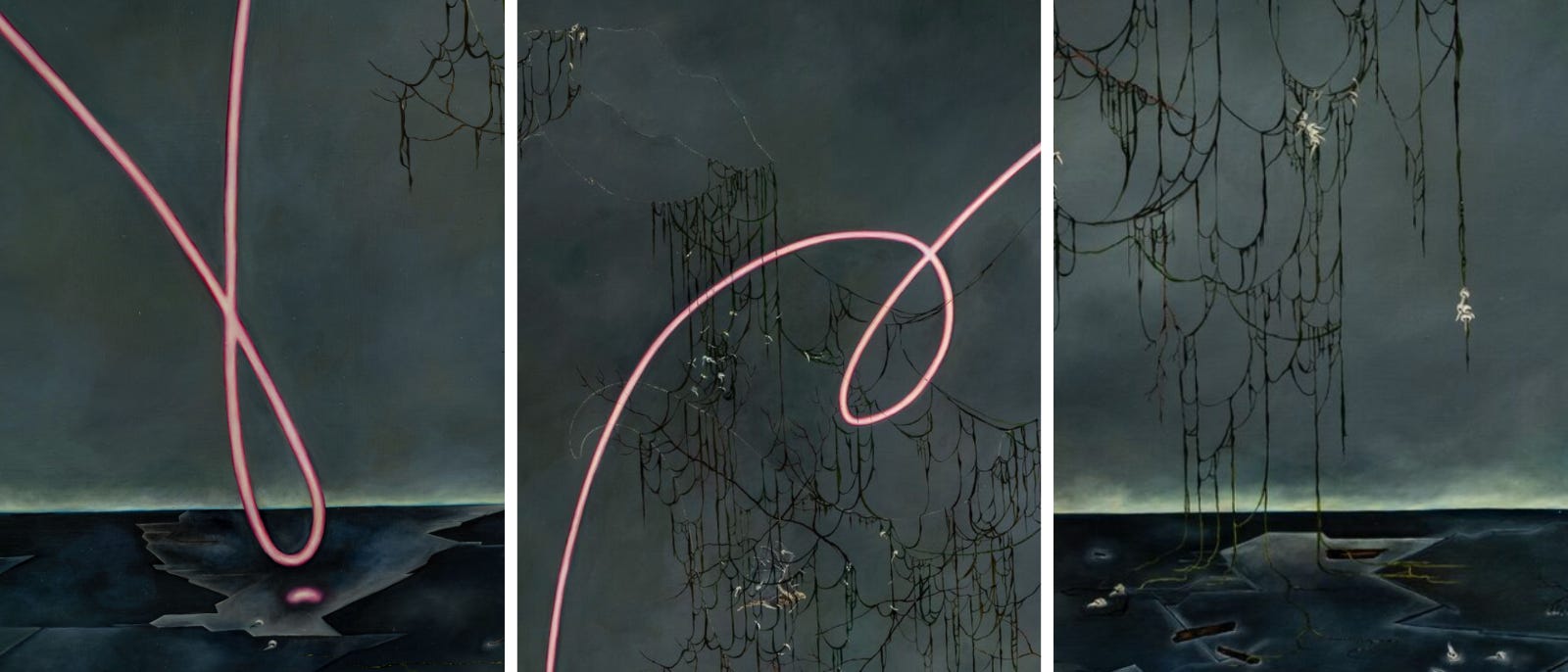
Anj Smith’s (b.1978) paintings are often set in liminal, hallucinatory landscapes, where the human and natural world collide, even morph into one another. In Intermittence, a pink neon light arcs through a stormy sky, casting an apocalyptic glow. Whether its a natural phenomenon or something manmade is unclear. Look closely and you can see tiny animals floating in the sea, which seems to be made up of broken ice floes. The painting manages to both be beautiful and unsettling, drawing you in yet refusing to provide answers. Look at these details!
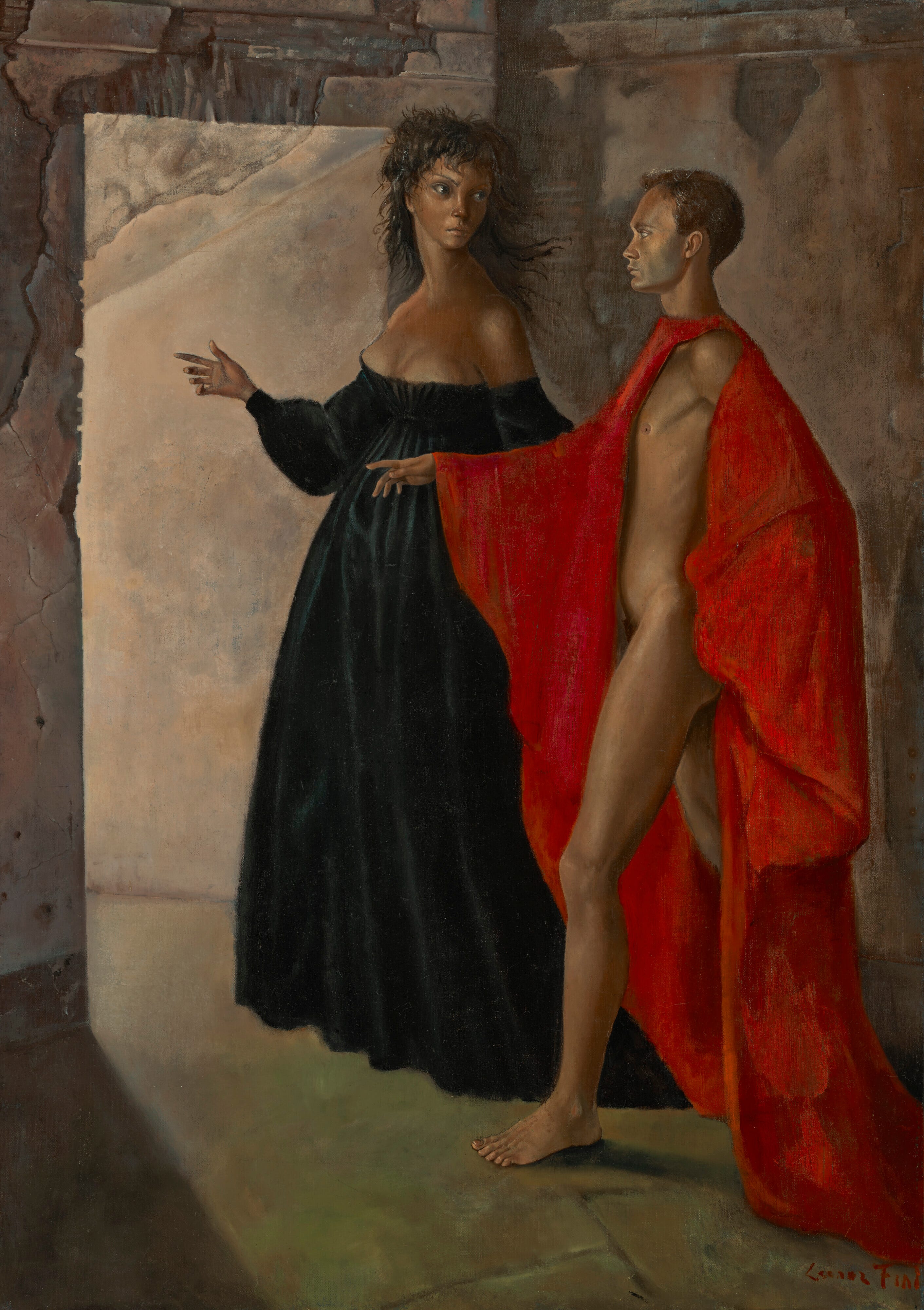
In this painting of herself and her partner Konstanty Jeleński, Fini depicts herself as the dominant figure, in an imposing black dress, pointing the way forward while fixing Jeleński with an authoritative gaze. He seems to be almost under her spell as he strides behind her, half-nude, half-draped in a red gown, towards an unknown realm. This is quintessential Fini, who challenged art history by painting women as powerful and self-possessed – casting them as guides, oracles, sorceresses.
Their real-life meeting was almost as uncanny as this painting. When Jeleński first approached Fini, she reportedly stared at him in stunned silence before explaining that the day before she had sketched a man who looked exactly like him. It was destiny, she decided, and the two remained together until his death in 1987.
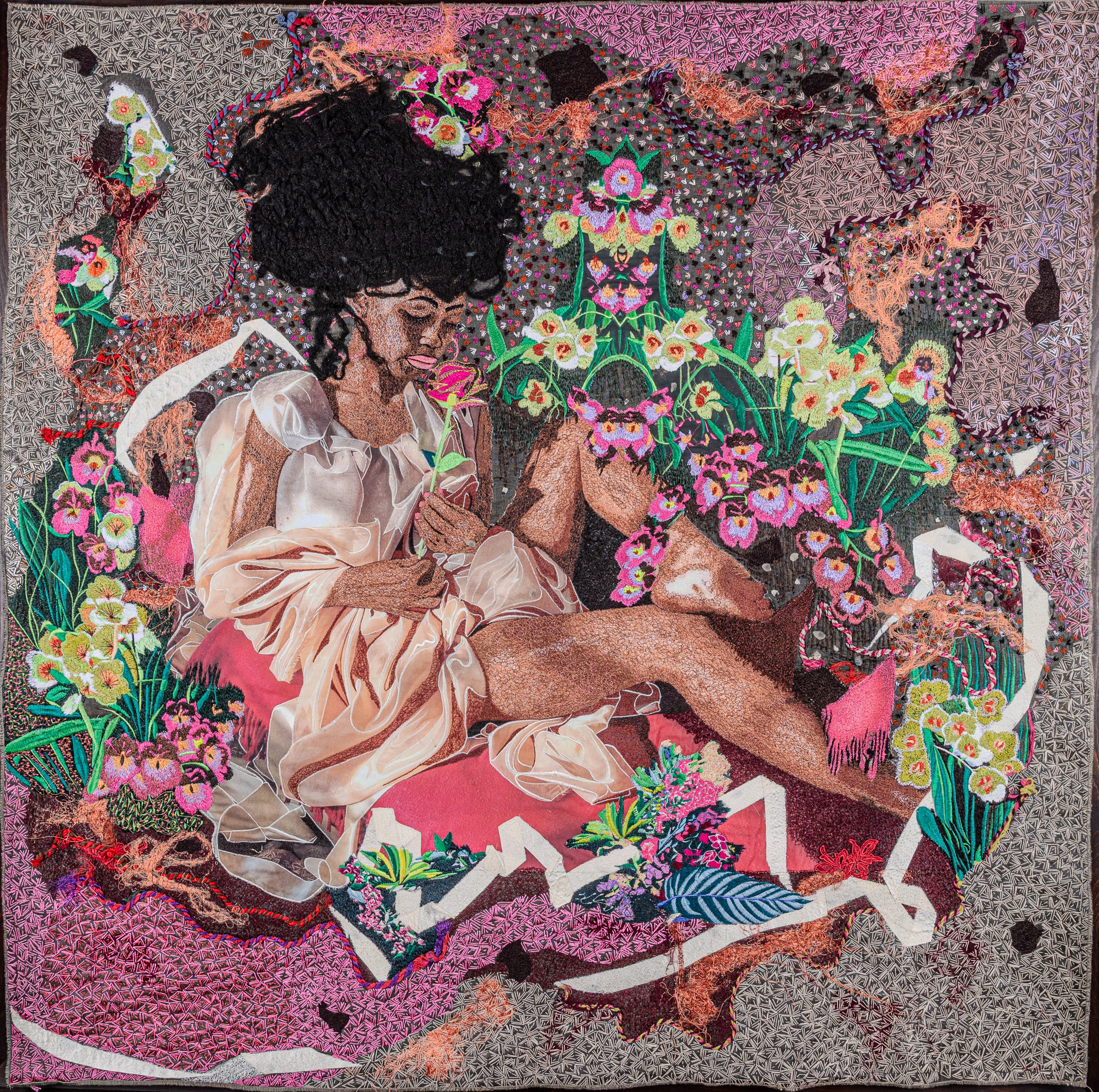
Kimathi Mafafo’s (b.1984) tenderly intricate embroideries celebrate female joy and power, often depicting goddess-like women surrounded by sumptuous bursts of flowers, butterflies, and birds. Challenging the male gaze, she depicts women in interior moments of rest and contemplation – here, she seems blissfully absorbed in a moment of self-discovery, existing entirely for herself.
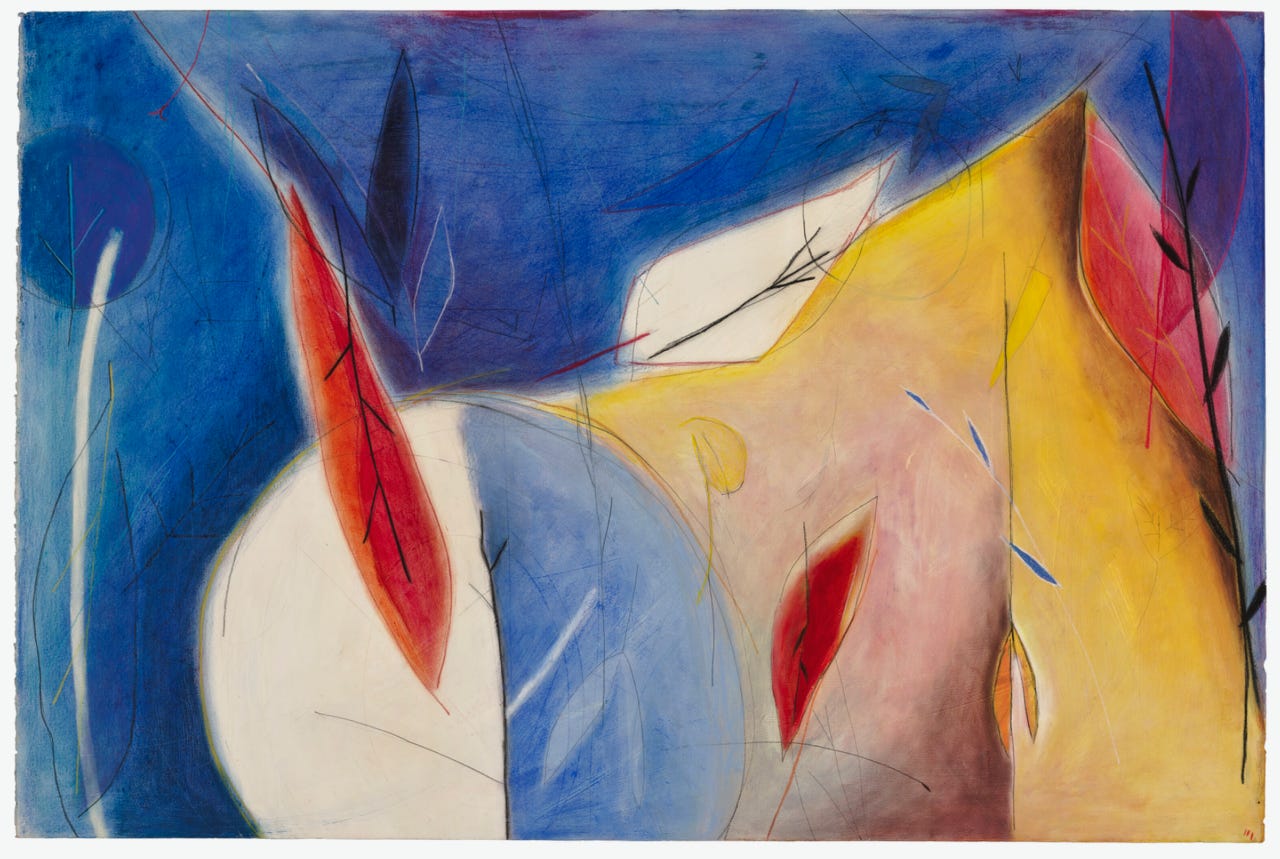
Born in 1957 in New Mexico, Emmi Whitehorse (b.1957) creates paintings that evoke the natural world through gestural use of colours and shapes. In this painting, leaves dance amongst spindly branches, with swathes of blue and yellow suggesting land and sea and sky. Its movement makes me think of the changing seasons, the cycles of the earth. A member of the Navajo nation, Emmi Whitehorse is inspired by the landscape of the Southwest, and uses abstraction to translate her relationship to the land into these gorgeous canvases.
No posts
Comments
Nothing yet. Say the first thing.
Sign in to join the conversation.