
There are always -isms, both systemic and heartbreakingly personal. They never go away, and I spend way too much time thinking about them. This post, just as my one-year Substack-aversary approaches on April 29th, focuses on capitalism, which unfortunately amplifies all the other isms: racism, sexism, classism, ageism, elitism, and everything in between, not to mention the big one we’re all enduring now: fascism. Capitalism was designed by white CIS men. Capitalism is rooted in colonialism, another ism—and everyone else has to endure this need for money. When I talk about the boot of capitalism on my neck every day, I mean it. It’s crushing.
However, think about this: if men gushed blood once a month, experienced menstrual cramps, nausea, migraines, and all the other PMS symptoms—never mind actually getting pregnant, which is a whole other process in itself; I’m only talking monthly PMS symptoms and the actual period—then capitalism would likely be unrecognizable from what we currently know, far fewer hoarder vibes and hopefully less punitive. Would there even be guys like Jeff Bezos or Elon Musk??? They’d be in bed with heating pads on their abdomens, groaning in agony, popping ibuprofen, and cursing the gods.
I can’t even list all the things that would change if men menstruated, but among the capitalist biggies: workplace culture, paid leave, family leave, work-life balance, equal pay, retirement accounts, the New York Stock Exchange not to mention all the finance bro energy on trading floors worldwide, as well as all the shit that keeps us on this frenetic grind. All of it would be far less toxic and far more compassionate.
Why, you ask? Consider what menstruation requires: collective compassion.
If your girlfriend comes to you bleeding out and needing a tampon, you immediately start fishing through your purse. There’s not a woman alive who hasn’t had this experience. Seriously. Gosh, even if a stranger in the restroom asks for a maxi pad or tampon from behind the stall—you can’t even see each other, you’re just two strangers who had to pee at the same time—you pitch in and offer what you got. Or, if she’s doubled-over cramping or rubbing her forehead with a headache, you check your purse for Advil. Menstruation by its very nature requires having each other’s back, not shoving each other down. Bleeding, even predictable bleeding, is messy business.
Half the global population menstruates. Bleeding every month creates compassion. This is why capitalism would look so different if men bled as women bleed.
Believe me, I would love to gush about palm trees again, but here we are. Instead of the constraints of capitalism and all its design flaws, I would love to dive into my favorite ism: escapism, which for me doesn’t involve video games or anime but planes, trains, and automobiles taking me somewhere, anywhere, everywhere. Show me palm trees prettier than the ones by my garbage bins. Show me a coastline that glistens brighter than my bike ride along the Pacific. Show me a shrine or a giant Buddha statue or a cemetery covered in flowers. Show me things I’ve never seen before. Show me things I have seen and should see again. You get the idea.
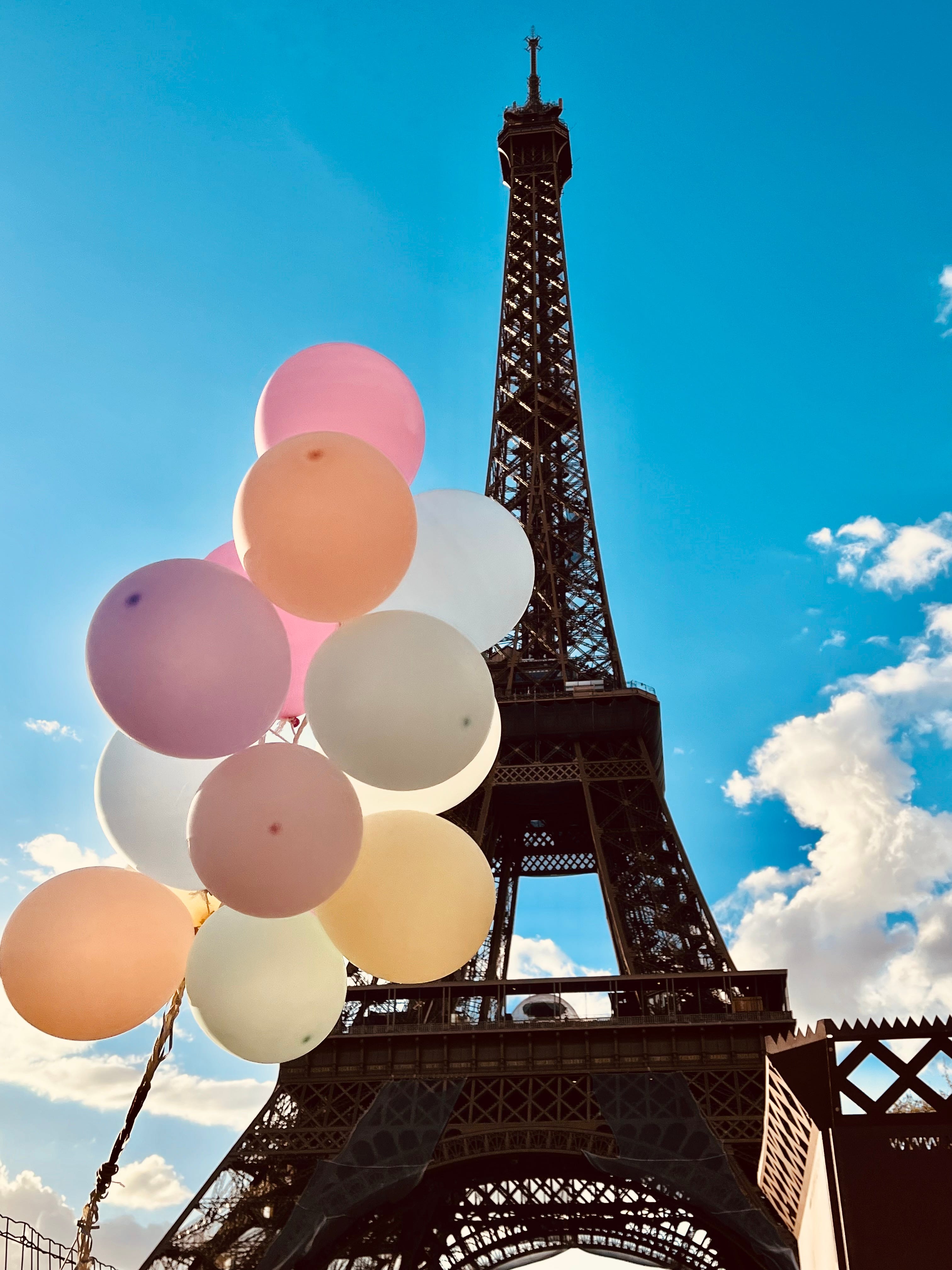
Fewer of us seem to be traveling right now. This time two years ago, I did April in Paris, and, wow! That experience lives up to the song and more! Spring break two years ago felt expansive, gorgeous, promising. A time for dreamers.
Fast forward to 2025, and it’s been a sit tight situation in America since January. Capitalism is wreaking some serious havoc on us all, and unpredictability usually means staying close to the nest. I did a modest spring break that was scheduled before the tariff trauma—four days in Arizona where I ate my bodyweight in guacamole, swam in cold water, slept past 8 AM, read poetry around 8 PM, orchid- and agave-bathed at the Desert Botanical Gardens in Phoenix, and dipped Oreos into my morning coffee because (a) it’s spring break, so there are no calories during that time period, and (b) it tasted amazing. The flight from Los Angeles to Phoenix cost less than my weekly groceries and is barely 45 minutes; the ice in your drink doesn’t even melt.
That said, sitting tight sucks and I miss international travel. Give me long flights to interesting places, and this is where capitalism comes in (again). America has its workers hard at work, no one is going to take a vacation and spend money while appearing less valuable to their employers. There are lay offs, hiring freezes, everything costs too much now, the stock market is being manipulated, and we’re all caught in this shitshow. This chaos makes me miss April in Paris and all forms of travel because travel for fun means freedom. Escapism—the kind of escapism I want to do like kayaking the fjords along coastal Greenland and having my own White Lotus Season 3 moments in Thailand and strolling downtown Zanzibar to admire all those beautiful doors—costs moolah.
Money may be about numbers, but ask anyone: money is really emotion, human desire run amok. Like most of us, I have strong feelings about money. The universe apparently sensed this because I was then connected with U.K-based, best-selling author Keris Fox, whose new book The Harry Styles Effect comes out May 30. Keris also writes the Substack The Ladybird Purse, where she interviewed me about my GenX attitudes towards money.
To sum up, I’m freaking out.
I have zero chill about moolah, and readily admit here that money comes with all kinds of family drama, trauma, and stuff. You can read the full post here, where Keris dives into a delightful rabbit hole about 80s music, and you can read me answering Keris’s questions and freaking out below.
As always, thanks for reading and happy Substack-aversary to L.A. Woman! Be patient with one another as we ride out this rollercoaster and I’ll try to do the same.
…is with Katrina Woznicki, who I discovered via her brilliant Substack. Her post about the LA fires has stuck with me (“Many people were going about their work day, landscapers, construction workers, and cleaning crews out and about. Not everyone has the privilege to leave.”) and then last month she wrote Fellow GenX Creatives: We’re Not Alone:
How do you explain this […] experience in media; how the Internet and now AI have completely, indelibly altered your career, that you have 30 years of experience but your income has tanked; that freelance word rates have remained unchanged since the Clinton administration; that you earned more at age 26 working at a dot-com and being handed fistfuls of stock options that you had no idea what to do with, but thankfully you did smart things like pay off student loans and invest.
There’s loss. There’s arrogance. There’s anxiety. There’s grief. There’s need.
Career is identity for so many of us. It is purpose, so when your industry bellies up, what do you do? Who are you, and who do you want to be?
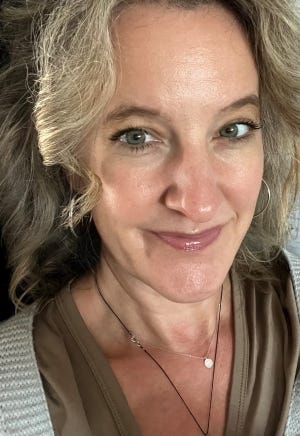
Katrina Woznicki is an award-winning writer and a 2025 Pushcart Prize nominee. In 2025, she received the Solas Awards' grand prize for Best Travel Story Of The Year for her piece, "It Can Be Beautiful For Everyone," which was first published by the London-based Panorama, The Journal of Travel, Place, and Nature in 2024. Her essays and reporting have appeared on the cover of AAA’s Westways magazine, as well as in The Toronto Star, The Washington Post, The Los Angeles Times, Catapult, Guernica, Flung, and National Geographic Traveler.
She also has a background in corporate communications, having produced online and print marketing material for clients. Her debut novel is represented by Word One Literary Agency.
What is your relationship with money currently?
I live in the United States, and, like everyone else, am currently riding out the anxieties of the unwanted tariff wars that are sending the stock markets into a slide, so unfortunately, my daily dose of morning news radio is filled with words like "tariffs, recession, inflation, bear market."
I would characterize my current relationship with money as a state of panic, but these are bizarre geopolitical times. Money is always emotional, and as a single, middle-aged woman, I feel like I will never earn enough to stay on top of everything.
What’s your earliest money memory?
My parents argued about money quite a bit, and later divorced when I was 14, so I remember money always being tight.
My father was diagnosed as manic depressive in the 1980s, and he was the breadwinner, so things were very unstable in our household. I remember he would buy new sneakers to run marathons but we couldn't get new school clothes, things like that. Not the happiest memory.
On the positive side, I started babysitting at age 13, and remember being handed cash for my time and saving what I earned. I also remember picking strawberries on a nearby farm very early in the mornings, the guy counting how many pints we picked and handing us cash. That felt great!
Did you have a job as a teenager? If so, what did you do? Do you remember what and how you got paid?
Yes, babysitting, strawberry-picking, and then a job that had a huge effect on me was getting hired at age 16 at the local country club to clear tables. The country club became a community for me, a home-away-from-home, and honestly, a calmer, more stable place to be where I had enjoyed working.
The country club hosted banquets, weddings, all these fun events, and I just loved working there. I worked my way up to waitressing. Sometimes, the staff--many of us were teenagers at the time--would go swimming in the club pool after our night shift.
I loved the buoyant atmosphere there, and I collected both a paycheck and tips. Honestly, even though it was a very physical job it didn't feel like work. I have many positive memories working at the town country club.
Did you feel pressure to ‘have it all’ - a career, a relationship, a family, etc.? And if so, do you still?
Capitalism would look VERY different if men menstruated. Think about that. Think about all these CEOs, who historically have been mostly CIS men, if they had their periods every month. Think about what family leave and equal pay and workplace cultures would look like. So I try not to buy into the "have it all" mentality because that framework comes from a limited place.
Women are constantly pressured at every age and stage, it's really annoying. I recall family members trying to sell me on the idea of how you buy a starter home when you start your family and then "upgrade" to a bigger house, or after I gave birth to my daughter I was repeatedly asked when I would have a second child even though I was trying to establish myself in my career.
Having more, buying more is pushed on people all the time. The "American Dream" that heavily emphasizes material comforts is outdated, based largely on mid-century values when people didn't have to pay as much out of pocket as they do now. I don't like following other people's notions of what success should look like. Everyone has their own path.
Growing up, what did you learn about women and money from TV, film and music?
The honest answer is I learned a lot about money growing up in a single mom household with a mentally ill father who fought providing child support.
We didn't have cable growing up. Books were borrowed from the library; there was no Amazon. You made your lunch and wore the same clothes until they were worn out. Then you get into the working world and realize the sexism and the Motherhood Penalty because daycare is calling and you need to leave a meeting early because your kid has a fever. Those were my lived experiences.
Everything I learned about money came from being in it. Dolly Parton's song "Hard Candy Christmas" is about women struggling to make ends meet and all the things women want for themselves. I always thought Dolly Parton excelled at that, capturing what women really want for themselves versus the challenges of being able to afford those things.
What advice would you give your younger self about money?
Honestly, I would cheer myself on and give myself a big high-five. I would tell myself that I did great by saving up money in high school despite difficult home circumstances, and when I earned stock options in the late 1990s working at a dot-com, I would congratulate myself for paying off student loans first. I didn't go out and buy new stuff at that age, my mid-20s; I just wanted to be out of debt. That time in 1999-2000 was really pivotal and set me up in positive ways later on.
Also, don't use credit cards. Credit card companies were on my college campus pitching to students who ended up in even more debt, myself included. Credit cards are evil. I still carry credit card debt and am paying that off. I tell my daughter, "Pay cash whenever you can." I'm very proud of her.
What have you learned from the generations on either side of Gen X (Boomers and Millennials) about money?
I'm generalizing here, but Baby Boomers seem to operate thinking some sort of net exists, such as a company pension or intergenerational wealth or that "hard work pays off." I know plenty of people who worked hard and couldn't get far financially because their industries were undermined by changes in media and technology.
I don't know what Millennials think of money. I particularly love and appreciate the resourcefulness of GenZ. My daughter is GenZ, her friends and roommates are GenZ, and they are mindful, thrifty, and intentional. I'm sure other GenZers are spending money they shouldn't spend, but GenZ thrifts everything, crochets their own clothes, hosts potlucks, like the stuff my grandmother used to do during the Great Depression. I love this!
What’s the best thing you’ve ever spent money on?
I spend money on international travel, all kinds of travel. Travel has always been a priority for me. I spent a semester in college in London, and feel travel is the best education.
You don't need to travel in luxury, just go wherever you can and see as much of the world as possible. My 2022 trip to Nepal was life-changing. Can't put a price tag on those experiences.
Do you have a retirement fund? If not, do you have a plan?
I do, however the unwanted, current tariff war is wreaking havoc on my retirement savings. So I have a plan, which is currently being ruined by a spray-tanned fascist. Sadly, this isn't hyperbole.
What would you do with $10,000?
Give half to the Los Angeles Mission where I used to teach creative writing to men and women in recovery, and use the other half to pay off credit card debt.
What little treat would you buy with a tenner?
Invite a friend to the beach, treat that person to coffee, and sit and admire the beautiful Pacific Ocean.
If you were me, what would you want to ask women about money?
Why aren't women paid the same amount for the same job as men? Why is this still an issue 25 years into the 21st century?
No posts
Comments
Nothing yet. Say the first thing.
Sign in to join the conversation.