
Thirty years ago this week, I moved from New York City to Dover, New Hampshire, to work at a small daily newspaper where most of the staff were men and there was still a dark room where photos were processed that sometimes smelled like expired salad dressing. I found this job not through connections or even an ad but through a library in downtown Manhattan where on a hot summer day, desperate for a paycheck above $300, I snail mailed paper resumes to a bunch of newspapers from New York to Maine. Foster’s Daily Democrat in Dover, New Hampshire, replied first: they had a staff writer position open.
I don’t even recall how I got to New Hampshire because I didn’t own a car. I do recall wearing a burgundy suit because at age 23, I thought you had to wear suits to get jobs. I was hired, and somehow moved my stuff from New York to coastal New England. Thankfully, there wasn’t much to move. Shortly after unpacking in my new, very cramped apartment, there was the smell of gas and the kitchen stove acted funny. I moved out within weeks of moving in to go to another cramped apartment where a couple next door fought almost constantly.
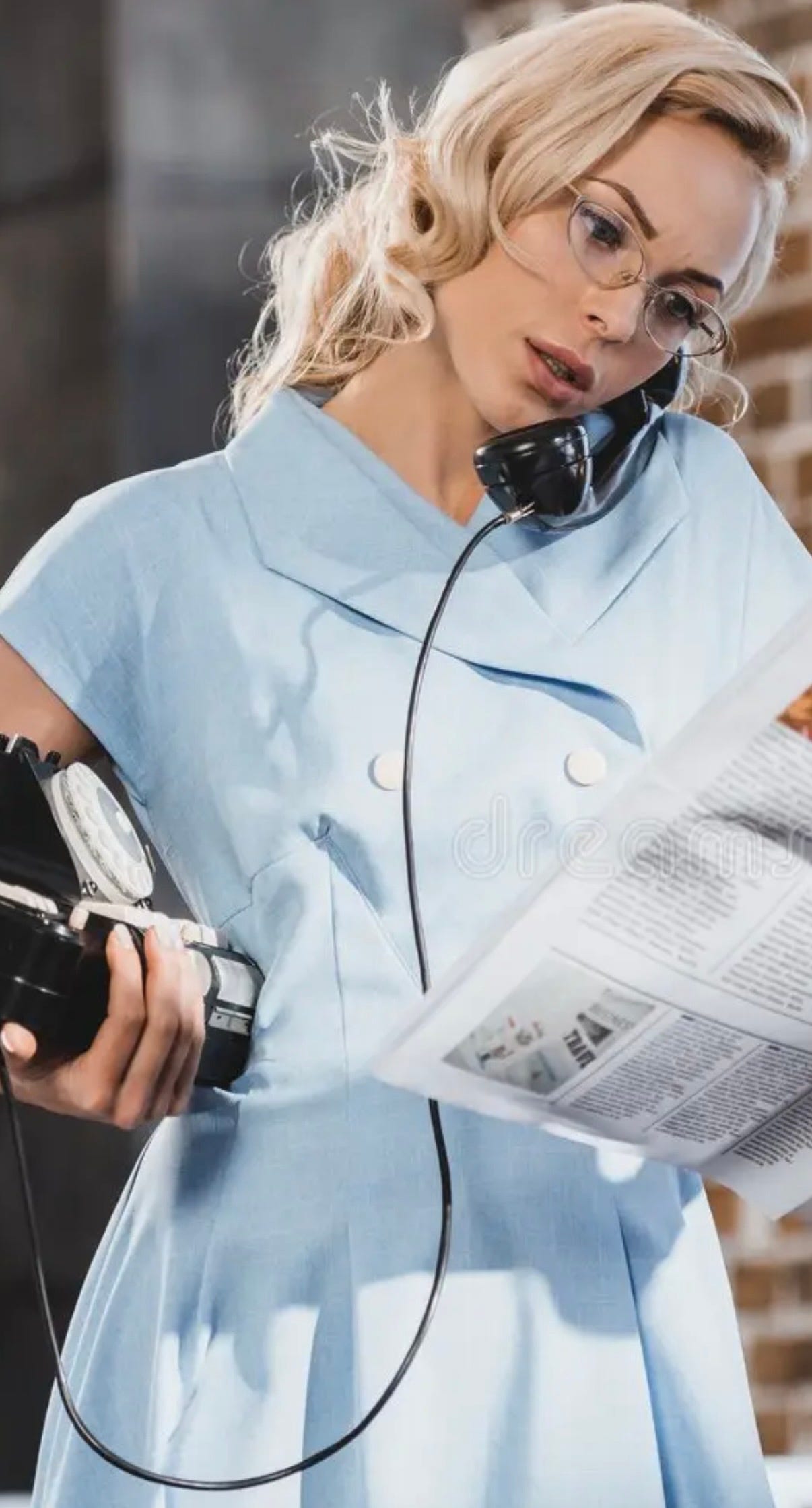
Local news was a big deal and a backbone of the community. There were no influencers. There was the usual attention-seeking but no attention economy. The “news desk” was a large room with bad lighting where about fifteen people mostly age 40 and under worked long hours at small desks, and everyone could hear everyone’s phones ringing because phones were objects that weighed about five pounds and sat next to a clunky desktop computer that even I found inelegant back then. Everyone heard everyone’s conversations all the time. The top dog of this operation who had final say on copy was an old white guy with a bulbous nose that had turned Rudolph-red from heavy drinking, and who had probably given up on himself long before the grind of a daily newspaper had consumed him. He was definitely someone who would not get past the HR teams of today. Everyone on staff cheered on the Patriots, ate and drank Dunkin Donuts religiously, and there was no such thing as privacy. We were all still figuring out the Internet.
Once a month, I was given the police radio to take home, and my job was to basically not sleep and respond to any car accidents, robberies, or any other “breaking” event that required a police response. Once, I covered a car accident and remember the blood on the wind shield. I also remember being jealous of a staff writer who had to report on stolen egg rolls from the town’s one Chinese takeout restaurant because that sounded like a fun assignment. Most of the time, I had to attend town council meetings where long timers debated for hours on matters that seemed small to me but were big to everyone else in the room.
My friend and fellow author, Sarah Stodola, recently posted that 40 percent of local news outlets have closed in the last 20 years. The year 1996 was the beginning of the end for local newspaper journalists, and it would soon become apparent that I would have to pivot, which was fine because I always saw myself as a long-form magazine writer, not someone chasing the scoop, but magazines would disappear, too. Since 2005, 3,5000 newspapers went out of business. During this same time period, local newspapers shed a staggering 75 percent of its workforce and print newspaper circulation dropped by 70 percent.
Walk around anywhere in America, and you see and hear TikTok from other people’s phones. What stands out now is when you hear different things. During my first full day in Paris, a man sat next to me at the cafe where I was having breakfast and scrolling through Instagram. He set his phone down, started on his newspaper and drank his coffee. I had missed that sound; the sound of a newspaper being cracked open. We exchanged smiles and comments about the heat. He went back to his newspaper.
It’s the middle of August again and this week, students returned to schools around Los Angeles, and I am teaching writing skills to 13-year-olds who have never experienced life without smartphones. I am guessing most don’t know the sounds of newspapers. Students can speak to data centers sucking up water, but they struggle with organizing their own ideas on paper—and this week was completely on paper with pencils, zero tech, as we practiced journaling.
There is a push to return to paper and pencil writing for students, and it’s not lost on me that I learned about this from my local news radio station, KCRW, while getting ready for the school day. LAUSD will limit screen time for all students, a policy that apparently is the result of a grassroots parent effort to reduce the reliance of computers in classrooms. School officials want students using paper and pencil more to boost critical thinking.
We all hear about too much screen time, and it’s during this debate when I feel grateful for being a GenXer because I can’t actually handle excessive screen time. After having a gazillion tabs and dashboards opened on my work computer, I go home, stare at the cerulean blue of the swimming pool I share with my neighbors, and I listen to podcasts in French. My brain needs different things by Friday at 5 PM, and perhaps my brain needs this shift because I grew up in rural Upstate New York where my mother didn’t want us in the house, so I climbed a neighbor’s tree and read whatever we had gotten from the library that week. We didn’t visit the library every week because my mother was an educated liberal; she had not gone to college and she voted Republican. We went to the library every week because we had no money and the library was free. So, I read a ton of books as a kid. Fast forward to now, and I am sensitive to screen overload.
As I walked around watching students do what I used to do in the 1980s, I couldn’t help but marvel that I am now teaching them the writing skills that were recently reduced by technology. Freelance writing careers tanked with AI. From 2013 to 2021, I was a freelance writer for Meredith, a major publishing firm, and making pretty decent money until suddenly I wasn’t. Who needs a freelance writer when there’s ChatGPT?
Now, we need teachers to teach kids how to structure narrative, and here I am, in this new chapter of my zigzag career, oddly at home with this new role and yet baffled that I have witnessed how technology has altered writing as well as undermined my chances at a job. My skills are back in demand, but in a new way, at a time when my writing career is older than some of my colleagues. This also baffles me because that first hot August day on the job in Dover, New Hampshire, feels like yesterday as well as lifetimes ago.
The 90s were an awesome time to be a young adult. They just were. I’ll go into that another time. Back to 2026 where my old-school skills have got my back: I still carry a notebook everywhere because I know I am more likely to remember something if I write it by hand than if I type it or dictate it. I have never read on a Kindle. At airports, I read a big, clunky book that adds unnecessary weight to my journey. At home, I actually don’t know how many books I own but they take up half a wall in my living room. If you’re talking to me in person, then I am not on my phone. I am actually listening to you not because I am polite but because journalism trains you to be active listeners. I use ChatGPT daily yet spin something from my vinyl collection on weekends when there’s time. I stopped subscribing to magazines because the clutter annoyed me (I was a New Yorker subscriber for 20 years). I am a subscriber to my local newspaper, The Los Angeles Times, but I read it on my phone. I’m on Spotify exploring podcasts every day. I deleted Facebook in 2018 after eight years of use; Twitter and TikTok in 2022 and I haven’t missed any of it. My only social media is Instagram, Substack, and LinkedIn. I tried out influencer content but got bored, though I’m not entirely sure why, or maybe I am actually following a few influencers but they’re so entertaining and so subtle about their influence that I am reeled in without my awareness.
What I do know is that my analog and digital lives are fully intertwined, and I honestly don’t understand any of my media habits other than they are uniquely mine, like dietary preferences.
Last summer, my daughter came home with a box filled with random stuff from her friend’s mother’s garage, and among the random stuff were a bunch of old tape cassettes that she admired like they were moon rocks. She is GenZ, and I asked her what the appeal was of “physical media,” as she calls it. She explained that anything online can suddenly be removed. Content survives in some cloud and can be used but it’s never yours. Ownership was the issue, she told me. When she buys a record or a book, it’s hers forever–it won’t just disappear because of some corporate algorithm.
It was that simple.
Students today engage in passive consumption of endless media. My guess is many do not have trees to climb where they can read, and fewer kids are motivated to read when there are endless games and reels and posts online. I read books in the neighbor’s tree not because at the tender age of 11, I was more evolved or out to make good choices. I read books in the neighbor’s tree because my parents fought, there was nowhere for us to go given we were surrounded by farms and woods, and my brother and I were left to figure out our day on our own.
Reading saved me. A love for books turned into a profession, which has survived multiple hits while having glamorous moments, like reading my work on a barge parked on the Seine last month. That August day in that newsroom in Dover, New Hampshire, I had no idea what was ahead for me or for the journalism industry, but here I am, in a classroom in South Los Angeles, talking to teenagers about the importance of a hook in a story while they take notes with pencils.
I tell my students that reading and writing led to a career that took me around the world, from New York to Dover, New Hampshire, to Macau to Paris to Australia. My byline remains a thrill, but 30 years later, I’m beaming with joy as I walk past a 13-year-old who was asked to hand write five sentences but instead has nearly filled a page and shows no signs of stopping. It’s ownership in motion, and I feel lucky to witness it.
No posts
Comments
Nothing yet. Say the first thing.
Sign in to join the conversation.