
Human/Parents is an interview series that explores and illuminates various mental health topics that some parents face while simultaneously performing the most important job on the planet: raising the next generation. Guests are Substack creatives who are also parents dealing with one or more of Human/Mother’s rotating monthly topics.
This month’s topic is holiday traditions.
So, pour yourself that third cup of coffee, snuggle in, get cozy, and get ready to meet our next guest: Isabel Cowles Murphy of The Noble Try.
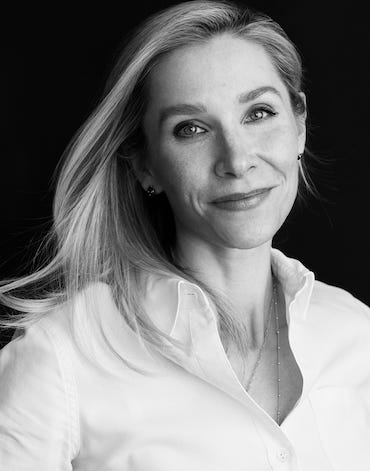
Hi, Isabel! Thank you so much for being here!
This month, we’re exploring holiday traditions—both the ones we inherit and the ones we create. Becoming a parent sharpens our sense of which rituals we want to carry forward from our own childhoods (or our partner’s), and which new ones we hope to build. It can be a joyful adventure, but sometimes a tender and complicated one, too. I’m excited to hear from other Substack parents, like yourself, and how you’re handling traditions this season.
OK, let’s get into it! For those who do not know you, tell us a little about yourself. Where are you from? Are you married/single? What has been your work/career experience? How many kids do you have? How old are they? What’s your Substack newsletter, and what’s it about?
I grew up in a small, rural town, which embedded me with a moss-psychology: I prefer to feel soft, quiet and close to the ground. My husband, Christopher, and I lived in NYC for many years, and I enjoyed the buzz, but I found it difficult to rest—like my fingers were always jammed in an electrical socket. When we moved to a woodsy town during Covid, I felt like I’d come home to myself.
We have four sons … feels like a thousand. They range in age from two to twelve. I write about the interplay of parenting and creative work, with a focus on keeping our family enchanted–alive to the mysteries of the world. My Substack is called The Noble Try.
How did you find writing, or, maybe rather, how did writing find you?
I talked to myself as a kid, nonstop: we didn’t have a T.V., so I was out most afternoons, crossing the road into the woods. I’d explain the shape of every leaf; the tones of light; the sounds of sticks cracking under my sneakers. My poor heroine was always getting lost and relying on the dog to lead her home. I found I didn’t cry if I narrated the experience—choosing what to say gave me ownership of what was happening; words held me steady. Omniscient narration was my first path to power, I guess.
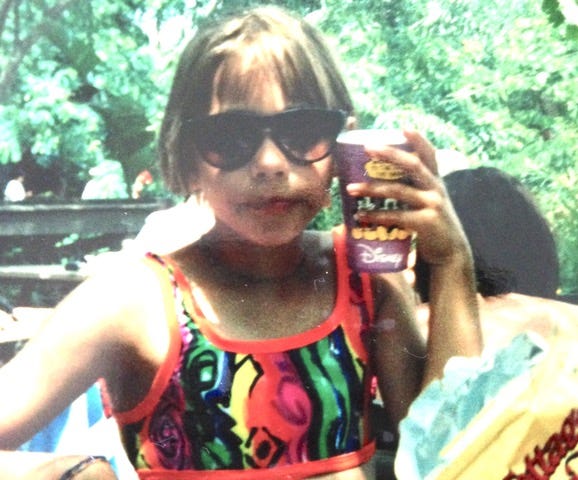
Many people think talking to one’s self is a sign of insanity. I worry those people are imaginatively impoverished and more prone to external pressure. How can you know yourself deeply if you’re not actively engaged in describing what you see and feel?
One of our boys talks to himself nonstop and I hope it means he’s a writer—just not a memoirist. Have you ever read a memoir where the writers’ mom comes off well?
Online and offline, I like to ask moms what it was about motherhood that they found pleasantly surprising, and what it was that they found utterly blindsiding?
Every time I get pregnant and have a child I find myself blown open to unfathomable dimensions of intimacy—with myself, my children, and everyone else. The late-stage pregnant body really ripens us to our frailty and tenderness. My heart gets so big and sensitive, it aches. In the first few months postpartum, I see everybody as a newborn. It’s a gentle, helpful little psychosis. Parental love has a tinge of grief to it, too, because even the elation is weighted with unspecified sadness. That surprised me.
Practically speaking … I was unprepared for the noise. Kids are very loud—especially when they’re happy. Why express yourself moderately when you can make a scene? I could run ten miles or spend an hour with my kids indoors, and it taxes me the same. That’s why I love living in the country. I need them outside 90% of the time, including at night.
What was your favorite holiday tradition as a kid, and why?
My mother is pure Polish, which regrettably means little to me, except on Christmas Eve, when we celebrate Wigilia. I love that we observe the same rituals as my grandmother and her grandparents.
The youngest child goes outdoors to search for the first star, and when it’s spotted, the meal is served. The menu’s austere—white fish, mushroom soup and cheese pierogi—but the preparations are lush: we line paper bags with sand and candles down to the road; cook all day (sneaking bites—we’re supposed to fast) and wear our nicest clothes. Every hour feels like a bell about to be rung.
My paternal grandmother bought our childhood house so she could raise my father and his brother near The Abbey of Regina Laudis—a farm tended by Benedictines in Bethlehem, CT. The Christmas Eve mass seemed especially sacred because they said it in Latin and it started at midnight and lasted almost two hours. I always hallucinated a little, fighting sleep, which must’ve enhanced the nuns’ other-worldliness. The chapel was candle-lit and the nuns wore black habits and lined the wall and seemed to be just a bunch of eyes floating in the dark.
We’d get our tree at the abbey, too—they had a few fields and you could chop your own. Some years we’d do that, some years we bought the ones leaning against the wall in the little shed—we always got the dregs because we waited until the 23rd. Waiting was a big part of the Wigilia tradition: a reflection of the Advent spirit.
There was a stark, but satisfying quality to holding off—in my memory, anyway. As a kid, I wanted to be like the families that did everything right after Thanksgiving, or maybe even before, but my parents refused. That lesson is important to me now: I’m grateful to have deep memories of Christmas that aren’t frenzied and consumerist. I felt the meaning of the holiday. This season would confuse me if I didn’t have that anchoring. There’s so much busyness and panic—I’m grateful to know I can choose otherwise, even when I get caught up.
What traditions are you taking from your childhood (or your partner’s) and continuing now with your own family?
We still do the Wigilia meal, but we put up our tree earlier—usually the second week of December. (This year it was the 14th.) I appreciate meeting in the middle: observing the pause, but softening the strictness. Still, I don’t want to lose the waiting because longing makes the getting so much sweeter. That feels important in an era where all our desires are immediately satisfiable; everything has a disposable quality, which is inherently un-special. But restraint has a satisfying fullness.
Our parish has a rural chapel in an old-growth forest a few miles from our home. We partner with a local Baptist church for hymns and spirituals a few nights before Christmas. The building has no plumbing and the windows are big and leaded, so they catch the light in waves. The little church is always jammed and the windows get misty on the inside. I love knowing these will be our boys’ memories.
What do you hope to impart to your kid(s) through holiday traditions?
This Thanksgiving, I stood at the kitchen counter rolling dough for a pie crust while the kids played Monopoly (loudly) and the dog slept by the fire and it struck me: this is it. This is everything. To be together in the house, working and playing, taking a walk, making the good smells happen with pleasurable effort. That’s the arrival point; the best of life, even though my pies never turn out. This year I rolled the crust unevenly and half of it sank under the filling.
Do you travel for the holidays, or do you like to stay at home? Why?
Historically we’ve bopped around for Thanksgiving, or right after Christmas, but this year we’ve stayed and it’s been surprisingly satisfying. It can be frustrating to be home for many weeks when the kids don’t have school. The house gets a stale, itchy feeling my mom calls “crumbs in the bed.” But there’s a reward on the other side. It’s very rich. I guess that’s the Advent theme— waiting; going deeper; staying clear enough to tune into finer frequencies, especially in the bleak midwinter. The whole season feels like a held inhale to me now, even with the crumbs and sunk crusts.
These years are so bustling (& have I mentioned LOUD) but they’re also the time Christopher and I get to stand at the stove and watch the kids play at our feet. I don’t want to run away from that. I want to be absolutely clear and present—this is their childhood, and it’s also our parenthood. We’re making our mythology every ordinary day. I think about that a lot, and it keeps me grounded. It’s a nice antidote to the subtly threatening truism: “It goes so fast.” I know it does. I don’t want to be scared about the time passing. I just want to be inside motherhood, all the way.
What do you wish for everyone this holiday season?
My wish for everyone is clarity and slowness; enough time to let the beauty of the details reveal themselves. I wish we could all feel the spirit of our homes and our families and the things we bring in—the symbols and the stuff. I hope we can resist false urgency; a belief that we need more; that we aren’t capable of deep satisfaction just as we are. I hope everybody might wake up these next mornings and think: “I’ve made it. This is everything.” Because, of course, it is. It has to be.
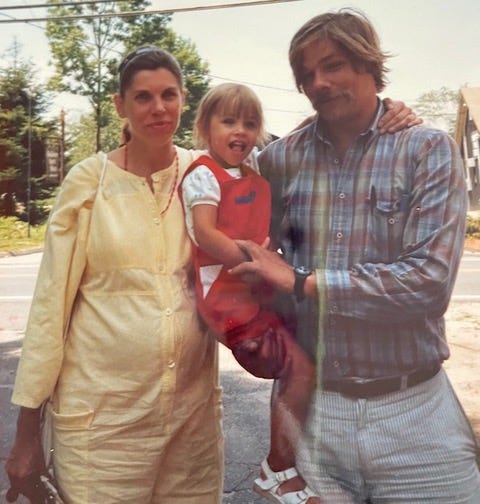
Isabel Cowles Murphy!!! Your responses here will be ones that I return to— especially those last two paragraphs. Yes. THIS IS EVERYTHING! I want to shout that truth to the highest mountaintops. What a joy! What a beauty! Yes. Yes. Yes. A thousand thank-yous to you (and your thousand sons!). May the slowness of the season yield rest, restoration, and revitalization for you.
Happy holidays to you and yours!
A quick note to you, dear Reader:
I have more to say in a forthcoming post, but I wanted to take a beat here to express my gratitude. Thank you for reading Human/Mother this year. And, if you are wondering about ways to support my work, here are a few really good ones:
Human/Mother is a publication designed for humans who are also parents and dealing with some pretty heavy life stuff. You can peruse, choose, and take what you need here.
Comments
Nothing yet. Say the first thing.
Sign in to join the conversation.