
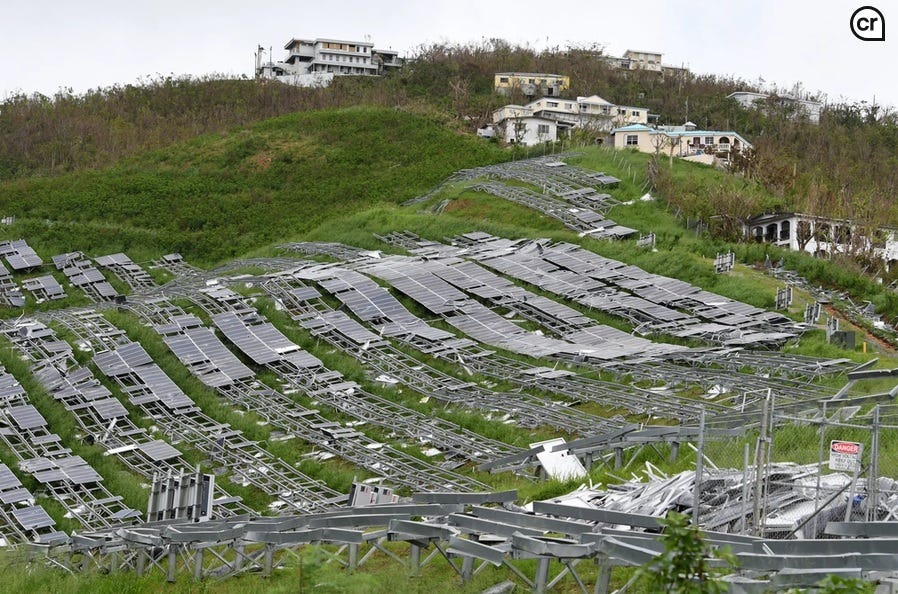
If a developer wants to install a utility-scale solar photovoltaic (PV) facility and/or battery energy storage (BESS) near you, consider yourself blessed. You get to shake up your assumptions about “green,” “clean” and “renewable” energy. You get to practice humility while explaining technologies’ not-so-sunny sides so that neighbors and legislators who believe that “renewables” cannot possibly have problems…actually hear you. You get to learn a new chant: “Show me the professional engineer’s report certifying that this project’s hazards are mitigated”—when, honestly, you’d much rather clean a closet.
For starters, admit that in your zeal to prioritize health and safety, you’ve made mistakes. Recognize that we are all powerless over “green” industries, and that our lives have become unmanageable. Salute yourself for exploring your part in society’s predicament.
Step 2: Learn how electricity keeps reliable and affordable. Get to know your county’s land use codes. Research solar PVs’ and BESS’s shadow sides…from their cradles-to-graves.
Step 3: Remember your goal: your county permits the facility only if protective health and safety conditions are met.
MANUFACTURING
The vast majority of energy is consumed, toxins are emitted and human rights are violated while manufacturing a product.
China uses Uyghur forced labor to make solar panels. Get informed from several sources.
Read why we burn coal and trees to make solar panels.
See the big picture: We are not equipping the energy transition; we are cannibalizing it to militarize our future. Our global scramble for minerals wages war on people and planet.
Would your county require the developer to prove that its raw materials were sourced only from companies that can verify worker and environmental protections?
INSTALLATION
To pursue a safe solar facility in your county, find out where the power it generates will go, if the facility will connect to the grid, if it will need new powerlines, transformers and substations—and if so, this equipment’s environmental impact.
From installation to “decommissioning” (dealing with end-of-life waste), require the developer to carry liability insurance for the project—not to self-insure. (If a self-insured developer files for bankruptcy, your county will pay to dispose of the project’s hazardous waste.)
Get written answers to questions such as: How much water will the developer use during construction? Where will it come from? Where will wastewater go? To protect groundwater, will used construction water need treatment?
Require the developer to keep all soil on site. Clarify in writing that only 400 acres (say) of land can be disturbed at a time to prevent stormwater runoff. (A big rain after a clear-cut would result in disaster.) After clearing an area (i.e., of shrubs or trees) the developer must plant grass within X number of days in order to hold soil and prevent sediment run-off. The developer must set up stormwater basins.
Your county staff, planning commissioners and board of supervisors will have to evaluate the project against the county’s ordinance about stormwater runoff and sediment in waterways—and/or land use issues specific to your area’s topography.
Since panels’ glare can blind pilots flying overhead, and the FAA has rules about the distance between a solar PV field and an airport, do a ForgeSolar “solar glare” analysis. Ask the court to pause the project until a licensed professional engineer completes a solar glare report.
OPERATIONS
Panels hold chemicals, including per- and polyfluoroalkyl substances (PFAs). In a hailstorm, panels can crack—and leach chemicals. Would your county require monthly soil testing in specified locations to ensure that no chemicals leach into soil? If they do leach, specify what the developer will do to remedy the soil.
Solar panels are electrical equipment. All electrical equipment poses fire hazards. To reduce risk of fire, your county should specify how long grass (or other vegetation) can get before the developer must cut it.
If a fire occurs during the day, the solar panels will not stop collecting sunlight and converting it into electricity: you cannot de-energize solar panels. Firefighters cannot spray burning panels with water—because water conducts electricity, and water will not put out a solar panel fire. It can only cool it. At a public hearing in Spotsylvania, Virginia, the county’s fire chief said he would not try to extinguish a solar PV fire. He would just hose down everything near it. What is your county fire chief’s plan?
IF THE PROJECT INCLUDES A BATTERY ENERGY STORAGE SYSTEM (BESS)
Batteries are made with lithium. Mining and processing lithium ravages ecosystems. Read about Max Wilbert and Will Falk’s efforts to stop lithium mining at Thacker Pass, Nevada. FYI—Max grew up believing that solar PVs, wind turbines and e-vehicles would help sustain our society.
Batteries provide high energy storage. One BESS battery can be the size of a small trailer. With a short and a discharge, you can end up with arcing, extremely dangerous, toxic, even runaway fires. Because of batteries’ toxic chemicals, when a BESS catches fire, nearby residents should not leave their homes, open windows or run ventilation systems for 24 hours or more. Roads and businesses will close. BESS fires have become common—if little-known. Here’s an example at Moss Landing, California. Here’s a data base of BESS failures.
Your county should require the developer to provide a professional engineer’s “sealed” report that all fire hazards have been evaluated and mitigated; and that this BESS will not catch fire like the one at Moss Landing or others listed in the database.
To keep cool, batteries require a cooling system. How much water will this BESS use? Where will its water come from? Where will its wastewater go? To protect groundwater, will it need treatment?
IF YOUR COUNTY PERMITS A BESS
If your county officials permit a BESS with lithium ion batteries, ensure in advance of a fire that your local government has:
1) an evacuation plan specific to the BESS facility it permitted. Since BESS fire smoke can travel many miles, coordinate this plan with nearby cities and counties. The plan should include a webpage with easy-to-find emergency and chemical exposure information.
2) a chemical testing plan. Community-hired trainers should explain (in advance of a fire) how to collect hair and surface samples for metals like lead and beryllium after a BESS fire; how to maintain chain-of-custody of materials; and where to send “ghost wipes” and other samples for proper testing. This way, health care providers who treat people exposed to a fire’s emissions will have reliable information.
3) quality, independently verified hydrogen fluoride (HF) detectors deployed around the community—and community members who monitor them. Hydrogen fluoride is a highly toxic chemical gas created when lithium-ion batteries fail, overheat or catch fire. HF can burn skin, poison blood and stop the heart. Even small exposures can cause death. Handling and disposal of used or damaged lithium-ion batteries risks HF exposure to workers and nearby communities.
4) special training for first responders, firefighters and reporters who will deal with lithium-ion fires’ HF emissions. Protect your emergency responders!
5) realistic expectations about help with a BESS fire. As with many disasters, EPA and other government agencies provide very limited testing and resources. Communities should prepare in advance to provide themselves with as much testing and protections as they can. Further, community members and neighborhood associations may have to pay for trainings.
END-OF-LIFE
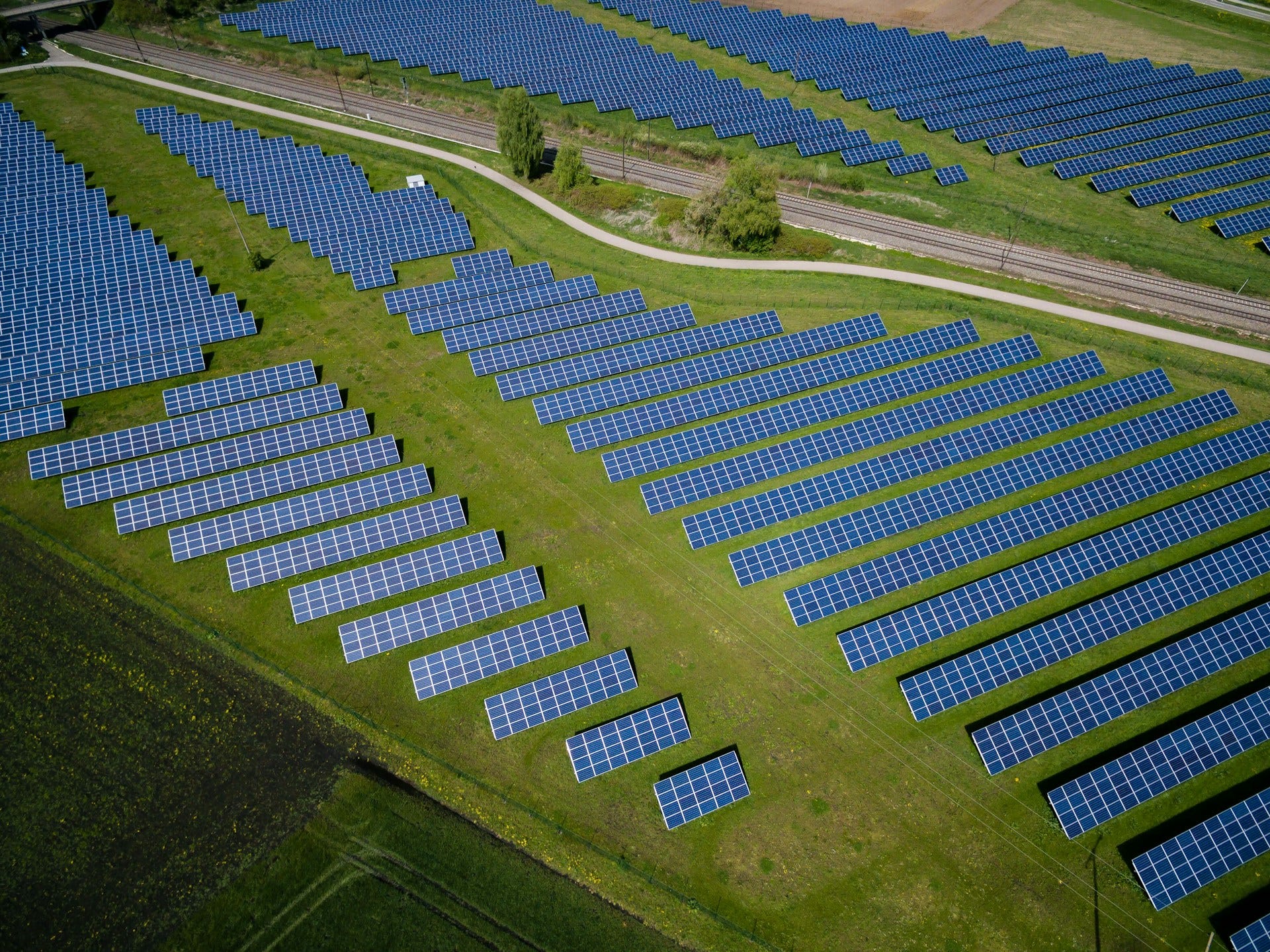
When the equipment ages and the facility is no longer efficient enough to be profitable, either all panels will be replaced and all wires (and batteries, if there’s a BESS) will be upgraded—or the developer will abandon the project. Solar panels and batteries do not biodegrade: they’re hazardous waste. Sending panels and batteries to a recycling center is actually very expensive. Get the developer to post a bond with the county so that it won’t be burdened with decommissioning costs if the developer files bankruptcy.
PROTECTIVE CONDITIONS
Remember your goal: county commissioners will permit the developer’s project only if it agrees to your conditions. This will require:
· a land-use lawyer to provide guidance and appropriate language.
· money for the lawyer.
· knowledge of your state’s restrictions on meeting with commissioners and/or supervisors. In some states, you cannot meet with anyone who votes on a commission.
· an articulate, thoroughly informed, well-mannered, even-tempered person to speak with county staff.
· A humorous, clear writer who educates the public about the case with brief entries posted on social media…two-three times each week.
· a professional engineer (PE) familiar with solar PV and BESS projects…who can spot foul play.
· If the developer claims that the solar facility will benefit your county economically, you will need to hire an economist to evaluate these claims.
If your county has in-house experts to evaluate a solar facility’s chemical run-off, fire hazards and economics etc. ask them to provide reports. If your county does not have such experts, then it can require the developer to provide funding so that the county can hire expert-consultants chosen by the county to evaluate the facility.
RESOURCES
As a model, here are the final conditions approved by Spotsylvania, VA’s Planning Commission for a solar facility that does not include a BESS.
When Spotsylvania, VA’s fire chief was asked in a public hearing how he would fight a fire at solar powered 500MW, 16 million panel facility, he said he would likely deploy his assets to surrounding residential areas that were threatened and set up a defensive perimeter. He would avoid sending his firefighters into the actual solar facility to fight the fire unless it was small. Check out this solar PV fire safety training.
CitizensForResponsibleSolar.org/ See their resources section. See their Solar Toolkit: https://www.citizensforresponsiblesolar.org/solar-toolkit
From Calvin Luther Martin/upstate NY Solar Energy: Yes or No?
Never Again Moss Landing posts resources and hosts events about preventing and responding to BESS fires.
Discovering Power’s Traps: a primer for electricity users by Katie Singer
MOVIES
Bright Green Lies, directed by Julia Barnes, based on the book by Derek Jensen, Lierre Keith and Max Wilbert.
Planet of the Humans Directed by Jeff Gibbs, produced by Michael Moore.
Related:
The Discovery and Science of Smart Meter Fires by forensic fire investigator Jim Brown and Dr. Vyto Babrauskas (PhD in physics of fire ignition)
Data centers increasingly encroaching on public health Teddi Nicolaus, The Nation’s Health August 2026, 56 (6) 1 13. “Data centers are being built at a rapid pace, without the general public’s consent, and without giving us a chance to pause and think through the societal ramifications of this technology.” — Mar Zepeda
A gentle reminder: this substack depends on readers’ support.
No posts
Comments
Nothing yet. Say the first thing.
Sign in to join the conversation.