
I love a good dual timeline historical fiction novel. I think it’s because what fascinates me about history is the layers and a dual timeline can be so good at showing the way history layers itself through the generations in a particular place or sometimes in a specific family. They can show exactly how people and places in the modern era have been directly impacted by history.
In short, dual timelines can teach us why history matters.
As a historical fiction writer working on my debut novel, which also happens to have a dual timeline, I'm fascinated with how authors weave them together. Below are four dual timeline historical fiction novels I’ve greatly enjoyed and thought you might like too.* It was hard to narrow it down to four so be prepared for future installments of this series.
You know those stories that just feel like…home? I don’t remember how I first came across this book, but I’ve read it now three times and I really can’t explain why I love it so much except that there’s something about it that strikes a chord deep in my bones. Something that feels familiar.
The story is part thriller, part mystery, and part WWII history. (That wasn’t supposed to rhyme.)
It jumps between the modern era and WWII. Between London, New York, Portugal, Canada, and Washington DC as Kate follows the thread left to her by a stranger in the few moments they met before he dies. There’s political intrigue, spies, a foray into the art world, romance, and, in the end, redemption.
The best part? I get an image of Susanna Kearsley braiding hair the way her weaving between timelines is so effortless. Seamless. The way she puts down one thread to pick up the other is elegant, I feel like I need to re-read it just to study how she does it. What exactly about the structure works so well?
Maybe you can tell me if you read it.
Note: The new edition is available through pre-order on bookshop.org but you can find previous edition used on Amazon.
If I had to pick my favorite subgenre of historical fiction, it would be historical mystery. This should come as no surprise to anyone who knows how many times I read each Nancy Drew mystery, usually with a flashlight under my covers long after I was supposed to go to sleep (hi, Dad!).
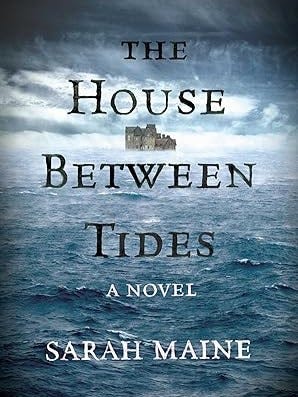
One thing Sarah Maine does really well is atmosphere. Her writing feels like dark, grey, stormy Scotland where this novel is set. But honestly, this novel checks so many of my boxes: an old house, a remote island, murder mystery, a disturbed artist, ancestral secrets, and a touch of romance.
Check, check, checkity check.
I also appreciate the opportunity to explore a historic period I don’t spend a ton of time in: the early 20th century. While I love the fashion (the Edwardians really got it right with their lace and silhouettes), I don’t feel well-versed in the social history of that era so it was refreshing to get a bit of that here.
An enthralling book that jumps between the modern era and 1715 in Scotland, The Secrets of the Rose is the second novel I’ve read (and very much enjoyed) by Nicola Cornick. Complete with a family mystery and a thread of romance, this dual timeline historical fiction explores generational tension and its manifestation.
I especially appreciate the way it subtly explores and invites us as the reader to consider who we automatically think of as the “good guys” and the “bad guys” in a war. The good side isn’t morally pure but rather quite out of touch when it comes to the opinions and needs of the populace.
Nicola Cornick’s writing is so evocative and immersive—I found myself highlighting sections just because I loved the way she described a setting. Awhile back I read The Phantom Tree, which is beautiful and heartbreaking, and I’m really looking forward to reading more from her.
I didn’t know how interested I was in 1950s Washington DC until I read this book, which I tore through in a weekend. Not exactly dual timeline, Quinn writes this through the points of view of various characters, skipping forward in time to tie together a single timeline culminating in a murder.
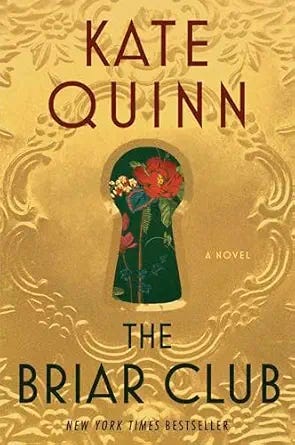
What Kate Quinn does so well, in my opinion, is making you care about even the most unlikeable characters. And let me tell you what she does with the characters you do like! I may have developed a tiny crush on a certain Irish mobster. She makes each of them feel so human because of how exquisitely fleshed out they are as characters. You feel what they feel. You experience their part of the story through their perspective so thoroughly that by the end of the book you find yourself wanting to keep in touch with them now that the story is over.
I’m torn between re-reading this (it would make a great book for our historical fiction book club) or first reading another of her books. I’m quite sure I’ll do both.
Thanks for reading! If you enjoy academically-informed but informal explorations of early America, the craft of historical fiction, and life as an independent researcher, please consider subscribing to this publication!
And if you’re interested in peeking behind the curtain at my own research notes and processes, my novel-in-progress, and a slow & seasonal book club, join us in The Keeping Room, the paid tier of Tending the Hearth, for only $6/month.
* Please note: I’ve included links to my bookshop.org profile and receive a small commission is you choose to purchase books through my links.
Comments
Nothing yet. Say the first thing.
Sign in to join the conversation.