
A few weeks ago, I sat down with Elana Gordon from Voices from the Field and spoke about my process with the Science of Learning on her excellent podcast, The Road to Reading (shameless plug here.) I mentioned I learned so much and that the amount of awesome information offered on Substack could lead to overload. Consequently, I now try to filter new knowledge within the lens of what I can easily implement into my daily schedule. On the podcast, I specifically mentioned an article written by Brett Benson, also known as SoL in the Wild, about Active Observation. Brett breaks down the components and the reasons it is a great teaching practice. However, I told Elana on the podcast that I was going to wait until the state mandated tests were over to dive deep on this teaching practice.. That’s when I can really work on my craft…

YEP, THE JOKE WAS ON ME.
I can thank Zach Groshell’s Podcast, Progressively Incorrect, for the turnaround. On a Progressively Incorrect episode from 2025, Denarius Frazier challenges teachers to try Active Observation. It doesn’t have to look perfect right off the bat. He gives advice to cut down on teachers’ cognitive load by focusing on a certain aspect of a question than all parts at once.
Additionally, I’m currently reading How Do We Learn? by Hector Ruiz Martin. In it, Martin mentions the need for teachers to oversee student learning and make observations to ensure students operate within the limits of their working memory capacity. It reinforces future learning. 1
Between the article, the book, and the inability to stop thinking about Frazier’s recommendations, I decided to go for it and try Active Observation immediately, in the middle of STAAR testing prep.
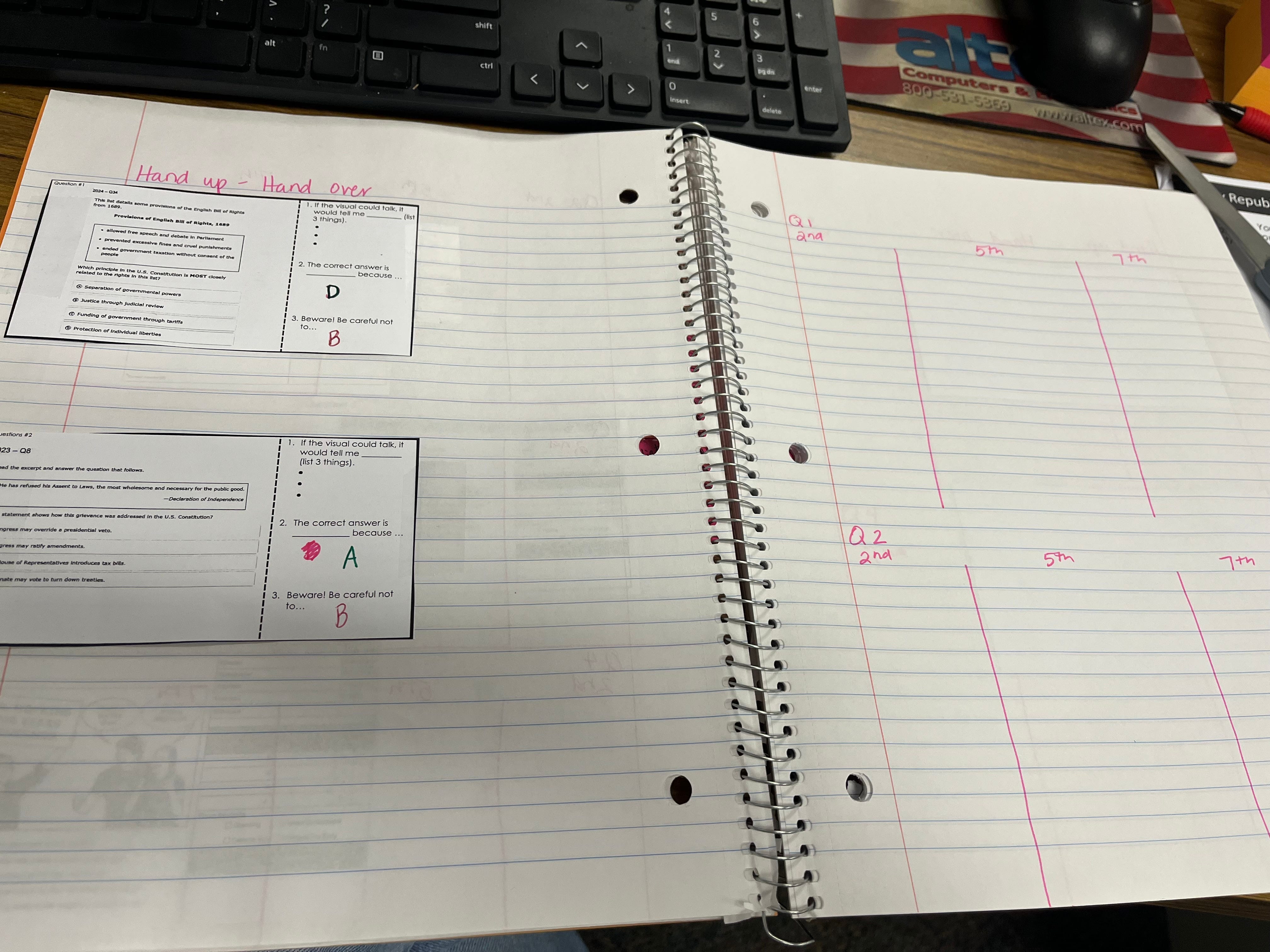
So two weeks ago, I made my first attempt. I liked the idea of keeping observations in a journal just to keep a reference that I can look back on in the years to come. I just added an area to notate key vocabulary and answers from students.
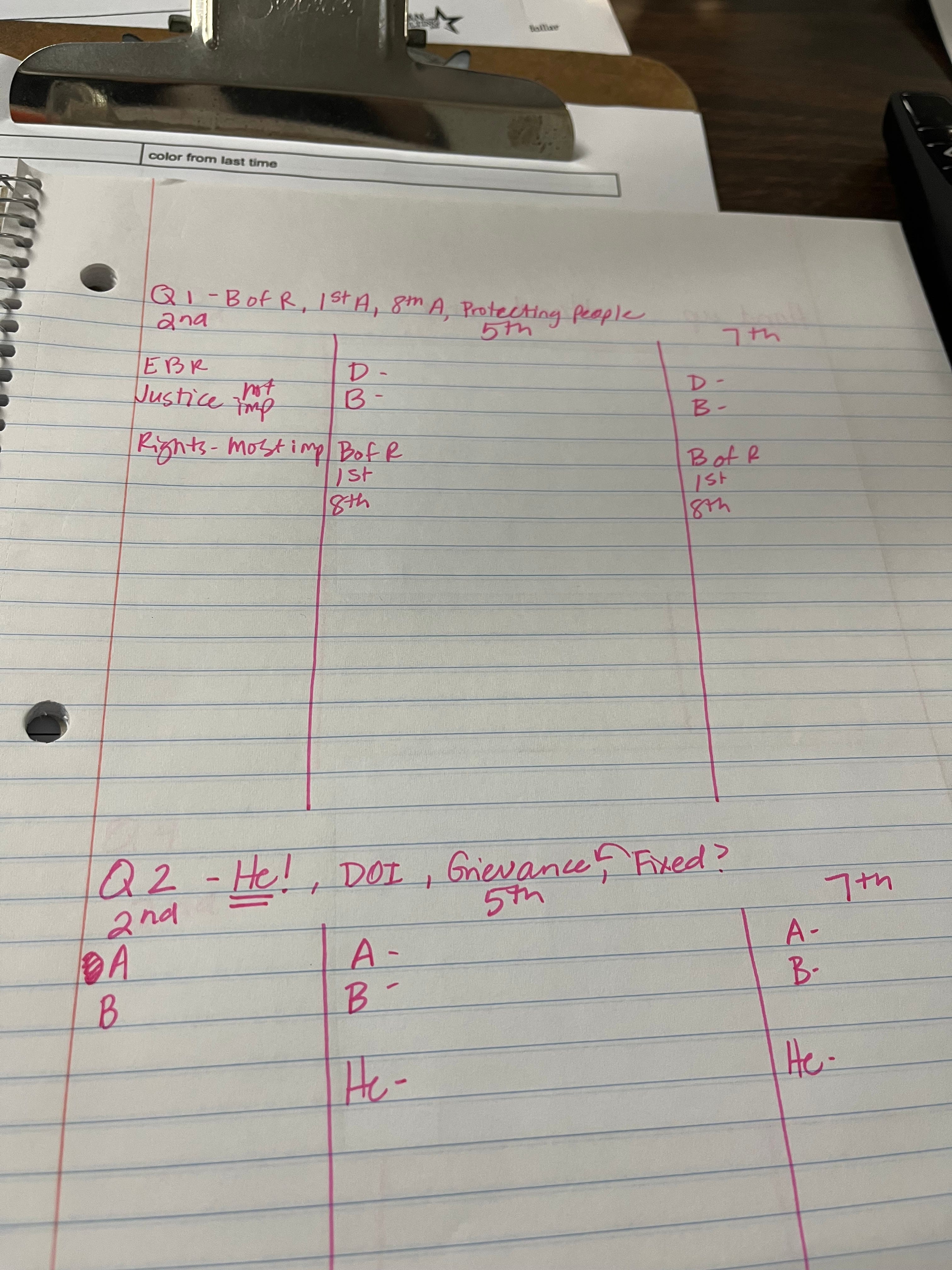
After my first day, I wised up and added vocabulary I was looking for and a tally system to record correct answers and the answer choice meant to trick students.
It felt a tad clunky, but the conversations I had with students about their thought processes were invaluable.
So I went back to the drawing board this past week. I received help from Science of Reading Classroom’s Teachers Teach Teachers Zoom meeting. In it, Lauren Profitt shared a Retrieval Grid that she uses with her elementary students. She has students answer certain number of questions based on a point system. I took her version and made it my own. It made for a great “Do Now” warmup this week, which covered the four units that are historically tested the most on the 8th grade American History STAAR Test. The questions become more rigorous based on the point value. I asked students to answer questions on their answer sheet that added up to 10 points each day, so that it could be turned in by Friday.
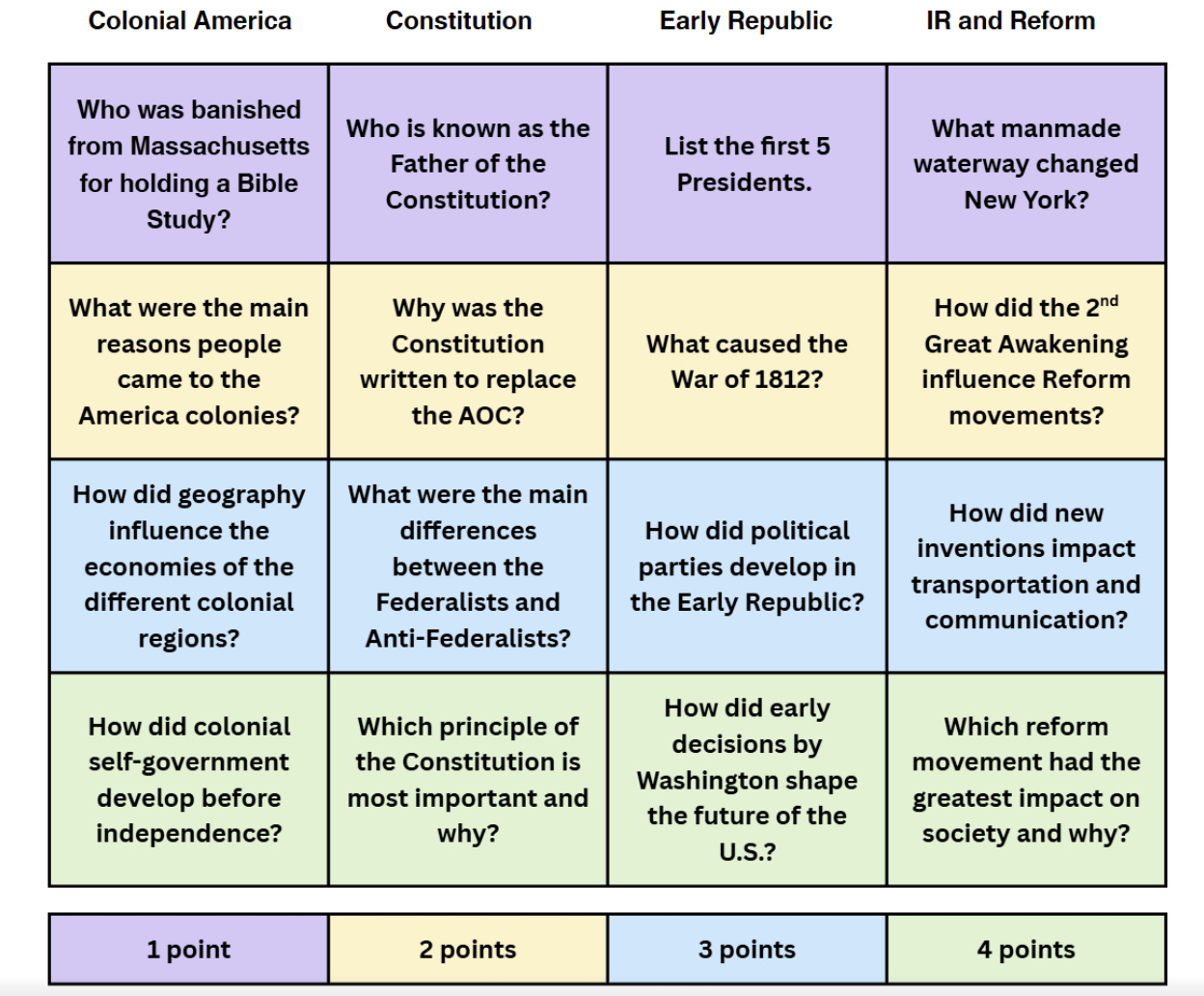
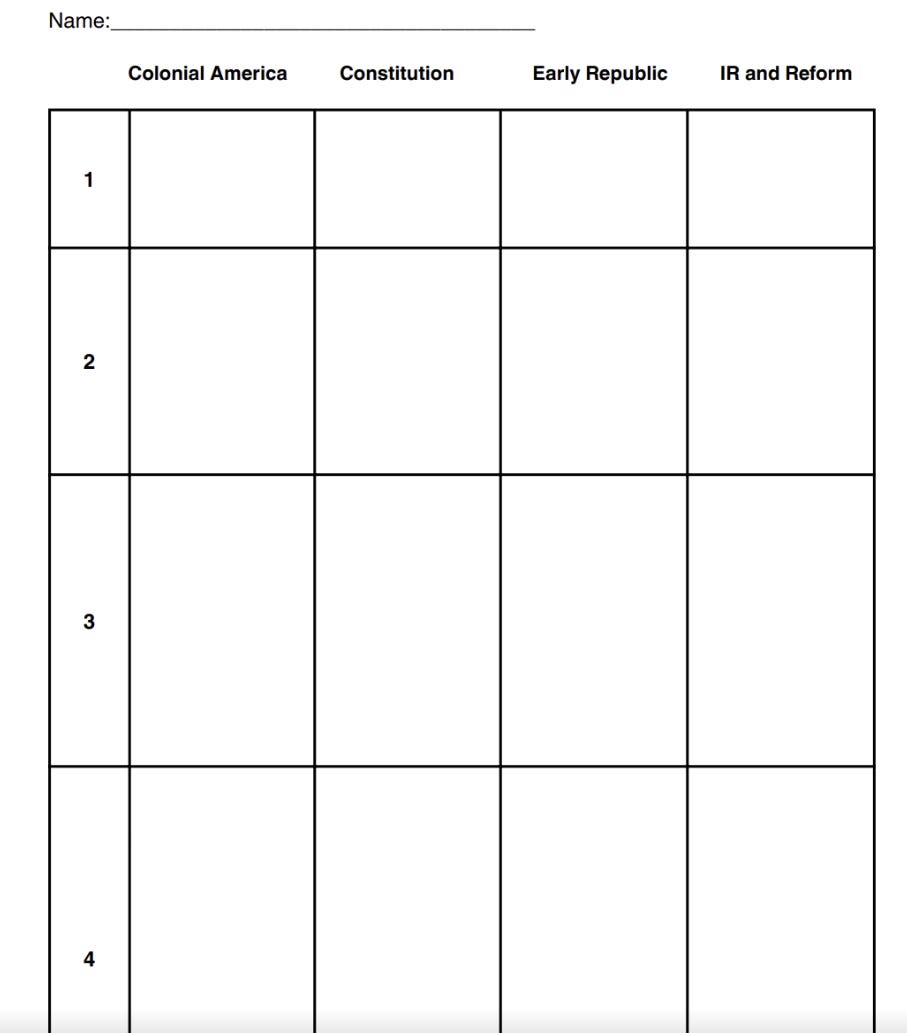
Even though I had students answer any question that added up to 10, with Active Observation in mind, I asked students to answer at least one mandatory question each day. That would be the one that I would use to go around and check answers. Students would receive a ✅ in the box if the answer was correct. If students were stuck, confused, or couldn’t remember, Active Observation gave me a chance to have conversations, provide clarity, and hopefully through questioning, lead students to the right answer.
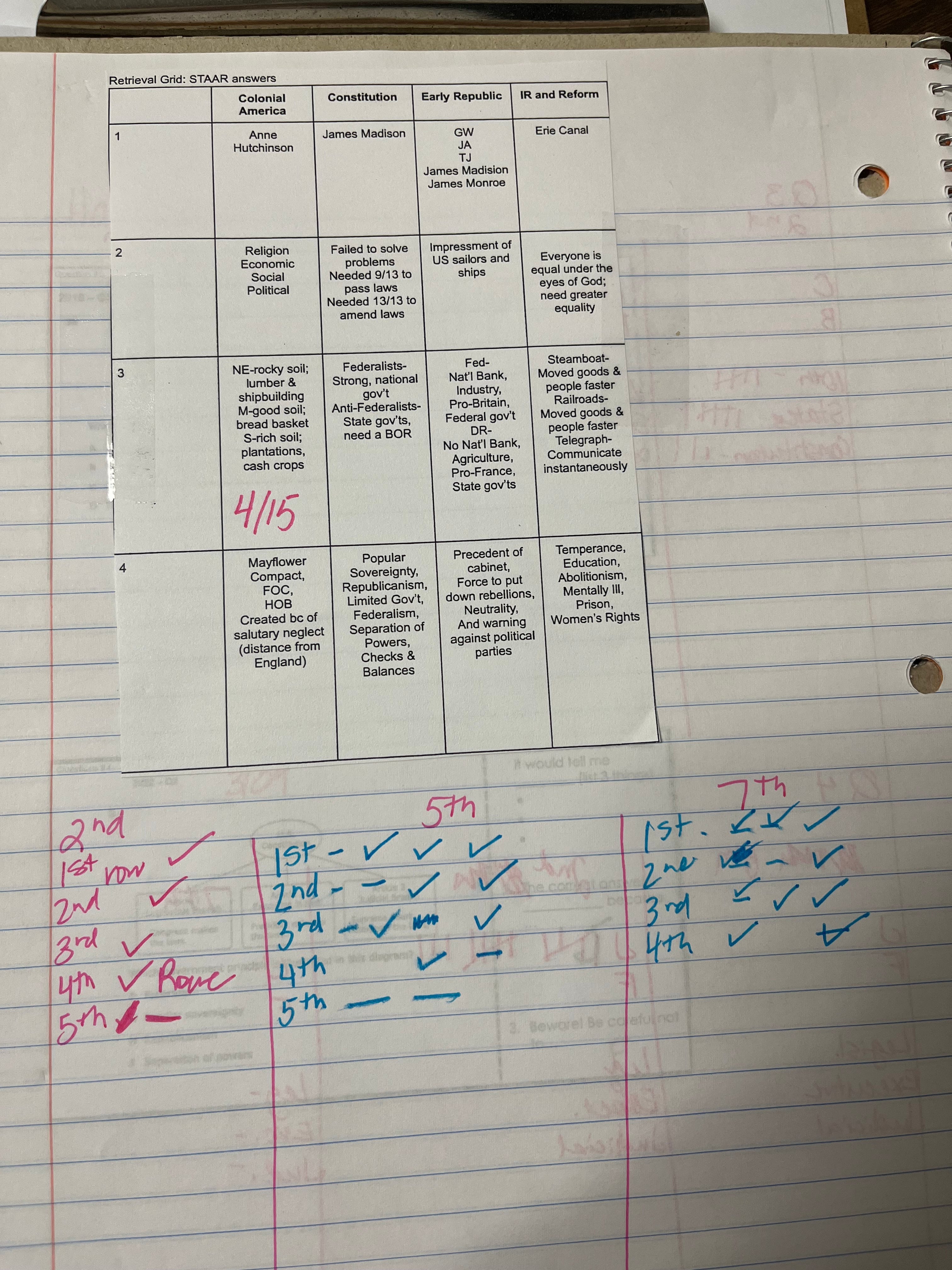
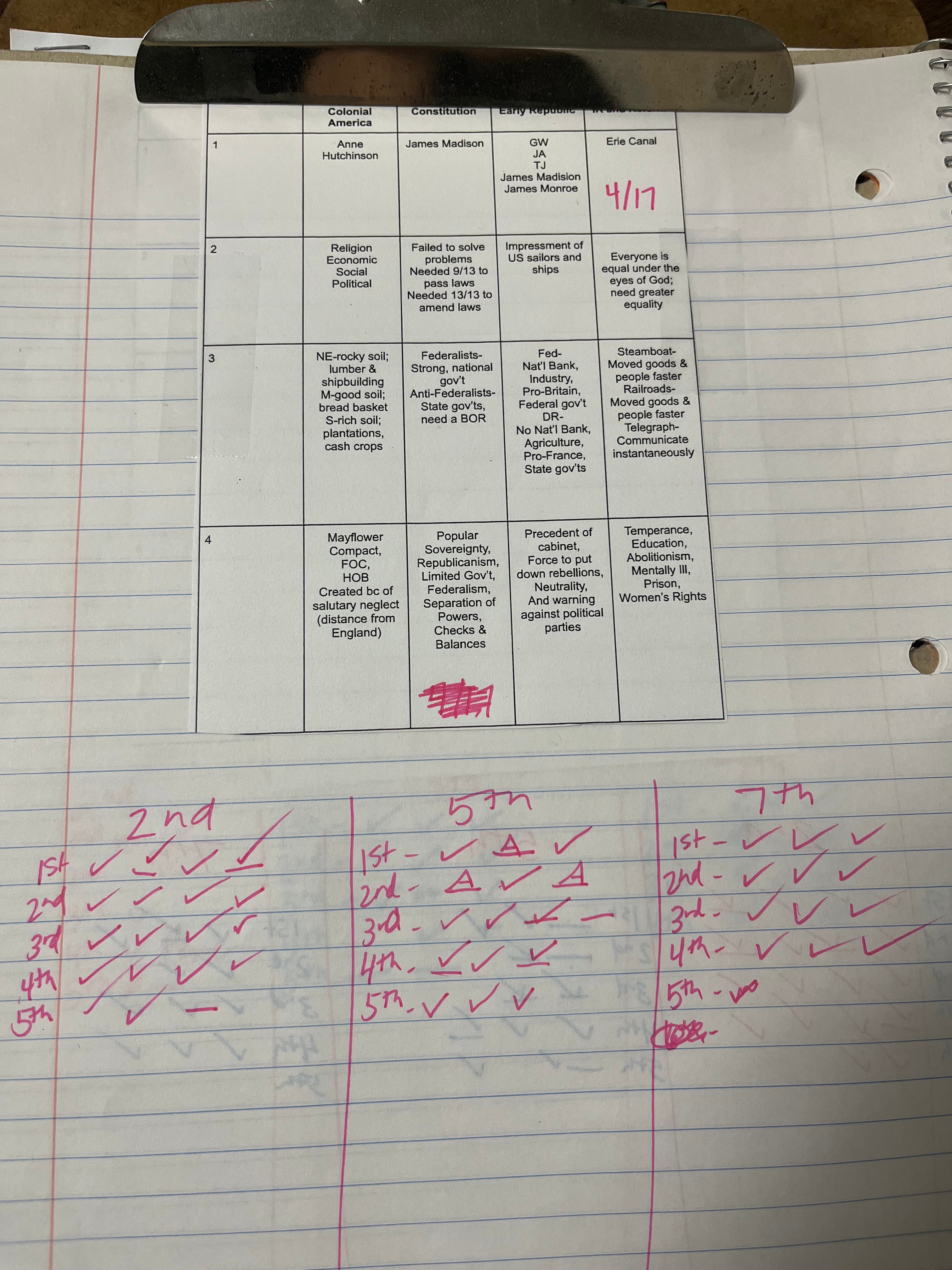
I created a key to prevent having to look at the board constantly to remind myself of the question and thus, the answer. I liked having it on the same page as my notations instead of on a separate page. By labeling the question for the day, it made it easy to keep up with the ones I used in the past. My notation system also changed this week. My desks are in rows, so when I checked in with a student I noted it by a check or dash, based on the seating chart. A dash meant I needed to return to check in again or the student was absent (finally decided to add an A by 5th period on the last day.)
In Progressively Incorrect, Frazier mentioned that his students lived for a check to be marked on their paper each day. Of course, I was skeptical. A checkmark, really?! I kid you not, my students were thrilled for a small checkmark on their paper! I had students THANKING ME for a checkmark! I took time to meet with each student and provided a small gesture of feedback and that meager bit of attention was a boost to confidence.
I’m not perfect at this practice. I know it, and I bet my students do, too. But they know I care about their learning, and that’s important.
I’ve taken copious amount of notes on this book, but of course the one time I need a page number, it’s not there. It’s from section 2 of the book.
No posts
Comments
Nothing yet. Say the first thing.
Sign in to join the conversation.