
Years ago, I was introduced to the Making Thinking Visible routines and attended several professional development sessions focused on discussing, practicing, and applying these strategies within my subject area. The routine that truly resonated with me and the one I have continued to use ever since is called “Zoom In.”
“Zoom In” is a thinking routine where students analyze an image one section at a time. They begin by viewing only a small portion of the image and forming a hypothesis about what they see. Gradually, more of the image is revealed until it is fully displayed. As new details emerge, students revise their interpretations, predictions, and conclusions.
This strategy encourages important cognitive skills such as predicting, interpreting, and synthesizing information. It also provides opportunities to connect new content with prior learning.
In my classroom, I ask students to remain silent while each portion of the image is shown. I prefer a quiet atmosphere that allows everyone to think deeply and record their ideas without influence. Once most students have finished jotting down their thoughts, I invite volunteers to share what they noticed and how their thinking evolved.
I use “Zoom In” throughout the school year, and although I may be a bit biased, it is an especially powerful tool for American History because it helps students explore context, perspective, and interpretation.
Here’s an example of a “Zoom In” routine that I use during my Early Republic unit:
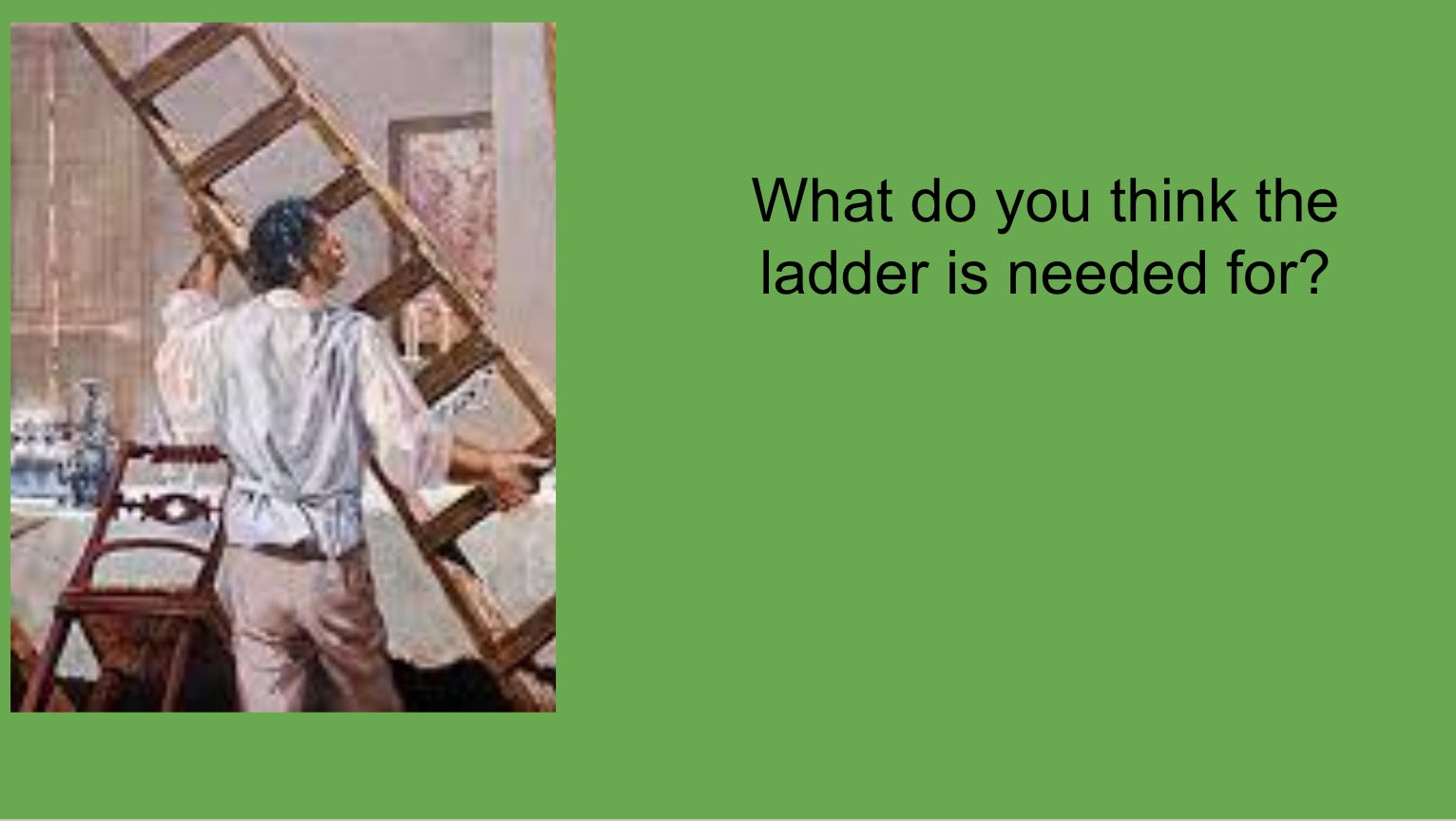
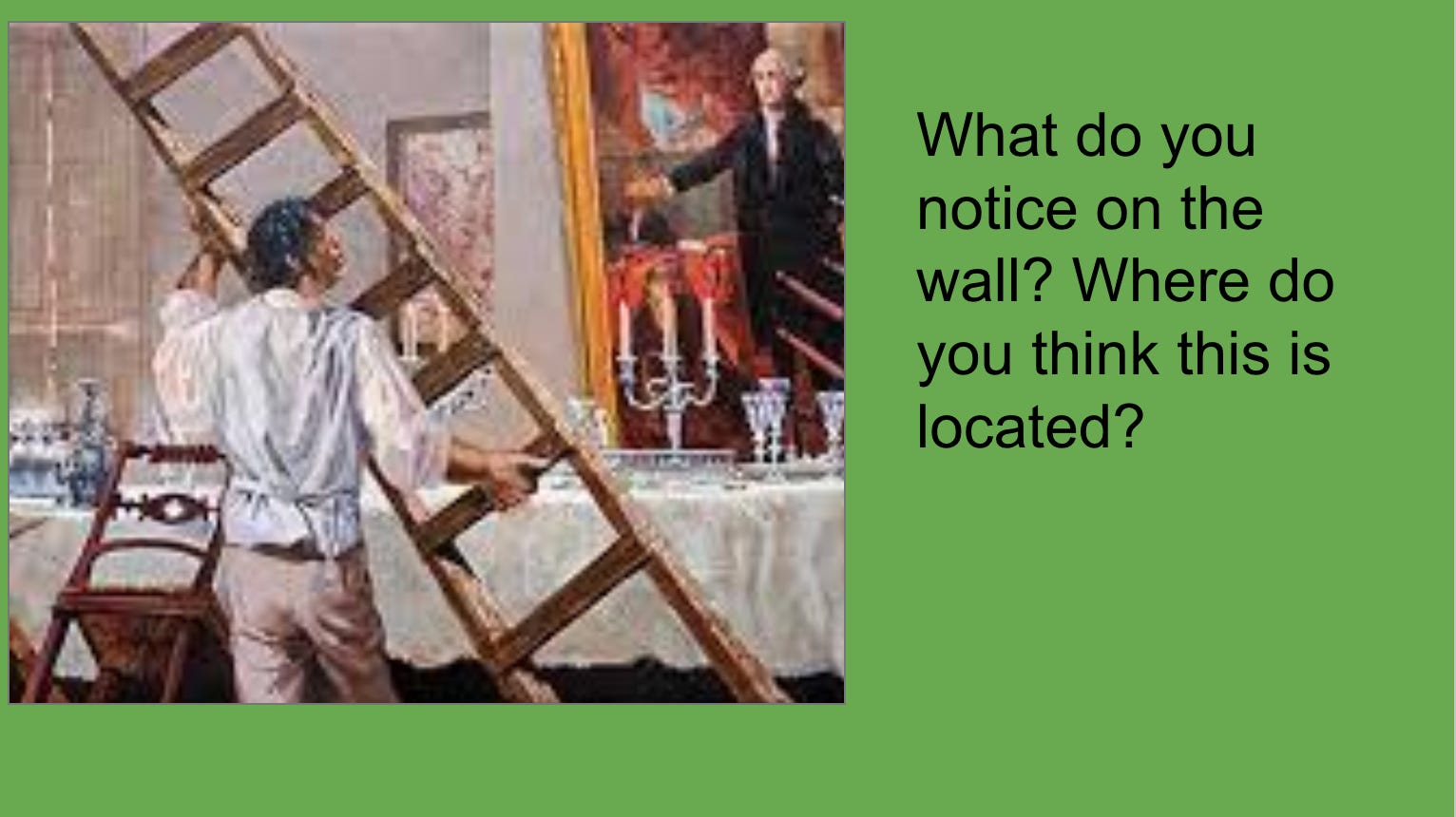
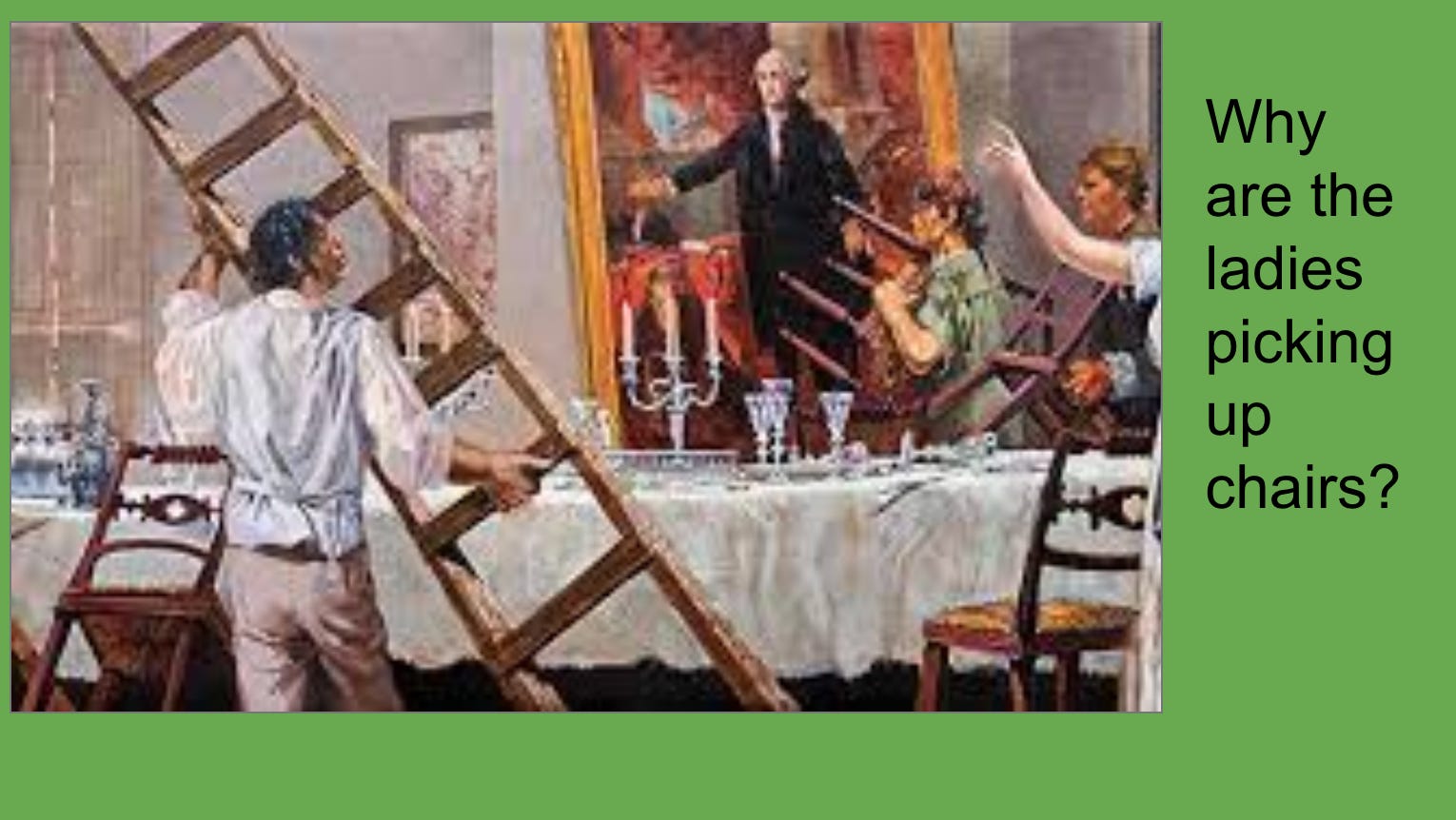
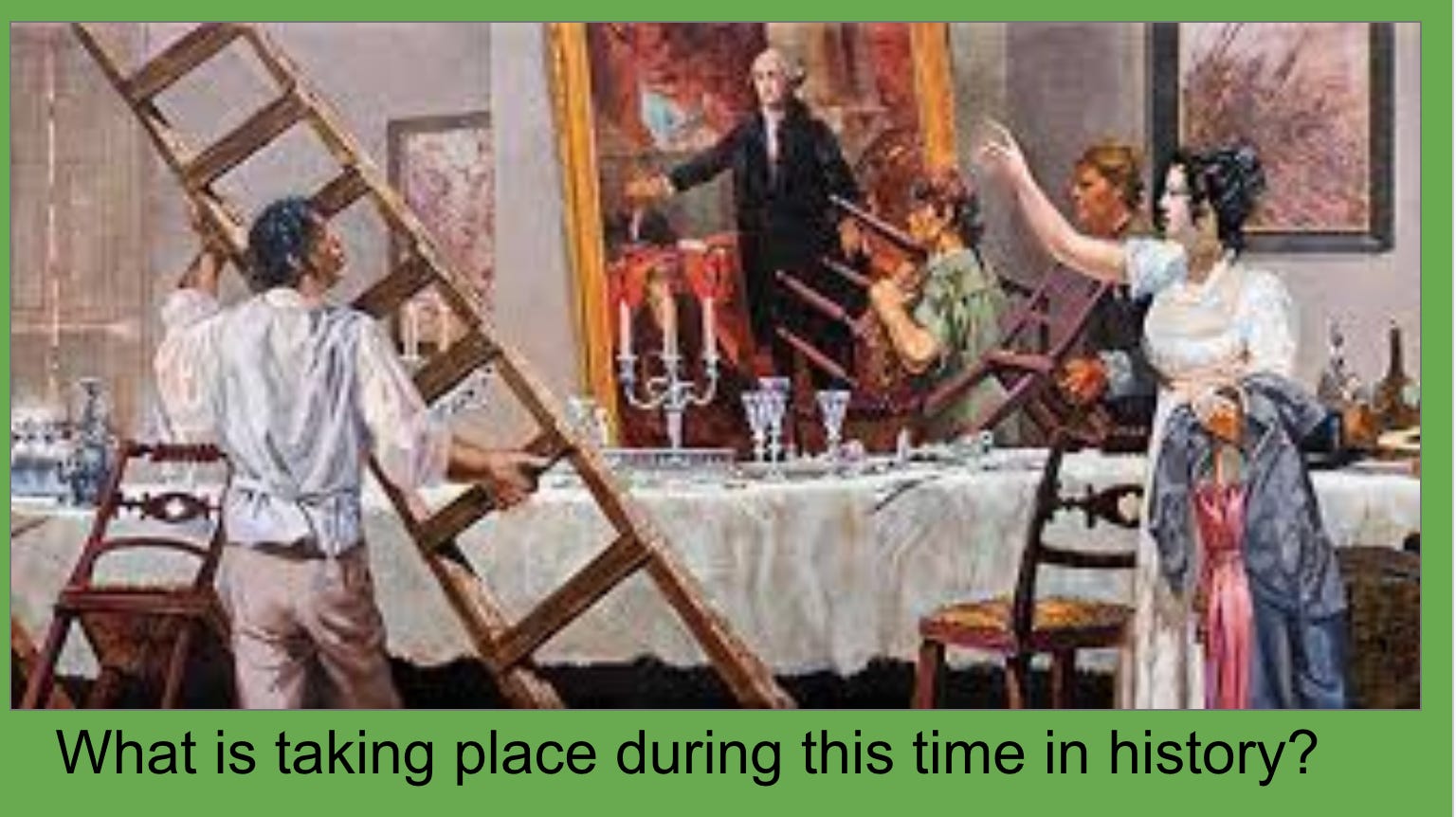
Here are a couple of examples of the responses that my students had to this particular Zoom In:
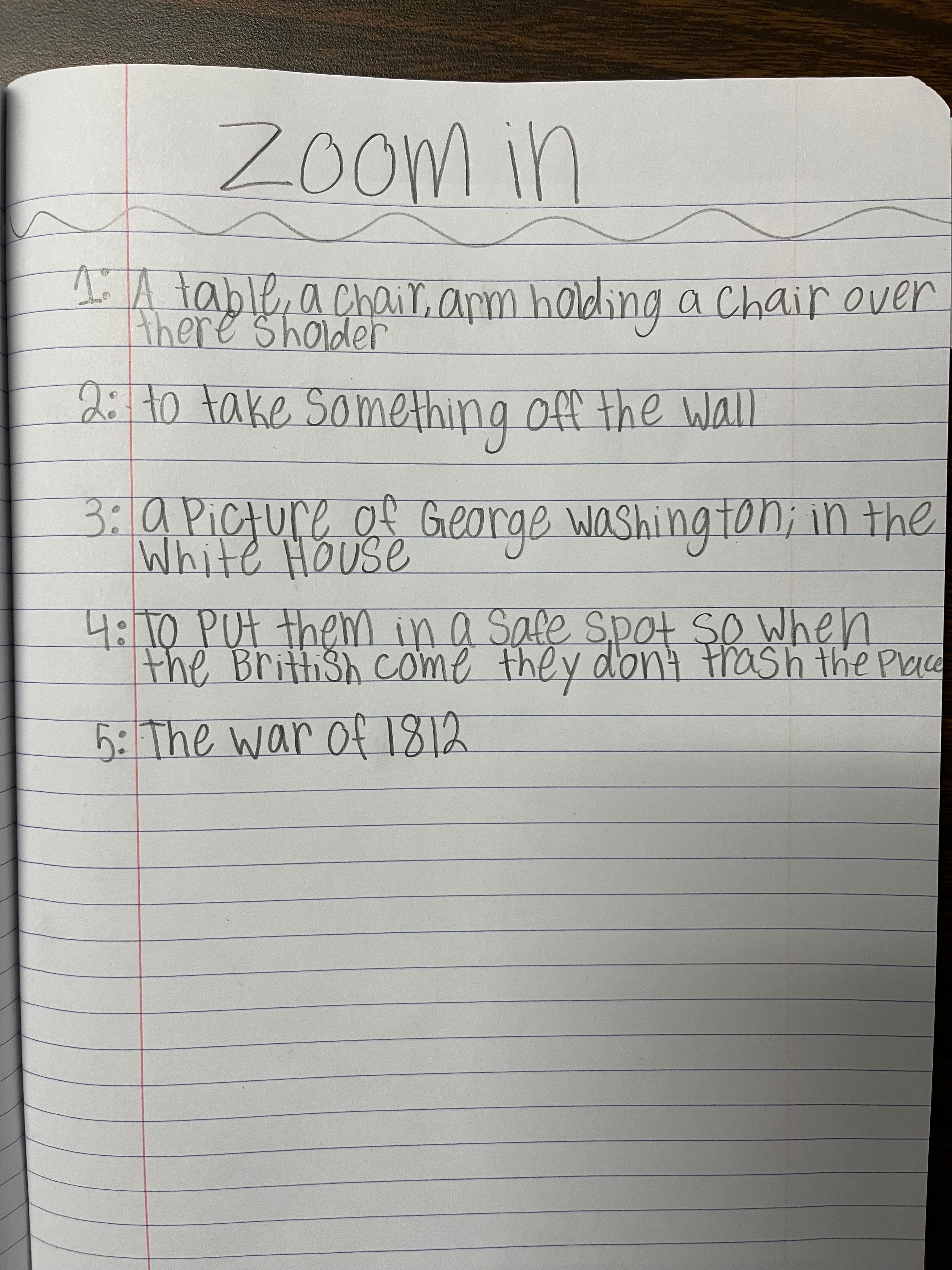
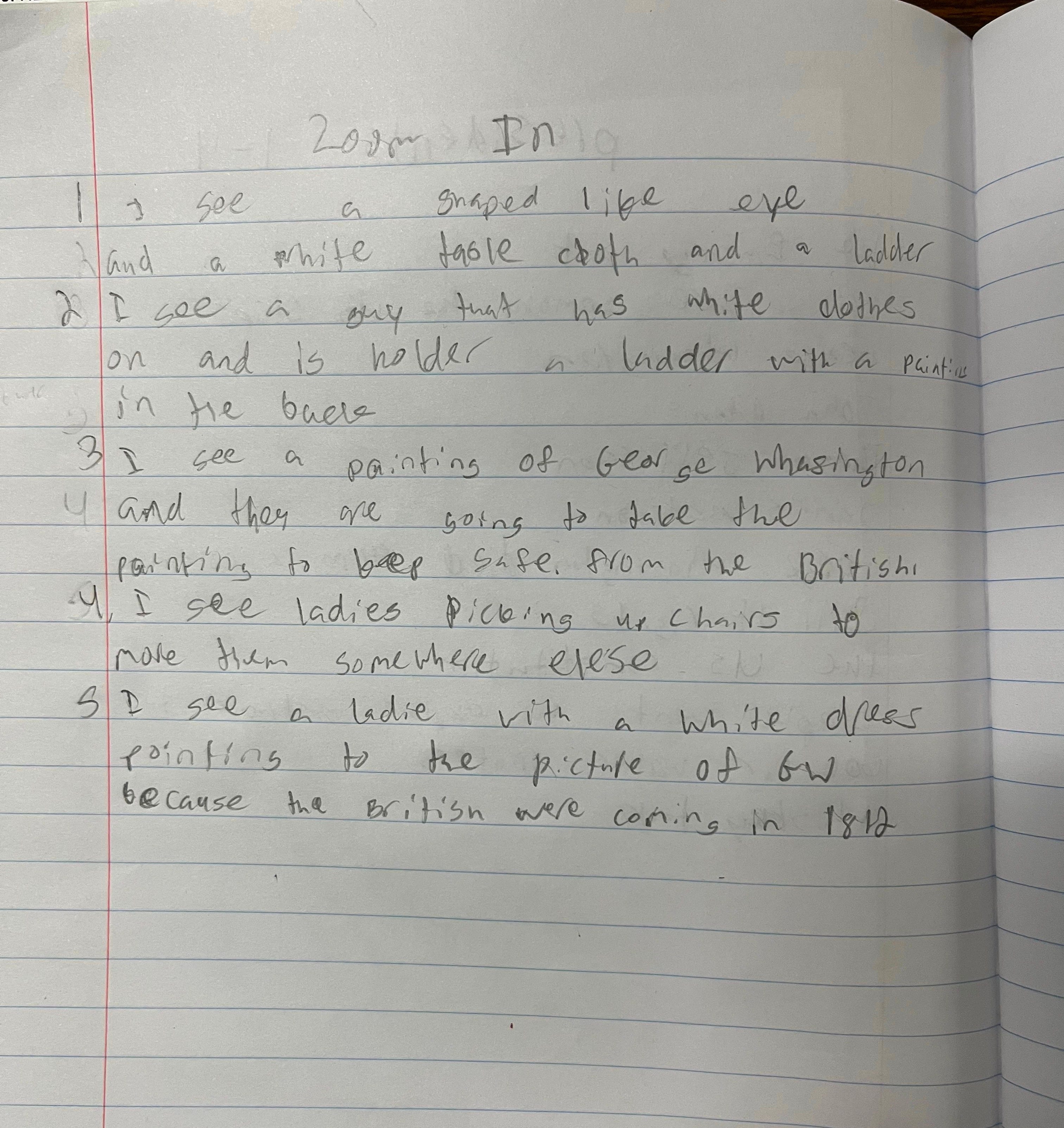
In the past, this is where the activity would end. However, this year I have made a conscious effort to include daily retrieval practice to reinforce learning. After completing a “Zoom In,” students now grab their mini whiteboards and move into a “Because, But, So” exercise.
“Because, But, So,” comes from Judith C. Hochman and Natalie Wexler’s The Writing Revolution. It is a writing strategy that works across subjects and grade levels, helping students extend their thinking through the use of conjunctions.
Each conjunction serves a distinct purpose:
Because prompts explanation and reasoning.
But introduces contrast or complexity.
So leads to cause and effect or consequence.
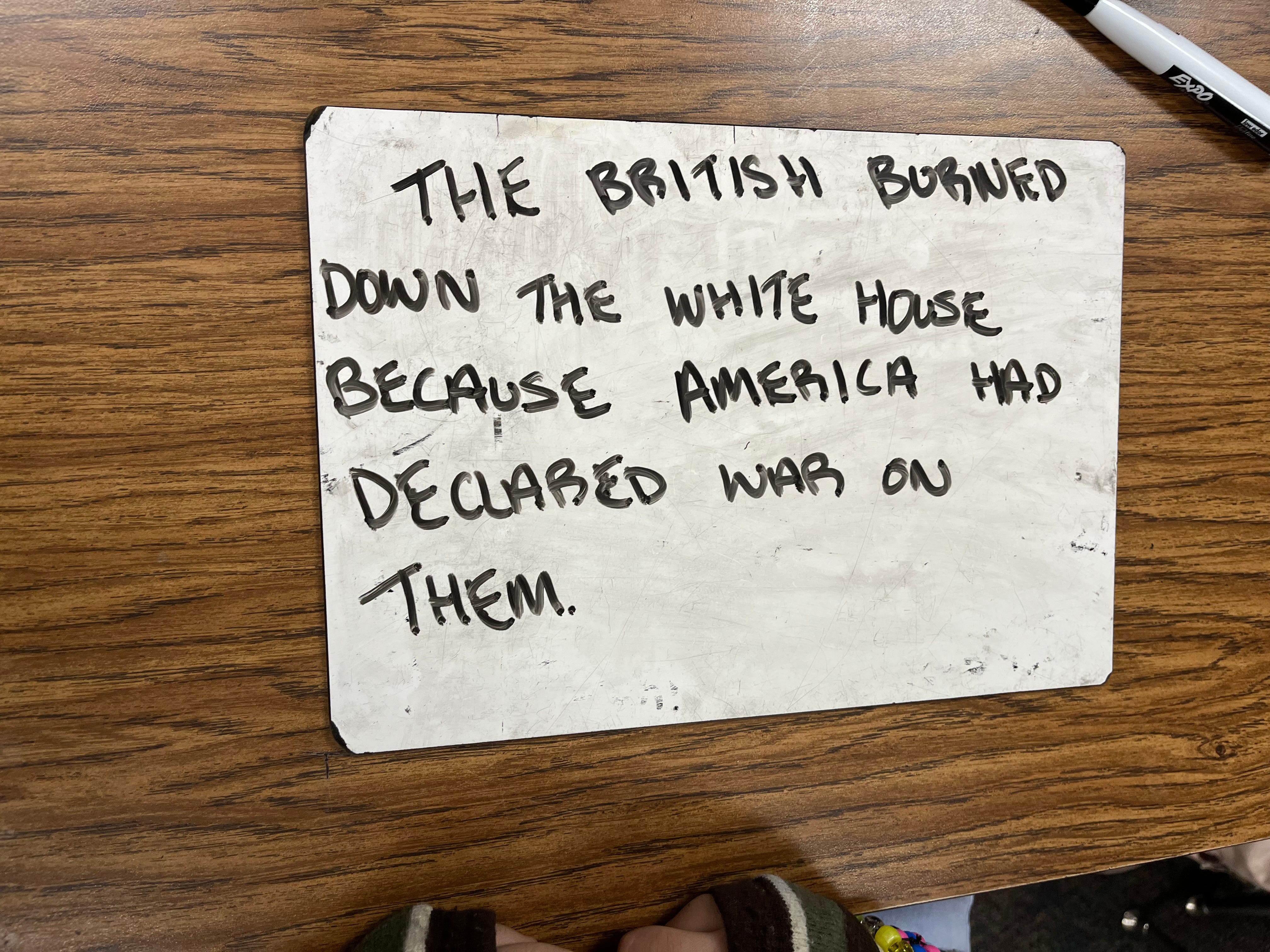
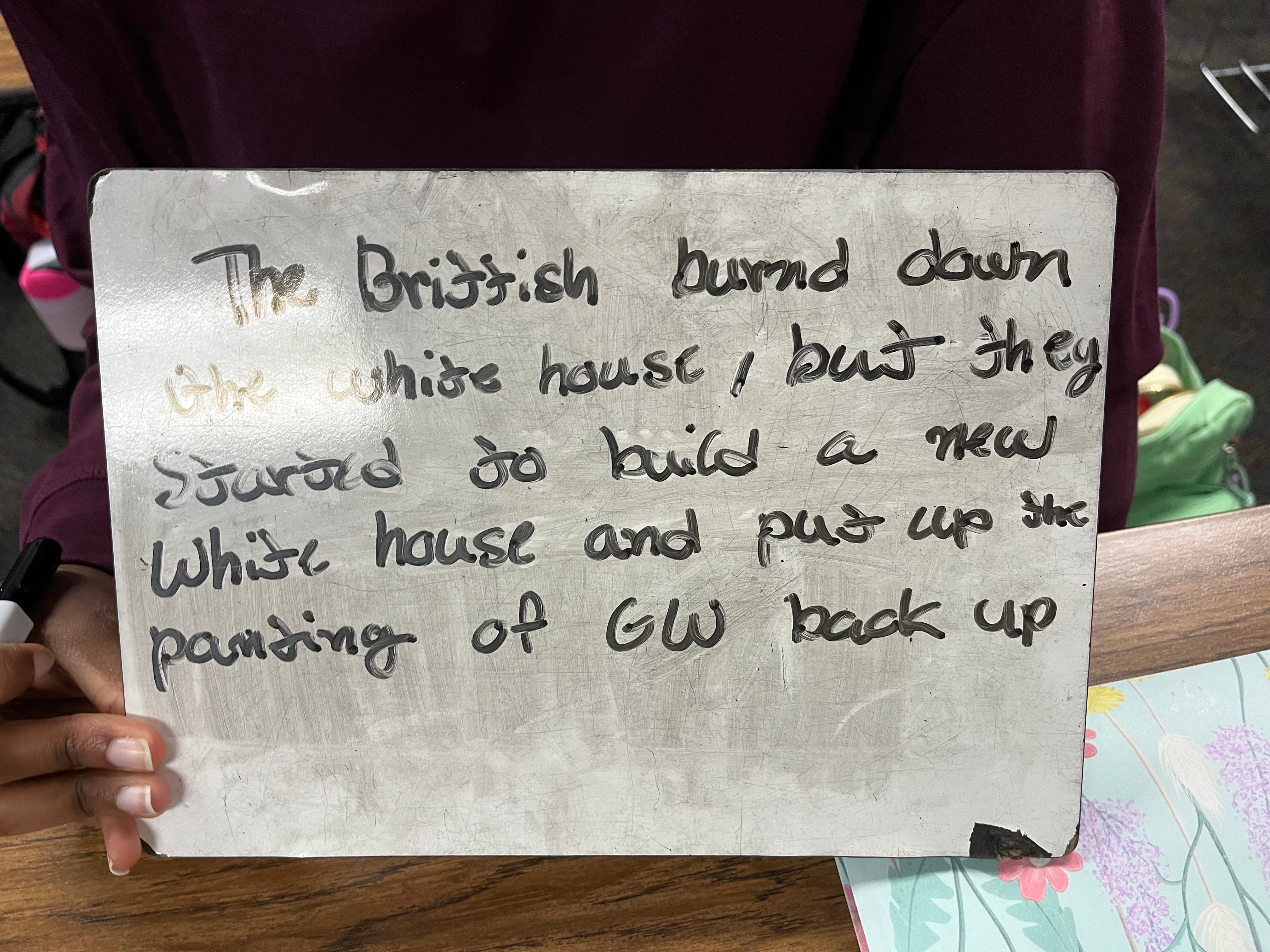
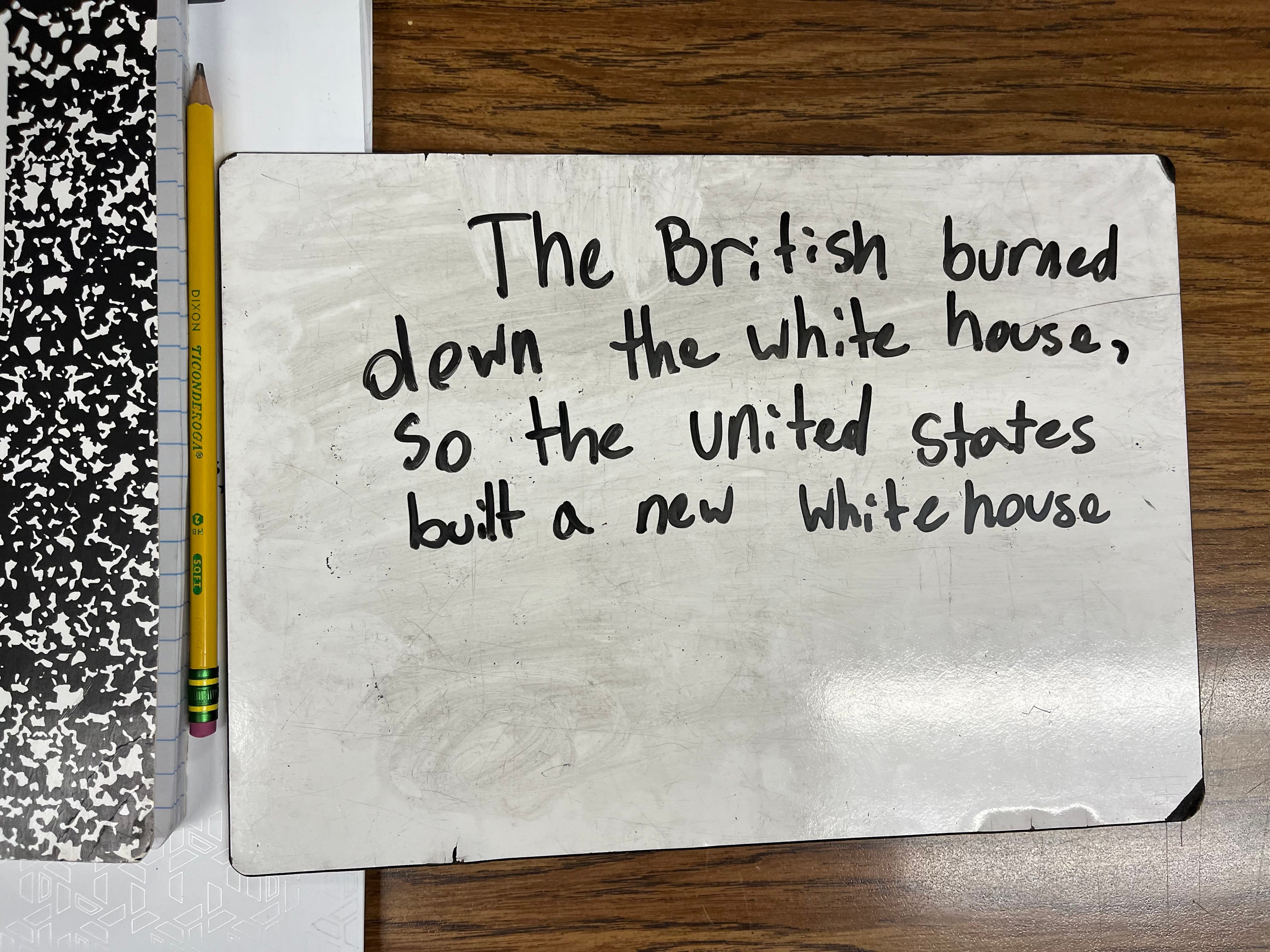
During this activity, students complete sentence stems using information from their notes and from the “Zoom In” discussion. The examples below include work from both general education and special education students.
For this specific retrieval practice, the sentence stem that I used after the ZI was the following:
The White House burned down because…
The White House burned down, but…
The White House burned down, so…
I enjoy using “Zoom In” because it allows students to anchor historical events or eras to specific images. Pairing it with “Because, But, So” strengthens that connection by encouraging active recall and analytical thinking. This combination of visual exploration followed by structured retrieval writing has quickly become a permanent fixture in my classroom.
No posts
Comments
Nothing yet. Say the first thing.
Sign in to join the conversation.