
Every Tuesday my husband and I go to town to get groceries. He drives; I look out the window. The grocery store is 28 miles away and 491 feet lower in elevation than our home. As we travel, we move from our rural farmhouse through more developed areas, finally arriving at what passes for a city around here.
In the time between winter and spring, aka mud season, it can be winter at home and spring as we near the grocery store. As the snow gradually disappears while we make our way southwest and closer to sea level, I find myself wondering, “Where are the spring bulbs?”
Actually, I know where the spring bulbs are. Thanks to my many years of gazing out the car window, I know exactly where they are.
There are two homes with snowdrops, a different two homes with crocuses, one rural home with daffodils planted along the road, one suburban home with a generous patch of them, and a half dozen homes with a half dozen daffodils apiece.
Twenty-eight miles of roadway, and that’s all this community can come up with? I take this personally. I’m still stuck in winter, and you people already have spring, and this paltry display is all you can show me? It’s positively sinful.
It’s more important to have the first blooms on your block than the first tomato. Let’s face it: mud season is ugly. The increasingly dirty snow and the sodden expanse of grey-green lawn are a visual desert, and the bright dots of the earliest bulbs provide psychological relief. Why wouldn’t you want that for yourself and your neighbors? In contrast, the first tomato is just bragging rights.
The Dutch call it Stinzenplanten. It was the custom of 19th century well-to-do homeowners to plant their lawns with spring-blooming bulbs. The Dutch treasure these plantings so much they have an organization to preserve them, Stinze Stiens Foundation.
Here in the States (and probably elsewhere) we call them bulb lawns. People drive by to admire the few there are, and then they think, “Omg, that must be a lot of work.”
It does take some work to get thousands of small bulbs into one’s lawn, but once it’s done, it’s done. And you don’t have to do it all in one year.
It takes more work to plant a lot of daffodils, but again, once it’s done, you have a fantastic display that cheers you and your neighbors, as well as passersby like me. I speak from experience—I’ve done the digging1.
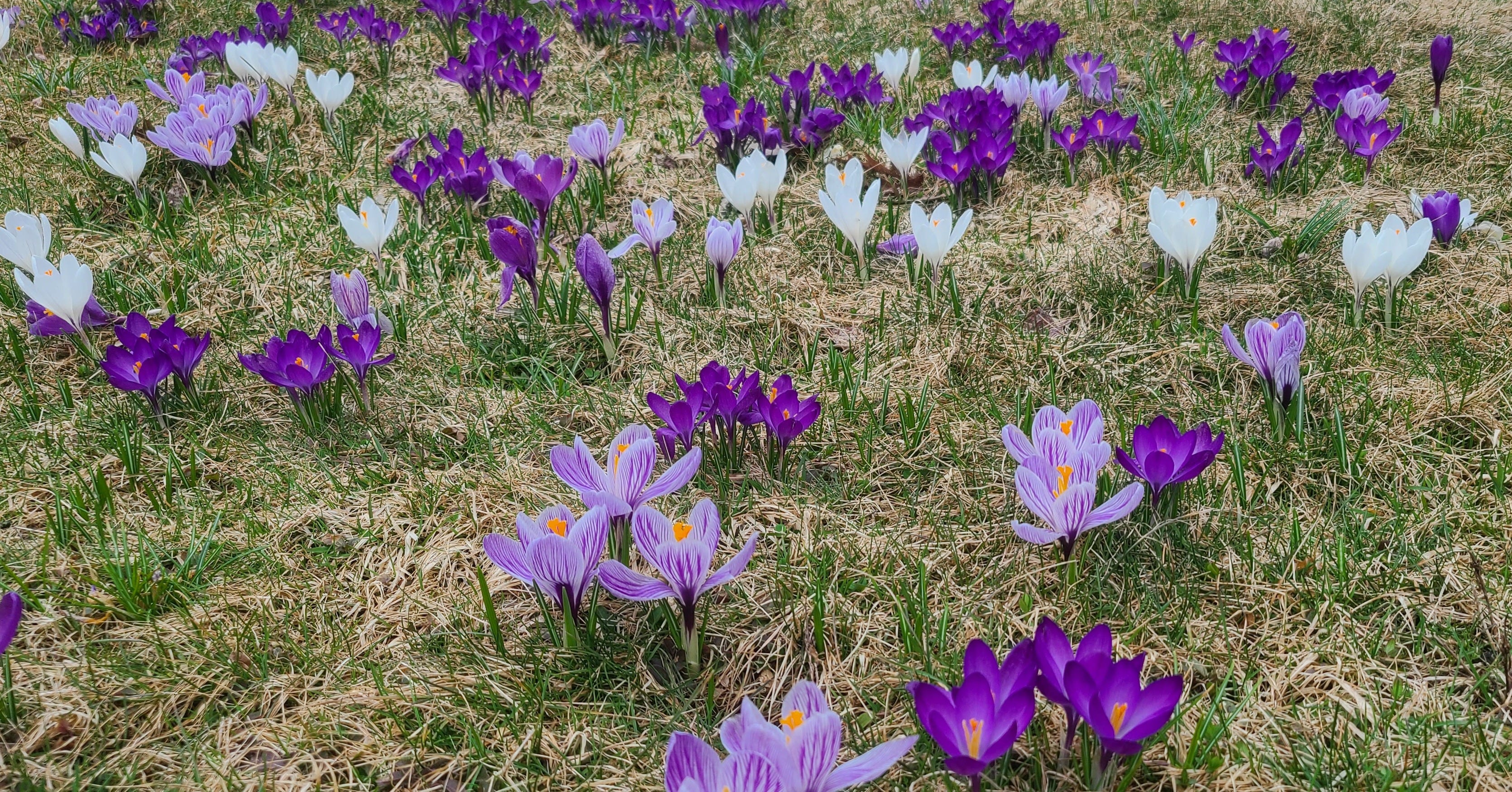
And I’ve also done my share of gawking. There are two lawns in the nearby village (which we don’t drive through on the way to town) with lovely carpets of crocuses. I’m pretty sure they are nineteenth-century houses, just like ours.
Bulb lawns definitely improve with age, so the best time to start one is last fall. And in case it didn’t occur to you, once you plant your lawn with bulbs, you don’t use weed killer ever again. Your poison can’t tell the difference between a crocus and a dandelion.
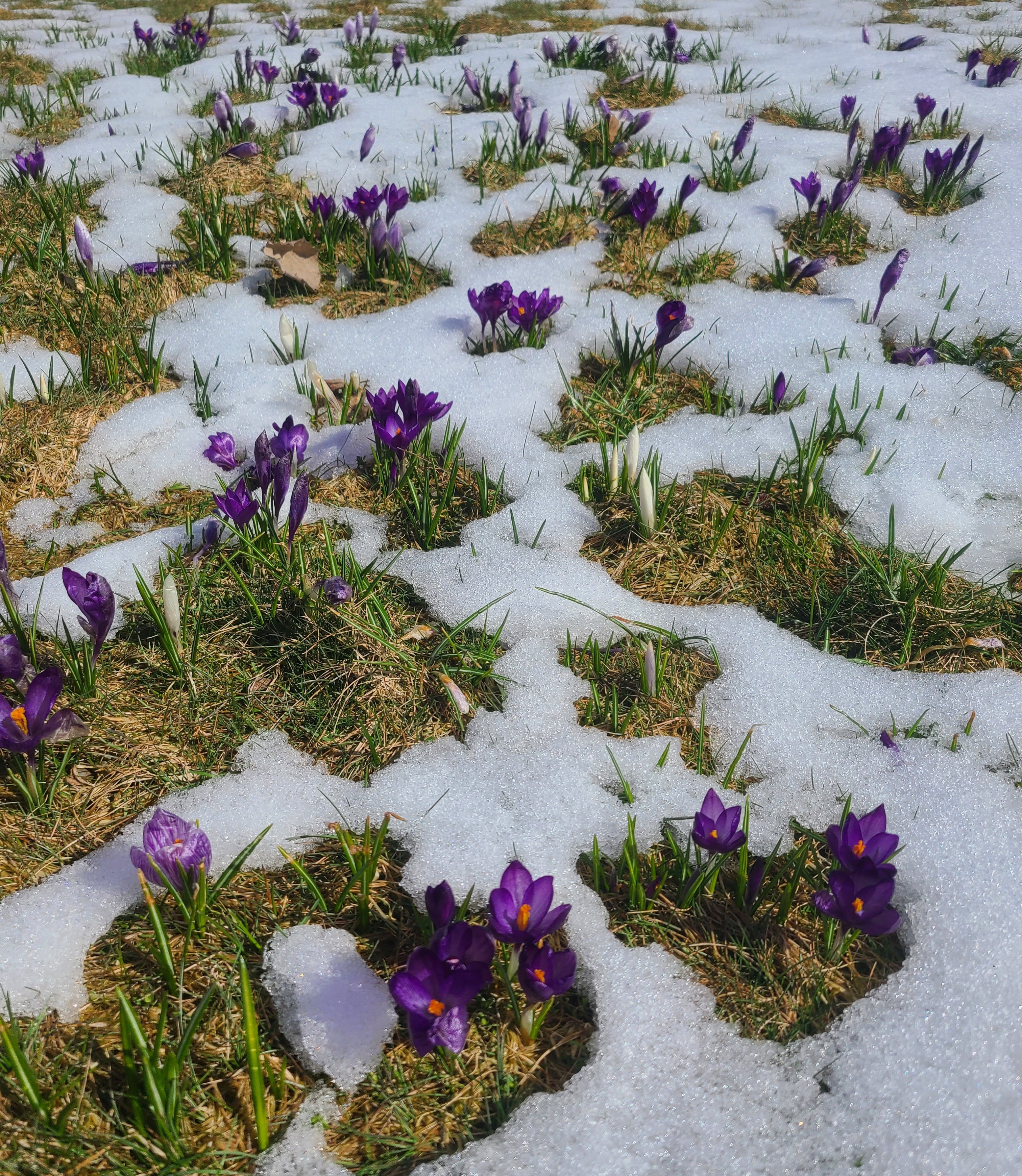
My own bulb lawn blooms anywhere from two to four weeks later than the crocuses in town do. That’s a long time to wait when your brain is addled with cabin fever.
Every year my nose is pressed to the car window hoping someone has stepped up and planted more bulbs than last year. So far every year I’ve been disappointed, but I continue to live in hope.
Next: My earliest inspiration
Comments
Nothing yet. Say the first thing.
Sign in to join the conversation.