
My first job was shit-shoveler and taking out trail rides at a horse barn down the road. I could do that job at 10, 11, 12, but when I finally got working papers at 16, I got a real job at the Village Pharmacy downtown, with a W2 and whopping minimum wage of $3.10 an hour, or maybe it was $2.90. Somewhere around that.
How I remember the ballpark wage, I do not know.
The job came complete with a wood-paneled colored name tag, my name engraved in white, to safety-pin onto the sky-blue polyester smock, courtesy of Village Pharmacy, whose name I think was embroidered loud and proud. I could be wrong.
I worked the front counter, selling candy, cigarettes, and racing forms, and on Thursdays, our local paper, The Pawling Chronicle. “Big purchases” like Timex watches from the plexiglass display case, engravable ID name bracelets from a display you turned with a knob, soap on a rope or Jean Naté or Charlie perfume, dirty magazines, and of course, prescriptions, were made in the back by the pharmacist and grown-up workers.
Lucky me, I was up front and got to wait on the townies, many of whom I was related to, and all knew my dad, nana, relatives, proving I didn’t need the name tag at all.
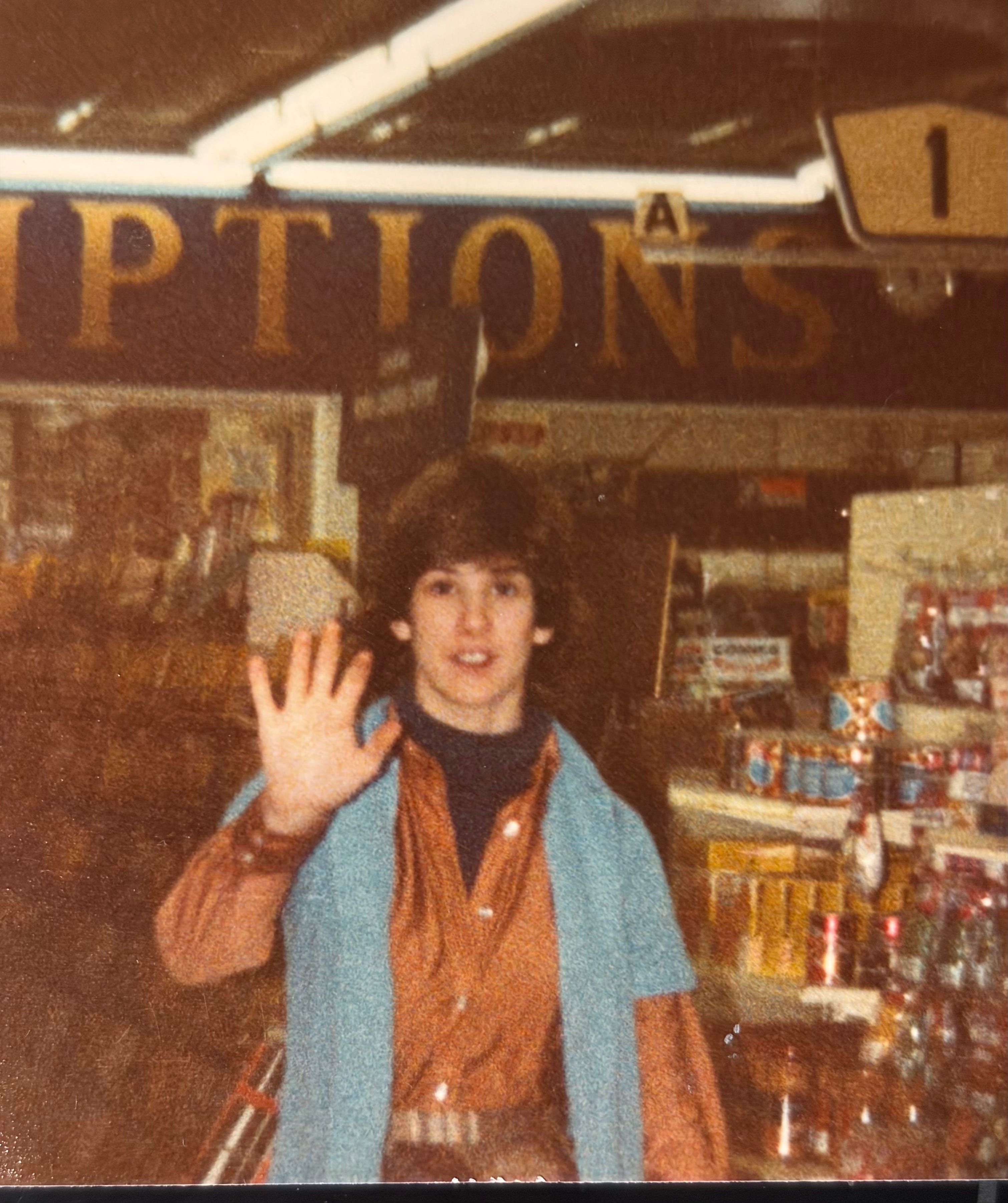
On Wednesdays, the local boys-only boarding school had half-days, and cute boys would walk to town in their ties, easy identifiers as “preppies,” but their unfamiliar handsome faces didn’t need the disclaimer.
For this alone I would have worked for free. On Wednesdays.
Everyone wanted to work Wednesdays.
While the locals all knew my name, thanks to the name tag and small-town know-how, most knew me as Mike’s daughter, but I didn’t know many of them by name.
I knew them by Ms. Virginia Slims. Mr. Newport, menthol. Mr. Salem man. The Winston family. Marlboro men existed – not just on TV – but farmers and horse people always smoked the red pack, the women Marlboro Light. Lucky Strikes seemed to be favored by people without much luck. Go figure.
There was one old guy who smoked Camel no-filters – from a hole in his throat. He’d put a little machine next to his throat to jumpstart his voicebox: “Camel, No Filter,” like I didn’t already know. He sounded like he was talking underwater.
Most people came for the paper.
The Poughkeepsie Journal, Wall Street Journal, Chronicle, and the racing forms. Weekenders and my grandmother bought the Sunday New York Times.
We clerks would unwrap bound and tied New York Times, section by section, like bales of hay, cutting their plastic ties open with a box cutter that snapped open like a firecracker and never failed to make me jump no matter how many weekends I worked. Arts & Leisure, Travel, Book Review, Business, Magazine — all delivered Saturday mornings. It was our job to assemble them in specific order, early Sunday mornings add the cover, then stack all those thick papers — towering like club sandwiches, too big to eat, dozens of them – all before doors opened.
Every weekend my fingers turned black with newsprint and usually my mouth too – I was a nailbiter from way back – still am – couldn’t keep my hands out of my mouth.
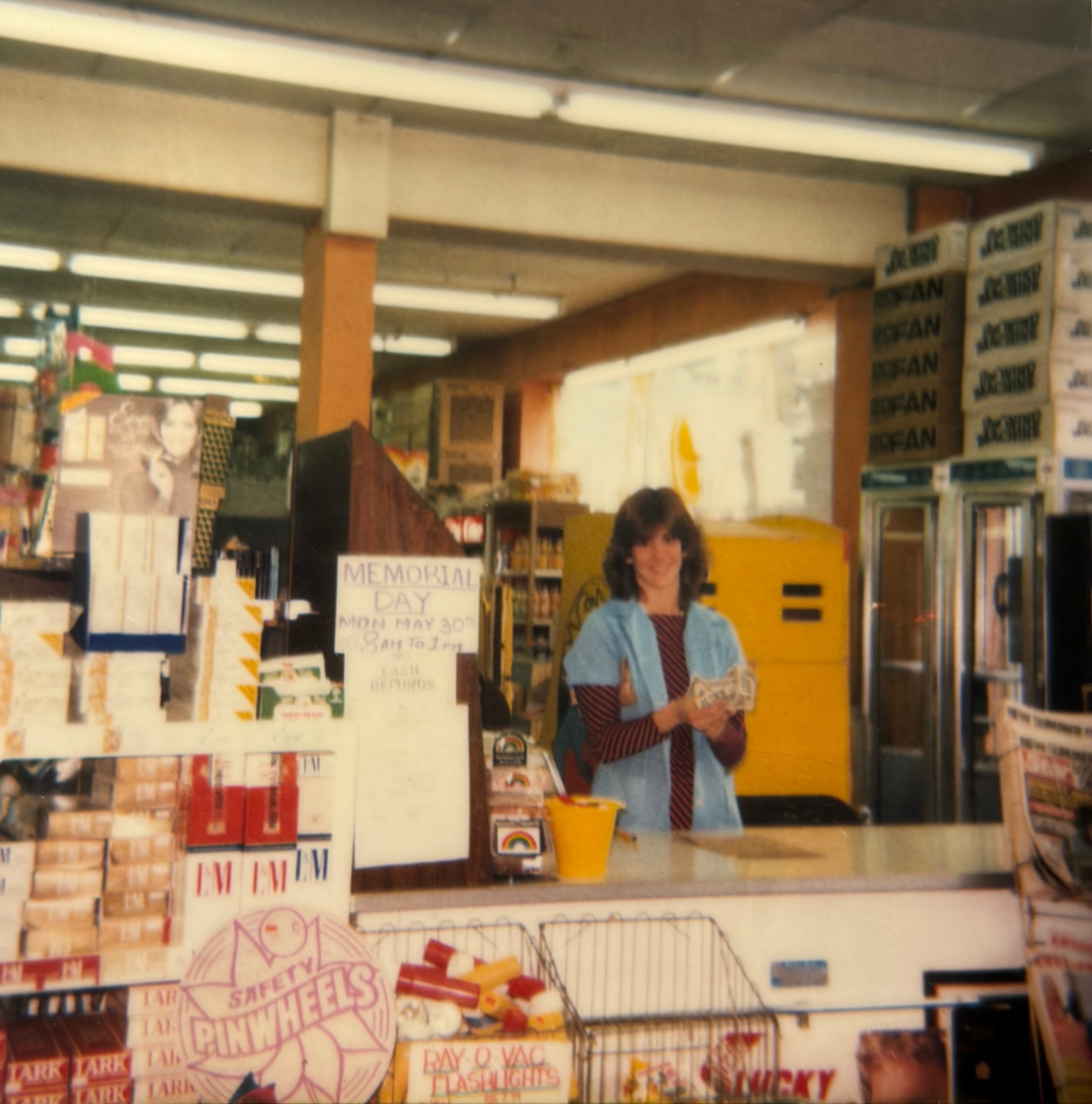
My boss, Kay, a perfect first boss for a first job, who was what I now consider ageless but then considered old, taught all us girls, only girls at the counter, the importance of eye contact, please and thank you to everyone all the time, how to make change – always count back to the customer – to greet people by name when we could, to not talk back, how to clean the phone booth, windows, and not leave streaks, and when to shut up and listen.
Once she squirted windex right in my face to clean the newsprint all over my face, but when it got in my eyes, the next time she squirted on a paper towel to wipe me clean, like a mom, spitting on her thumb to clean her baby's face. We were her babies, and she grew us right, taught us well, windex and all.
I was a good employee when new, following all the rules, except on Wednesdays when I was easily distracted. Obviously. But Kay would slap me back to reality — with a dirty look, a hand slapped hard on the counter, a clear cough, or a Kath-eee overly enunciated to get me refocused on the task at hand and not the ties in sight.
With time and experience, I’m embarrassed to admit, I was a horrific employee: giving candy to friends, not charging for sodas, shoplifting condoms, and not ringing up every sale to keep the register over, then keeping the cash when reconciled after my shift.
Stealing. Me. I did that.
And today, all these decades later, when asked my biggest regret, I have so so many, but treating the pharmacy so badly when they were nothing but good to me is always in the top tier, and something I can never reconcile in my conscience, and likely never will.
No posts
Comments
Nothing yet. Say the first thing.
Sign in to join the conversation.