
Welcome to Palimpsest: A Novel. This is a subsection of my personal newsletter, Metanoia Road. Every Thursday, I share a chapter of this novel (first published in 2010), and I invite you to read along with me. If you’d prefer not to receive these chapters, follow the instructions here to unsubscribe from this section only. This way, you can continue to receive other letters & writing from me, and we can stay in touch. If you’ll be reading - thank you - you can catch up on previous chapters here. 💙

Dear You —
Welcome back to Palimpsest: A Novel. Here is Chapter 8.
Previously: Our protagonist Kally Palamas has travelled to Zelopolis village in Greece with her mother, Anastasia, after her father - Akindynos Palamas - was found dead on Zelopolis beach. We’ve learned a little more about her - she’s a philosopher who is no longer working as one - and we’ve met her parents who are separated. Her father Akindynos, an autodidact, left the marriage to return to Greece where he established a philosophy school. We’ve met her mother, Anastasia, and grandmother, Kallisto, and her father’s funeral has happened. There is some controversy around Akindynos’s death on the news. It is unclear if he has died by drowning, murder or suicide.
Catch up on previous chapters here.
In this chapter, we’re with Kally, and we learn that she is deep in grief after the death of her young daughter, Thalia.
Anastasia’s crying ended. She’d been secretly mourning my father’s loss for a decade, but his gradual withdrawal from the family home and the conjugal bed had given her no opportunity to publicly mourn him. For years she’d been a zontohira, or a widow to the living, as the Greek language crudely denoted separated or divorced women, and it was only once Akindynos was dead that she could, at long last, release whatever emotions she’d bottled up. But Anastasia was efficient and practical, so her decade of silence was expelled in only a few days.
She announced, with her characteristically compact use of language, that she was getting out of the house. ‘I’m going out,’ is what she said. She headed down to the beach, and I, I followed her. It was what I did. It was what I did after Thalia. I followed Anastasia around like a child. I was not a mother, not anymore, so I became a child. And Anastasia mothered me, again. We made good company back home in Coober Pedy. She would wake me, a tender caress on my forehead, then a soft kiss, then a whisper in my ear, just like she had when I really was a child and had school to rise for. And so, I would rise and she’d have my clothes set out on the bed, a change of underwear, a clean towel. When I’d washed and appeared in the kitchen, she’d already have toast, honey, marmalade laid out on the table and she’d be at the stove brewing coffee. She always said the same thing, ‘Good morning, how did you sleep?’ If I’d slept well she read my coffee cup — it was the way she attempted to get me talking, because I’d become dumb. If I’d slept badly she presumed the evil eye and filled a glass of water and added three drops of oil and did her cross and yawned. She always yawned, and it was this that confirmed the presence of the evil eye. For what else could explain my sudden and unexplained silence than some malevolent supernatural interference? This was our morning ritual. Then she’d say, ‘Come on we’ve got work to do,’ which meant that I should get back to my room and to my philosophy while she headed out to the mine. Anastasia had returned to opal mining, to her dream of finding her painted lady, the week after Akindynos left.
She made a good enough living for both of us. I didn’t help her, I couldn’t. I just didn’t have her zeal and it was difficult for me to go down into the mine. Thalia was there. Thalia was everywhere. In any case, Anastasia found a business partner, and she would send me to my dark and quiet room. She believed that this room provided the ideal conditions for my philosophy to be nurtured and sustained. As if my mind were some exotic seed that would only germinate under the most sheltered conditions, protected from the risks of a volatile external environment. I’d come to despise that room, and Anastasia’s dogma, her diligent Christian optimism that assured her that my mind would return. I hadn’t told her that I was still barren, that I would not continue with philosophy. I hadn’t told her that I would do anything at all to keep my head hollow, to keep the terrible task of thinking far, far away. I hadn’t told Julian either, though he must have suspected, because he still hadn’t given up on me and still sent letters to my Coober Pedy address. Sometimes he would call. But I never answered the phone, and never replied to the letters. Anastasia did. When she was home she answered the telephone, and on weekends she would reply to his letters on my behalf. She offered polite excuses and euphemisms about my condition. Julian, and anyone else who remembered me — colleagues, publishers, journalists, teachers — accepted this narrative. I had acquired a new kind of fame. And this one was easier to live with because it had a momentum of its own. It was the only thing that kept me alive.
It was not quite true that I never wrote to Julian. I did. I composed long letters. They took me hours. Sometimes days. I composed them in my head first.
I’d start with the first sentence, then the next until I could recite it all (which I did, silently, in my head, or in a whisper). My most recent letter, I remembered, went something like this:
Julian —
I will tell you this: I have rejected harsh argumentation and, like the rest of them, I proclaim that understanding is beyond my reach. I’ve raised my arms in defeat. You should see me now! I no longer reason. I no longer do philosophy. No philosophy for me. It does not comfort me. It does not. Does it still comfort you? Please tell me. I confess all this to you because I know, I know what you’ll do.
You’ll try to bring me back. You’ll begin, like good old fat smug Socrates, by talking around the thing that has made me what I am now. You’ll apply the logic that boys and slaves once understood to help me arrive where you’d like me to arrive. But I’ll tell you this, I will agree with your logic — that’s the one rule of your game, isn’t it? — and I’ll give you all the right answers and believe that they are so, but then I will fall back to where I am right now. It’s what all non-thinkers do. It’s infuriating. I know! Yet what may seem to be obstinance to you, is my refuge. I have lost a daughter and, quite simply, no amount of your reasoning will help me understand why.
I know what you’ll say. I can hear you saying it. You’ll say, Pity, I once believed you were the direct descendent of Aristotle. I’ll say, I once believed I was, until I lost my baby. I see what divides us. It is you. You have not been destroyed by this. You go on and on and you preach and you think and you reason, and yet I, I cannot. I am lost.
You can try to bring me back, but I warn you, I am too far gone.
Philosophy cannot cure me. And if it cannot, then what use is it to me?
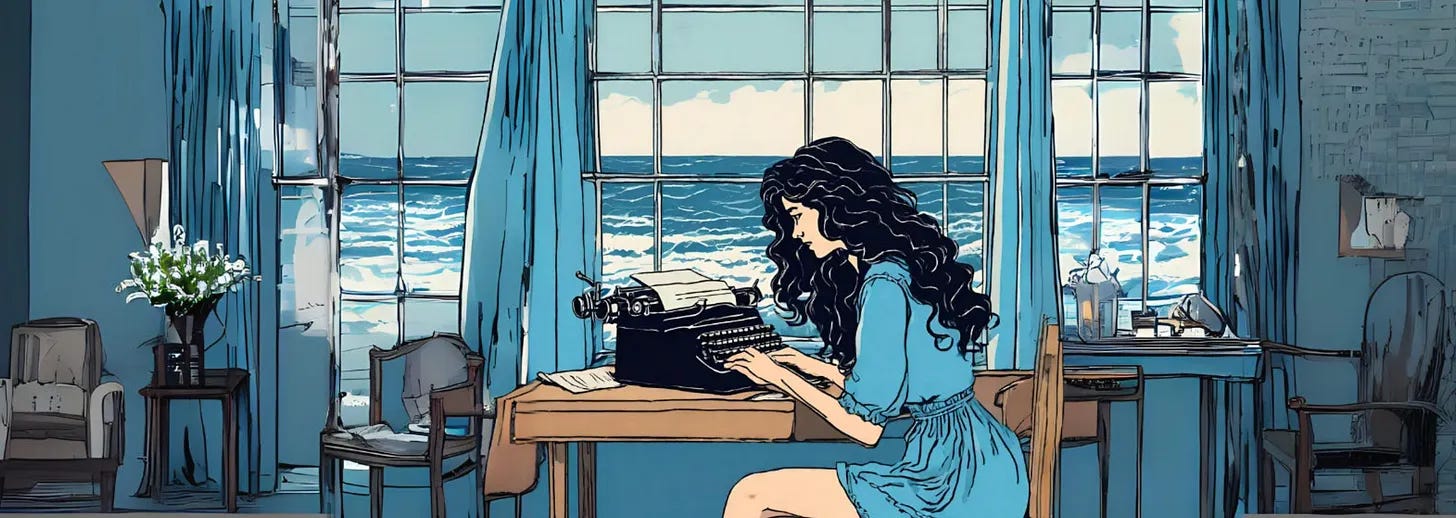
When I thought I’d perfected a letter in my head, I wrote it on paper. It often took me days to do it correctly. I wanted to reproduce accurately the tone and nuance of my voice. But when I read the letter — in a whisper — it was never what I expected it to be. I’d bring up the words in my head once more and compare them to the words on the paper, and I’d always be struck by what I observed. Something was missing. Some essence that even I could not articulate was gone. All that was left were the tools, devoid of any real meanings. Just the pen, the paper, and the alphabetic characters on the page. When I looked at them, I saw the usual disintegration of my handwriting. I could never sustain the perfect calligraphy of the opening sentence. My letters always degenerated into something undecipherable. Whose were they? I’d inevitably ask. The usual blankness. I never knew. And so I’d pick it up, the unfinished letter, a page at a time, I always did it like that, and tear it up into neat geometrical shapes.
Squares, usually, or rectangles, sometimes triangles. Then I’d shuffle the little bits of paper about on the table as if they were playing cards, and I could play with them. But I never played with them. As I shuffled them I realised that they were not easily disposable. Undecipherable though they may be someone could retrieve them from a rubbish bin and reconstruct the letter. From the reconstruction they could fabricate all sorts of meanings. Fictions. Fiction out of something that was already a fiction. Imagine the mess they’d make of it all.
And so I would take them outside and burn them. I’d sit on the ground, cross my legs, and gather the little shapes together in a tiny paper mound in front of me.
I’d light one, then another, and watch as the paper lit up in a weak flame. I’d watch the red, then the blackening, then the wicked smouldering and withering into ash. When it was all black ash I’d dust the thing with my fingers, dispersing the flimsy residue, like one might dispose of the ashes of a deceased loved one.
And just like that, my letters to Julian would disappear. And it would be as if I’d never written them at all.
Thank you for reading with me. See you next Thursday for Chapter 9.

Hey, thanks for reading. Over the course of this serialisation, I’d love to hear your thoughts on the story, the writing, the themes, as well as your own obsessions and explorations into forms and genres that hold your stories.
Comments
Nothing yet. Say the first thing.
Sign in to join the conversation.