
This story, Undefeated, was written as a short story included in my doctoral project, There’s No Such Thing as Ordinary. I wrote it, inspired by the palpable hope of Opening Day and with a particular nod to the ritual elements of baseball fandom that feel strangely liturgical.
“I like your interest in sports—ball, chiefest of all—base-ball particularly: base-ball is our game: the American game: I connect it with our national character. Sports take people out of doors, get them filled with oxygen—generate some of the brutal customs (so-called brutal customs) which, after all, tend to habituate people to a necessary physical stoicism. We are some ways a dyspeptic, nervous set: anything which will repair such losses may be regarded as a blessing to the race. We want to go out and howl, swear, run, jump, wrestle, even fight, if only by so doing we may improve the guts of the people: the guts, vile as guts are, divine as guts are!”
Walt Whitman to Horace Traubel, With Walt Whitman in Camden
I haven’t seen Dad smile like this in a long time. Walking through the city among towering buildings, we turn and emerge from their looming shadows. In the distance, a brick facade with banners hanging from the windows welcomes us to the park. With our sanctuary now in sight, he winks at me, and I see a glimpse of who he used to be. Lines form at the entrance while small pods of people gather before processing together into the stadium. We naturally fall into one of the five lines to parade through the metal detectors. Soon, we are strolling beneath the wrought iron archway, welcoming us to the park that changed baseball forever. Everywhere I turn, I overhear someone whispering to their friend and fellow faithful follower, “This is the year.” Or “We’re supposed to be good this year.” Or my personal favorite, “We’re undefeated.” The whispers add up, and the stadium is alive with the hope of a new season.
We shuffle through the crowd, and smells make my stomach churn with hunger and thirst: a mix of sausage, onions, and fried foods. Having rarely indulged in these finer things of life, my immediate reaction is to take my Dad’s arm and lead him gently to the nearest lemonade stand. When he realizes what I am doing, he grins with that sideways smile that Mom always made fun of and turns with me, against the flow of the crowd, to appease my unpolished impulse.
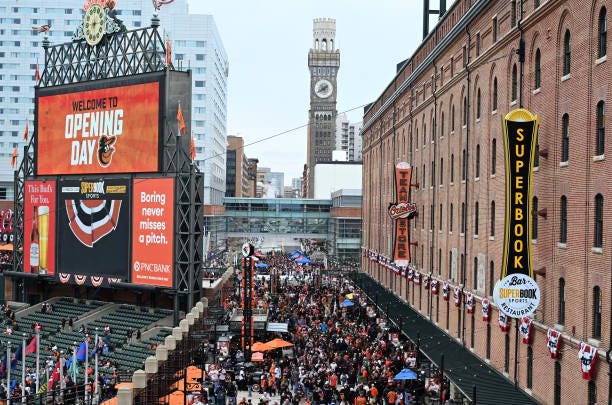
“Two lemonades, please,” I say as Dad reaches into his pocket to dig out some cash. The man behind the cart dunks a cup into a steaming container of ice to scoop it up, then squeezes two of the brightest yellow lemons into each cup. He smiles ear to ear as he hands us the freshly squeezed lemonade and exclaims, “It’s gonna be a great year!” Dad catches the man’s ear when he passes me my lemonade and says, “It’s her first game.” Dad’s whispers reveal the most delicate and vulnerable secrets. The lemonade man throws his hands and says, “You’re our good luck charm this year! Undefeated, baby!”
I have never met this guy before, yet he seems so familiar. As we shuffle away, lemonades in hand, I realize he reminds me of my Dad. At least, who my Dad used to be. Before she died. We were all different then. I was 13, barely. Now, 2 years later, I am learning to drive. I have learned to cook dinners, barely. We have new routines. But Dad remains a shadow of who he used to be. I’ll never forget those few weeks after Mom got sick. Our neighbors had a little dinner party for us to help celebrate my Mom’s birthday, her last. I didn’t understand what was ahead. But I see now their party was not just for Mom’s birthday; it was to pick her up in the face of the most terrible news. As soon as we walked into the Beekmans’ home, my Dad began taking off his clothes piece by piece, starting with his shirt. When everyone was confused, he said, “Oh, I thought I was supposed to wear my birthday suit.” Of course, everyone laughed, but most importantly, it cut the tension for Mom. It made it easier for her to show up. That was my Dad, always willing to do anything to make my Mom laugh. But now, without her, I could count how many times I have seen him smile, much less laugh until this very moment.
We shuffle through the crowd to the escalator—the longest I’ve ever seen—which takes us to the top of the stadium. As we ride up, Dad leans over to me and says, “You know, this could be our year.” I look back at him and nod, but I can’t help but notice the new lines on his face and grey streaks peppering his chestnut-brown hair. These last few years have aged him. When we arrive at the top, Dad goes to the stadium's outer wall and points out the city.
“That’s where we lived when we brought you home from the hospital,” as he points at a neighborhood of identical row homes. “And that’s the restaurant where I took Mom on a first date. And there’s the hospital tower.” His voice trails off. “But look over there, there’s our favorite ice cream stand.” People are milling about below, looking up at the stadium and those lucky enough to get Opening Day tickets. We are the lucky ones.
We take our places in this rounded sanctuary and wait for the festivities to begin. First, a blonde soprano sings the National Anthem as everyone stands, just as we are instructed. Some mouthed along the words with her, muttering the high notes and tapping their toes to the beat. Then, a bald man walks out into the middle of the grass to throw a ball to another man, who, upon catching it, turns to the crowd of screaming worshippers, throwing his hands up.
Music fills the air, and suddenly, our team—nine men dressed in identical black uniforms—scatter like cockroaches, taking the field for the first time. The announcer rolls “Play ball!” off his tongue, giving it enough breath and sound to make it five syllables. If there were rafters in this stadium, they would be vibrating.
The crowd goes wild, which is to say, they are beside themselves. Grown men yell at the top of their lungs beside other grown men with tears in their eyes, gripping that old lucky charm as they say silent prayers for this to be the year. Prayer is a funny thing; I used to pray a lot. Before she died. So many unanswered prayers left me wondering what the point was. Yet, these men are sure that the heavens would hear their shouts of acclamation and exultation, and the divine realm would then look favorably upon our team. I look up at my Dad, still standing with his ruddy old ball cap in his right hand, tucked up underneath his left arm.
“Watch this, Eva.” Dad likes to call me Eva even though everyone calls me Evangeline. It means “Good news.” Mom always talked about me being her miracle baby. They tried to have kids for a long time before I came along, which is why they were the oldest parents of any of my friends—an embarrassment once upon a time. Now, instead of being the girl with the old parents, I am the poor girl whose Mom died. I used to think it couldn’t get worse.
The first batter steps into the batter’s box, and my dad and the crowd roar. The season is officially underway. I learned these things over the last few years watching baseball on television. It all started that fall two years ago in the hospital. There wasn’t anything else in the sterile waiting room, so it quickly became our thing.
“There are two boxes: the batter’s box and the strike zone,” he once told me. “One visible and one invisible. One is the subject of no arguments, and the other is the subject of almost every yelling match on and off the field.” The first batter strikes out. That invisible box claimed its first victim. The last pitch, a little high, riles up the crowd, especially when they replay it on the big screen. People love arguing about what they can’t see: pollution, strikes, God. All a waste of time, if you ask me.
The second batter comes up to the box, the visible one, rests his bat on his left shoulder with his muscular right leg out facing the pitcher, a lefty, like me. Despite his effort and one somewhat-promising foul ball, he strikes out, too.
“Just the way it goes,” says my Dad as he finally sat down.
“Dad, why do you stand up the whole time?” I asked, a little worried about whether the people behind us would turn us in to the baseball police.
“Oh this is the best story, girl.” His eyes light up. “Your granddaddy and I were at a game. It was probably two or three years before you were born. We were losing.” He laughed. “It was bad. In those days, we were lucky to get a run or two each game.”
I had never heard this one before. Dad used to tell stories all the time. Every night it was a different adventure: hiking, biking, and all kinds of road trips. But by far my favorite stories were the stories about how he met Mom, about how he was crazy about her and she barely knew he existed, about the time she told him no to a date because she had to walk her dog. Each time he tells me a story, his eyes would do just as much talking as his mouth. As he gets going on this story—about my granddaddy—his sparkled, just like they always had and something inside me recognizes it like a long lost friend.
“Your granddaddy got real mad that day and stood up to leave. About that same time, our worst hitter swung at a sinker and knocked it all the way to Eutaw Street.” As he retells the story, he gets more and more animated.
“From that time on, granddaddy decided that all we needed to win was for him to stand. So he just kept standing. Then I felt bad for the old man standing there alone, and I stood with him. You know, solidarity?” Dad gave one more big belly laugh. There was a time that I would have been embarrassed by this. But right now, I can’t fathom telling him how silly he looks. Especially now.
For most of the beginning of the game, I waver between feeling enamored and bored. Bored by the slow play and scoreless match.
“Did you know, Eva, that baseball is the only modern game that is not beholden to a clock?” I scratch my head, wanting to come up with another option to prove him wrong. Nothing.
“Well, that explains a lot,” I say, offering a pity laugh. I am not sure that is something to be proud of, but I encourage him to continue.
“But here’s the deal though. Because it’s slow, it allows fans to sit with their wonder. It gives us time and space to just let our minds be. When’s the last time that the only thing you had to do was sit beside your old man and just be?”
Now that I think about it, I haven’t gotten to do this much in the last few years.
My thought is interrupted by the crack of a bat. One player, a righty, gets on base with a ground ball that slides right past the shortstop, out of reach. He knows it will be close as he rounds the corner to second base. He stretches out, sliding into second base with his fingertip, getting there just after the second baseman tags him out. When the umpire calls him out with a simple yet dramatic fist pump, the crowd erupts in boos.
“That was our chance!” Mutters my Dad as he throws his hat to the ground. I pick it up and hand it back to him. I can’t decide whether to be elated that he is showing emotion or embarrassed by my 60 year old dad acting like a flustered teenager. He must see confusion in my eyes because he apologizes profusely.
He invites me to grab a dog, which I immediately agree to without hesitation. We join the crowd of hungry hopefuls seeking this succulent sacrament. Dad takes me to the hotdog stand that he swears has “the best dogs in the stadium,” even though we pass several other identical hotdog retailers.
“Your Grandaddy used to take me to this exact stand when I was your age.” I roll my eyes in the way that only a teenage girl, embarrassed by her Dad, could.
“Eva, this is the good stuff,” he declares, holding up his steaming hotdog with nothing but relish on it. As I sink my teeth into my hotdog, I notice the woman on the other side of the trashcan from us looks so delighted. Her hat is turned backward, jersey proclaiming she is a hometown girl, stickers adorning her face, and she is holding the hand of a little blonde girl with curly hair. She looks strangely familiar. Sharing this meal beside her—together—and watching her laugh with her daughter, I see who I used to be. I see my Mom. Who she used to be. I long for my Mom, with her blonde bouffant hair. I can only dream about enjoying a hotdog with her and imagine her giving my Dad sass about how much money he is spending on a trip to the ballpark. Yet, in the eating, I feel her. In the watching, her presence is strangely near. The woman and her daughter walk off in a half-walk, half-skip, and I elbow my Dad to point at the two he is already watching. A tear falls down his face, and he says, “I know,” as he puts his arm around me.
We stand there in awe for just a moment, watching what that little girl and her Mom have, wishing we had it too, wishing I had it too, and wondering what life would be like if she were still here. All we have is each other and these two steaming hotdogs.
“Hey, guess what?” He asks as he wipes his welling eyes. “We’re undefeated!” The refrain of being unbeaten carries us back to our seats, laughing.
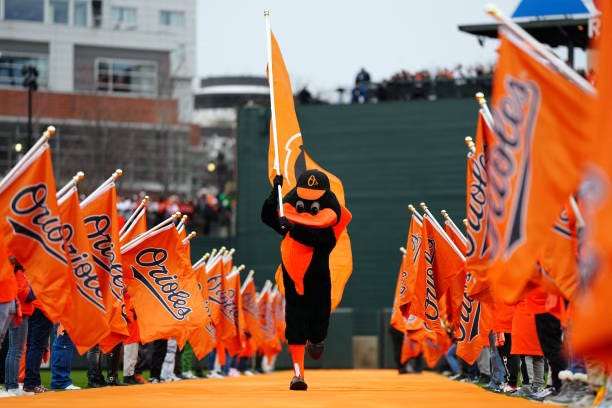
The game remains scoreless going into the seventh-inning stretch. The mascot—a huge black and orange monster, who actually looks like something from a horror version of the Muppets, jumps up on the top of the dugout where the players sit and direct the crowd in singing “Take Me Out to the Ball Game,” as if we are his church choir and he the maestro. The camera pans the crowd and shows images of smiling, sweaty faces on the big screen on the scoreboard. Dad grabs my arm and hoists me to my feet, throwing his arms around my shoulders and forcing me to sway with him as he belts out the notes the maestro demands.
Not only do I sing, but I scream at the top of my lungs. An almost-musical catharsis. With my throat tingling, I sit down to finish the game. Dad looks at me and says, “It doesn’t get better than this.” I look at him, confident that he is wrong, yet strangely satisfied. It is the first time I have felt normal—the first time I haven’t felt like I am different because of what happened, the first time I forget the gaping hole at the center of my life, the first time I am just me. Not the girl whose Mom just died.
The closing innings have an electricity to them. The energy we put into the seventh-inning stretch recharges the entire stadium, including the team. Our guys hit a lead-off homer in the bottom of the seventh, followed by a few hits that never resulted in a point because of some lucky catches from the outfield. Once we are winning by one, I feel a palpable relief in my Dad. He relaxes. His hope for the season remains alive, but not only that, I start to feel it.
We could leave right now, and I would be satisfied. But we stay.
During the top of the ninth, the other team scores the tying run off of a miscommunication between our second baseman and catcher. Going into our last at-bat, my Dad invites me to stand with him, which I do.
The first batter, our clean-up batter, strikes out swinging. The next guy up, our left-handed first baseman, steps into the batter’s box with a look of determination. His gaze stares straight into the opposing pitcher’s soul. Undoubtedly, the pitcher feels it, too. He keeps looking over his right shoulder to catch a runner who exists only in his nightmares. Then back to the batter, hoping there is someone else standing there. The lefty remains steadfast, offering a point of the bat down the first base line. The wind-up is calculated and choreographed perfectly, resulting in strike one. Two more pitches, still calculated but a little less choreographed. Both balls.
My Dad grabs his knees and squats down. “This is your pitch, man. This is it.”
The nervous pitcher removes his cap and wipes his sweat as he takes deep breaths and turns to his team in the outfield. The second baseman throws his fist into his well-loved leather glove.
The wind-up and pitch.
Crack!
My Dad grabs my shoulder. We both feel the crowd gasp—a collective breath that certainly had the power to create a vacuum effect over the stadium. The crowd watches the ball gain altitude slowly as it soars down the first baseline. Over the outfielder’s head, just outside of the reach of his glove, the ball lands in the bleachers among ecstatic, bouncing fans. The crowd erupts.
Dad falls back into his seat and throws his head back just after throwing his ball cap into the air. We win. Hope is alive. We’re undefeated.
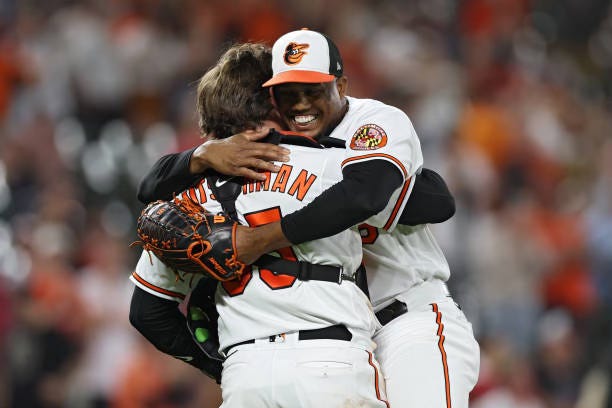
We gather ourselves to make the jubilant walk back to the car. On the way, we get caught up in the crowds of believers—new and old—recessing from the park, riding the joyful cloud of victory. We are undefeated and seemingly invincible. Everyone is ready to put it all on the line for this season, this team, this city. My Dad included. We have life again.
The glow of the city lights the way back to the car, though I’m confident our faces are glowing with enough pride to do the job. When we finally return to the car, we hop in and stay put while the traffic disperses. Dad turns on the radio, the post-game show. As we listen together and remember the sights and smells of the game, both of us exhale and smile at each other. No words are necessary.
I twist the radio knob and say, “We should do this more often.” Dad smiles and reaches his arm around my shoulder, pulling me in for a kiss on the top of the head. The first time in years.
No posts
Comments
Nothing yet. Say the first thing.
Sign in to join the conversation.