
As a child, I went to the public library occasionally. Located in a part of town I rarely went to, I would only go if I had to. There were always people who looked different from me outside, some asking for money, others enjoying a cigarette they were given by a passerby. The public library made me uncomfortable. Instead, I would often choose to do research at the bookstore on the other end of town with its clean, comfortable couches and the opportunity to keep the books I wanted. So the first time I discovered the value of the public library, I was well into adulthood. Living in my hometown, now with my own little family, I often found myself entering the white building that seemed so much bigger and scarier as a child. But now, I saw it for what it was: a gift to the community; a gift to me.
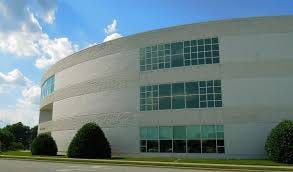
Each week, I would peruse the shelves on the second floor for the books that would be my companions for the days to come. I scanned each spine, evaluating the topic and author as if I had some advanced algorithm to decide whether to pull it from the shelf. Once I had an initial pile of around ten books, I would find a seat – most of the time one of those faux wood desks with dividers so that whoever sat at the desk could remain anonymous, or at least not cheat off their neighbor. I’d narrow my pile to two or three books and just sit for hours reading them.
It felt so decadent.
The library – this one, in particular, that I had visited many times before and not realized its value–was a place I could simply enjoy without any expectations of production or sales.
There are very few spaces in society that are explicitly shaped around simply holding space without agenda. These spaces resist and subvert the economic temptations of productivity measured by revenue.
While I frequented that library for books with an explicit purpose of learning about a particular field of study, the library itself resisted the capitalist agenda. In a world where meaning and value is based on a price tag, the library subversively offers a different model where the only currency is curiosity. The moments of respite one can encounter in the library – whether respite from unrelenting heat outside or respite from the pressures of production – cannot be measured.
While libraries are not the only place this occurs, they are unique because held within them are little doorways to respite from productivity as well. Reading literature creates such a space wherever it is done. Stories build an oasis in the wilderness of capitalism and provide refuge from the pressures to produce. Stories, reading them or listening to them, allow us just simply to be.
In Becky Chambers’ The Psalm for the Wild Built, human Dex and robot Mosscap meet one another only to go on a journey together. Dex, a tea monk, is in search of something. Mosscap is simply along for the ride.
In this world, tea monks are part therapist and part pastor, creating a space for weary and sometimes content travelers to just be. They park their tea cart, brew a concoction of nearby herbs, and wait for anyone who might need a cup of tea. Tea monks’ job is to hold the space for an unproductive moment. They don’t fix anything. They certainly don’t convince their visitor of anything. They don’t have an agenda. They just simply hold space.
When I began this book, I found myself on edge, waiting for the conflict and action. I was waiting for something that never came. As I noticed the anticipation in me, something in me softened alongside Dex as they followed their heart’s desire to be a tea monk.
Toward the end of the book, after a long journey, Mosscap looks over at Dex and says, “You keep asking why your work is not enough, and I don’t know how to answer that, because it is enough to exist in the world and marvel at it. You don’t need to justify that or earn it. You are allowed to just live.” (139)
It is enough to exist in the world and marvel at it…You are allowed to just live.
As a serial over-achiever, I am learning how to marvel and simply exist. I am learning how to let my wonder lead me on adventures in delight and joy. And all of this in a time in which delight is a little lot more challenging to recognize.
Marveling, wondering, delighting. These are not skills they teach in school. These are not skills I learned in any jobs I’ve had, especially given that reviews of productivity are part and parcel of what it means to work in the 21st century.
Marveling, wondering, delighting. These are skills I’ve picked up while hiking through a pine forest on the Appalachian Trail. I’ve learned these skills while biking at dawn through the rolling hills of Iowa. I’ve learned to marvel at the little things: when I make eye contact with my senior dog and she wags her tail telling me she’s excited to see me; when I watch my kid sleep peacefully in the moment just before I wake her up for school; when the snow is falling on a quiet January night.
I delight in the stories, many of which will be found here in this newsletter, that I can read while curled up on my couch wrapped in a warm blanket.
These are the moments I long for in life. They nurture my soul in ways that few things can. Their pricelessness overshadows the meaninglessness capitalism assigns to them for their resistance to monetary value.
“Then how,” Dex said, “how does the idea of maybe being meaningless sit well with you?”
Mosscap considered. “Because I know that no matter what, I’m wonderful,” it said. There was nothing arrogant about the statement, nothing flippant or brash. It was merely an acknowledgement, a simple truth shared. (141)
Upon reading Psalm the first time, I shirked at the idea of being meaningless in part because I have worked my entire life driven by the idea of making an impact on the world. I’ve worked my entire life to make a difference, produce something that lasts.
And yet, the further I have traveled down the road of productivity and impact, the more clear the opposite has become: sometimes the greatest impact a person can create is to step outside of the system itself. As a young adult, I assumed that impact could be achieved once I ascended to a particular role in my career. But the longer I have climbed the ladder, the more I have realized impact is not actually contingent on climbing.
Goodness is not contingent upon the tasks I accomplish. Mosscap teaches that we must embrace the possibility of meaninglessness to truly be free. In doing so, we are liberated to an existence that does not rely on production or a particular ending. Embracing meaninglessness loosens our grip on the simple byproducts of our actions in the world.
Re-storying our lives invites us to resist the myth of a “productive” ending and embrace the possibility of meaninglessness.
Reading fiction can be seen as non-productive in the sense that it doesn’t accomplish anything tangible in the world. And yet, that is precisely its power. It teaches us how to dive into a moment. It teaches us how to marvel. We can do nothing to affect the story that has been written; only marvel in it as we get wrapped up in it. In that willingness to marvel, we reclaim something essential: the right to simply exist, to wonder, to be.
Subscribe so you don’t miss an announcement in the next week about an upcoming live event! I’m gathering a few friends and we’re up to something exciting!
You may have noticed that there is a new sub-Substack, Marginal Musings. This space will give me a place to put more experimental work and other writing I am doing. If you are already subscribed to A Modern Canon, you’ve been automatically added to the Marginal Musings list too. If you haven’t subscribed, what’s stopping you?
No posts
Comments
Nothing yet. Say the first thing.
Sign in to join the conversation.