
Eric Rosengren worked on monetary policy and bank supervision for more than four decades at the Federal Reserve Bank of Boston, spending his final 14 years there as president from 2007 through 2021 when he helped to navigate the Fed through the worst years of the Great Financial Crisis all the way through the emergency steps taken to avoid another bond market debacle when Covid hit.
So what does Eric see now as the new Fed Chair Kevin Warsh takes over at a time when inflation has run for five years above its 2% target? After a long period of most FOMC members being willing to wait and see if inflation comes down, they are now as sharply divided on whether or not they need to start raising interest rates. And the latest consumer price report has once again shown that inflation, which has steadied, may not be steadily falling, but at least it’s not moving sharply higher again.
He joins me after the release of the July consumer price report, where the year-over-year number has fallen from 3.5% to 3.3%, and the core CPI number that takes out volatile food and energy prices is down to 2.5% from 2.6%. Skinny progress here: no big move back down toward the 2% target but no big resurgence either.
Eric says it’s not enough progress on inflation to change the Fed hawks’ minds about the need to hike rates now.
”My guess is <that> for those people who are concerned about having missed the <inflation> target for five years, they’re not going to find it compelling enough that they’re not going to continue to want to tighten,” Eric says. “I mean one reason overall the report was so good was we had <oil> prices down but…since that time…prices have gone right back up and we continue to have <price> pressures in the economy.”
He says a relatively tight labor market that is likely to get tighter as more people reach retirement age and immigration policies remain restrictive is also likely to be inflationary. The failure of the U.S. and Iran to reach a stable agreement to settle the Middle East war will keep oil prices high and volatile for the foreseeable future.
As for where the Fed goes next, Eric says the question it faces now is how quickly officials think they can get back to the 2% inflation target and how confident they are it’s actually going to happen when their forecasts for the last five years have been overly optimistic for so long.
Looking ahead to the next meeting, he says, “Assuming we are in the same situation we are in now in September, I think there’s a high probability that they don’t do anything… And as we get into the midterm elections, I think it’s even less likely we see them do it unless there’s a really strong compelling case.”
How would Eric have voted on a rate hike at the July meeting? "I guess my own view is that the <rate> increases are overdue and that we’ve missed on inflation for so long that I wouldn’t be as comfortable saying <that>, because I get a few <inflation> reports that are good, <that it’s OK to hold policy steady now>. I…would have probably tightened at the last policy meeting.”
He says that the words of Fed chair Warsh have been quite striking on “how clear he’s been wanting to bring inflation down. But at some point your rhetoric has to match your actions, and waiting to see if things hopefully come down has been to some extent the strategy they’ve been following, and it hasn’t been succesful.”
So what about forward guidance, the biggest bugaboo Warsh has unleashed in his two-and-one-half months of leading the Fed? He proclaimed at his first FOMC meeting that he was no longer going to provide it, provoking sharp criticism from some former Fed officials and others.
Warsh has said instead of FOMC members using forward guidance to basically tell markets where they are taking policy next, it needs to stop doing that and let bond traders and professional Fed watchers watch the data to make their own assessment of where the Fed is at any point in time and where it is going next.
Referring to Warsh’s first post-policy meeting press conference, where Warsh put it on the table, Eric says, “I would separate out not communicating with providing forward guidance.”
”Whenever other <Fed bank> presidents or other <Fed Board> governors speak, they speak from their own viewpoint,” he explains. “So if particularly around an FOMC meeting, if you (the Fed chair) say we’re laser focused on inflation, but we’re not doing anything about it, even as we’re well above the inflation target, that deserves an explanation.”
So dive in and hear Eric Rosengren give the clearest, least biased, pro- or anti- Kevin Warsh view that I have herd on why and how he wants to stop giving forward guidance as he sets up task forces to guide the next era of Fed policy.
Spoiler alert: Eric says if Warsh is going have a post-policy meeting press conference, he can’t say nothing about the decision that has just been made, and if he isn’t going to say anything about the decision he shouldn’t have a presser at all.
A good CPI report 00:01:16:10
I think it was a good report. I don’t think one report alone solves the inflation problem. As you noted, looking at it over a year, it’s still over 3% on the total. It’s clearly not a 2% for the core either. And the PCE is the inflation rate that the fed has historically focused on. So I think it’s definitely positive.
Probably a split response to the report by the Committee 00:01:42:12
I think for some people on the committee it’s likely to be sufficient. My guess is for those people who are concerned about having missed the target for five years, they’re not going to find it compelling enough that they’re not going to continue to want to tighten. And I think that’s the challenge. I mean, one reason the overall report was so good was we had prices down, but since that time, well, prices have gone right back up and we continue to have pressures in the economy.
All in all a tight labor market 00:02:16:04
So if you think about the labor market, initial claims were 199,000. That’s quite low by historical standards. The unemployment rate actually is low. The payroll growth number was negative. But in some sense, since we’re not having an increase in labor supply, you actually wouldn’t expect a whole lot of growth and payroll. So in a tight a relatively tight labor market.
Sufficiency depends on the Fed’s objectives 00:02:46:06
The question is how quickly do you want to bring inflation down. And if you’re willing to continue to be patient, this number probably is sufficient. If you think that coming off of five years of misses, that we shouldn’t be as confident that we’re going to get inflation down to 2%. 1 or 2 reports might not by themselves do it.
A question of patience and outlook 00:03:50:17
Some of the committee members are probably already ready to hike. And I think it’s partly whether you think that they can afford to continue to have year over year inflation over 3% for, you know, another six months. How quickly do you think that that inflation is actually going to come down? And if labor markets are relatively tight. How long is it before it starts being a bigger problem for more general inflation.
Risk to an inflation jolt is there 00:04:21:19
So the labor market wages don’t seem out of place. But the shrinking labor supply is an issue. And with people reaching retirement age and the immigration policies that we’re following, it is likely that if we have strong growth at any time, that it it will be pretty quickly inflationary. Now we’ve had fairly weak GDP growth. The last number was 1.5%.
Considerable if spread-out tightness 00:04:51:12
Part of that is because we’re importing a lot of the capital goods that are going into the AI spending. So that goes in as imports rather than as investment. So they’re definitely parts the economy that are doing quite well. And a lot of it’s being driven by the tech sector. And I would argue that obviously there are other areas of the economy that are continuing to be relatively tight as well.
Unsettled Middle East will remain an impediment to stability 00:05:54:08
Yeah. I think it’s your last point, actually, that we’re probably not going to see the pre-war prices anytime soon as you highlight is highly volatile, but it doesn’t look like there’s going to be a very stable agreement anytime soon. And without that stable agreement, there’s going to be concerns at any time that there could be a rising of tensions.
Not so much a problem for the US 00:06:18:19
And it’s not as big a deal in the United States as it is in other parts of the world, where they’re far more dependent on the strait than we are. So, you know, it’s not as if we’re in the United States. We’re going to face higher prices. Rather unlikely that we start seeing long lines for gasoline. But as we get into winter for Europe, they get their natural gas from the Middle East.
Some permanent elements of change here 00:06:45:08
It could be more significant problem globally and even in the United States. I think the longer this continues, the you start putting higher risk premium on prices going forward. So some of it is obviously a temporary shock depending on what’s happening in the Middle East. Some of it’s a permanent change in how you think about whether prices are going to be determined by the same factors that they were prior to the war.
Making the strait riskier is simply too easy and cheap 00:07:24:00
So two drones flying over a ship are sufficient to get people in insurance to stop in the strait. It’s not that expensive to buy a drone. It’s not that expensive to basically shut down the strait. So that puts a risk premium on anything that’s coming through. If you’re really dependent on getting natural gas, fertilizer or and it needs to be shipped through that straight, you’re going to be worried that at any time it can be shut down.
Shocks will become more damaging 00:07:52:22
So one of the things you would logically do is build up inventories so that if it happens again, you will be able to whether it. Well, but right now our inventories are low not high. And most of the world has depleted their inventories. So we’re in a situation where shocks probably are going to have a bigger impact going forward just because of the state of the market right now.
Housing/shelter costs are very important 00:09:04:07
So it is good news. It definitely is good news that shelter prices aren’t going up as quickly. I would highlight that that number is particularly important for the CPI because it’s roughly 35% of the wave. So all the concerns about over weighting the CPI with housing when prices are up also work, when prices are going up more slowly.
Focus more on non-shelter price trends 00:09:27:17
So I actually focus on the non shelter a little bit more than I focus on the shelter. Shelter is not measured particularly effectively and probably reflects a lot of considerations that are different than the overall demand and the economy. But I would agree with you that from the CPI there’s nothing that’s highlighting rapidly increasing inflation across the board.
How confident should we be in Fed forecasts? 00:09:55:15
I would also note that the PC has been a bit higher than the CPI, and that continues to be true, and it’s also well above the target. So I think part of the discussion is really how comfortable you are with the inflation forecast. How quickly do you think you get back to target and how confident you are that that’s actually going to happen, given the forecast that we’ve seen out of the Fed for the last five years have continually been optimistic.
Excess optimism has its cost 00:10:25:24
So at some point, being optimistic and being wrong has to start weighing into how you think about the inflation numbers and how compelling they need to be, whether it needs to be more than 1 or 2 months, whether it needs to be quite clear that the inflation pressures are behind us.
The Fed is likely to not do anything… 00:11:12:05
So obviously it does depend a little bit on how the data comes in. And the geopolitical situation is still unstable. But assuming that we were roughly in the same situation that we are now in September, I think there’s a pretty high probability that they don’t do anything. And as we get into the midterm elections, I think it’s even less likely that we see them do it unless there’s a really strong, compelling case.
But…rate increases are overdue 00:11:40:24
I guess my own view is that the increases are overdue, and that we’ve missed on inflation for so long that I wouldn’t be as comfortable saying, because I get a few reports that are good, that, I mean, I would have probably tightened at the last meeting. So if I would have tightened at the last meeting in September doesn’t look dramatically different.
In the same circumstances I would not change my vote in Sept 00:12:08:06
I don’t think I change my vote. So if I was one of the dissenting presidents who voted to tighten policy. I’m not sure that the CPI alone is going to be sufficient for them to think that, that we shouldn’t be taking further action. And the words of the chair have been quite striking, and how clear he’s been about wanting to bring inflation down.
Wait and see has not worked 00:12:34:20
But at some point your rhetoric has to match your actions, and waiting to see if things hopefully come down has been, to some extent, the strategy we’ve been following. And it hasn’t been that successful.
That’s right… 00:12:55:03
The same strategy that Jay did. And it didn’t work for Jay. Why do you think it works for Kevin.
Odds seem to favor them doing nothing a the next meeting 00:13:36:10
I think if we see reports like we saw today in the CPI and it’s confirmed by the PCE, which remains unclear, that they probably will not do anything, that I think the chair is going to continue to argue that they should wait and highlight some of the things that you just highlighted, which is if you strip out the oil prices the last couple months, inflation hasn’t been that high.
Grading Warsh; Too early to tell, but some good ideas 00:14:48:01
I think it’s too early to tell, but I think the actions he’s taking, forming groups to reevaluate the things that we’ve been doing for quite some time and asking, is there a better way to do it as a perfectly reasonable way to start? It’s a reasonable way to start a new job where you at a company as well as at the fed.
Task forces remain a wild card 00:15:11:09
So I think that that probably is a good idea and very appropriate. And he’s talked kind of vaguely about the framework document, but, I think it’s going to be difficult to dramatically change the framework by January if there’s not been that much preparatory work done. We don’t know what the reports are going to say. We don’t know how the rest of the committee’s going to feel about those reports and the staff as well.
Awkward timing 00:15:46:11
So I think it’s going to be he has a if he really wants to do it for the January meeting, which is traditionally when the they approve kind of the policies that they’re going to be using at the FOMC for the year, that’s not that much time. And at the same time, he doesn’t strongly believe that the current framework is the right framework. So it’s rather awkward time for actually setting policies.
Framework document 00:16:44:17
So the framework is the document that says this is the the way we think we should implement policy to be consistent with the Federal Reserve Act and the dual mandate. So if you have a dual mandate of being focused on inflation being stable at a low level and for full employment, then how do you actually achieve that? So historically, the framework document has provided some insight as to what economists would say as a reaction function.
Not an equation but a mapping of sorts 00:17:18:20
So as data comes in, how should the Fed react? So if you keep seeing inflation higher than what you say you want to get to, how should you react to that? If you see unemployment much higher than you want, how should you react to that? Now, it’s not a mathematical equation that you can just follow and say they’re automatically going to do this or that, but it provides a pretty clear overall idea of if you keep missing on one or the other element of the mandate, how is the Fed going to respond? Ben Bernanke has basically highlighted that if inflation’s well above 2%, the Fed should probably tighten. And if the labor market is well above their estimates of full employment, the fed should probably ease. And when those two are in conflict, you should probably weigh how far away they are and how long it’ll take to get to where you want to be.
Will Warsh rework the framework agreement? 00:18:20:24
So that’s rough, very roughly what the current framework is and what it what it has been basically since Ben Bernanke, with some changes that I won’t go into or in more detail than you need. But I think there’s a question about whether the new chair wants to rethink that framework and be more specific about the things he thinks the Fed should be focused on.
Will productivity end up in the framework document? 00:18:49:13
So traditionally, for example, productivity doesn’t get a lot of attention in the framework document. Certainly, in some of his speeches prior to becoming chair, he highlighted productivity quite significantly. So that would be a big change, particularly because we don’t measure productivity particularly well. And it moves very slowly over time. So usually you’re looking at something that you can respond to more frequently than that, but it remains to be seen what they decide is the appropriate framework.
Tight lips do not help communication 00:19:26:21
But I would say the current communication strategy of not saying very much at all makes it very hard to deduce what that framework is that they’re actually following.
Verbiage is there but policy is tolerant- 00:20:12:12
I think it’s possible he’ll want something more aggressive on inflation. But then he has to act as if he’s going to be more aggressive on inflation. So I think that’s the challenge as his words have been consistent with that. I’m not sure if you use a variety of relatively simple shorthand models for where the fed funds rate is, and you put in an inflation number that’s over 3% and an unemployment rate that’s a little bit below full employment. That probably would get you a tighter fed funds rate than what we currently have.
Some communication and policy choices are easier than others- 00:21:48:03
So I think forward guidance, there are times when it’s appropriate to use in their times when and probably isn’t that helpful. And it’s particularly not helpful if you don’t know where inflation and unemployment are going. So if the unemployment rate is close to 10%, it’s not that hard to be saying that we’re going to continue to ease until we see a labor market that’s much closer to where we want to be.
But when direction is unclear talk is not helpful 00:22:12:23
…As for guidance, but it’s probably I don’t think there’s much cost to that. We’re not in that environment right now, and I think you can make an argument that when you don’t know where you’re going. You shouldn’t talk about where you’re going. So the lack of forward guidance, I don’t think, is as big an issue as not explaining why you’re doing something now.
Incongruities require explanation 00:22:39:05
So I would separate out not communicating with providing forward guidance. So the only person who can really speak for the entire committee is the chair. Whenever other presidents or other governors speak, they speak from their own viewpoint. If you say we’re laser focused on inflation, but we’re not doing anything, even though we’re well above target, that deserves an explanation.
Not speaking has its drawbacks 00:23:14:14
It doesn’t have to be what we’re going to do with the next meeting or in the next couple of meetings. But I do think you should explain why the majority felt the way it did. Now, we’ve gotten some of the information from some of the people who voted on both sides of the last FOMC. So it’s more that the chair is not speaking rather than other people aren’t speaking, but unfortunately, the other people speaking or speaking for themselves and for outside observers, distinguishing between what individuals think and what the committee thinks is not that straightforward.
There are some obligations to speak- but not what to say 00:23:51:12
So I think there actually is an obligation, if particularly if you’re going to have a press conference, if you’re not planning on saying anything, you probably shouldn’t have a press conference. But if you are going to explain why you took the action that you did, the press conference is the right place to do it. And only the chair has the ability to say, this is how I would summarize how the committee felt about the majority thought the following.
Dissenters speak for themselves 00:24:18:04
And he doesn’t have to explain the dissenters, because the dissenters will get an opportunity on their own to explain their dissents. But there’s no one else who can say as a you know, I sat through a day and a half and this is how I would summarize why the majority of the people thought this was the appropriate policy.
Share Kathleen Hays Presents: Central Bank Central
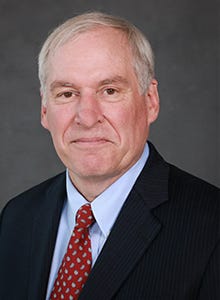
Eric S. Rosengren was the thirteenth president of the Federal Reserve Bank of Boston. He began his term in July 2007, after serving in various roles at the Bank since 1985, and retired September 30, 2021.
Rosengren was born in Ridgewood, New Jersey. He graduated summa cum laude from Colby College with a bachelor’s degree in economics. He then spent one year in Australia as a Thomas Watson Fellow. Upon his return to the US, Rosengren attended the University of Wisconsin, Madison, where he earned a master’s degree in economics in 1984 and a PhD in economics in 1986.
Rosengren held senior positions within the Boston Fed in both the research and bank supervision functions. He joined the Boston Fed in 1985 as an economist in the Research Department. In 1989 he was promoted to assistant vice president and then to vice president in 1991 as head of the Banking and Monetary Policy section of the Research Department. Rosengren was named senior vice president and head of the Supervision and Regulation Department in 2000. He assumed the additional title of chief discount officer in 2003, and in 2005, he was promoted to executive vice president. While in the bank supervision function, he obtained significant domestic and international regulatory experience related to the Basel II Capital Accord.
In his work as an economist, Rosengren has made the link between financial problems and the real economy a focus of his research, and he has published extensively on macroeconomics, international banking, bank supervision, and risk management. He has been an author of over one hundred articles and papers on economics and finance, including articles in many of the top economics and finance journals.
Rosengren retired September 30, 2021.
Comments
Nothing yet. Say the first thing.
Sign in to join the conversation.