

Drift doesn’t just mysteriously happen in businesses. And the reality is that it never happens there first.
It happens in people.
Without a destination, people don’t just drift operationally. They drift culturally.
And over time, they can wake up in a life that no longer feels fully aligned with who they are or who they want to be.
For me, these past few weeks have not been a break in Cooper’s story, although it may have felt that way. Instead, they have been a time of exploration so that the story can emerge in a way that doesn’t just put words on a page but will deliver a real message that can help you find your own way forward.
One thing I have learned over the years from observing thousands of businesses and their leaders is that people within a culture normalize it. Even if it’s not serving them. Especially founders.
Many founders believe culture begins when they hire their first employee. I no longer think that’s true. Culture begins with the first decision about what matters, what doesn’t, and what kind of future you’re trying to create. A team may eventually inherit that culture, but it starts long before anyone else arrives.
Which is why reflection matters so much.
And why outside perspective matters.
And honestly? It’s why parables help.
Because stories let people see themselves indirectly first.
And that’s where my thoughts have been, particularly over this past month. Cooper’s story hasn’t been moving forward as fast as I wanted it to because of a very simple factor that has become clear to me.
The reason he’s been having a challenge making decisions about the future of his company, even of his life, is that everything about its beginning was about external influences. There was no defining moment where he recognized what the company was being built for or who it was being built for.
It brings to mind one of my favorite life lessons and scenes from Lewis Carroll’s beloved story, Alice in Wonderland.
This particular scene shows Alice walking along a path when she comes upon the marvelous Cheshire Cat. Here is the part of their exchange that fits our conversation here:
Alice: “Would you tell me, please, which way I ought to go from here?”
Cat: “That depends a good deal on where you want to get to.”
Alice: “I don’t much care where—”
Cat: “Then it doesn’t matter which way you go”.
It has become clear to me that before Cooper can move forward, he needs to go back. At the moment, he doesn’t really know where he wants to go.
Cooper’s dilemma isn’t uncommon. In fact, I have recognized it keenly in my own journey. I first formed my company in 2009. I had been laid off from a corporate position, and the economy at the time was challenging. Even though I was younger, age was still a factor. I was already in my 50s. Prime time for some things, not for others, it seemed.
I was also in the middle of getting my degree. Something I had put off for decades. It was a dilemma. Should I stay the course and finish the degree? Look for other work? Take a different path? All good questions and valid ones.
But the question I was failing to ask myself was what I wanted in my life. I knew what I needed. But what did I want?
In the end, I stayed the course with my degree despite plenty of well-meaning advice saying that it wasn’t the right choice. And, in the end, that decision made all the difference because it helped me to answer that question.
Even back then, culture drew me in. I was fascinated by it in a company, so when I chose my degree focus, I chose Organizational Psychology.
My first course within my major was titled simply “Decision Making.”
Little did I know how that would change my trajectory, then and now.
It’s where I began to understand that a company’s culture shone through in three places:
In what they measured
In what (and how) they communicated
And, how they made decisions.
When I came back into the workforce, I knew that’s where I wanted to make an impact because all of those areas are related, and my work in business intelligence was born.
The primary driver for me became how I could help my company make better decisions by establishing a clear line of sight into a culture everyone understood.
And today, it’s still the work I want to do—only now through my own company.
I knew this mattered because over the previous years of experience, I had seen how companies drifted unconsciously through decisions and proximity into failed efforts.
And I think that realization sits at the center of Cooper North’s story more than I originally understood.
One point Cooper and I share is that we both came from a corporate environment where we were successful. We weren’t inexperienced, fresh-out-of-grad-school consultants.
And that’s the underlying lesson when it comes to the idea of how we carry culture with us that can also work against us.
When someone leaves a place —especially after years —they are not simply leaving a job, a town, a marriage, a company, a role, or anything you can name here.
They often leave an entire operating system behind, which is why these transitions can feel so disorienting.
Not just emotionally but existentially as well.
Because we suddenly stumble into this realization:
“I don’t actually know which parts of me were mine… and which parts belonged to the culture I adapted to.”
That’s enormous.
And honestly? It’s why we tend to drift into something that feels like the place we left rather than pushing us to create a place of our choosing.
That has certainly been the case for Cooper.
He didn’t just leave a role. He stepped outside a culture that had shaped everything about how he operated. His pace, his sense of urgency, his language, his personal identity as a professional role, and, yes, how he made decisions.
And now he’s arrived at the critical moment of asking:
What is the culture I actually want to create and carry forward intentionally?
That’s not a branding exercise. That’s identity work. Much harder. Because many people assimilate so completely into external cultures that they lose conscious relationship with their own values, rhythms, and worldview.
It is how we move away from being just driven by a desire to survive, belong, succeed, avoid conflict, and preserve some level of security, which is always false.
Those reflex drifts are human. But not the recipe for success on our terms
Cooper is now asking:
What is actually mine?
That question must be answered before he moves to any others.
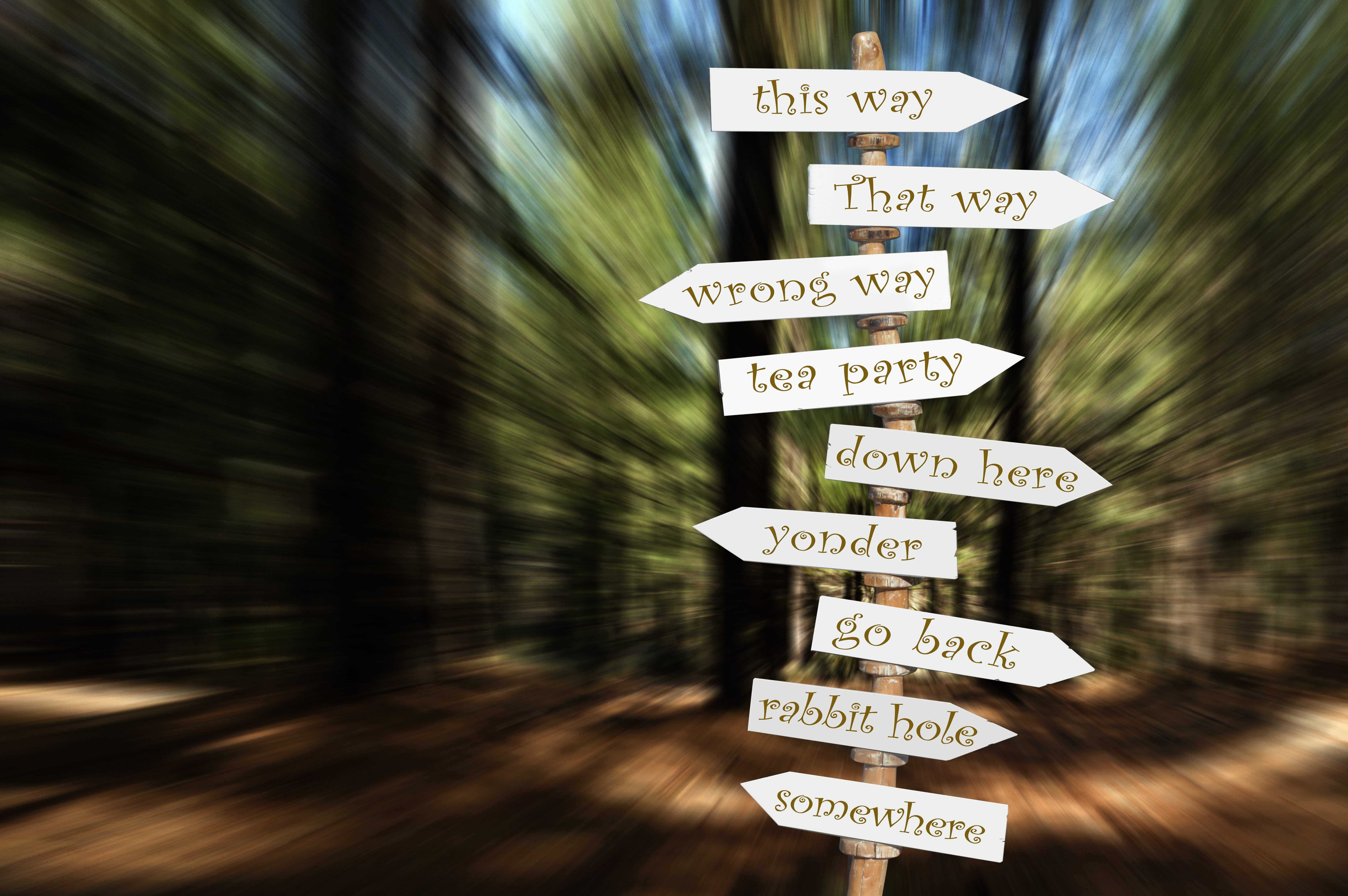
As we turn back to ourselves, we may also need to hit the pause button.
As we look at ourselves and our work, this is the starting question:
What currently matters most here?”
Not theoretically. Operationally.
Here’s how you can recognize the answer:
What gets attention?
What gets resources?
What gets forgiven?
What gets celebrated?
What creates consequences?
What gets protected?
This is why culture and decision-making are inseparable.
Once you know the answers to those questions, these follow:
What are your decisions organizing your life and work around?
What destination are your choices reinforcing?
What culture is forming unintentionally?
What if drift isn’t a motivation problem, but a clarity problem?
While going through these questions won’t, on their own, give you a roadmap for moving ahead, they will help you better understand where to begin and what makes sense for you going forward.
The work I’m doing beyond writing this book is built around exactly this — helping founders and business owners move from drift to direction, one decision at a time.
On June 16th, I’m leading a 90-minute workshop: The Decision Framework Your Business Has Been Waiting For.
We’ll move beyond recognizing the patterns and begin building a framework that reflects how you think, what you value, and where you want to go — whether you’re a staff of one right now or building toward more.
There will be time for your questions, your decisions, and your situation. That’s the part I’m most looking forward to.
I’d love to have you in the room. Here is the link to register:
https://maven.com/kathi-laughman/the-decision-framework-your-business-has-been-waiting-for
The workshop is $200. As a thank you for being part of my community here on Substack, use code IDEAL at checkout for $50 off.
And, as always, if you have any questions about today’s message or the workshop, I’d love to hear from you.
If you are new to The Possibility Factor, this publication offers a behind-the-scenes look each week at the book I’m currently writing under the same working title.
Our central character is Cooper North, a business owner at a crossroads who is learning that much of what he thought he knew is no longer giving him the answers he needs. We are following his journey as he learns to ask better questions.
Note: You can find the earlier chapters and reflections collected here: The Possibility Factor.
Comments
Nothing yet. Say the first thing.
Sign in to join the conversation.