
*Dear friends, this post is a little bit different than what I usually write about. I know many of my readers are not Christians, and yet, I think you may find in this piece something that will be of value to you, something that speaks to your life. It will certainly show you a large piece of my life. Here I share my life’s vocation. Something I don’t say much about here. But I have so many stories. The mystery novel I am working on is set in a place like I describe here.
Text within this block will maintain its original spacing when published
Church pastor.
Bible study teacher.
Sunday school leader.
Counsellor and pastoral caregiver.
Thrift Store Manager
Social services program coordinator.
Business director.
Employee relations director.
Fundraiser.
Executive director of residential programs.
Community organizer.
Chair of the Social Advisory Committee to Mayor and Council—in several cities—as well as a member of various community committees.
These are some of the many roles I filled while I was active as a Salvation Army officer, and usually all at once!
In 1990, my husband and I entered The Salvation Army College for Officer Training in Toronto, Canada. To say it was a culture shock would be an incredible understatement. Wow! What a change we went through!
For those who knew me in my early years, I’m sure they wondered how I got there.
Who? Kathie Hartley? She’s doing what?
Although I grew up attending The Salvation Army church with my mother, but as a teenager I was a wild child. I mean, come on—it was the 1970s: drugs, rock n’roll, and the spirit of free love leftover from the 60s. The smell of weed was in the air and kids were smoking pot outside the school, with even my Grade 10 math teacher joining in.
I was definitely a rule-breaker, feminist, protester, justice warrior, and all-around pain in my mother’s backside. It amused me to shock my parents. Once, as I left for school in bell bottoms, a peasant blouse and braless. My mother stared at me and asked where I thought I was going dressed like that.
“I’m going to school.”
And I always went to school. Despite my free spirited ways, I loved learning and I was creative, curious and happy when I was writing, playing violin, painting or making something with my hands.
My English teacher teacher saw promise in my writing, and I dreamed of university, becoming an English Lit professor, and writing novels that might one day become classics.
Yeah, that never happened.
One day, my father said, “I’m not paying for you to go to university!”
Just like that, difficult family dynamics brought my dream to an end.
But that creativity followed me.
Why am I telling you all this backstory?
Because, that was when the wild, creative child became depressed. Then she simply became the wild, older teenager: partying, drinking, and eventually trying drugs.
It was a good thing I didn’t like them. I hated the loss of control, and that likely saved me from an awful life.
So I stuck to drinking.
Parties. Nightclubs. Dancing the night away.

One day I met my husband while out partying. After that, we both just stopped living that lifestyle.
A few years later, when I returned to my faith, I kept seeing Isaiah 61—a chapter in the bible that kept opening itself up to me, underlined when I was a young teenager, nagging at me. I felt God was dragging me back to those words, again and again.
Suddenly those words began to feel less like something I had read and more like a calling.
Text within this block will maintain its original spacing when published
The Lord God’s spirit is upon me,
    because the Lord has anointed me.
He has sent me
    to bring good news to the poor,
    to bind up the brokenhearted,
    to proclaim release for captives,
        and liberation for prisoners...
Years later, that is exactly the direction my husband and I went with our ministry. We began working with people who were unhoused, living on the streets, struggling with addiction, or involved in sex work, we both felt a deep empathy and compassion for them.
We knew that had we not stopped that lifestyle, there but for the grace of God…
I raised a lot of money and we built an emergency shelter and transitional housing program in Maple Ridge, BC. There we ministered to the lost and forgotten.
Then one day I recognized someone…
A man arrived at our feeding program who looked familiar. I couldn’t shake the feeling and was sure I knew him from another life. Finally, I approached him and asked his name. The moment he told me, I knew exactly who he was: I had gone to high school with his brother.
He had partied at the same time I did, in the same places.
Except, he never stopped.
I’m not sure what happened to him, he just wandered off one day, as many did.
When you minister among marginalized people, you begin to see faith differently.
In Church ministry, the emphasis was on discipleship—helping ordinary people live as Christians and remain grounded in their faith. Many carried profound struggles of their own: illness, family crises, grief, addiction, and private pain.
But in our social ministry, the focus was immediate. We needed people to know that God loved them because faith, hope, and human connection could mean the difference between life and death.
Many came to faith in God. They prayed, calling out to God from the worst possible places. Many rebuilt their lives and went on to live in ways they had once thought impossible.
One particular man who came to us had fallen into addiction after the murder of his son. We sent him off to a treatment centre, and when he came back he entered into our transitional program. The first year was healing for him. The second and third years he attended college and became an addictions counsellor, and later worked in social services. I see him now and then and to say we are so proud of him and the life he’s lived since recovery, would be an understatement.
Many rebuilt their lives. Some died.
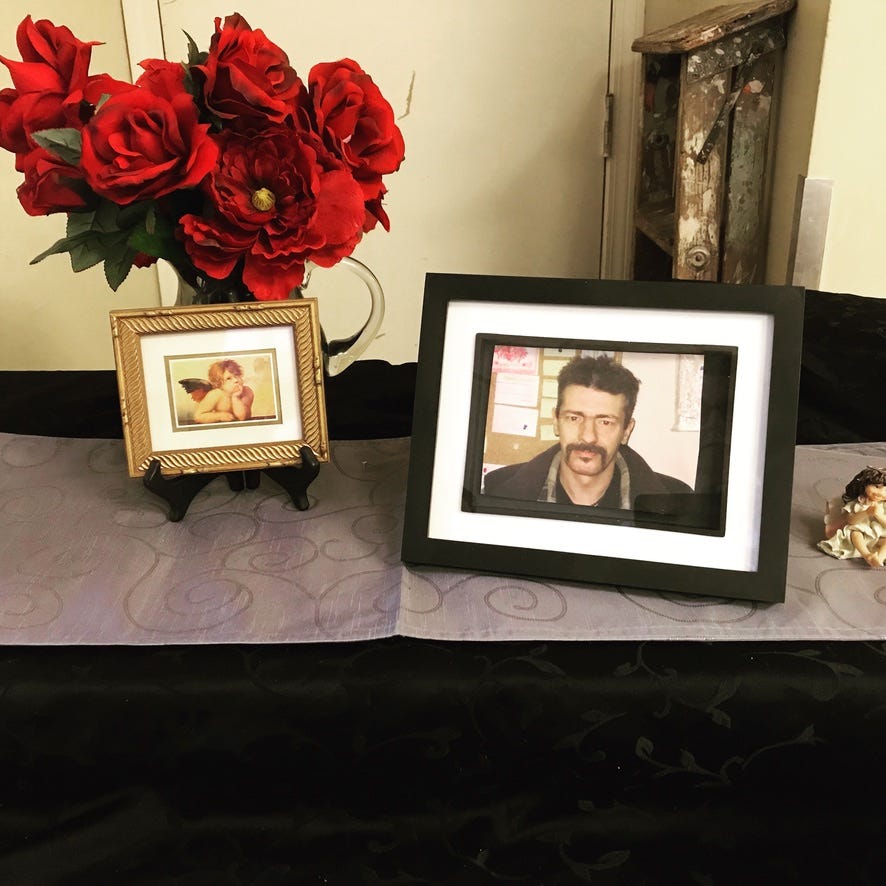
One young woman came into our shelter. We tried to help her get clean. She went to treatment and then returned to our transitional housing program.
One day, she received a letter telling her that her parental rights to her three children had been terminated and that they were being adopted by other families.
The following week, she walked in front of a train.
Another young woman struggled terribly with drugs. Her children had also been taken, and she felt she had nothing left to live for. We finally helped her get clean, but then she became seriously ill and was hospitalized with MRSA, a potentially deadly infection.
We had been away on vacation. As soon as we returned, we went to the hospital. She had been placed on palliative care because, we were told, she was not responding. But when she heard my voice, she began to respond. I visited each day and watched her become increasingly alert.
I told the nurses, but they just shook their heads. They didn’t seem to care.
I spoke to her doctor, who said, “Even if she lives, what kind of life will she have?”
What? Did I just hear him right?
So I threatened them. I told them that if they didn’t begin treating her again I would go to the newspapers. I would tell the entire community what they were doing. And in a small community, almost everyone knew me for the work I did. They would believe me.
Euthanasia by discrimination and neglect.
They grudgingly resumed treatment. She made it out of the hospital, returned to our program, and lived for several more years. She still struggled, but most of the time she did all right. Eventually, she died, too early, as many people in our ministry did after years of drug use.
Our ministry was a ministry of grace.
It was during this time that I began to see the teachings of Jesus differently: his approach to the marginalized and persecuted, the people communities shunned.
He did not begin with condemnation. He met people where they were at, spoke with them, listened to them, touched them, ate with them, loved them, and welcomed them back into relationship.
How?
By graciously loving them.
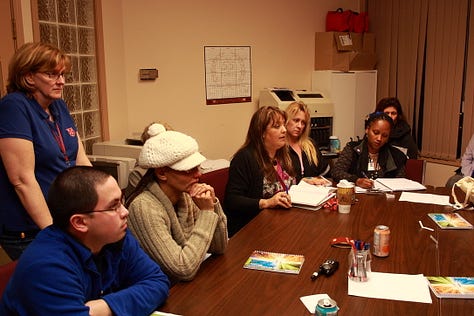
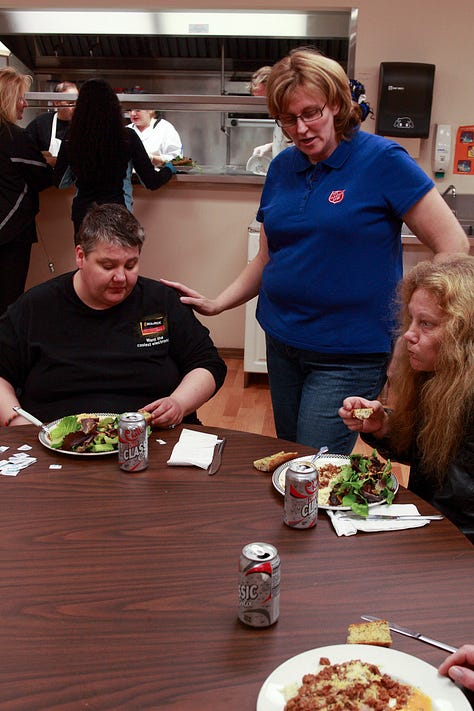




The church is supposed to be a training ground—a place where we learn how to minister to others, the lost and brokenhearted. A place where we learn to be Jesus with skin on.
For us, the people we helped every day brought the ministry of Jesus out of the abstract and into real life.
This was the ministry of grace.
Grace-centred theology is Christianity that focuses on God’s love, mercy, compassion, and acceptance rather than fear, punishment, and rule-following, or the belief that salvation must be earned.
It says that human beings do not earn God’s love by becoming “good enough.” Grace comes first. Grace means the undeserved love and favour of God.
A grace-centred Christian tends to focus more on transformation than punishment. It says I’m more interested in your healing rather than shaming you for your sin. It says I want a relationship with you, because of who you are, rather than approaching you with a leagalistic view. It means showing compassion. It means having humility rather than being certain.
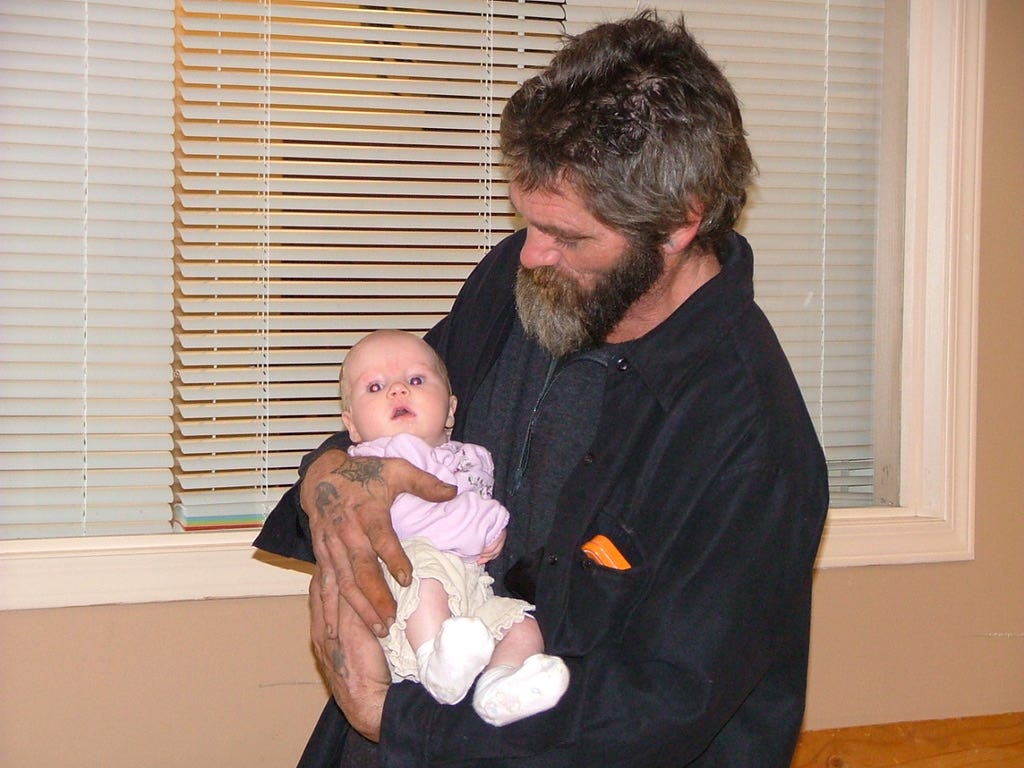
Spiritual formation is a process that unfolds over time. Doubt is not necessarily a failure of faith; it can be part of an honest spiritual journey. The Bible requires careful interpretation and looking at it in context. The way Christians treat people matters as much as what they believe. The fruit of a person’s life matters more than strictly following religious rules.
Having a faith like this draws heavily from Jesus’ treatment of outsiders and sinners in the Gospels. It also comes from the Paul’s writings about grace and the law. You can see it in passages such as “The letter kills, but the Spirit gives life,” “By grace you have been saved,” and “The greatest of these is love.”
A grace-centred Christian faith can often be found within many denominations, like the Anglican and United churches, in Catholic contemplative spirituality, and even some in some evangelical and charismatic churches. And it can be found in my own denomination, The Salvation Army, where people work among those society shuns.
Some might call me a “progressive” Christian but I’m not. I still believe the same theology.
I simply lead with grace.
Over the years, I have also become less convinced that faith requires certainty. This is anathema to some Christians. They turn hope into certainty, but even a sure hope is not the same as certainty. Hope is faith. It is believing and trusting without possessing absolute knowledge.
Some will read this and gasp: Oh my gosh, Kathie has lost the plot!
Nope. I have simply worked with some of the most broken people and they require a grace-filled approach. I could never believe that God had abandoned them at their worst.
I saw God walk with them every day as we prayed for them, told them they were loved, and hugged them, smelly or not. We tried to embody a grace-filled gospel at every opportunity, without preaching at them.
And many people who came through our ministry and heard that grace-filled gospel came to faith. That simple faith gave them strength to keep going when life was so hard.
Critics sometimes argue that grace-centred faith can become too permissive or can minimize sin and accountability.
But genuine grace does not ignore harm. It doesn’t excuse destructive choices. And it doesn’t pretend that consequences do not matter.
I have seen what addiction and mental illness can do to individuals, families, and entire communities. It has even hit our own family, and our extended family.
Grace does not call destruction good. It simply refuses to declare that a person has become unworthy of love.
Grace also changes people more deeply than fear ever can.
Jesus reserved some of his harshest criticism for religious leaders who burdened others while neglecting mercy and justice. He did not shun the woman at the well; he spoke with her and offered her living water. He touched and healed the leper. He ate with tax collectors and welcomed them into relationship.
Many people today are wrestling honestly with doubt, suffering, the church’s failure to police itself, clergy abuse, and the question of what mature faith looks like after certainty fades.
And they are leaving the church.
Some call it deconstructing their faith. Some leave and never reconstruct it. They remain outside the church, wondering whether God really exists, unable to find answers to the big questions.
Others reconstruct a gentler faith, one that recognizes the dangers of power and control in religion. We all know what that looks like. They pay closer attention to the teachings of Jesus, and leave more room for questions. A more grace-centred faith.
I understand why people leave.
Too often, the church has asked them to accept certainty when they needed compassion, not rules and judgement. They needed healing, and someone to sit beside them in their pain.
My own experience with breast cancer has made this even more personal. It has reminded me that none of us lives beyond vulnerability or uncertainty. Sometimes grace means helping others carry what is too heavy. Sometimes it means allowing them to help carry us when we’re falling apart.
Looking back, I can’t claim certainty about everything I once thought I understood. Faith is not knowing.
Faith is trusting, and continuing to believe and love when easy answers have disappeared.
But this much I’ve witnessed…
God did not abandon the people we served.
God was present when we fed them.
God was present prayed with them.
God was present when we listened to them.
God was present when we fought for them.
And God was present when we hugged them, smelly or not.
God was present when lives changed, and God was still present when the outcomes broke our hearts.
Church pastor, teacher, counsellor, executive director, community organizer, and Salvation Army officer. I carried many titles over the years. But perhaps the most important role I played was much simpler…
To help broken and forgotten people know that they were still loved.
If the fruit of our faith is not greater compassion, humility, mercy, and love, then what exactly is our faith producing?
Legalism asks, “Are you following the rules?” “Did you say the right prayer?” “Do you believe the right theology?”
Grace asks, “Are you becoming more loving?”
After all these years, I know which question I want my life to answer.
Text within this block will maintain its original spacing when published
God of grace,
Thank you for the grace that meets us where we are, the grace we cannot earn.
You are the God who forgives, restores, heals, and makes all things new.
Even those who are often out of our sight, not because we cannot see, but because we do not look.Open our eyes to those who society overlooks or pushes aside.
Help us remember that no person is beyond your love. No life is disposable. No one is merely a problem to be solved.
Each person is your beloved child, worthy of dignity, compassion, safety, and hope.
Give us courage to challenge injustice, defend those who are mistreated, and stand beside those who feel forgotten.
And when we have no easy answers, teach us to remain present. Let our hands become your hands, our voices speak your compassion, and our lives bear witness to your saving grace.
Amen.
This is a beautiful song about grace. Enjoy!
Thank you, dear reader, for walking with me through these memories and reflections. I hope they have encouraged you to look beyond appearances, lead with compassion, and remember that no one is beyond the reach of grace. May we all become a little less certain of our judgments and a little more generous with our love, smelly or not.
If you would like to support my retirement gig, and a subscription isn’t in your budget, you can always Buy Me a Coffee…

Here’s some questions to reflect on.
What does grace mean to you personally, beyond its theological definition?
Have you ever judged someone before understanding their story? What changed your perspective?
Legalism asks, “Are you following the rules?” Grace asks, “Are you becoming more loving?” Which question has shaped your faith—and which one do you want your life to answer?
I’d love to hear your thoughts and stories in the comment section below.
Comments
Nothing yet. Say the first thing.
Sign in to join the conversation.