

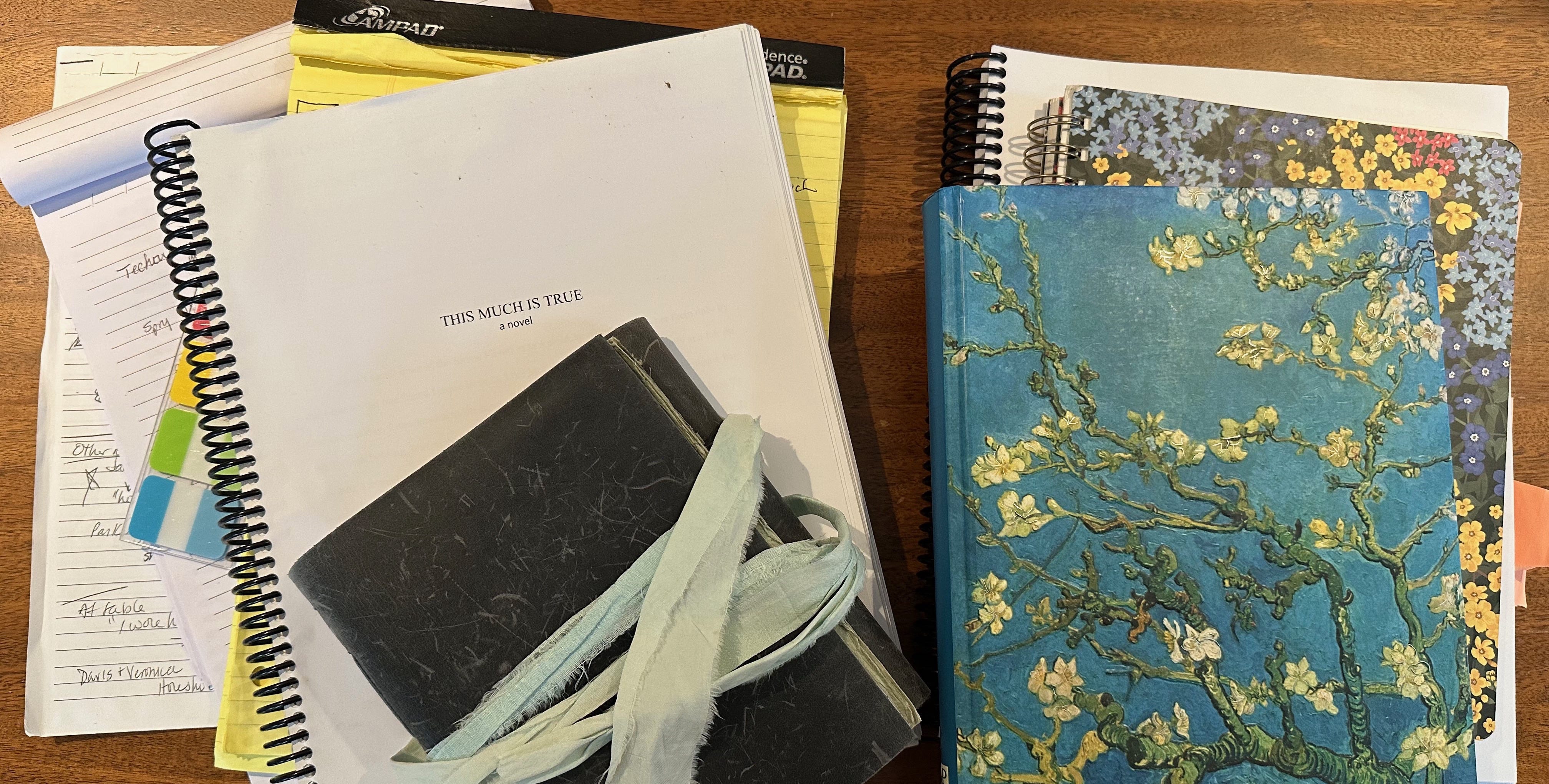
As I mentioned in a previous post, my next novel, THIS MUCH IS TRUE, will be coming out this September. My final draft is due to my editor in a couple of weeks, which means I’m at the time-consuming but all-important stage of tightening and polishing language one last time to ensure that every sentence and word is doing its best work for the story. Or at least that’s the work I thought I was doing until a dear friend—who I rely on mightily for writerly feedback—told me she thought my novel wasn’t quite finished where I had left it, that the story needed/deserved(?) an epilogue.
For me, receiving thoughtful feedback and figuring out what to do with it is one of the most important and rewarding parts of creating a novel. It’s a thrill when a new insight about a character or plot line resonates—it’s like being shown a door I didn’t see before—and I relish the challenge of figuring out how to get my character down that particular hallway. But it’s not always a joyride. I’ve also learned that when my shoulders clench and my throat tightens in response to feedback, it’s a sure sign of something I need to pay extra attention to.
As I tried to respond to the suggestion of an epilogue, my voice climbed an octave as I squeaked out, oh so casually, “um, an epilogue?”
Why the resistance to this idea?
Perhaps I worry that the very existence of an epilogue suggests that there is something faulty in the book itself, that as an author I didn’t, you know, “leave it all out there on the field.” Or perhaps I find some epilogues to be a last-minute attempt to squeeze in extra information, like that carry-on bag you lug with you because you remembered one more outfit you just might need that won’t fit in your checked bag.
But if I’m being more openminded (or at least trying) maybe an epilogue does important work by offering a new way of seeing the story, a version of it that sits outside the main text and thereby brings with it a new perspective, an additional layer of richness?
Naturally, this all got me to wondering about the origin and exact definition of epilogue, which is always cause to open my 1934 Funk & Wagnalls Dictionary.
EPILOGUE: 1) The conclusion or peroration of an argument, speech, or discourse, normally consisting of a recapitulation and an exhortation. 2) The close of a narrative or dramatic poem, specifically a concluding speech to the audience by one of the actors
Don’t you just love definitions that require more definitions? For those who don’t know (I didn’t), peroration means a “conclusion in which the speaker makes practical application of the subject to the audience, which may be explanatory or persuasive.” Exhortation goes a step further as “an attempt to arouse or excite.”
Well, hmmm. First off, both definitions focus on oratory and performance, not literature (outside narrative or dramatic poetry—okay, I’ll give a nod to Shakespeare), which makes sense given that the form originates from the 14th-15th century, before print became pervasive. So are epilogues not meant for written work? And I don’t honestly think it’s the job of a novel to persuade, per se. Sure, we authors often inject strongly held beliefs into our characters, but those characters have flaws and face peril. It’s up to the reader to decide how they feel about them. Also, great novels, in my view, don’t tend to offer a clear-cut conclusion akin to a powerful oral argument. I try to leave my readers with at least a few open questions to consider themselves.
The focus on oratory in both definitions, though, did get me thinking about a different kind of “after story” in our culture, namely the eulogy—the epilogue of a life, if you will—that most difficult of pieces to write, let alone deliver. How to encapsulate a life, a person, in a few short minutes?
I recently attended a service for the patriarch of a family my husband grew up with, and I’m always amazed by how much you can learn about someone from a thoughtful eulogy. I didn’t personally know this gentleman very well (excepting the time he generously lent his surgical expertise when I cracked my forehead open almost 20 years ago now…but that’s a different story), and I was struck anew by how each carefully chosen vignette played a powerful role in painting the portrait of this man, and how every person at the service had a different one to share.
These celebrations of life, with the eulogy at its center, play a critical part in bringing proper closure. They offer a certain recognition that there is no way to pour a whole person into one friendship, one relationship, one perspective. It’s important to step back, gather up the various pieces, and puzzle how they fit together before we can make sense of it in total.
Can an epilogue do the same for my novel, offer a way to look back on the story and provide a deeper sense of its meaning before the back cover is closed?
On the hunt for a clearer way to think about epilogues, and with apologies to Funk & Wagnalls, I turned to my 2003 edition of Merriam Webster to see if a more contemporary definition might help me:
EPILOGUE: A concluding section that rounds out the design of a literary work
Ah, now we’re getting somewhere. Literary work! And this definition suggests that an epilogue, when done well, is not something stuffed in at the end, but rather a section of the work that is included by design to create a more fulsome story. This could be a powerful tool given that my novel takes place over the span of only three days. While a significant and (I hope you’ll agree) intensely satisfying resolution to my protagonist’s dilemma is reached, there are nonetheless more questions raised than can be realistically settled in a seventy-two-hour timeframe.
I also recognize that my favorite books not only offer resolution but hint at a new beginning, something I try to emulate in my own work. After all, the solution to one burning question is most satisfying when it opens up an opportunity to move forward, not unlike a eulogy, which presents closure on one life while inviting us all to carry forward the best of that life into our own.
So, I’m warming to the idea. I’ve been drafting various options in search of just the right vignette that will create not only a powerful conclusion, but an onramp in the reader’s imagination to what might come next.
Do you have an example of an epilogue that makes a novel you love even better? Asking for a friend.
As always, my highest regards,

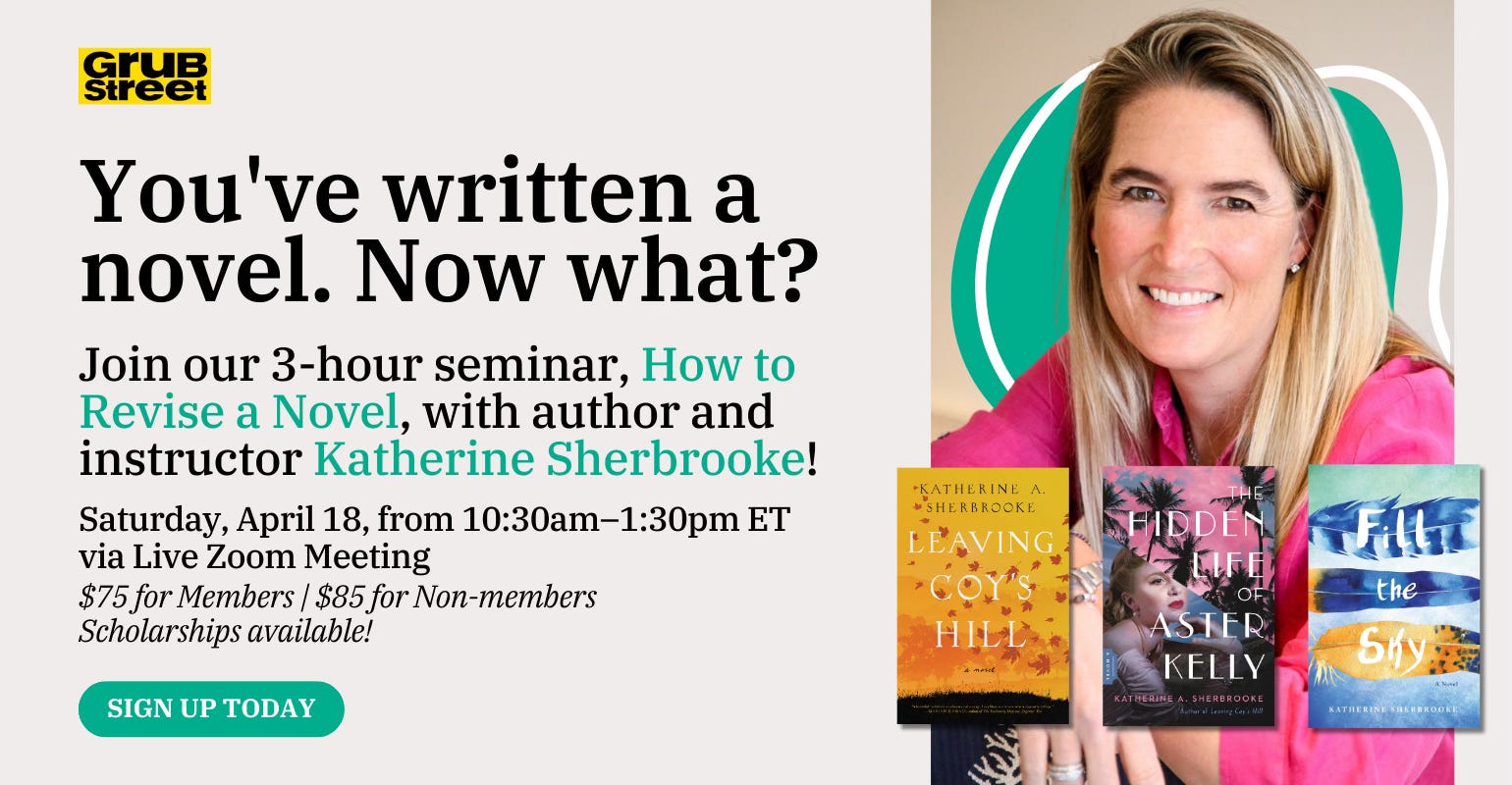
PS Speaking of revision, if you’ve written a novel of your own, and you’re ready to get serious about revision, please join me!
No posts
Comments
Nothing yet. Say the first thing.
Sign in to join the conversation.