

A famous quote of Shakespeare’s has been stuck in my mind lately: “What’s in a name? That which we call a rose, by any other name would smell as sweet.” It is of course delivered by Juliet as she agonizes over her love for Romeo and the cruel reality that his last name, Montague, brands him as enemy in her family’s eyes. If only he didn’t carry that name, then all would be right in her world.
But how brilliant that in the very moment that Juliet is trying to convince herself that a NAME doesn’t really matter, Shakespeare chooses to have her invoke the image of a rose. There are few other flowers Juliet could have mentioned that would be as immediately recognizable or carry such strong associations. The NAME is the vessel that carries what that a particular object or person represents in our minds—what they mean to us.
NAME. n. A word or term embodying any knowledge, notion, or conception so as to fix and make it subject to record and recall for future or common use in the process or interchange of thought. - Funk & Wagnalls New Standard Dictionary, 1934
I’m sure anyone who has named a child can relate to the weight of the responsibility. If doing so with a spouse or partner, in my experience, it involves an astounding elimination game that kicks off as soon as the first name is suggested: “God no! That was the name of the girl who never invited me to her birthday parties,” or “No way! My first boss had that name, and he was a total creep.” It can be difficult, if not impossible to put aside our associations no matter how hard we may try.
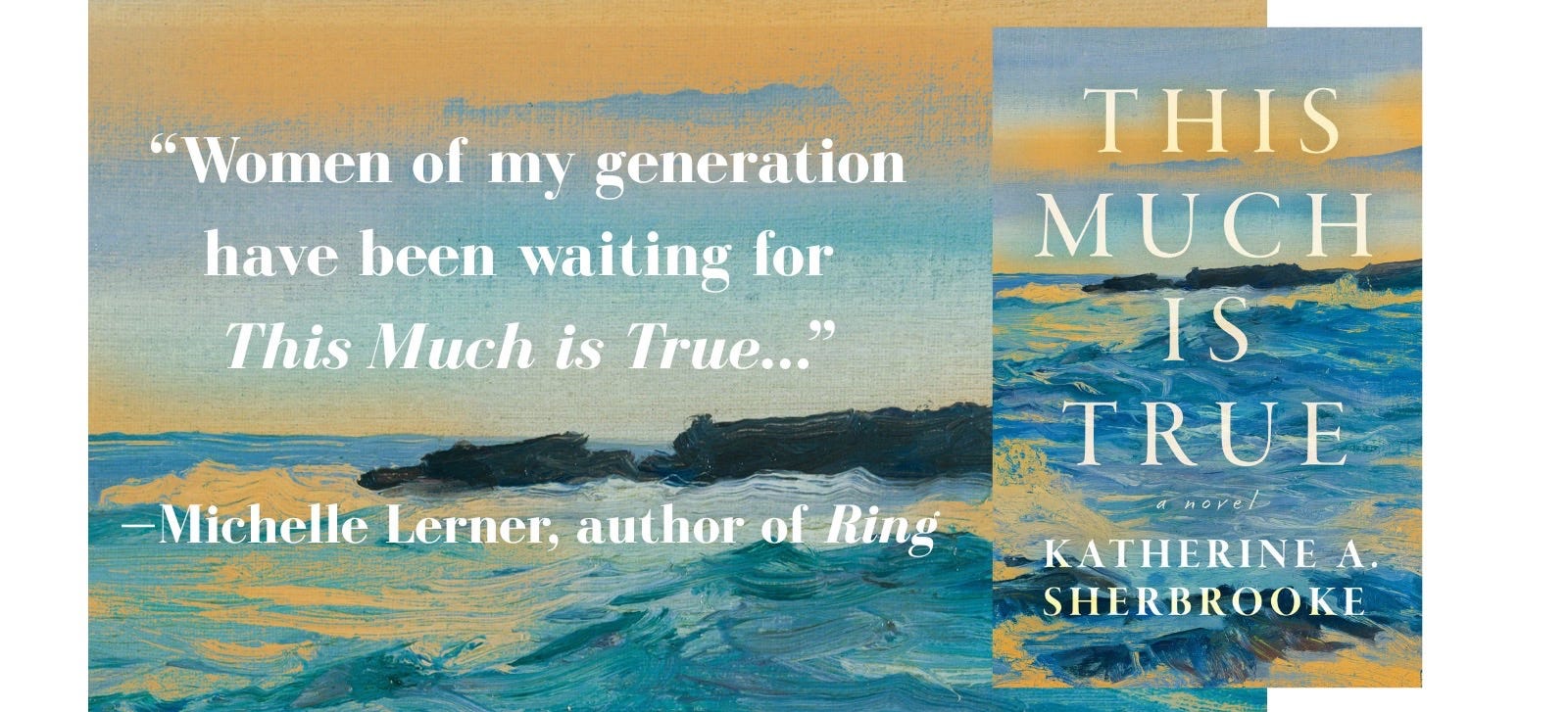
Naturally, I think about this a lot when naming characters in my novels and spend an ungodly amount of time searching for a first and last name combo that I hope will “sound” like the character I’m trying to create. For my last novel, I picked Aster Kelly for a runway model in Hollywood (sounds glamorous, no?). In my latest, THIS MUCH IS TRUE (out in September, have I mentioned? :), I chose Davis Harmon for a good-as-gold-guy. I didn’t want any hard edges on his name.
But a different angle on names has been showing up in literature for me lately, not so much the associations that various names embody, but the power that comes with using someone’s name at all. These two ideas are, of course, deeply connected. I suspect we all have a desire for our names to mean something to the people we love, for our names to be invoked as short-hand for the totality of who we are, in all our quirks and foibles, strengths and aspirations. But what if no one cares enough about who we are to even use our name?
This hit me recently while reading the 1986 novel, Lonesome Dove by Larry McMurtry (yes, I know I’m late to the party). I will admit that “cowboy literature” is a bit outside my world of go-to genres, but I finally stopped resisting because of the very strong recommendation of several women in my book group. I’ve been pleasantly surprised. McMurtry is expert at creating memorable characters and is even adept at diving into the female psyche (with the one major caveat that he seems to think that all whores in the 1800s, which are plentiful in this book, loved nothing more than the process of whoring…but I’ll restrain from digressing down that road…).
There is a very touching scene between one such woman and a man whose regular visits have caused them both to fall in love, even if he doesn’t know it. He describes her as being very talkative, which he doesn’t mind, until she hesitantly vocalizes something that’s been on her mind.
“Can’t you just say my name? Can’t you just say it once?”
The question so took him by surprise that it was the one thing of all those she had said that stayed with him through the years. Why was it important that he say her name?
“Why yes,” he said, “your name’s Maggie.”
“But you don’t never say it. You don’t ever call me nothing. I just wish you’d say it once when you come.”
“I don’t know what that would amount to,” he said honestly.
Maggie sighed. “I’d just feel happy if you did. I’d just feel so happy.”
Despite his claim not to understand her request, he realizes afterward that what Maggie really wants is to feel known by him, seen by him, to matter to him, and it’s more than he is willing to commit to in the long term. He never goes to her again.
Rose Cousins, a singer-songwriter introduced to me by my close friend and fellow author Susan Donovan Bernhard, takes a more uplifting tack. In her beautiful song “The Benediction (A Good Woman),” she sings about a desire to be called by her name in the hopes of answering to a promise of what that name might eventually say about who she has become.
“Call me by my name and I will answer…
I wanna be a good woman
A strong and reliable daughter
A kind and understanding sister.
A dear and attentive friend and lover
A girl with her heart on fire.”
This song became an anthem of sorts for Susan as she wrote her latest novel, Westerly. In fact, when she was struggling with the direction of the novel early on, it was this song that gave her inspiration for her characters. (If you are a lover of music, she writes about all the songs that inspired her while writing the book in this awesome piece in Largehearted Boy).
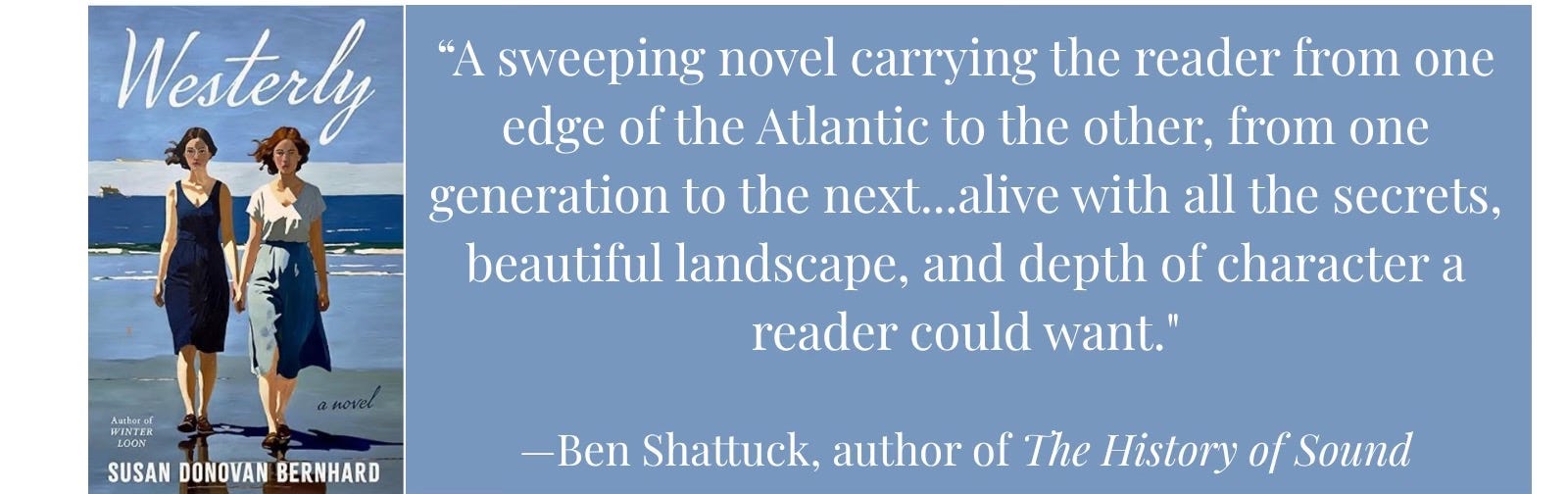
True to the inspiration, Westerly, which came out earlier this month and is already a #1 Amazon bestseller, is populated with richly drawn characters trying to be “good women” while living with the weight of secrets from the past. But they persist and become all those things mentioned in the song: as daughters, sisters, lovers, friends, even with a heart or two on fire. It is a GORGEOUS book, and I cannot recommend it more highly!
And then there’s the wonderful Call Me by Your Name, by Andre Aciman. When uttered in the book, the phrase is the ultimate expression of breaking down the barriers between two people, and perhaps of the impossibility of a union so complete you can become the other person.
Call me by your name and I’ll call you by mine.
Funnily enough, I changed my own name as a teenager. I was birthed as Kathy—there was no longer version, no Katherine or Kathleen, just Kathy. I hated how plain and ordinary it was, not to mention the association with “chatty Kathy.” My dad was a lawyer and I convinced him to let me legally change my name to Katherine, so I’d have something more formal to put on my high school diploma, something more substantial to walk into adulthood with, perhaps a larger vessel I could fill with who I wanted to become? It is certainly a more elegant name to put on the front of the book. But the truth is, I just mostly go by Kathy. I guess letting go of the name we’ve been called thousands of times isn’t as easy as I’d thought.
In hopes that your name is spoken lovingly on the lips of many,
My best regards,

No posts
Comments
Nothing yet. Say the first thing.
Sign in to join the conversation.