
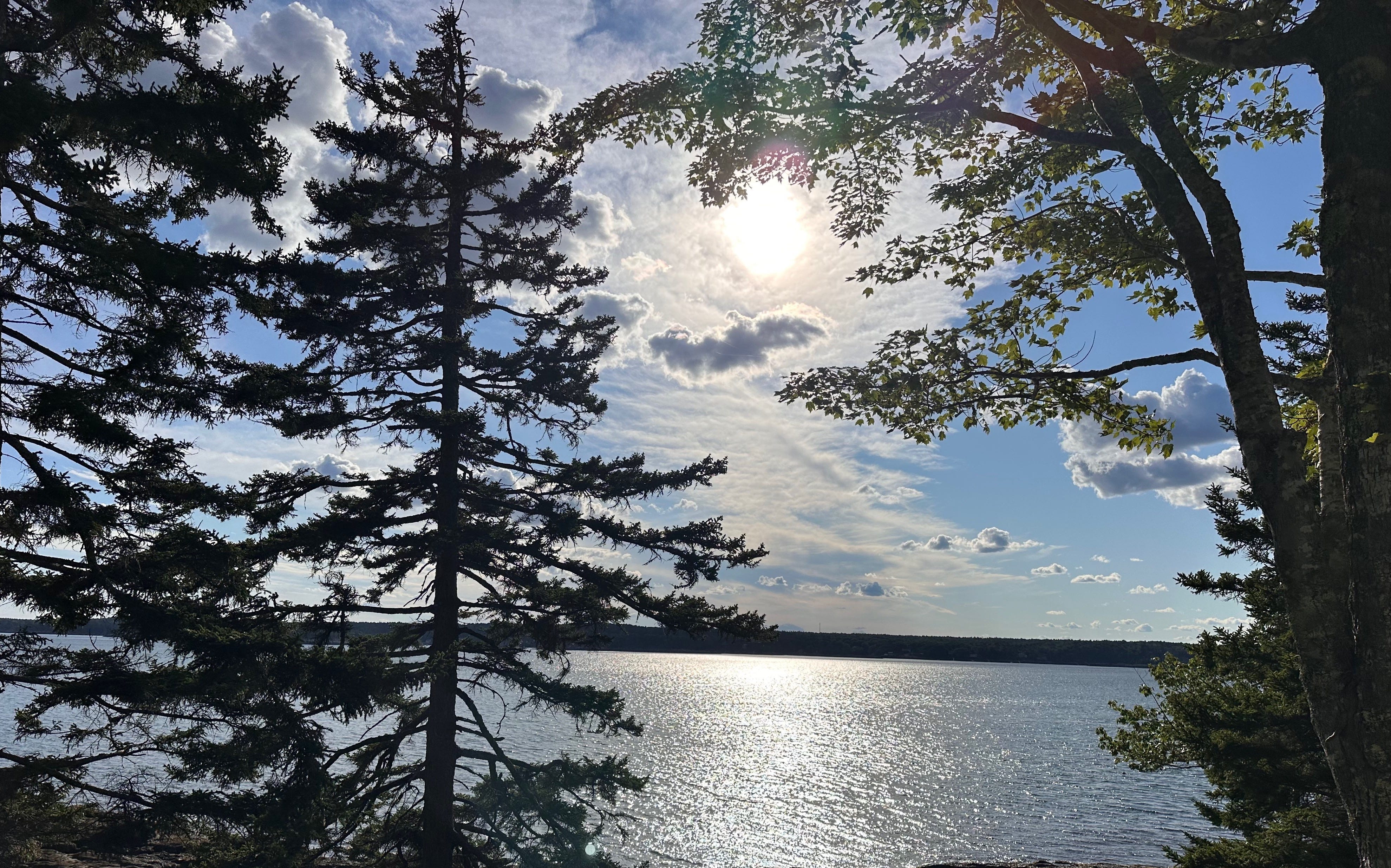
I’m just back from a week-long solo writing retreat in Maine.
I planned this over a year ago, but I will admit that as the date for packing up and driving north drew closer, I was a little worried that a week might feel too long, that after the fourth or fifth day came to a close with no one but myself for company I would feel, well, lonely. I wondered if I’d end up sheepishly inventing some excuse to leave early.
I’m no stranger to writing retreats. I’ve had the good fortune to go on many over the years, but other than a few 3-day escapes by myself here or there, the longer retreats I’ve had the pleasure to experience have always been in the company of other writers. We give each other plenty of space to write during the day, but if I’m ever creatively stuck or in need of conversation, there’s always another writer in need of a break. And each evening is full of shared conversation about our work, plus plenty of wine, stories, and laughter. The chance to commune with other artists in this way always recharges me and I feel lucky every time I get the chance to participate.
This was different. This was just me.
So how’d it go? First off, the week reminded me that solitude is a thing of magic on its own. The opportunity for quiet contemplation and separation from the relentless pull of life’s obligations is, in itself, a restorative gift. For that alone I am wildly grateful.
As a writer, a whole week alone ended up being an extra trick of magic. Writing a novel, to state the obvious, is an exercise in weaving words together to create striking images, memorable characters and compelling stories. It takes a level of focus that can be difficult to maintain if I need to use my words for anything else. This may sound a little crazy to a non-writer, but the interruption of even simple conversation can feel like being called back to Earth when I’m already halfway to Mars. And so, for an entire week, I got to stay on Mars—or rather in Maine, and in a very special spot indeed.
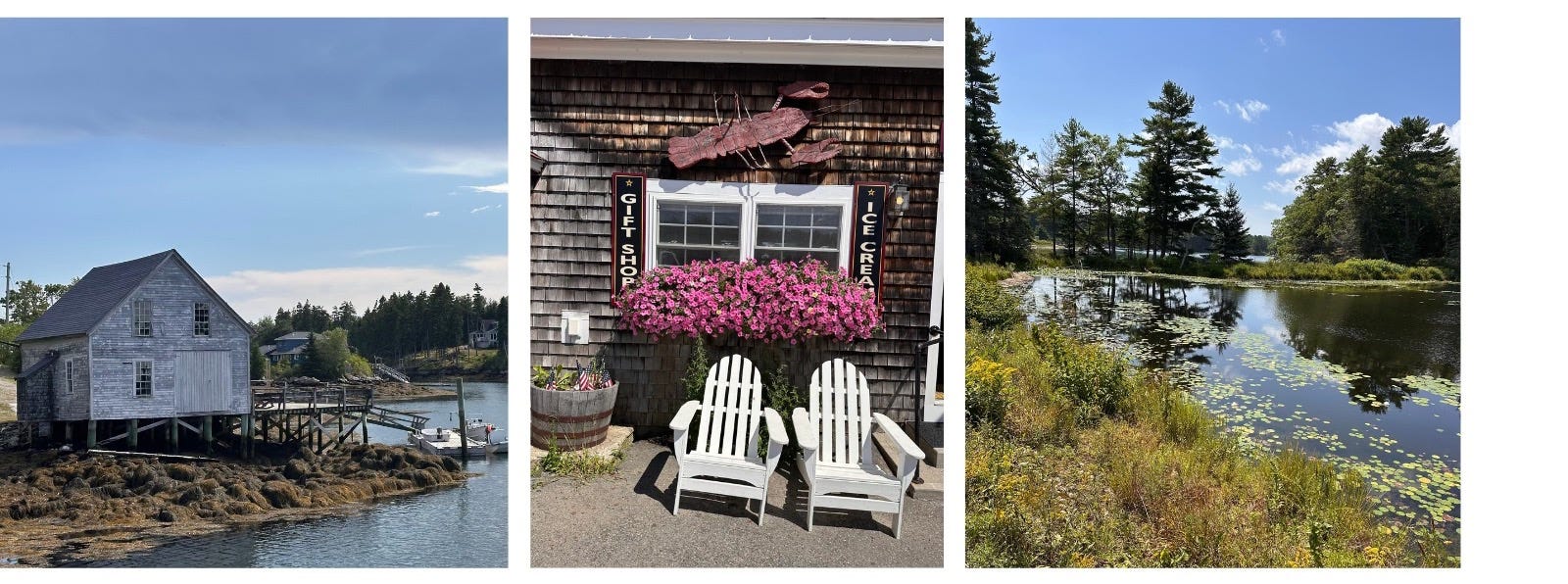
While my newest novel, THIS MUCH IS TRUE, comes out in September (yay!) I’m already at work on my next book, an historical novel about an extraordinary writer from the last century. And this past week I had the opportunity to stay in the cottage she built in Maine as her writing haven. I’m not ready to tell you who she is just yet—and I agreed not to post any photos of her cottage as the family would like her privacy protected—but what I can tell you is that the very act of walking the shoreline she used to walk, gazing out on the view she could see from her writing desk, and writing about her from the very place she used to write, was unlike anything I’ve ever experienced. I still can’t quite believe it.
And so, I’m happy to report that the week was miraculously productive and the new book has begun to take shape. I promise to share LOTS more about it and about this extraordinary woman as soon as I get a little bit father down that road.
Of course, all of this got me thinking about the word RETREAT. It is often used in military terms to designate an act of failure, the giving up of a position that had previously been gained. Soldiers “in retreat” are the ones losing the battle.
Retreat:
v. to go back or withdraw, especially from an enemy or threatening danger;
n. the act of pulling back; the state of having retreated as for seclusion or solitude; an establishment for insane people or habitual inebriates; a time specifically devoted to mediation, prayer or self-examination.
-Funk & Wagnalls Dictionary of the English Language, 1934
The definitions of RETREAT as a noun come a little closer. The idea of seclusion and solitude obviously applies. Of course, I had to laugh out loud at the definition of RETREAT as a place designated for “insane people,” (yes! we writers definitely qualify) and “habitual inebriates” (no comment)! But while there is much about a writing retreat that involves pulling back from the day-to-day world, I suppose for me, a retreat is ultimately not about withdrawing but about pushing forward, putting ideas out into the world.
I believe Edith Wharton, the celebrated writer of classics like House of Mirth, The Age of Innocence, and Ethan Fromme would have agreed. I recently visited The Mount, the house she built in the Berkshires to escape the society world of Newport and to write. She specifically designed the house for privacy. She did occasionally entertain, but while other grand homes of that era boasted dining tables for twenty or more, Edith’s only had room for eight.
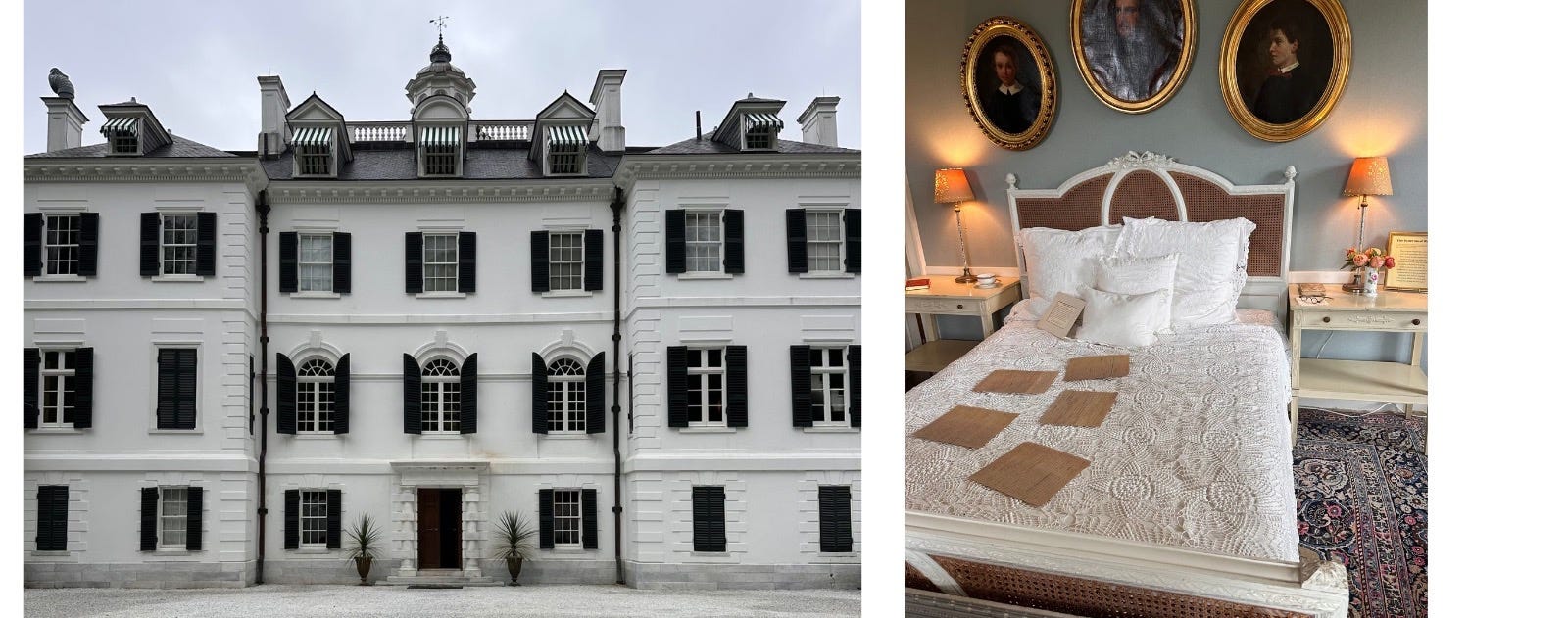
“Drawing rooms,” I learned on that tour, were so named because that was where the ladies were meant to “withdraw” into obscurity while the men held court on their own. In Edith’s house, she was the main event and never needed to withdraw.
Until she did.
It turns out that this wildly prolific writer—she wrote more than 40 books—did all her writing in bed! She would “ring” for breakfast and then stay in bed and write until the noon hour. Her stated reason was simple. Leaving her bedroom meant putting on a corset, and she declared early on that there was no way she was going to write in a corset. But I also suspect this routine gave her the uninterrupted focus she needed to avoid all other conversation and pen book after book after book, not to mention write well enough to be worthy of a Pulitzer Prize. Maybe there’s hope for all of us who write in PJs and slippers!
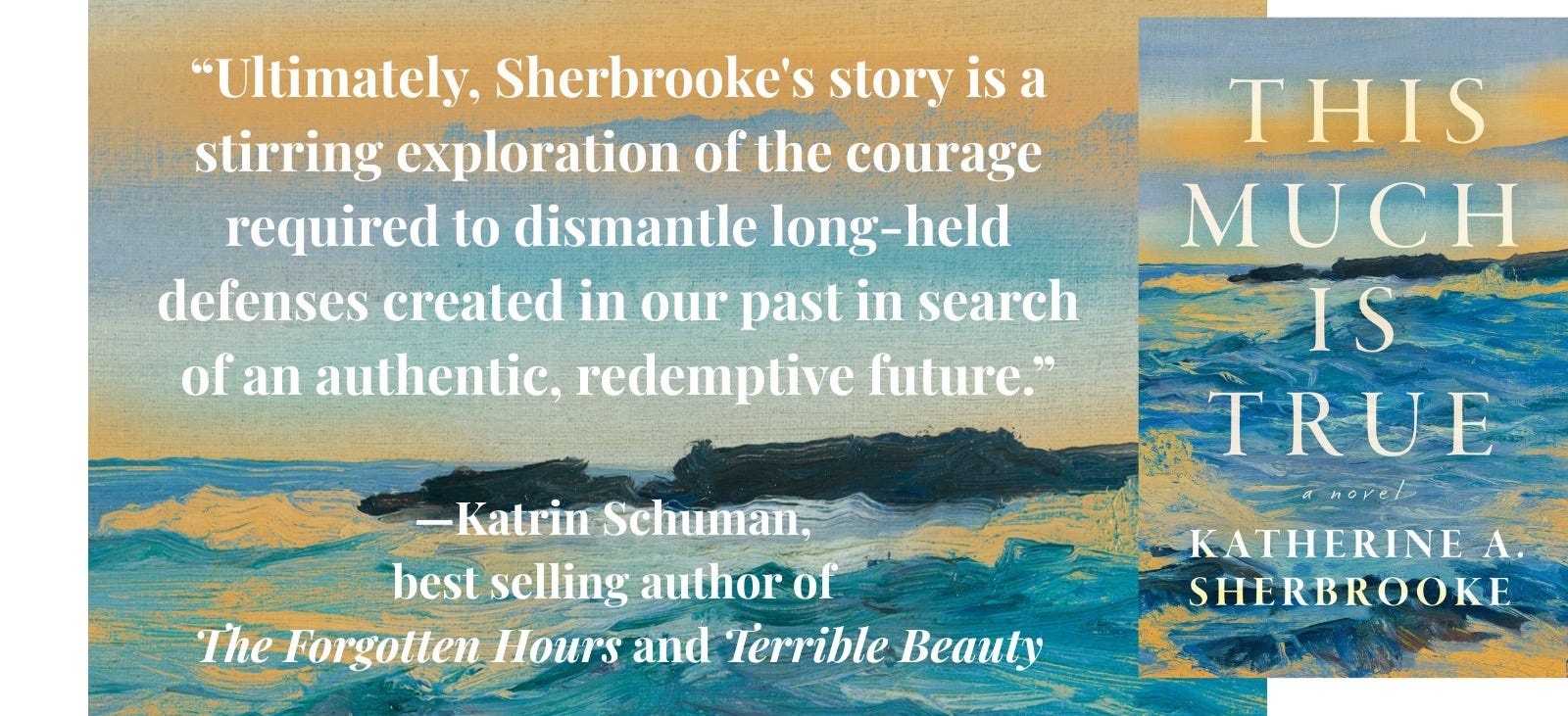
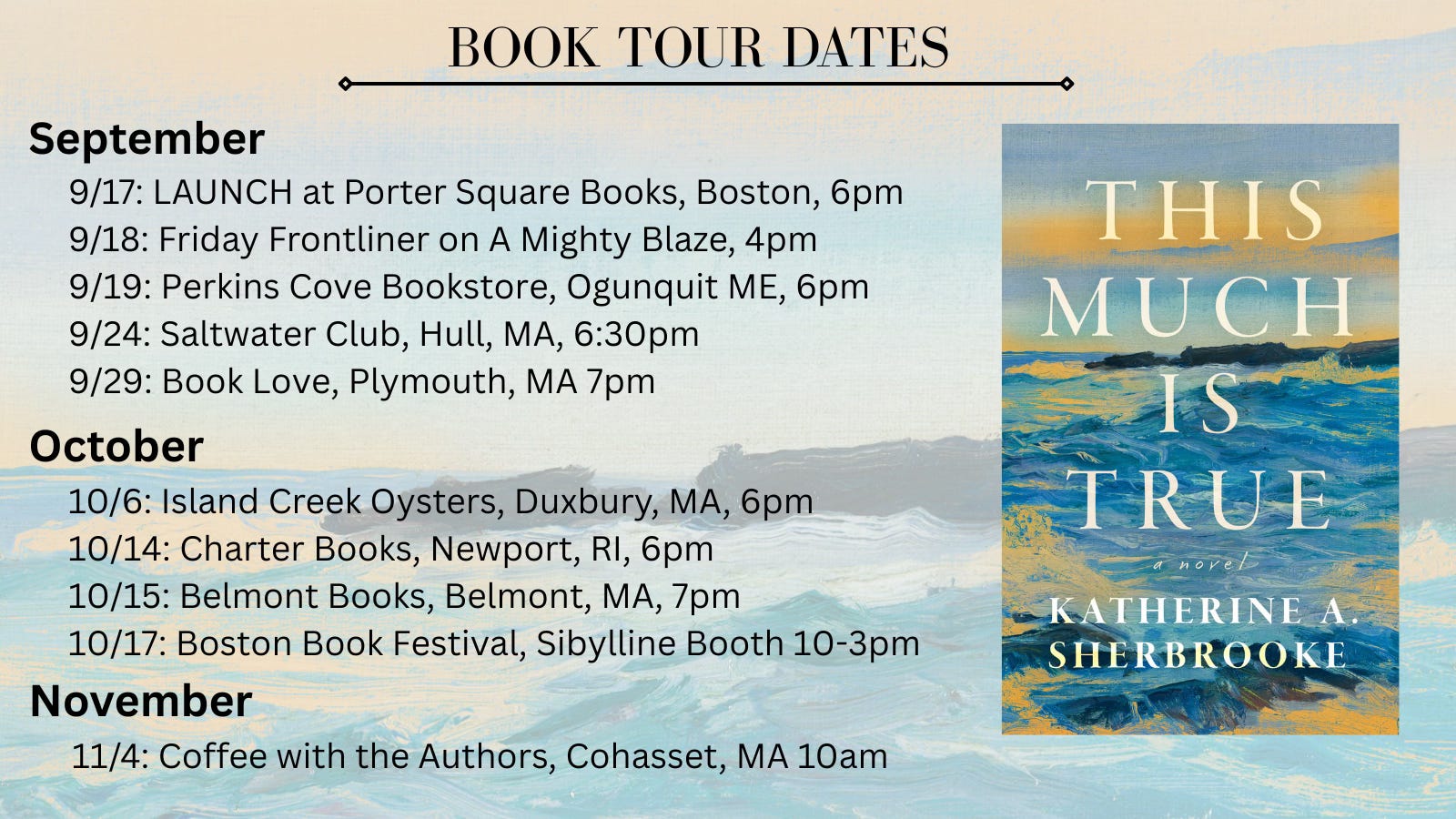
Now that I am back from my RETREAT, I hope to keep the magic of Maine in my bones while I gear up for the publication of This Much is True in September! I can’t wait to share this novel with you— the story of one woman’s attempt to reckon with past trauma when she recognizes her daughter’s future father-in-law as the man who was at its center. It’s a tough set up but it won’t let you down.
I just received my first commercial review yesterday, and I’m still dancing in my kitchen! Of all the thing I hoped someone might say about this book, he said…pretty much all of them(!) including that “a highlight of This Much Is True is Sherbrooke’s prose, which balances vivid imagery with emotional depth. Her descriptions often move between the beauty of the visible world and the private experiences that remain beneath the surface,” and, “with this novel, Sherbrooke proves herself to be a storyteller who balances emotional honesty with literary precision, creating a work that is both deeply personal and profoundly human.” (oh my heart)
You can pre-order the Kindle or Audio versions now. Print copies will be available for sale at all outlets on September 18. I hope you pick up a copy in your favorite format. I look forward to hearing what you think!
Until next time, my best regards,

No posts
Comments
Nothing yet. Say the first thing.
Sign in to join the conversation.