
Today is Holocaust Memorial Day, marking 81 years since the liberation of Auschwitz-Birkenau, the largest Nazi death camp. The theme for Holocaust Memorial Day (HMD) 2026, ‘Bridging Generations’, is a call-to-action. A reminder that the responsibility of remembrance doesn’t end with the survivors - it lives on through their children, their grandchildren and through all of us.
This feels like a good time to share the story of what happened when Holocaust survivor Renee Salt took the courageous step to return to Auschwitz with her 13-year-old grandson Adrian, sixty years after her liberation.
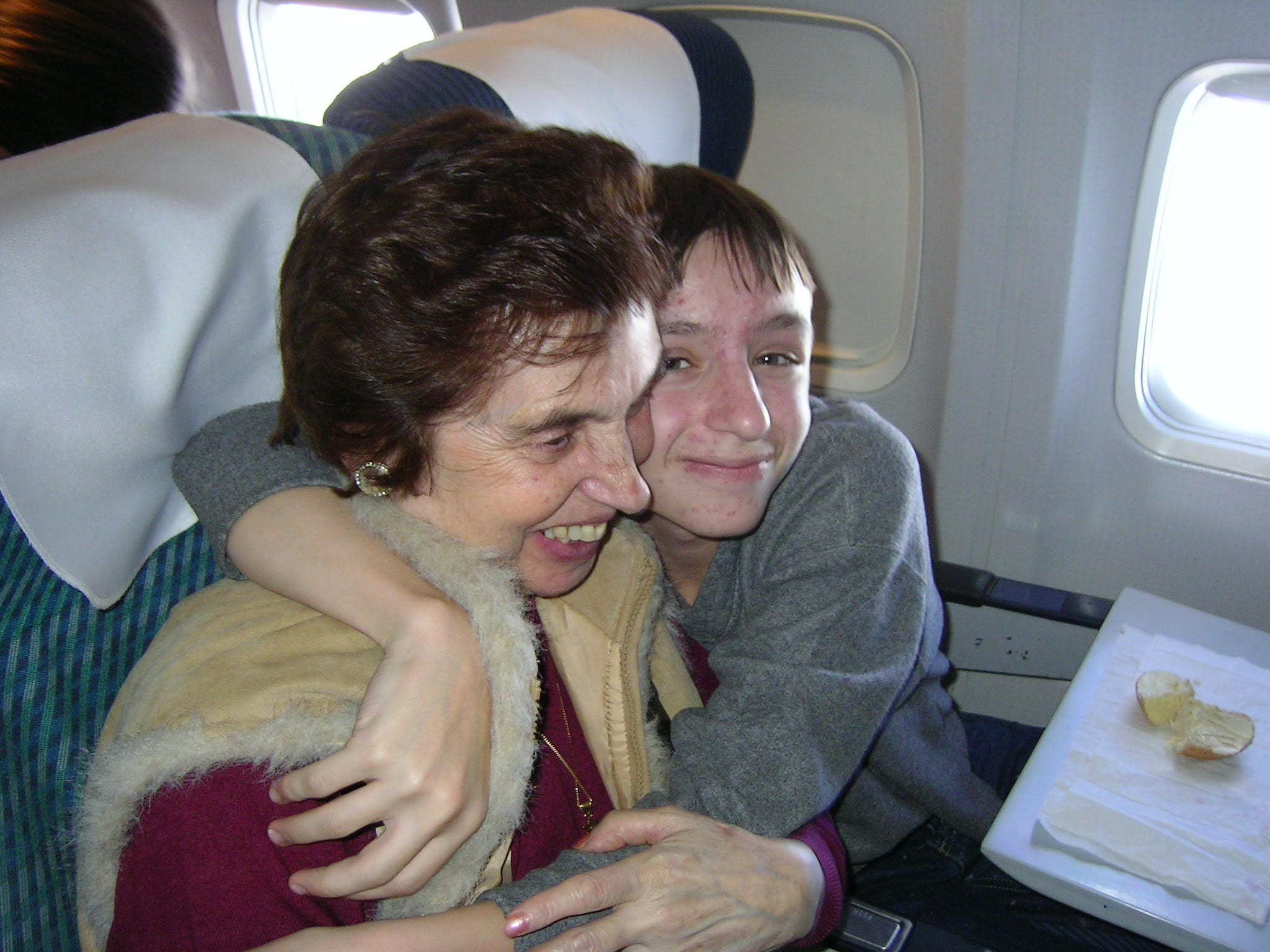
Renee and Adrian on board the flight to Poland in 2005
The extract below is taken from Renee Salt’s book, A Mother’s Promise, which I was honoured to write.
I had to return to Poland, if only to lay the ghosts to rest.
The opportunity came in 2004 when the BBC got in touch with me via the Holocaust Survivors’ Centre. They were making a documentary called Grandchild of the Holocaust and were looking for a survivor and their grandchild to film. Who should they pick but me and my grandson Adrian!
Adrian was thirteen at the time and knew very little about the Holocaust.
‘Why did you never talk about the Holocaust, Grandma?’ he asked me as the cameras started to roll.
“It was too painful,” I told him. “And some things I thought you were too young to know, but I think you’re ready to hear.’
‘I’ve always known my grandma survived the Holocaust,’ Adrian said in a video diary he was asked to keep. ‘I’ve tried to ask her about it, but she won’t answer my questions. I know she was in Poland somewhere.’
The filming was a very intense process. The BBC arranged for myself, my son Martin and Adrian to return to Poland. But first they took Adrian to the Imperial War Museum to visit their Holocaust exhibition to try and get an understanding of what I’d suffered.
‘I never thought it would be anything like this,’ he said, visibly shocked and upset after hearing survivor testimony and viewing footage and photos of the camps and ghettos.
‘To kill them in the way that they did. They used to humiliate them, destroy their businesses, make them pay for it. It is hard to believe that one nation or race of people can do that to another kind. I can’t believe Grandma actually saw that happening. You could die just from seeing that happening.’
Adrian came back with so many questions. ‘Did you experience Auschwitz?’ he asked, and I had to admit yes.
He turned to Charles. ‘Did you meet Grandma in Poland?’ He was surprised when he learnt that we’d met after the war, and that Charles had been part of the liberating army.
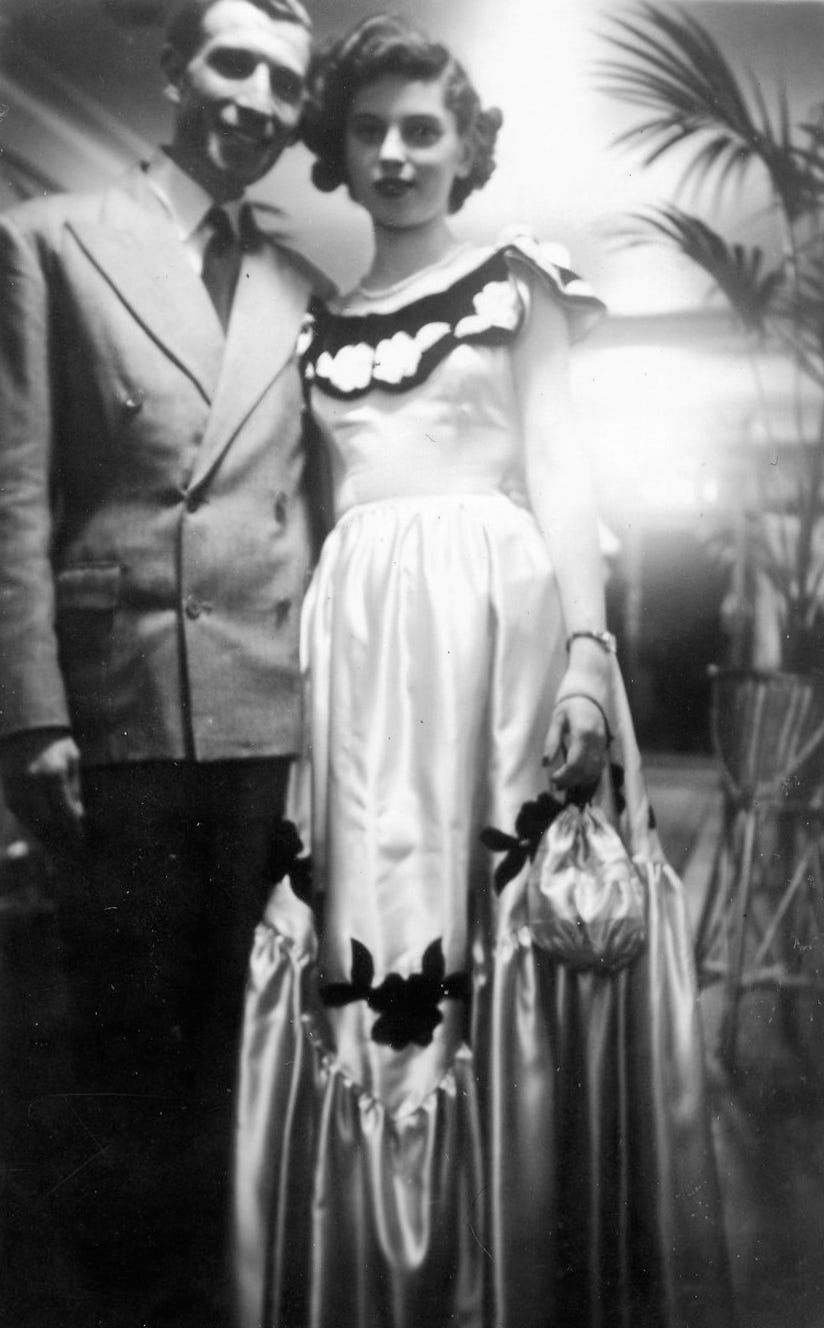
Renee and Charles after the war.
‘It’s amazing to think that Grandma was a survivor and Grandpa had been one of the liberators of the Bergen-Belsen concentration camp,’ he said.
Then it was time to go to Poland. I was so nervous returning to Zduńska Wola. If I hadn’t been with a BBC film crew, I don’t think I could have gone. I’d have been too frightened.
My heart was in my mouth as we wandered the streets of my old home town. I couldn’t recognise a thing. Eventually, we found my street. We got chatting to an old lady.
‘Of course, I remember how they murdered the Jews and that they were murdered in the cemetery,’ she told me. ‘From where I lived, you could hear all the screaming. I heard it all,’ she said. Later, she told me that they couldn’t do anything as the Germans had threatened to kill all their families if they did anything to help the Jews.
It stunned me to find someone who remembered those days, who’d been on the other side of that cemetery wall. It felt unbelievable, so strange.
Then we walked to the spot where my little sister Stenia was taken in a selection. I stood once more in the space where I saw my lovely little sister torn away from me.
‘The mothers were screaming and crying, “Almighty God, help us,”’ I told Adrian. ‘That upset me more than anything. That happened here.’
I stood in silence with my grandson and son, remembering that terrible day as people walked about us, doing their shopping, going about their business. It didn’t feel real.
From there, we walked to the overgrown Jewish cemetery. ‘Only three children from the whole town survived the massacre,’ I told my grandson. ‘I was one of them.’ Here, I couldn’t stop my tears.
‘It was really difficult to see Grandma so upset,’ Adrian told the cameras. ‘I’ve never seen her cry before. The marketplace and cemetery brought back so many bad memories for her.’
Our next stop was Łódź and the courtyard of our old home where my bubbe was taken.
‘I had no idea that Grandma had lived through so many selections,’ Adrian told the camera. ‘She told me she saw people die every day from starvation and disease. I was beginning to realise how lucky she was to have survived.’
From there, we made the long journey south and I came to the place I was dreading most of all. Auschwitz-Birkenau.
It took Renee sixty years to return to hell. She had left the camp a terrified fifteen-year-old, bundled into a freight wagon. She returned six decades later, a 75-year-old Holocaust educator with her grandson on one side and her son on the other. The trio walked hand in hand along the rail tracks that led into the centre of Birkenau.
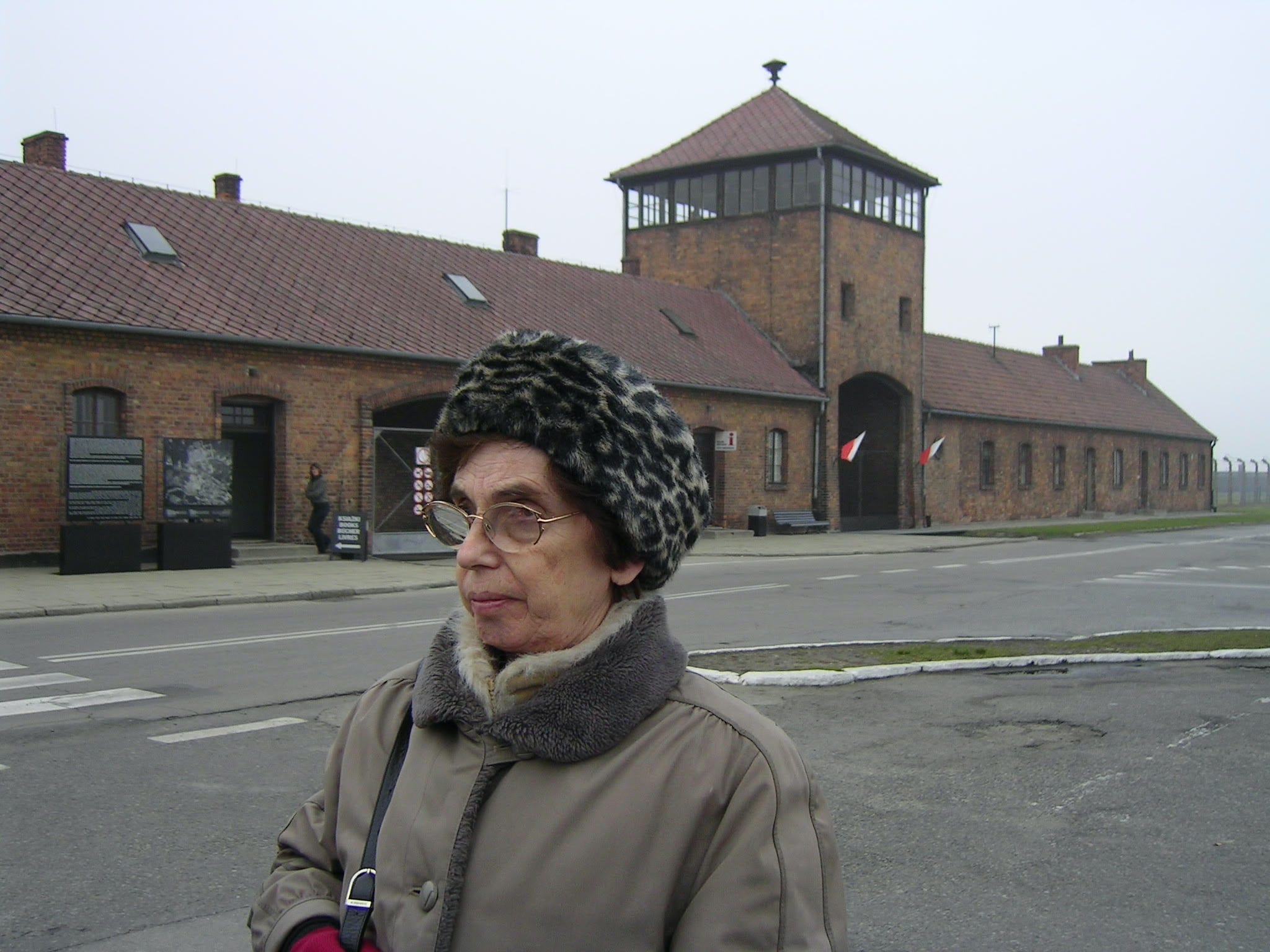
Confronting her past. Renee outside Auschwitz-Birkenau in 2005.
Adrian asked me if I remembered getting off the wagon. ‘As if it were yesterday,’ I told him. ‘I remember everything.’
I told my son and grandson the story of our fear and bewilderment and of the selection when I faced Dr Mengele.
‘This is the place where I last saw my father,’ I told them, pointing to the side of the tracks where we were forced apart. Sixty years melted away as I stared about the vast camp, at the barbed wire and the high watchtowers. To be back in Auschwitz was absolutely terrifying. All the memories came flooding back and I was so terribly nervous.
I was broken-hearted to see that place again. There were no words I could say that could express my feelings. Instead, we all stood in silence. Then we lit a candle and placed it on the tracks.
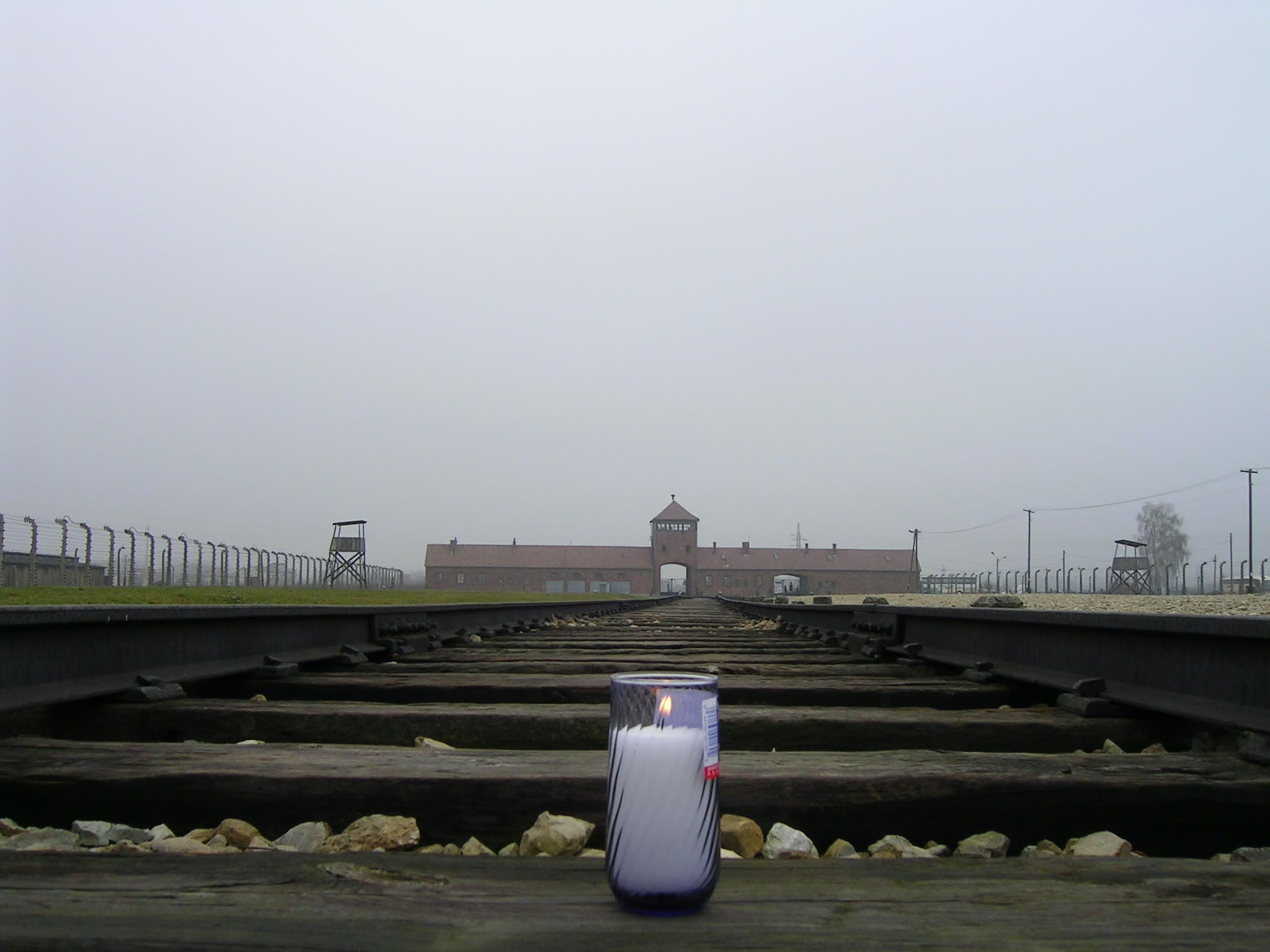
To return to the largest crime scene in human history, the site of Renee’s incarceration and the last place she saw her father alive, took unimaginable courage. Words are rendered useless. The swampy ground at Birkenau tells its own story.
‘Now I’ve seen Auschwitz, I realise why my grandma found it so difficult to talk about,’ Adrian said in his video diary. ‘I started this trip with so many questions and gradually, she’s telling me her story and I’m beginning to understand what really happened to her.’
‘Do you think it’s made you a bit more overprotective?’ Adrian asked me when we reached Hamburg.
‘Yes, it made me very protective towards my children and my grandchildren. I hope one day to see you all settled and have good jobs. I like to see only good things for my grandchildren. I’m pleased I’ve been able to bring you here. You’ll remember this for the rest of your life. I love you so much.’
In Bergen-Belsen, we were joined by Charles, who told Adrian what he’d seen on entering the death camp.
‘They sent us here to die,’ I explained. ‘The dead were lying on top of the living, the living on top of the dead. There was sheer chaos here. It’s impossible to describe. We gave up all hope of surviving.’
I told Adrian my mother’s last words. Do not cry when I die. I couldn’t last much longer. I thought I was going to die too.
He held my hand. ‘Did you think you would survive?’ he asked.
‘No. I was all on my own after my mother died. I was fifteen years old and I had no one.’
Telling my grandson this story was so incredibly hard, but he had a right to know the truth. He hugged me with tears in his eyes and we all left the camp arm in arm.
Back home in England, we went to a Holocaust survivors memorial service.
‘The Holocaust is not history,’ said a speaker. ‘It is a part of us. The purpose of coming together is not just to remember the past; it’s to pass over a message to future generations. That they will keep alive everything that we stood for and we stand for. As we begin another year, my message is, let the children and the grandchildren take over where we are leaving off.’
‘Before I went on the trip, Grandma never told me much about the Holocaust because she wanted to hide it from me,’ Adrian said in his video diary at the end of the documentary. ‘After the trip I realised, she didn’t want to hide it from me. What she was actually saying was that all those questions that I wanted to ask her couldn’t have been answered in a conversation. I actually had to go there to get them answered.’
After that, we went back to normal, until the TV documentary aired in January 2005. You can’t believe the letters we got. Sack loads. Adrian even appeared on Blue Peter and Richard and Judy. I’m so proud of him and all my grandchildren.
Layer by layer, Renee’s past was unfolding as she shared her story with the people who really mattered to her. Not just the backbone, but the softer, in-between details, of the childhood games she played outside her home, the smell of her bubbe’s baking and the sound of lively Yiddish conversations drifting through the busy streets of Zduńska Wola. It was important to Renee for people to know about the cultural richness of Jewish life in Poland, not just its death. For Renee, the need to share had finally overcome the desire to forget.
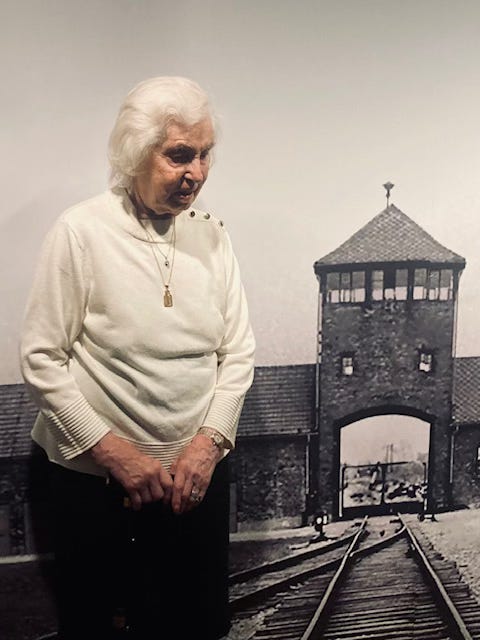
Today, Renee is 97 and will be at the Memorial Day Service in London with her son Martin. The BBC documentary, Grandchild of the Holocaust is a powerful watch and can be viewed here. Twenty-one years on from the airing of the documentary, Adrian lives with his grandmother and continues to tell her story.
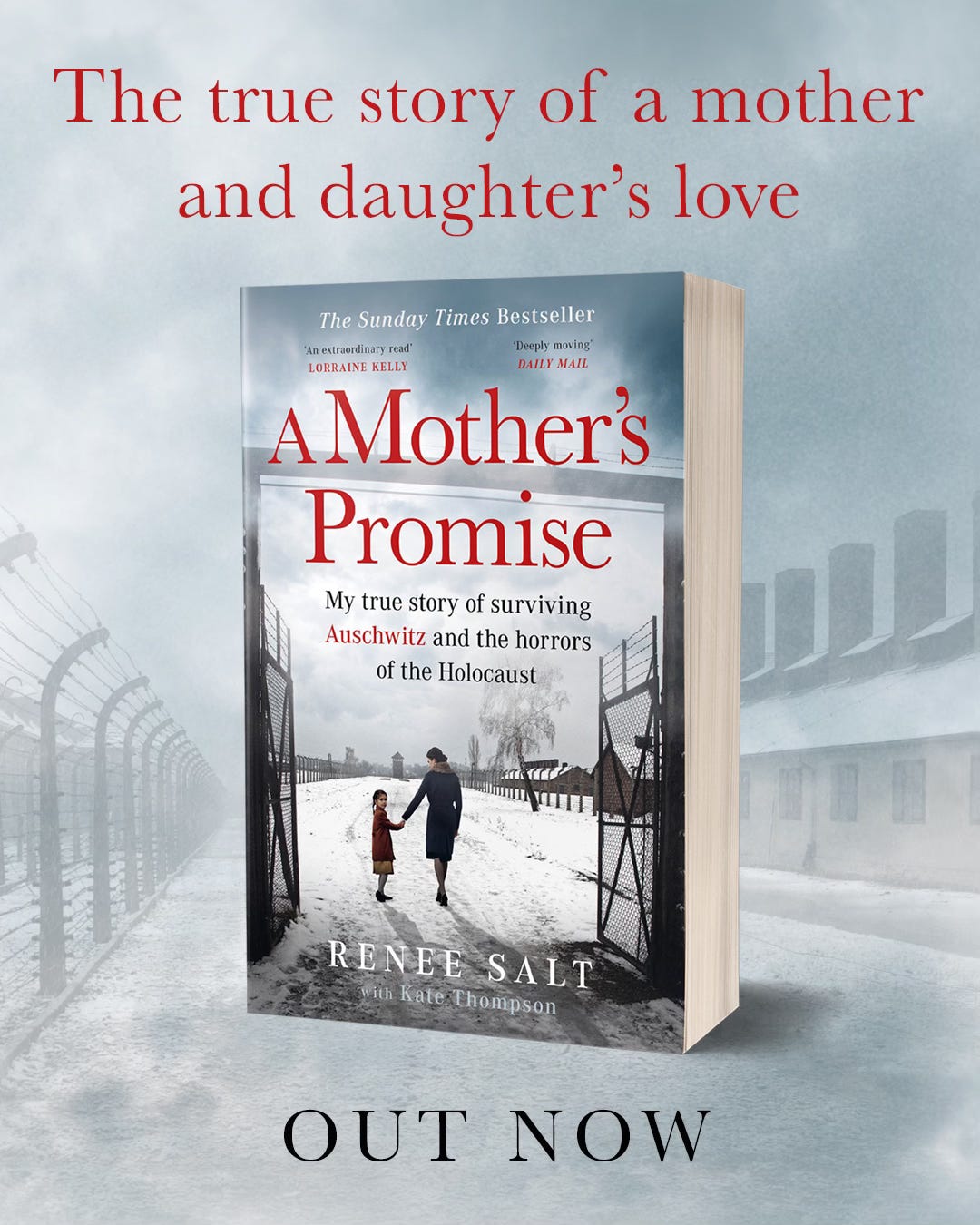
A Mother’s Promise is on sale now in paperback in the UK.
The book is known as Do Not Cry When I Die in the US and Canada and from the 2-28 Feb will be $1.99 as part of Kindle monthly deal. Click here to view.
No posts
Comments
Nothing yet. Say the first thing.
Sign in to join the conversation.