
Dear Readers,
Before steaming into Africa, a word of thanks. In just three months, you have helped me sell over 450 copies of my novella, A Truth Occasionally Acknowledged! There has been no marketing besides the word-spreading that you have done, and I’m very grateful. Thank you!
I am not an adventurous traveller. I am afraid of — in no particular order — bed bugs, dirty bathrooms, lack of bathrooms, third-world tap water, being hungry, getting sick, and missing my morning Earl Grey tea. I’m not afraid of being kidnapped or mugged or getting lost or losing my passport — not that I think I’m immune to such things, but I figure someone else has them covered (or not, According to His Will). My fear of third-world travel hovers mostly around the loss of comfort and control. (There’s also a scarier fear of being exposed when I react badly to those losses. It has been said there’s room for growth.)
Which brings me to East Africa. Or, rather, a cruise ship brought me to East Africa. Some might call it poverty tourism, and I did have some embarrassment last fall when a good friend invited our family on a missions trip to Africa with her family, and I had to tell her that we were going for two weeks on a luxury African cruise instead. “Rich people on cruises need Jesus, too,” she said kindly. I immediately felt justified.
During the first half of our trip, we enjoyed several safaris in South Africa. That Swahili word needs unpacking. Safari means ‘journey’ or ‘expedition’ and comes from the Arabic word safar, which means the same thing. I had absorbed that word through the filter of 19th century British Allan Quatermain stories, so I pictured myself driving through trackless savannas, perhaps looking jaunty in a wide-brimmed white hat and scarf, risking my life to see lions in the wild. The reality exposed my ignorance.
Experienced from the safety of our open Land Rovers, our first safari on Christmas Eve felt rather like Jurassic Park with its enormous, double-layered electric fences, 20-ft.-tall gates, and amusement-park polish. Luxury villas in the style of native African huts dotted the hillsides from which the guests could have their morning cup of coffee whilst observing hippopotami basking below in the mud. Feeling a bit coddled, I asked our South African guide if there were places where one could encounter elephants or lions in the wild, not within fences. He said, “Civilized countries do not have dangerous animals roaming about anymore. In South Africa, they’re all in game reserves.” Abashed by my ignorance, I still felt slightly disappointed. This was not a real safari. It was a big zoo.
Well, not like the Atlanta zoo. There were no internal fences, and I was in the unguarded proximity of some gorgeous animals. Here are a few beasts metaphorically shot on safari by my husband.
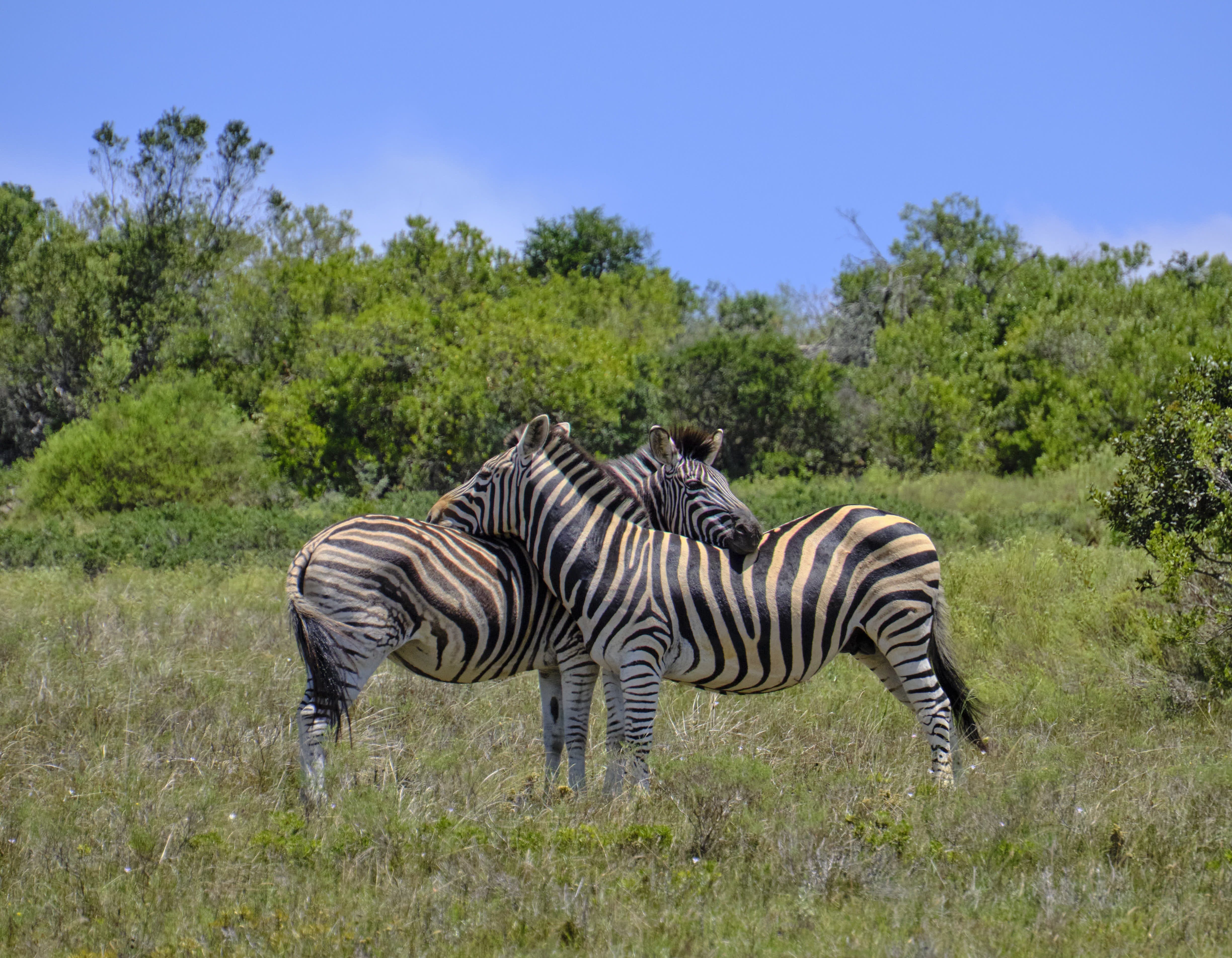
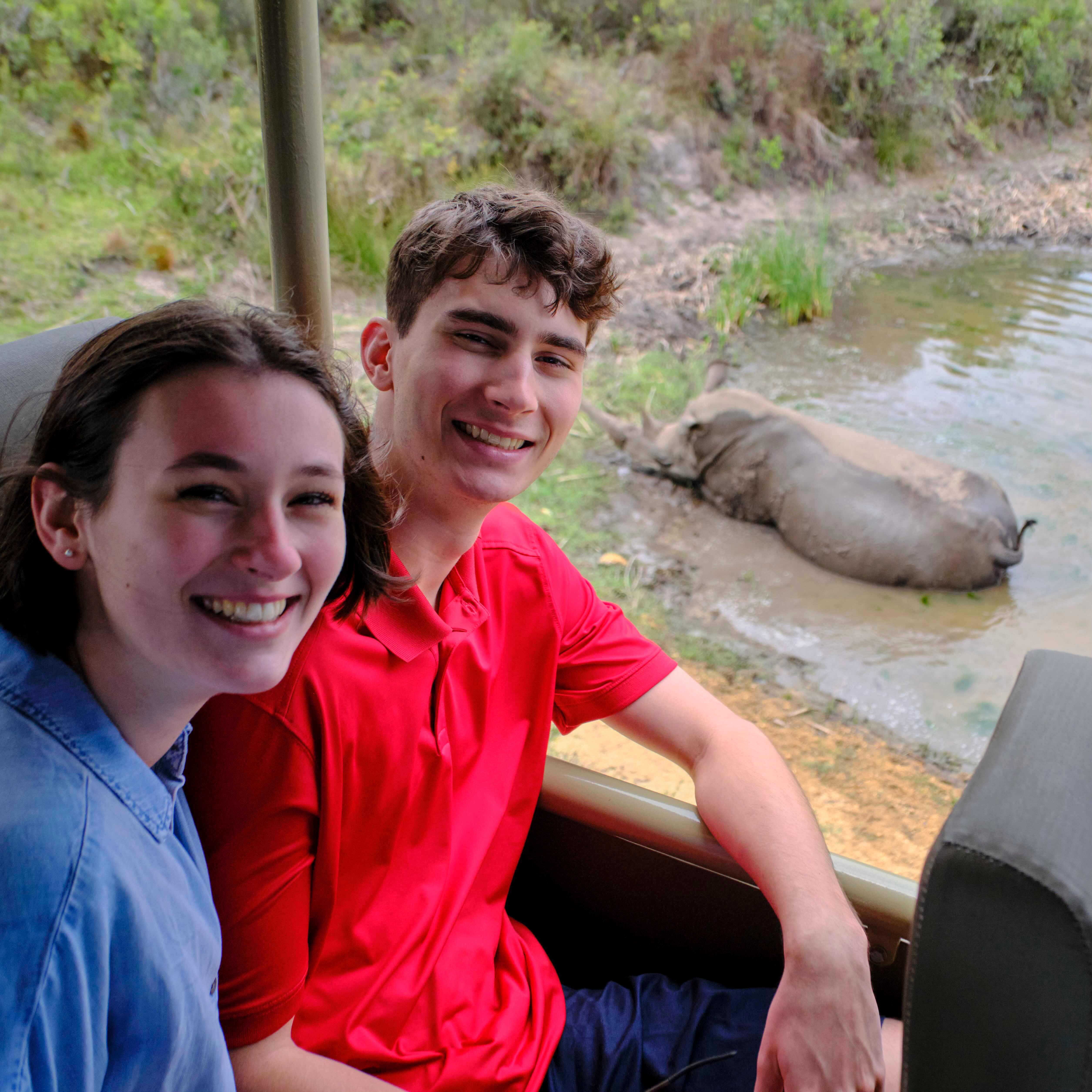
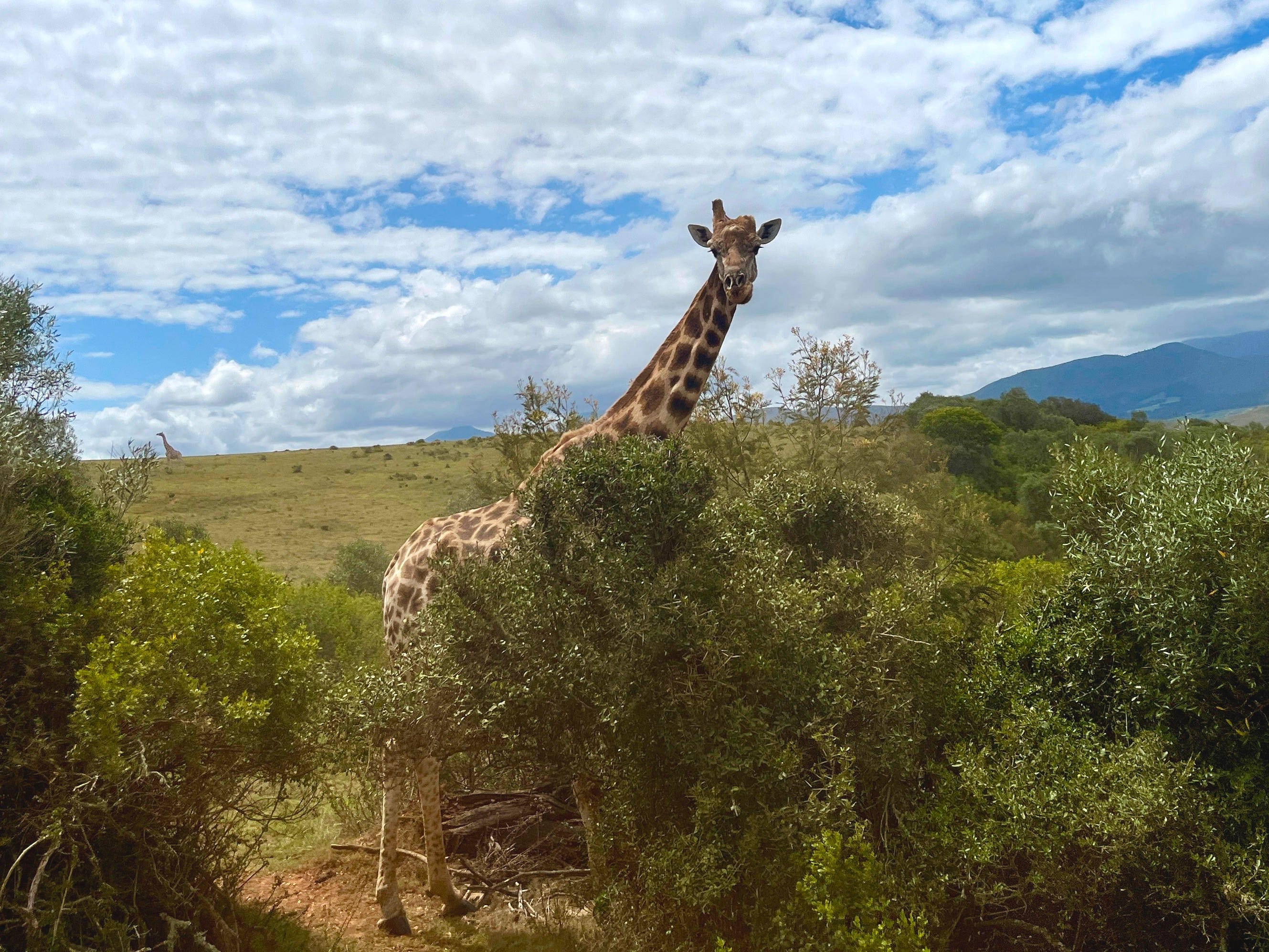
That first safari felt controlled and without risk. Nevertheless, when my hat flew off near the end, the guide seemed nervous about leaving the Land Rover to retrieve it for me (he wouldn’t let me do it). Perhaps there was more danger than I realized?
The next day was Christmas! We docked at Port Elizabeth and drove for two hours to a more remote game reserve that successfully recreated my Out of Africa expectations. In fact, the land we covered was so expansive that we saw hardly any animals at all and were gone for so long that I had to risk being attacked by leopards to use the facili-trees. I have now had an authentic experience in the bush. Take me back to the theme park.
In the final five minutes of that safari, we had the most thrilling encounter of the whole trip. Our guide, desperate to show us an impressive animal, heard over his walkie-talkie that a family of elephants could be found over the next rise. We crested the hill and saw a group of majestic beasts. Warned of the violence of elephants — they will sometimes charge a vehicle if approached — we were shocked when our guide thought a closer view would guarantee customer satisfaction. He parked our Land Rover no more than 5 yards from the group of females guarding their baby elephant, which even I could have told him was unwise. Thankfully, most of the elephants wandered off, but one of the adolescents was curious and lumbered over for a closer smell. Enjoy the short video below, and turn up the volume. We were all aflutter.
That Christmas Day safari was not as full of Christmas cheer as I had wished — the game reserve was owned by Muslims and references to Jesus’ birth were markedly absent. Even the sight of a lion in the wild would have sufficed to symbolize the Lion of Judah, but no joy. However, I did get to dance for joy — at a traditional tribal dance put on for us by the local residents. My daughter thinks I’m an exhibitionist, but I maintain my innocence: I did not jump up there uninvited. One of the dancers pointed at me and asked me to join them — and it would have been insulting to refuse. (I hope my good-faith imitation of their dancing was not more insulting. In the video, I look like I’m in an aerobics class for seniors.)
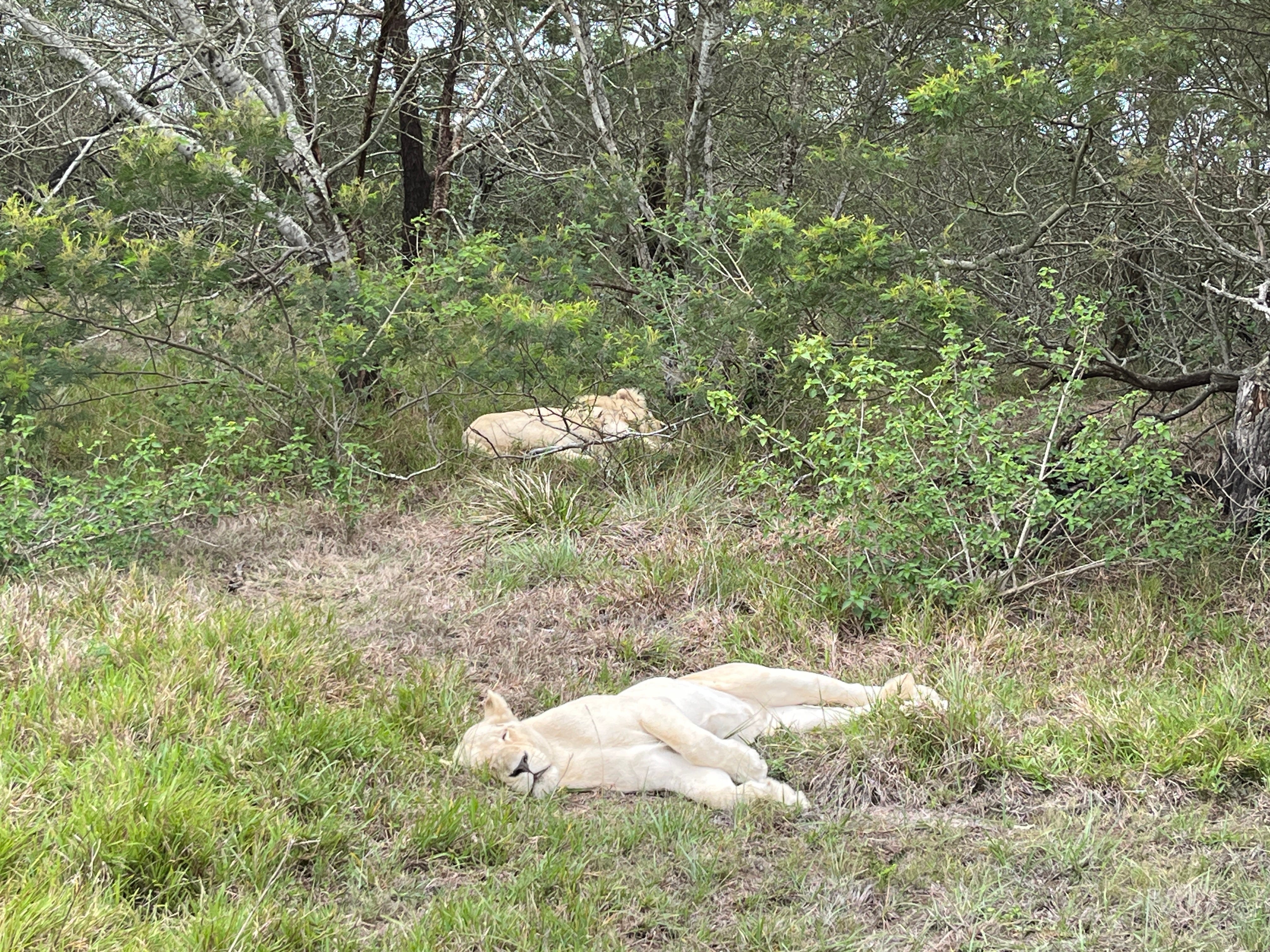
The day after Christmas, we took a long drive from the port of East London, South Africa, to a third game reserve where we passed through a double-layer of electric gates — and encountered the coveted lion-in-the-wild!
Well, nearly in the wild. At least the lions might have thought they were in the wild since they were able to hunt and roam freely in their hundreds of acres. They had recently eaten, as a nearby carcass attested, and were not interested in us. In fact, the male lion was annoyed by our presence and took himself further into the bush to finish his nap. I read that they sleep 16-20 hours a day, which seems like a poor use of time, but even asleep, their majesty and raw power were thrilling to see.
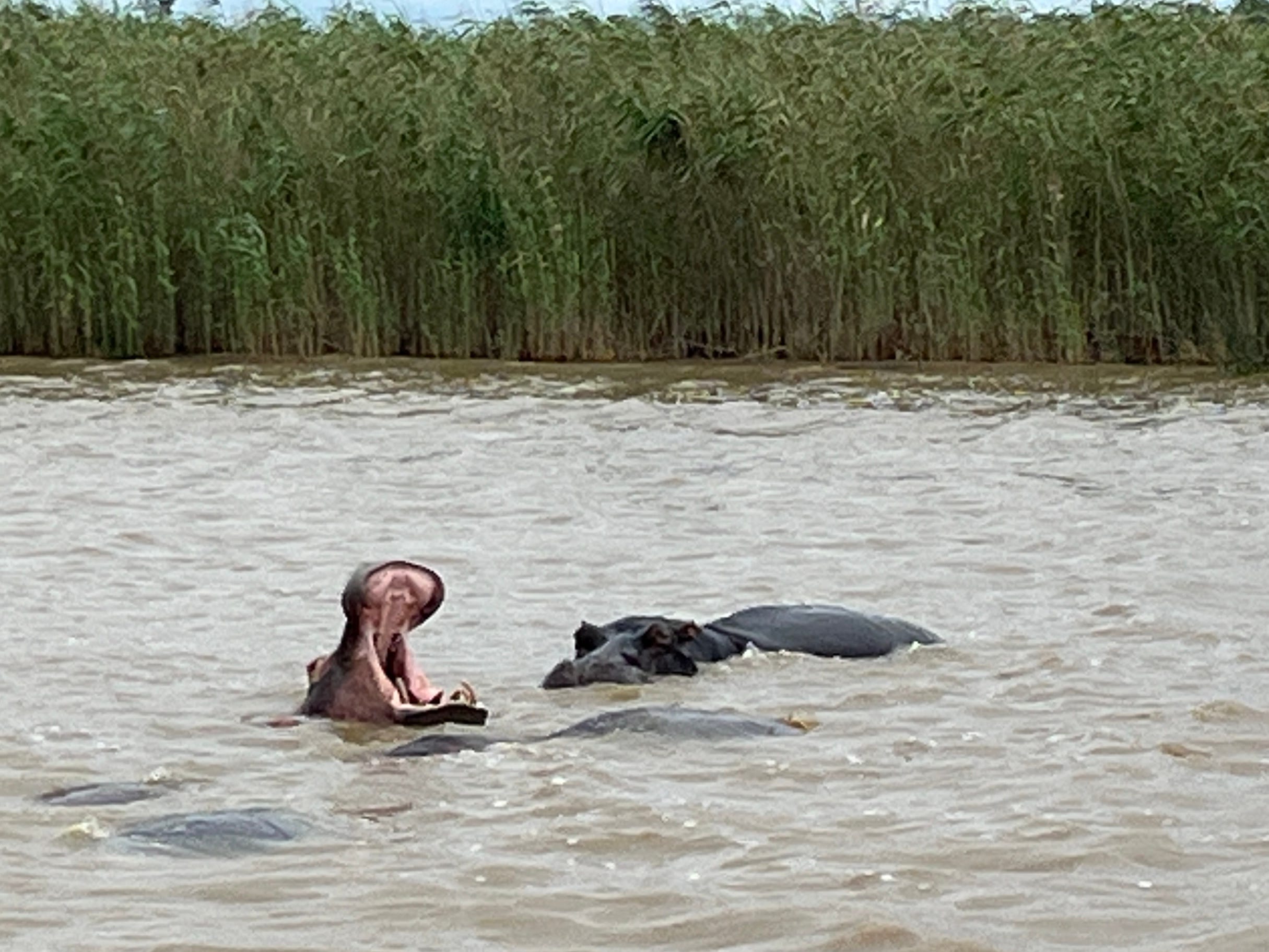
For our final safari, we docked in Richard’s Bay for a wetland cruise. Hippopotami were the order of the day, and we saw a couple of magnificent birds as a bonus. Our safari departed from a small town called St. Lucia on the edge of the wetlands. As we drove down the main thoroughfare, we noted the wildlife warnings, typical of every municipality in the world. (In Atlanta, we have them about deer.)

The wetland cruise was beautiful, but brief. I took the hippo picture, of which I’m very proud. Not depicted below is the traditional, native dance performed on the shore when the boat returned to the dock. The native women were topless, and my teenagers were mortified. They would have been much more embarrassed had their father and I stood there filming the bouncing beauties as the rest of our boat’s passengers did. It’s all on the internet somewhere, I’m sure.
After six days in South Africa meeting the hospitable locals, purchasing their gorgeous fabrics and creative jewelry, sampling their cuisine and enjoying the beauty of their land and wildlife, I was unprepared for our next stop: Mozambique.
We docked in Maputo, the capital of the former Portuguese colony, independent since 1975 after more than four centuries of European rule. (Remember Vasco da Gama? He landed there in 1498 on his famous trip around the Cape of Good Hope, establishing the first trade route from Europe to India.) Following the Portuguese’s hurried departure in 1975 (thanks to militant Socialists), the country suffered from 16 years of civil war — the native people fighting to maintain their traditions against their new native rulers who were supported by the USSR. The conflict resolved, more or less, in 1992 after the USSR collapsed — but 34 years has not been enough time to get their bearings.
My husband, son, and I had signed up for a tour of a suburb called Mafalala, described by the excursions director as an “historic” neighborhood with “important cultural significance.” I had vague visions of decaying colonial Portuguese architecture with laundry hung out to dry on rusting wrought iron balconies. What a thrill it would be to see the architecture of this storied nation!
Before arriving at the start of our walking tour, we drove past the crumbling colonial buildings of my imagination, past snarled, Gordian knots of electrical wires attached to concrete facades, past loitering groups of unemployed men and dazed, homeless women before arriving at a heap of rubble and trash where the shuttle driver pulled over.
I thought we had been stopped by law enforcement or that there was a problem with the engine, but no — this was where we were getting out. It was at that moment that my luxury cruise morphed into something entirely different.
Reminding myself that God goes with us everywhere, I stepped out of the shuttle and was instantly accosted by three Mozambican men dressed in cast-off American T-shirts who whistled and expressively said, “Hellooo white laydeeeeeee!”
My most effective move in any awkward social situation is to smile lovingly.
“Hello!” I said with a bright smile as if welcoming them to church — and they scuttled away. Crazy white ladies were unpredictable and not worth the trouble.
Our tour guide emerged from the crowd, distinguished from the sea of black faces by his pressed, white linen shirt, and apologized profusely for the encounter. Determined not to be uncomfortable — or at least not to appear so — I dismissed the apology and introduced myself with a refreshed smile.
Conscious of being entirely out of place, I attempted to interpret my surroundings. A few women crouched in the nearby rubble doing something, staring at us over their shoulders. Men loitered nearby leaning against walls, squatting in the dirt, clustered in groups, all eyeing the well-heeled white people who had appeared like a hallucination. Our tour guide spoke to them in Portuguese, and they moved away, returning to their business.
Our guide invited us to follow him — where? what was happening? — and it soon became clear from the trash-strewn, dirt streets and informal shacks lining the road that we had entered a slum. I have served the poor at various times in various places in America, and our poverty at home is wealth compared to this Mozambican suburb. Since then, I’ve learned that according to the IMF, Mozambique ranks among the ten poorest countries in the world1 — and as one of its poorest neighborhoods, Mafalala has nearly the lowest human flourishing on the planet.
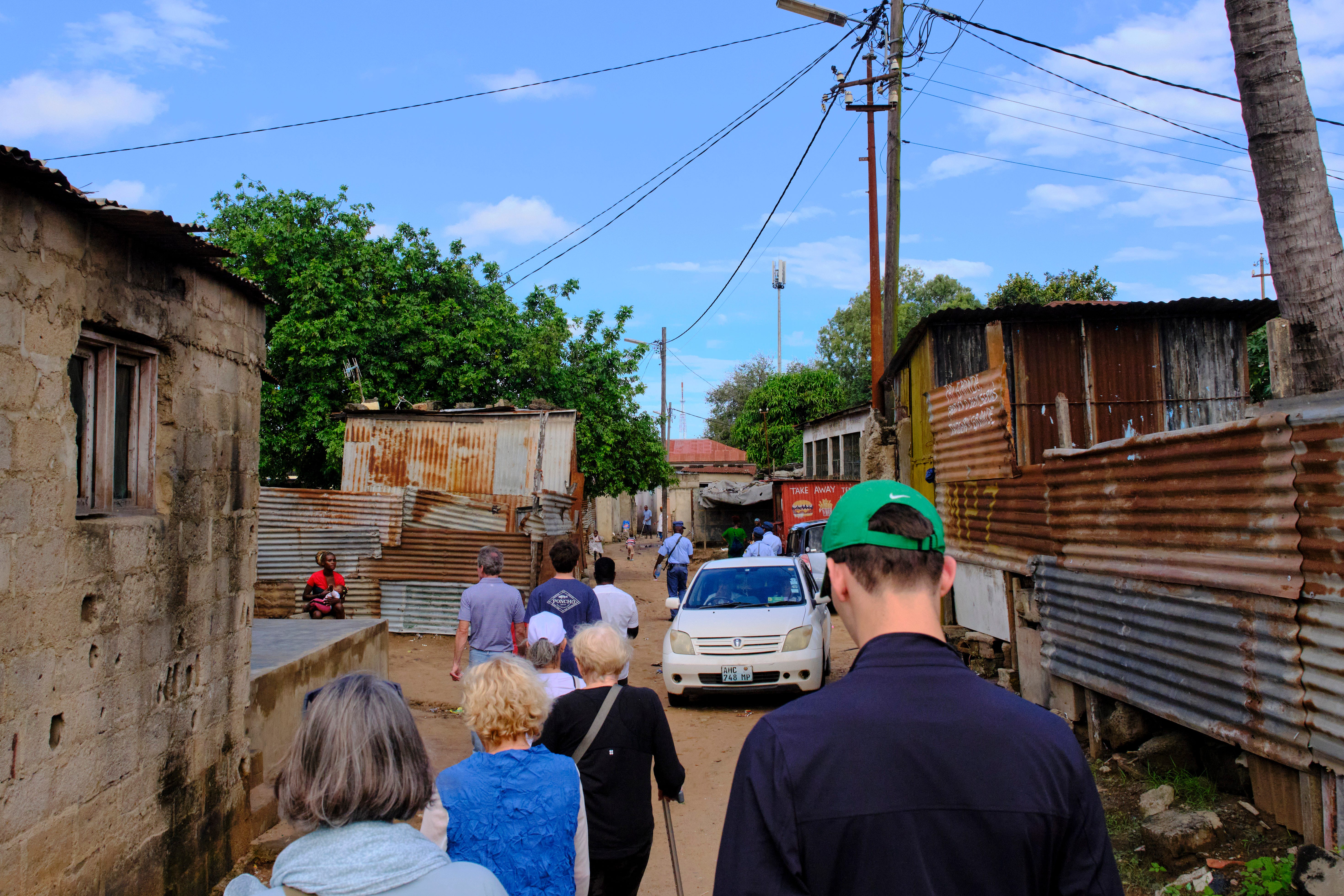
Joseph (not our guide’s real name for reasons soon to be clear) began to describe the history of the place and his connection to it. He had been born and reared in this slum. Twenty years previously, he had attended one of the two schools built by the Portuguese in the 1930s when there were only 5,000 residents. The post-colonial government has not built any new schools since then, so these two covered, open-air structures serve this community of 25,000 people.
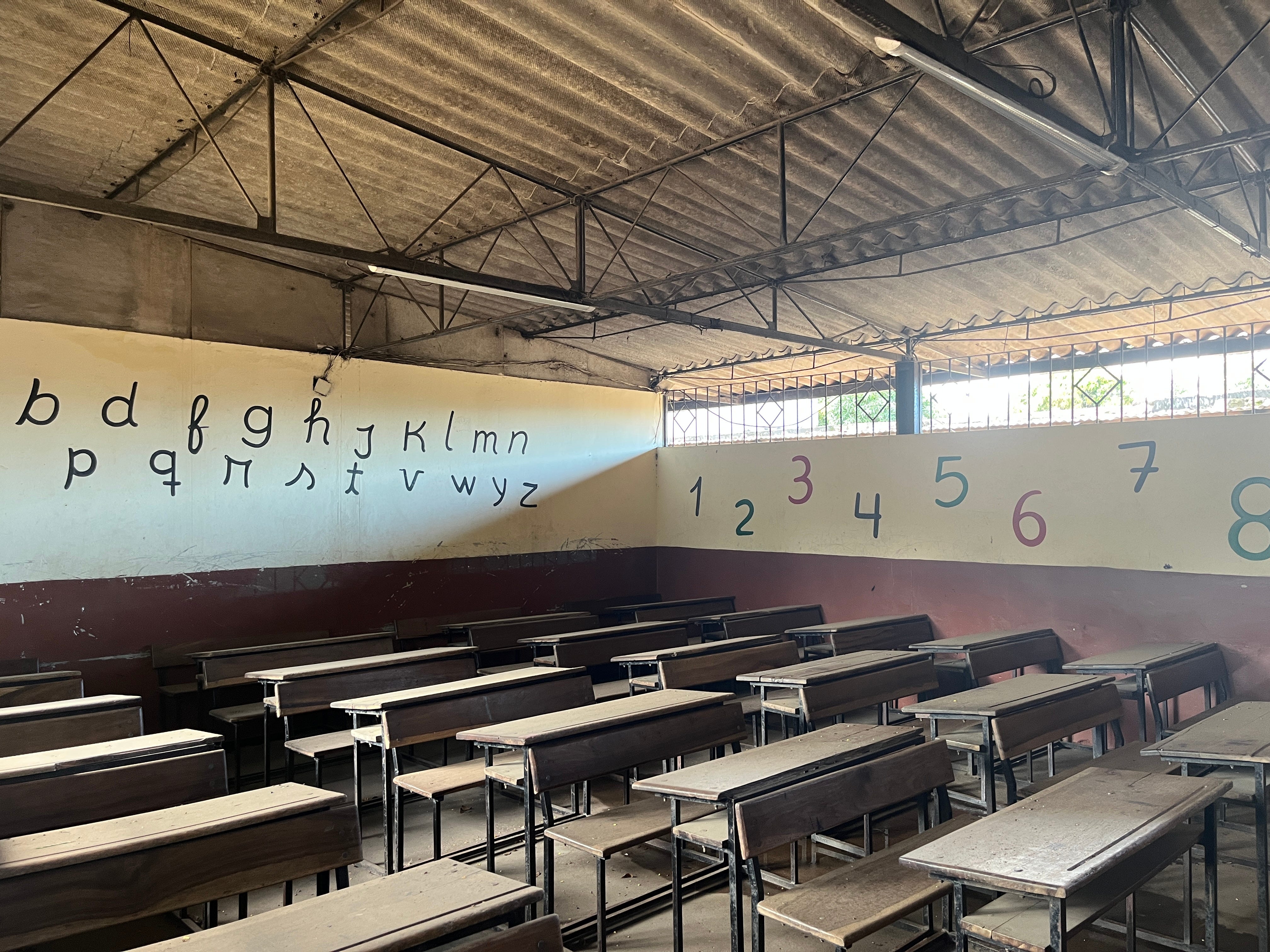
The children attend school in three shifts, sitting in the tree branches outside when the benches under the shed roof are full. The teachers are government employees — but the government doesn’t pay much, so the teachers don’t teach much, Joseph said.
Joseph’s serviceable English had been acquired through a family member who taught in a private school, the only place to learn English if one hails from Mafalala. In a country with little chance of economic advancement, learning English brought him in contact with tourists, lifting the veil between poverty and opportunity. A Mozambican man fortunate enough to be employed at the city’s docks might earn $65/month, but as a tour guide, Joseph earned at least two or three times that from our tips in one day. He was now saving to be married and have a family.
As he led us up the dirt paths of the shanty town, we passed rows of men sitting on upturned crates or on the ground, staring at us as we meandered by in clothes and jewelry I would not have worn had I known we were going to a slum! I smiled, making eye contact with each of them, remembering that marvelous story about Brooke Astor visiting the poor in New York City. (Yes, I am Brooke Astor in this analogy.) She was widely criticized by the press for showing up in expensive clothes when these people had nothing — but her response silenced the critics. This American Queen of Fashion said she wore the same clothes for the poor as she would for the Queen of England. The destitute deserve the same respect as the wealthy. I soldiered on, dispensing smiles and “Bom dia” (“good day”) to every person we passed, though I did turn my diamond engagement ring toward my palm. No need to parade that around. (I tried to remove it, but my fingers had swollen in the hot, afternoon sun. Definitely not from the excess of food I’d eaten on the cruise.)
It turns out that “Bom dia,” though literally “good day,” actually means “good morning.” I was finally corrected by a friendly resident of the slum who told me in Portuguese with a smile to say “Boa tarde” for “good afternoon,” instead. Though grateful to appear less foolish, I was mostly impressed by the graciousness of the previous hundred residents I’d spoken to who had all returned my Portuguese good morning, though it was well into the afternoon.
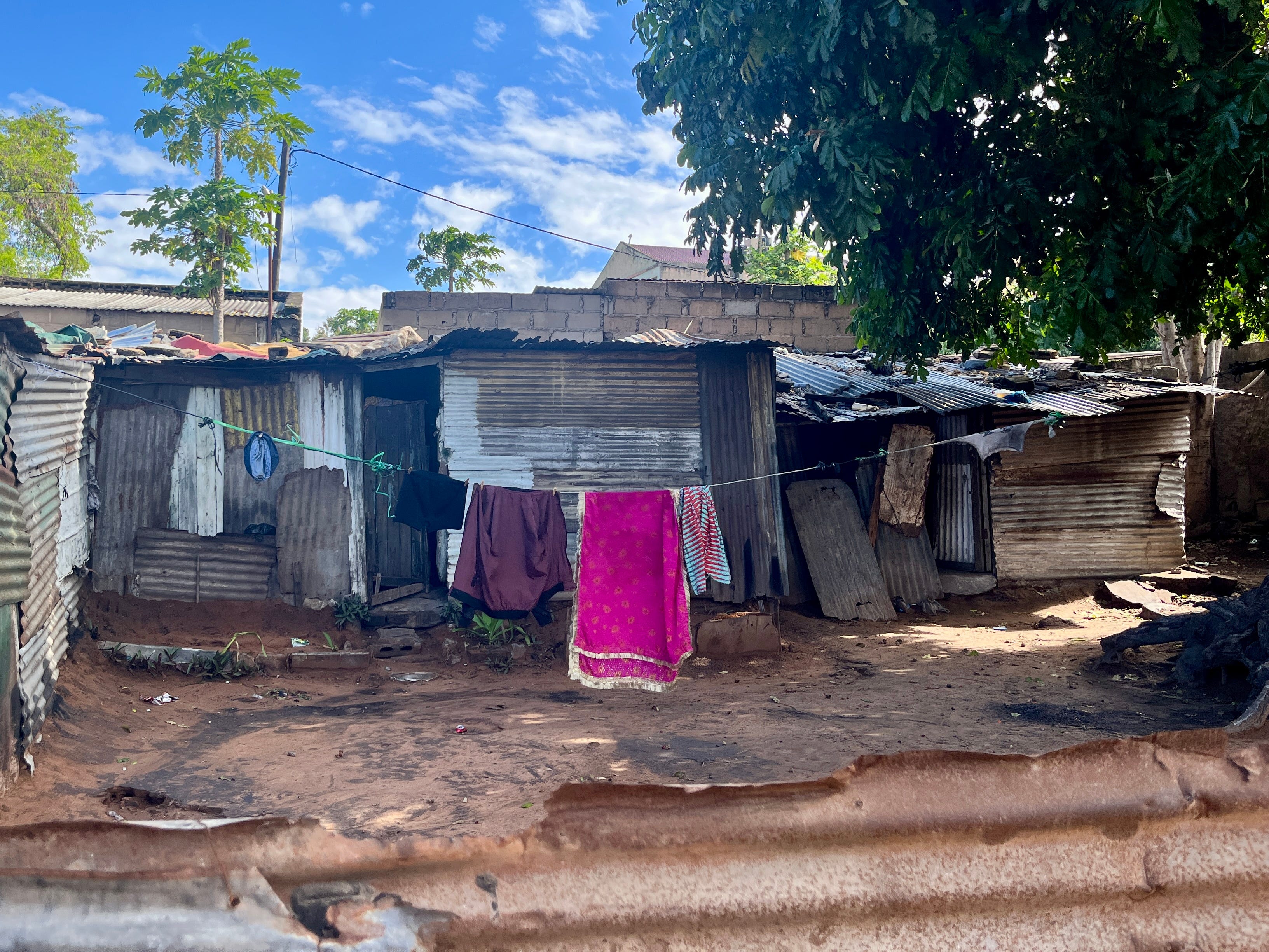
We departed from the main drag and gathered on a side path that saw little foot traffic. Joseph faced our group while two other tour guides who had accompanied us faced out, watching the passersby and acting as deterrents to the criminals operating freely in the area. Behind Joseph stood a corrugated metal fence that enclosed a small dirt yard where a group of metal hovels slumped. He explained that these typical little shacks (that would barely keep out wind, rain, or animals) housed four families — roughly 16 people — who slept and ate on the dirt floors.
Thankfully, they weren’t home to be insulted by our distressed faces as we contemplated their deprivation. In retrospect, I realized they must have taken pride in their home. The dirt yard was swept relatively clean with little trash compared to the streets. Clean laundry hung on a clothesline. And bravely catching the breeze hung a pink cloth edged with gold — a banner of dignity in poverty.
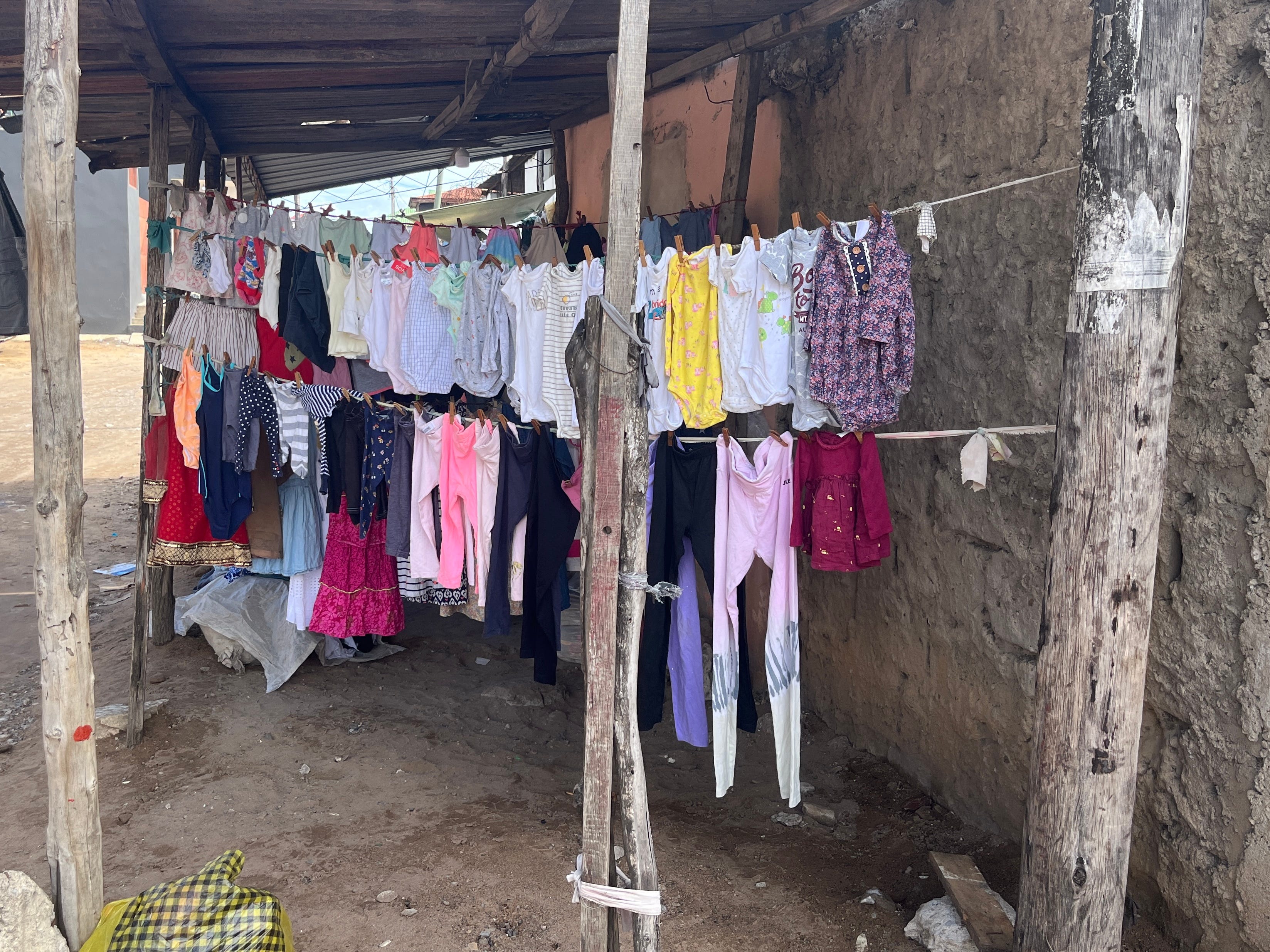
There were sights on the tour that surprised me. Residents wearing clean clothes, in spite of having no running water. The complete absence of sewage or foul smells in spite of living on top of each other with no plumbing. There were familiar signs of economic activity: women waiting in line to have their hair braided, women having their nails done at tables salvaged from the 1950s, an outdoor children’s clothing shop with what looked like Goodwill donations for sale on clotheslines, a small outdoor marketplace where the community’s only old people sat guard beside a few fruits and vegetables — all conducted in dirt-floor sheds and dwellings. The industry of the few contrasted with the unemployment of the many.
Joseph mentioned one of the peculiarities of the neighborhood — a thriving drug house, protected by the police for the profit of the government — and one of the teenage boys in our group immediately asked to see it. On our way, we walked in single-file down a narrow alley where the residents were less responsive to my “Boa tarde.” A group of men and women sat on piles of rubble at a widening of the path, their eyes hostile as we passed and greeted them.
The alley opened onto the main drag of the settlement where the drug house plied its trade and the traffic of cars, motorcycles, bikes, and pedestrians roiled with activity. Men pulled heavy carts that should have been pulled by mules. Women carried enormous loads on their heads with babies tied to their backs. Children ran and played, barely escaping the wheels of vehicles competing for the right of way.
The energy became frenetic as we neared the drug house. A tall man put his arm around my husband’s shoulders, hawking something in Portuguese over the noise of the crowd, while a visitation from another world emerged ahead. A woman out of a fashion magazine stepped lightly over the trash-strewn street in high heels and designer jeans, her coiffed, voluminous Afro framing her aviator sunglasses. Her gaze lingered for a moment on our tour group, and she produced a wry smile before disappearing into the back of an S-Class Mercedes-Benz, her drug purchase complete.
The contrasts were disorienting, and in the crush of people, our group began to separate. I kept one eye on my teenage son, easy to spot at 6’7”, and turned back to see my husband adroitly refusing the efforts of a drug salesman while cradling his camera — worth four years’ income in that neighborhood. I was jostled back and forth by the crowd, bumping against cars crawling their way through the people, clutching my purse and keeping my ring hidden against my palm, not processing all that I was seeing. Pointing out the drug house somewhere up ahead — I never identified it — Joseph turned to see the man wheedling my husband and then realized that his tour group had dispersed in the crowd. He became instantly uncomfortable and reversed course, calling us back up the street, shooing off the drug-dealer, pulling another of us by the arm, herding us away from the drug house. As the distance increased, the chaos diminished, and my mind cleared again, feeling like I’d emerged from an energy field of radio interference. I don’t know what I saw, but in retrospect, it felt like that drug house was protected by more than the government.
The last stop on our tour was a bizarrely placed museum — a brand-new, two-story building of contemporary design surrounded by the medieval deprivation. Joseph implied by his tone that the museum didn’t deserve a visit but said it was required by someone to be included on the tour. It was a paean to the residents who had escaped — a poet, a musician, a soccer player, a politician — all in Portuguese, so it wasn’t there for the tourists. But the residents of the settlement weren’t allowed inside, so for whose benefit did this boondoggle exist? Joseph’s English became impenetrable when asked that question. I never got an answer out of him.
His English became clear again when we asked what could be done to relieve the suffering of this place. His answers were so counter-cultural — counter to our culture, I mean — that I have wondered how my readers would receive his words. I was expecting to hear that this poverty was the result of Portuguese cruelty and their rape of the native society. Since high school, the academic culture around me has stated the evils of imperialism and the arrogance of forcing our ideas on other people. According to prevailing Western wisdom, all cultures are equally good and all religions are equally valid, right? (That’s what they told me at Princeton!) His unexpected answers arrested us all. I wish I had recorded the conversation, but I wrote it all down when I returned to the ship.
A blonde, bejeweled lady from Texas asked, “I’d like to give some money to help these people. Is there an organization I can give it to?”
“I wouldn’t trust your money to any charity organization here. If you see someone in need, give them a little bit of money,” Joseph replied. “Not too much because it will ruin their lives.”
“You know who is in need. Can’t we give the money to you to pass along?” she insisted.
“Don’t give the money to me,” he laughed uncomfortably. “It will change my mind.” — which meant that he would be tempted to keep it.
“What about the termination of USAID? Are people suffering because of that?” her husband asked.
“USAID? No, we never received a penny of that money. The government leaders pocket all foreign aid.”
All eyebrows rose at this information at odds with many Western news reports.
“How do these people live?” I asked.
“Everyone scrapes and sells and does what he can. There are no jobs, and no one can start a business to hire people because it will be nationalized by the government. The black colonizers are worse than the Portuguese.”
“I’m sorry—” my husband said. “Did you say ‘black colonizers?’”
Joseph looked embarrassed. “Yes. That’s what we call them. Our current leaders are from the most educated black families who expelled the Portuguese in the 1970’s. Then we fought a civil war for 16 years — over a million people died — because of conflicts over who would lead. The war ended in 1992, and they agreed we could vote. But they’ve never lost an election. I’ve never met anyone who has voted for them. Seems unlikely, yes? We know.”
Someone whispered, “Has there been an uprising? Doesn’t everyone want to overthrow this government?”
“Yes, but they have all the guns. Every time a protestor gains followers, he disappears. What can we do?”
We were quiet for a moment, and then I had to ask, “Is it safe for you to talk like this? If people are disappearing when they protest, isn’t it dangerous for you to say that?” I glanced around for eavesdroppers or police, but for the moment, we were alone.
“I don’t care what they do to me. I’m already old,” he said, though he was much younger than I. “In this neighborhood, very few people live more than 50 years. I have nothing to lose. This is my protest.”
We considered that in silence.
“But it’s not just the government,” Joseph continued. “Everyone is corrupt from top to bottom in this country. No one will do their jobs unless you bribe them. If you are dying in the hospital, the nurses won’t treat you unless you pay extra. I have friends who have died of simple things because the nurses wouldn’t treat them. The teachers won’t teach without a bribe. The students won’t study because no one’s bribing them.”
The Texas lady said, “But the people are desperate! Of course they act that way.”
Joseph grimaced in an effort to make us understand, and the conversation took an even more unexpected turn. “No, desperation has nothing to do with it. It’s corruption. Everyone is bad — we cannot blame the government, though they are terrible. We are all corrupt. We need education. Moral education. We need to be taught how to live. How to treat each other.”
I could see our tour group processing his endorsement of ‘morally educating’ his countrymen. Whose morals was he referring to?
“Didn’t the Portuguese do that sort of thing?” I asked with hesitation. “—bring ‘moral education to the natives?’ Isn’t that kind of insulting? and imperialist?”
“What we are doing certainly isn’t working.” He glanced at his compatriot, the other Mozambican tour guide, and said carefully, “I don’t mean to offend my colleague — I hope I may say this — but there is something wrong with us. We don’t need money. We need to change. All of us.”
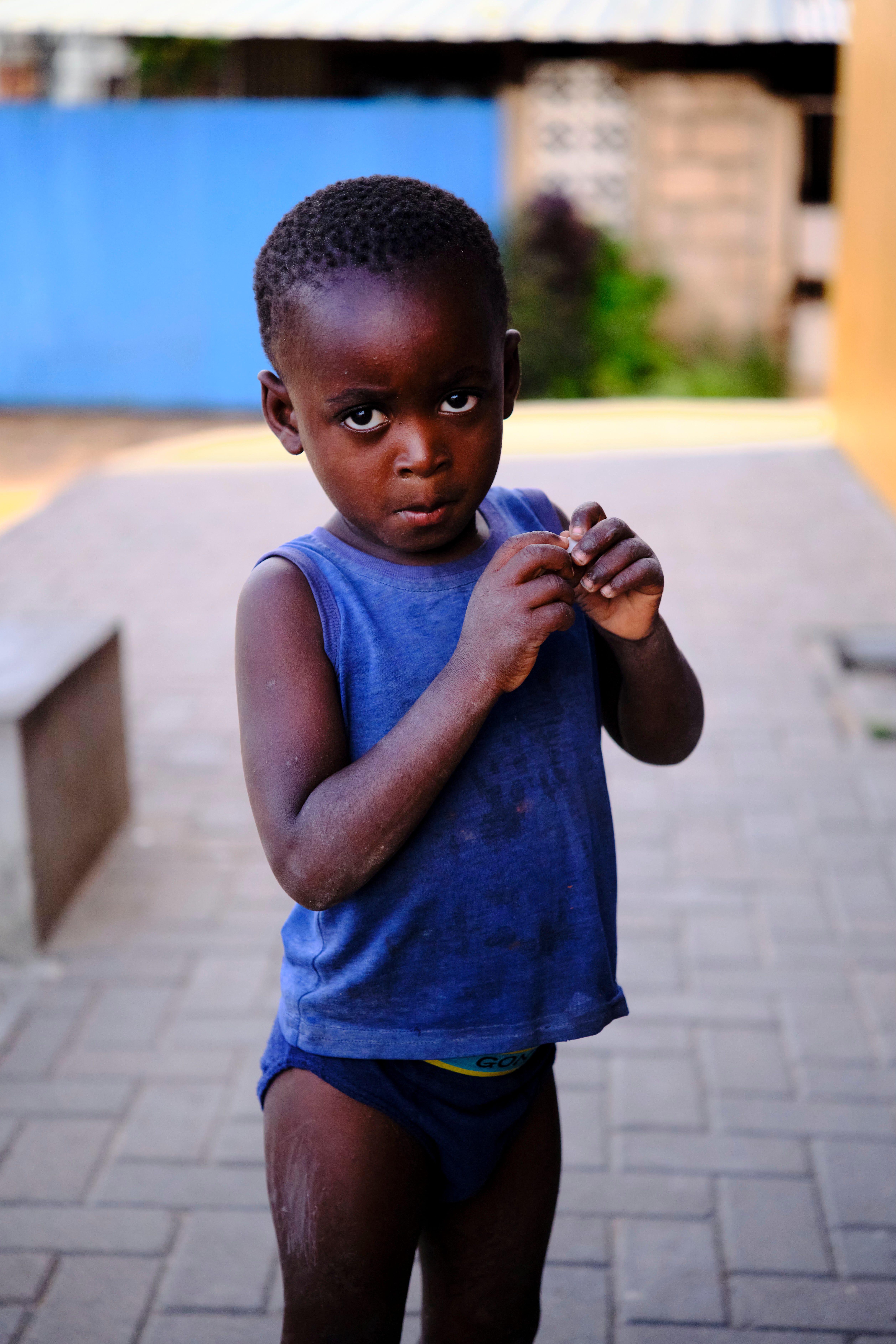
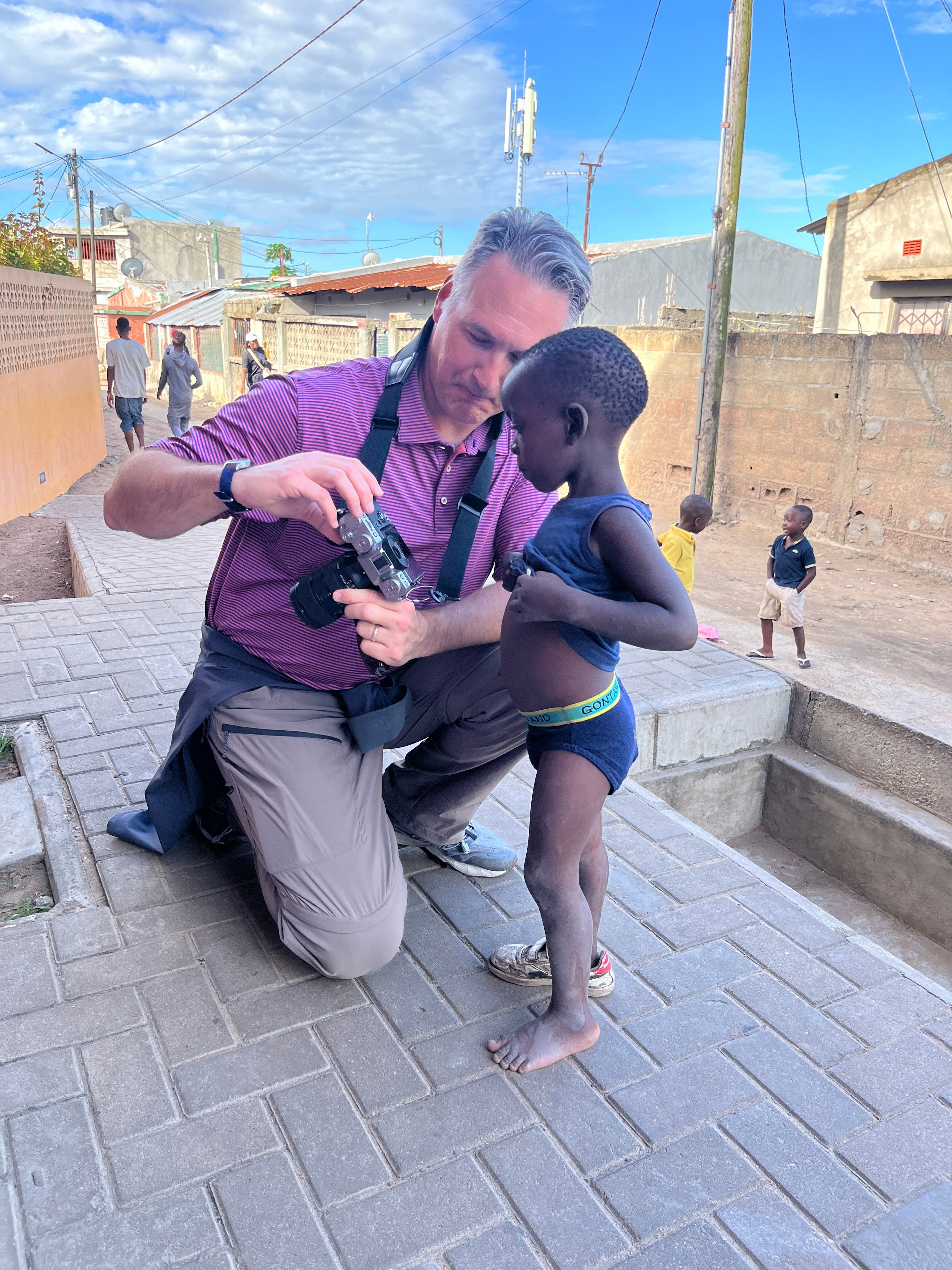
The conversation was profound. We left the museum behind, deep in thought. On the street, a little boy asked my husband in Portuguese to take his picture. I wish we’d had an instant printer to give him a copy, but my husband showed him what he looked like on the camera’s screen.
We followed Joseph in silence back to the shuttle, idling near a large yard of dirt where boys played an organized soccer game. Organized, but without shoes or uniforms, these boys hoped to escape Mafalala like the great Eusébio, winner of the Ballon d’Or and the Golden Boot. He, too, had played barefoot on that field with broken glass littering the sidelines. The street was crowded with spectators, and I felt awkward tipping Joseph in front of people who wouldn’t see that meagre amount in weeks. I wondered if he were safe with our cash on him.
We thanked him and drove away. I continued to mull over his words about moral education and how he refused to blame others — white colonizers or black colonizers — for the people’s plight. They were all corrupt and in need of change, he’d said, sounding rather like the 16th century theologian John Calvin. I wondered if Joseph knew the phrase “total depravity,” Calvin’s description of every human’s sinful state. Clearly, Joseph was familiar with the concept.
In the weeks since my return from Africa, when I’ve related this conversation to friends, a few have suggested that Joseph was just saying things that we wanted to hear to relieve our white guilt. I considered that possibility as I listened to him, but nothing about his manner suggested insincerity, fabrication, or flattery. Besides which, I didn’t like hearing it. The easiest way to make us feel better would have been to fabricate a “friend’s charity” that we could support. But he didn’t do that. I found his words to be difficult, and I believe that he spoke from the heart.
Ruminating further, it didn’t surprise me that Joseph turned to education for his hope of relief. The Portuguese brought their Western schools, the black colonizers used their Marxist moral reeducation camps, USAID and other Western aid have offered their neoliberal instruction in one hand and money in the other. Education is the favorite way to effect change. But Joseph senses that something is lacking. He wants education that will change their character.
As he pointed out, all of them — and I believe all of us — need this change. Take me for example. I am highly educated about fitness and nutritional science — and yet I rarely exercise and frequently overeat. (I’m enjoying an unnecessary slice of pepperoni pizza as I write this.) Knowing what is right and good for me doesn’t mean I’ll do it. I don’t want to do it. I don’t need more education. I need transformation. In an apocryphal story from the early 1900s, G.K. Chesterton was asked by The Times of London to contribute to an essay series answering the question, “What’s wrong with the world?” His response was short: “I am.”
No amount of money, education, healthy food options, clean water, convenient bathrooms — even luxury cruises or my morning Earl Grey tea — will make me want to do what is right. I want what I want when I want it and will pursue what I want — unless something changes my desires. The members of the Mozambican government, Joseph, and I all need to be — not reeducated, but — re-created.
Is such a thing possible? The Bible says it is. God promised millennia ago,
“I will give you a new heart and put a new spirit in you; I will remove from you your heart of stone and give you a heart of flesh. And I will put my Spirit in you and move you to follow my decrees and be careful to keep my laws.”
Ezekiel 36:26-27
The Jewish Christian named Paul believed that Jesus’ resurrection was the fulfillment of that promise. He explained to the early believers,
“…if anyone is in Christ, he is a new creation. The old has passed away; behold, the new has come.”
2 Corinthians 5:17
I believe that knowing Jesus is the knowledge that Joseph is seeking. Perhaps, like Joseph, one of the nurses who demands a bribe to heal a patient knows that she is sick in her soul. More than anything else, she needs to know that Jesus offers her healing at his own expense — no bribe required. That knowledge will change her heart of stone to a heart of flesh that softens toward her patients, as desperate for healing as she once was. Whether or not there is a chain reaction of grace that untangles the corruption in Mozambique — that nurse will be new and filled with joy because death at 50, or at any age, is not the end.
But I didn’t tell Joseph about Jesus. It didn’t come up. I probably should have risked offending him and the other tourists, overcome the awkwardness, and told him the Good News — that he and I are more corrupt than we can imagine and also more loved than we can comprehend. After all, as Paul said to the Romans, “I am not ashamed of the Gospel, because it is the power of God that brings salvation to everyone who believes.”2 Is maintaining my post-colonial, cultural sensitivity more important than sharing that?
Writing this, I’m feeling more confident. I’m getting his contact info from the cruise company and sending him this essay. (Maybe he’ll subscribe! I’ll let you know.)
My experiences in Africa were too complex to fit into one essay — I’ll publish a second one next month: “East Africa: Zanzibar!” It was my favorite part of the trip and deserves its own essay. See you soon!
If you haven’t bought your copy yet, you can find it on Amazon through the button below. Thank you for reading, and please keep spreading the word!
https://360mozambique.com/development/mozambique-among-the-10-poorest-countries-according-to-the-imf/
Comments
Nothing yet. Say the first thing.
Sign in to join the conversation.