
I’ve joined a new gym.
It’s a normal kind of gym but one with something called an EGYM. And it’s revolutionised not just my muscles (I have deltoids, people!) but how I feel about going and whether or not I actually do.
No longer do I worry about which of the many machines to use, how to use them, or even how much weight to lift, because the machines do it all for me.
Magic.
All I have to do is log in with the chip on my armband and wait while the moving parts whirr around me to suit not just the amount of weight I should lift but also how far my arms and legs can reach. All movement is controlled in such a way that it’s really difficult for me to hurt myself. And every six times, I do a test so the machines can up the weight (or not, I guess!).
This is a game changer for me.
Not having to think about it before I start means I just…start.
This isn’t the only area in my life in which obstacles, real, invisible, and entirely made up in my head, sometimes get in the way of me doing something.
Taxes, invoices, essays, dissertations, and just about every creative project I’ve ever done spring to mind.
It’s part of human nature.
We have a natural aversion to the frustration, pain, and confusion that are an inevitable part of getting started with something that too often feels unwieldy, unmanageable, overwhelming, too difficult to start, and too big to imagine finishing.
How many times have I sat at the piano or at my desk, an idea in my head, yet not found a way to get stuck in?
It seems to me that it comes down to two main things: friction and ambiguity.
With the EGYM, all I have to do now is line up my carefully curated Kate’s Gym Songs playlist, login to the first machine, and do what it tells me. The only friction is having to make sure I get out of bed in the morning.
But it’s a different story if you can’t find a way to move forward. And for my music students, for example, this can be an ongoing and frustrating thing.
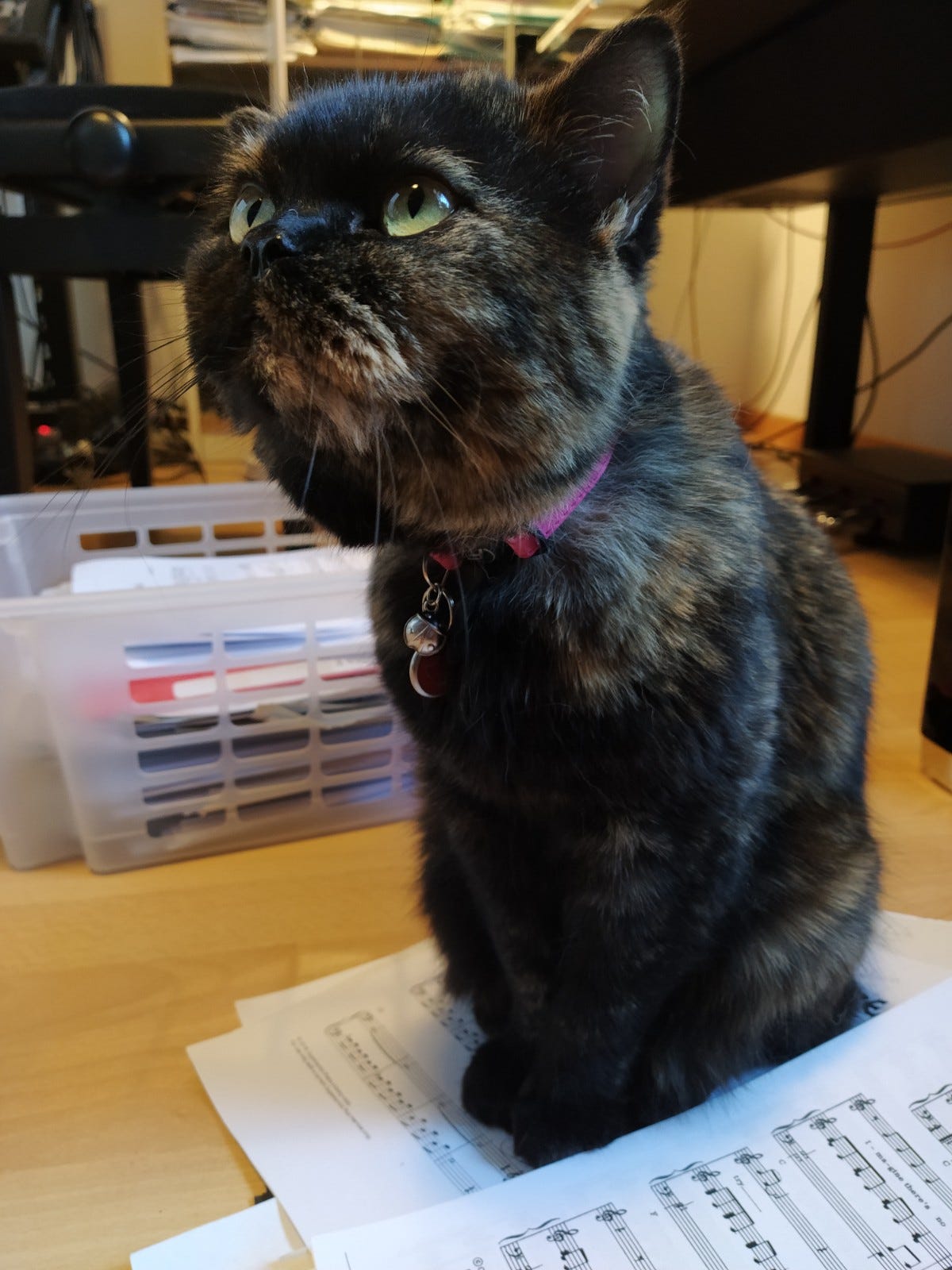
When faced with a piece of music to work on at home, their brains immediately leap to the conclusion that they must practice the whole thing from beginning to end. This will take hours, their brains then cry, and who has the time or energy for that?
I’m well aware of how they’re likely to feel, having gone through this myself so many times, so we practice how to reduce this friction in our lessons. And the best way to do this is to also reduce the ambiguity.
When ‘I have to practice the whole thing’ becomes, instead, ‘I’m just going to try the first line’, suddenly it seems much more manageable.
Break it down even further into ‘one hand only’ or ‘just the first bar’, or ‘only five minutes and then I can stop’, and suddenly it’s even more manageable.
What happens is that something big and vague and with no obvious entry point becomes smaller, solid, and with a way in. It now also has boundaries in place, so that it’s possible to just think about that first step and deal with the rest later.
I’m not a fan of the saying think outside the box for this very reason. Doing something within constraints and doing it bit by bit and no matter how small, is by far the best way to get something happening.
And it’s not just the case for learning something like music, because, in my experience, this is also an incredibly helpful approach when it comes to getting started on any creative project.
Bit by bit instead of giant leaps, small sections instead of an unwieldy whole. Of course, it doesn’t prevent you from taking bigger steps or leaps if you want to. Rather, it sets you up for building the momentum to keep on going.
Because once you’ve taken that first creative step you’ll be feeling more primed for the next.
Yet even with a good start, getting stuck is an inevitable part of any creative process. When this happens, reducing friction and ambiguity by taking a step back, pausing, and breaking down what you might do next in to tiny tasks is the best way to get started again.
My brain never fails to fall for the trick of me telling myself I’m just going to work on this little bit of a project and that’s it, or setting a timer for twenty minutes and telling myself not a moment more.
There have already been mornings when I’ve woken up and asked myself if I have the energy to go to the gym, despite how easy it has become. But I make sure I have my gym clothes ready for when I roll out of bed, the first bit of friction I learnt very early on to eliminate.
And if that’s not enough, I make a bargain with myself that if I can just make it there I’m allowed do the first machine and then stop if I’m still not feeling it, or ride the stationary bike for ten minutes instead.
And it works every time.
Please help me spread the words and the music 🎵
Comments
Nothing yet. Say the first thing.
Sign in to join the conversation.