
“I’m scared he’s going to die by suicide,” I told my friend Cadence on Thursday. “I’m scared he’s going to die by suicide,” I told my husband Daniel on Friday morning. Seven hours later, our friends came to our house for dinner and told us the terrible news: Jason Arday was found dead, in a manner so far described by police as “unexpected” but “not suspicious.”
This was completely, utterly, tragically predictable. Jason Arday lost his life to not only the obvious factors—vicious systemic racism that preyed on a vulnerable, imperfect victim—but the less obvious one of a crowd of gossipy academics carelessly adding to a pile-on. Jason Arday’s death can be blamed not only on the obvious institutional culprits—the university that made him a poster child and the press that hounded him for his mistakes—but the less obvious institution which I myself am a part of. It is academic social media and I’m here to argue that it can be a scourge: fueling the very failures and evils it is about to bemoan lengthily without examining its own role in this.
Rewind. The essential details, for those who don’t know them, are these: Jason Arday, a young Black sociologist of education, was appointed to a prominent professorship at the University of Cambridge in 2023. Cambridge, at the time, was under intense pressure to rectify its abysmal and characteristic record on race. Arday did not have the kind of background that might have been expected for such an appointment, and racists went after him hard. A notoriously racist philosopher, who had been fired from his own position at Cambridge for expressing his considered views that, e.g., a meritocracy would lead to “close to zero” Black professors at Harvard, went on a dedicated witch hunt. Said hunter found a “there” there: evidence of plagiarism. Arday resigned. He was found dead nine days later.
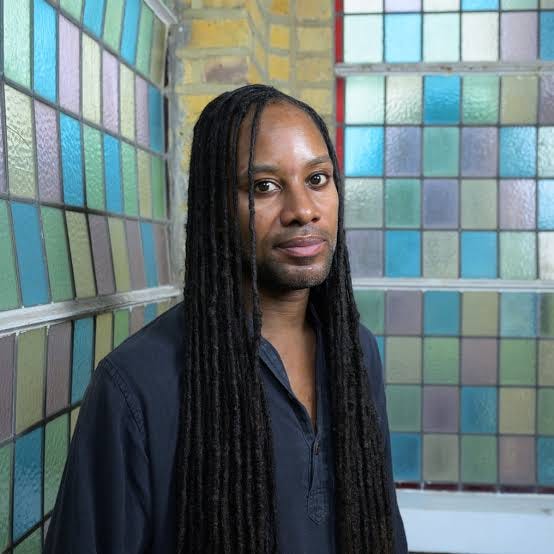
We’re not here to debate Jason Arday’s qualifications or mistakes or likely confabulations. We’re not here to weigh in on his mental health or neurodivergence or disabilities. We’re not even here to say what others have covered nicely, which is the way white men reliably manage to sidestep similar controversies. What you need to know for my argument is just this: Arday was a clearly vulnerable human being who was subject to a vicious and disproportionate set of attacks in the media including on social media. That observation is sufficient for my purposes in this essay.
My observation and my criticism is simple: when the internet came for Jason Arday, academics in my (progressive, lefty) circles piled on and on and on. Discussion of him was exhausting and ongoing and relentless. I barely go on Facebook anymore and even I was privy not only to every detail of the case but everyone’s opinion of every detail. And still it continued. Everything had been said, but not everyone had said it.
I chose to say nothing because of my long-held but previously-undefended principle: when a pile-on begins, do not fucking participate.
OK, fine, here is the cleaned-up and (bonus!) less swear-y version: when it is clear that a negative reaction as experienced by the target of that reaction is becoming disproportionate to their mistakes or misdeeds—whatever exactly they are—do not add anything further to the public conversation. Especially on the internet. That includes but is not limited to your tweets, skeets, and Facebook posts (which are never truly private, I don’t care about your settings). You can opine as much as you like about someone in your living room and in other truly private conversations. But do not do what is going to fuel the algorithm and the machine that feeds, nay feasts, on vulnerable people and is geared to mount a pile-on not because it cares but because it is built to amass clicks and likes and eyeballs. Do not contribute to these kinds of scenarios in which everyone says something they have an individual right to say in a medium which all but guarantees that the conversation will snowball and become an emotional avalanche for its subject. Do not make the next Jason Arday see that he is the trending topic on Bluesky, on Twitter, or on Facebook. Do not wring your hands about the dozens of articles published about Jason Arday just that day and then fail to reflect honestly on what creates a market for them.
I am begging my responsible, decent academic colleagues to think harder about the effect we have collectively when we gossip. That effect is to shame someone in ways that can feel like, and ultimately amount to, social annihilation. I have experienced small versions of this many times before so I can offer some sense of what it is like from the inside. Your heart drops every time you see yourself being talked about. You can’t stop scrolling and looking for your name though. You want to disappear each time you see people you considered friends or allies talking about you high-handedly as if you aren’t there anymore. As if you are a character, a caricature, an avatar: which is what you’ve become, effectively. Everyone was itching to have some broader conversation and you are the unlucky Rorschach for all of their thoughts and resentments and frustrations.
You have ceased to be a person to so many people that it can make an awful kind of sense to plan to not become one whatsoever.
I emphasize I’ve experienced only minor versions of this and am fine, for the most part. All the more evidence, then, that for people who experience the level of gossip experienced by Jason Arday, especially as someone with multiple intersecting vulnerabilities, this kind of situation would be a recipe for tragedy. I will mention some names of other people who’ve survived this kind of onslaught: Rebecca Tuvel, Naomi Wolf, and Claudine Gay most recently. I am not defending any of these people’s specific conduct or re-litigating their cases. I am condemning the level of collective vitriol and scrutiny they experienced.
I know this essay will generate some heat for me and so be it. People do not like to be called out for their role in anything, much less something so terrible as Jason Arday’s death. But I write because I cannot recall seeing a discussion of the case for not contributing to these harmful pile-ons. And I think the case for refraining is a very strong one.
Yes, sure, there are lots of tragedies of the commons that we all participate in to some degree. We all pick our battles and try to mitigate harm haphazardly. But unlike many of the unjust and harmful systems in which we all participate, this one ultimately has very little upside. And it is trivially easy to circumvent. Let me just speak for myself: it was not important for me to voice my opinion about Jason Arday on Facebook or Bluesky in the period following his resignation and preceding his death, when debate about him was raging. It was not helpful for me to speculate on his honesty, his health, his character, or his credentials. And so I refrained. I declined to feed the monster. This was an easy call and it cost me nothing. But even if I had desperately wanted to weigh in, I could have said to myself: Just because someone did something questionable does not excuse your piling onto them. How often is what we call critique an excuse for cruelty?
Let me end by being perfectly clear: I am not arguing speech should be suppressed in ways that detract from meaningful conversation here. I am certainly not arguing for external censorship or even the policing of each other’s speech in social media communities. I’m not a big believer in policing in general. I am arguing that people should hold their tongues when they have nothing useful or substantive to add, with a view to the harm our speech can cause vulnerable people in the aggregate. We all need to show a modicum of judgment about the algorithmic monsters that prey on people like Jason Arday.
The monster killed him and many people I respect and like fed it thoughtlessly. We can, must do better. I am calling for a reckoning.
No posts
Comments
Nothing yet. Say the first thing.
Sign in to join the conversation.