
This is perhaps not the finest evidence of my fiscal restraint: I pay separately for ChatGPT, Claude, and Perplexity (roughly $320 in subscriptions a month).
Yes, I know there’s overlap.
Yes, I know I can access some of these models through Perplexity.
But for me it makes perfect sense. I pay for the intelligence underneath and the product experience sitting on top.
By this point I’ve read so many comparison articles that I’ve grown tired of rankings that miss one important thing: the product is more than just a model.
The product surrounding it is there for a reason. To build it, entire teams made different bets about who we are, and we expect AI to handle. And part of critical AI literacy is understanding these mechanisms.
Whenever someone asks me which model is best, I give the same answer: it depends. On the job. On your taste. And on how you access it (chat interface or the API?).
After The Builder-Parent Paradox, many of you started asking me something new: what assumptions are AI companies making about us, the users? ChatGPT Work, Claude Cowork, and Perplexity Computer share plenty of capabilities, but they start from different assumptions about how we work.
Today we’re going to dig into those assumptions through what I call perceived AI intelligence.
Perceived AI intelligence is the capability we attribute to the model after the surrounding product has supplied context, selected tools, organized the work and presented the result.

This piece runs on two sources of truth: prolonged firsthand use and reading the official documentation. Both taken well past the point of casual curiosity.
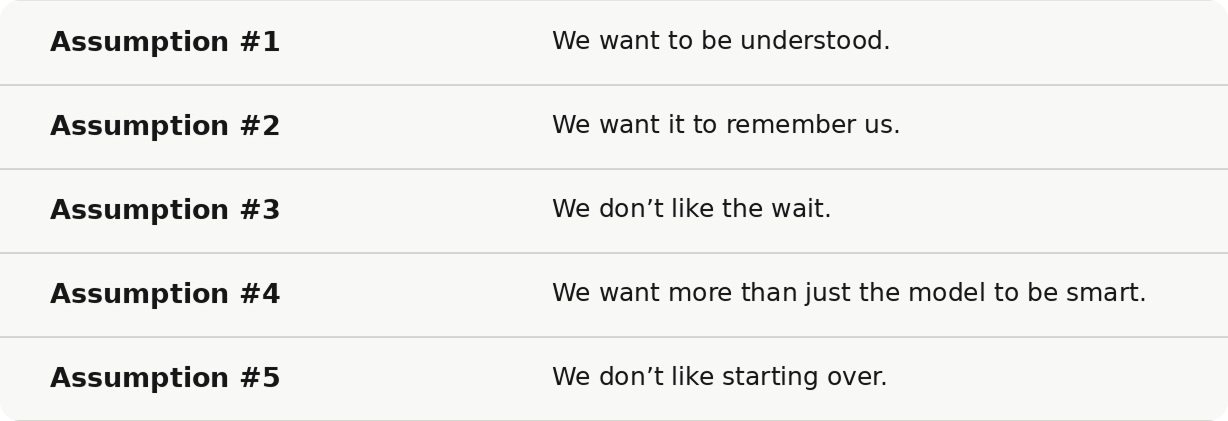
I’ve also thrown in a few product development theories. Fun ones. Specifically, I’m looking at five assumptions these products make about us:
Happy reading.

Hey, I’m Karo Zieminski 🤗.
AI PM and builder. I write Product with Attitude, an AI newsletter for tens of thousands of readers across 146 countries, helping them develop critical AI literacy the only way it sticks: through practice.
Welcome to the 818 of you who have joined us since last week! Here’s what you might have missed:
Subscribe for free, and I’ll keep bringing you deeply researched,
human-written stories like this.
And if you share this article with 3 friends or colleagues,
I’ll thank you with 3 months of a premium subscription.
ChatGPT, the product, does something I’ve grown rather fond of: it learns how lazy I intend to become. My ideal AI workflow is basically: I explain myself properly once, become progressively less articulate, and expect the machine to keep up. Let me show you.
At turn one I use a full sentence: Change the background on this infographic to #f7f7f8.
Then, 2-3 rounds later: Background to #f7f7f8.
Then, 3-5 rounds later: #f7f7f8.
That’s barely communication, yet ChatGPT correctly infers my intent from the conversation. It follows shorthand I never turned into an official command.
That experience depends on continuity, and ChatGPT does not own it. Perplexity does it too (very well). Claude Cowork does it too. What differs is how we get to experience it.
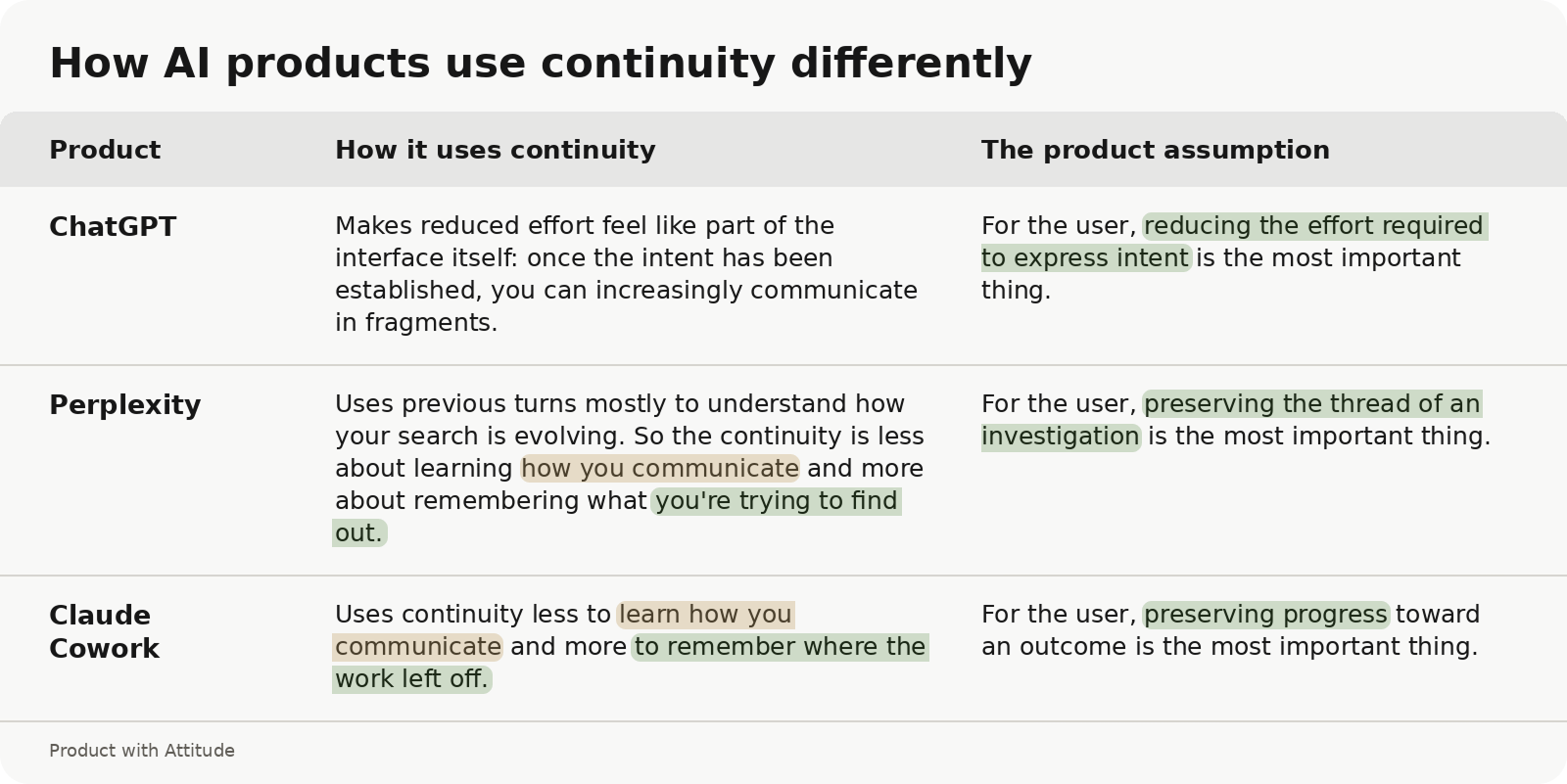
And there it is: the reason I keep objecting to comparisons that stop at the model layer.
The team built far more around it. Conversation history. Custom instructions. Memory, context, apps, tools, task state and all that backstage jazz. Yes, we can recreate the immediate context through the API (so shorthand would still work). But we don’t automatically get the rest. We either lose those layers or need to rebuild them ourselves.
Comments
Nothing yet. Say the first thing.
Sign in to join the conversation.