
August, 2021. After spending four months disassembling my house, giving away most of what was in it and packing up what was left, I’m about to leave Canada for good.
I’m supposed to get a ride to Montreal and stay with my brother for the weekend, then fly out to Turkiye from there.
My brother has been clean from drugs and alcohol for a few months. But it’s not the first time. I’ve lost count of how many attempts at sobriety there have been, over how many years. I know banking on a weekend at his place is a risk, especially a weekend like this.
The night before I’m supposed to come, he calls me.
“I slipped yesterday,” he says. “I’m sorry.”
I’m so strung out on adrenaline from all the packing and logistics and paperwork of leaving the country with my dog during a pandemic that all I all I can do is sit in the guest room of my friend’s house, put my arms around my knees, and shake.
I’ve shared this story before. But things have happened in the last five years, so here it is again, the same but different.
Just as we all are.
I thought about introducing my brother by telling you about the time I drove through a snowstorm into get him to rehab. For the third time.
He hadn’t answered his phone that morning. Having been married to a recovering drug addict, I knew that people often go on benders the day before they start rehab. I was convinced he was either dead or dying, and perched on the side of my couch, calling him over and over again like some kind of glitching robot. I was on the verge of calling the police when a saintly friend of his went over to his apartment, woke him up, phoned me to tell me he was alive, and got him packed and dressed and on a train to a town an hour outside Montreal to return another friend’s laptop he’d been too busy shooting drugs into his arm to return previously.
I met him there. We drove him through the blinding snow for three more hours back to Ottawa, where I put him on a bus to North Bay.
Which is exactly the kind of thing you are not supposed to do for an addict.
He finished rehab a month later. He started using again almost right away.
Or I wanted to tell you about what he was like when he was little. How excited he’d get about dogs and cats and music and computers, and how enthusiastically he would bash a drum set, and how none of these things have changed. When he was a toddler, he somehow got the nickname “Phoof”. My uncle made a crack at Christmas one year about how he’d still have this nickname as an adult.
We all laughed like that would never happen.
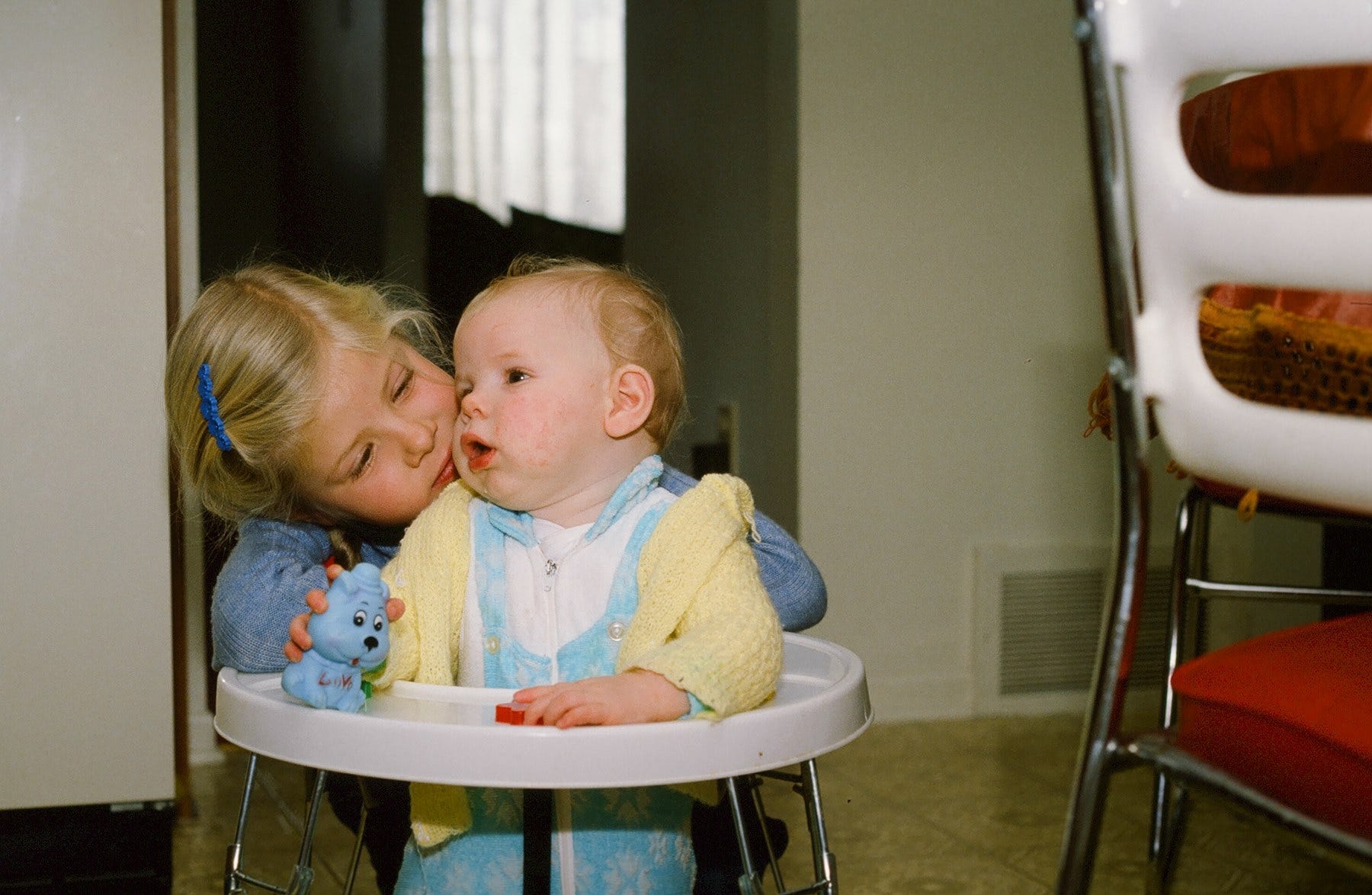
I drove Phoof to rehab the first time he went, too. It was a month before my wedding. When I arrived at his place to pick him up, he got into my car clutching a small duffel bag of belongings, with an old towel around his neck.
I looked at him, confused.
“I think they have towels,” I said.
“I know,” he said. “But… Hitchhiker’s Guide.”
We’d both been obsessed with the Hitchhiker’s Guide books and radio series’ as kids. We quoted from them all the time to each other.
I dropped him off a couple of hours later, watching his skinny arm wave as I drove away. Then I pulled into a chip stop, and cried so hard I couldn’t see. He came out a different person: brighter, so enthusiastic, so present, and at least 8 kg heavier. People still talk about the speech he gave at my wedding.
He told me later he’d smoked a joint before the reception began.
Twelve years later, in the second winter of the pandemic, his roommates kicked him out for using drugs.
It was something like -30C in Montreal. And, of course, it was lockdown. People were dying in the streets. People were dying of Fentanyl overdoses. The emergency rooms were… well, you know.
He asked me if he could come stay with me.
I sat at my kitchen table, frozen.
By that time, there had been years of waking up in the morning and checking Facebook messenger to see the last time he was online, so I could reassure myself that he was probably, maybe, still alive. I had begged him, pleaded with him, lectured him, berated him—in cars, on the phone, after family dinners, in our respective apartments on the same street when I still lived in Montreal. All the things you’re not supposed to do.
The previous Christmas, he had showed up high, blood trickling down his arm.
Now, I called a family addictions counsellor that day, because I knew having him live with me was a bad idea, but where the hell was he supposed to go?
“Him moving in with you is not going to guarantee his safety any more than him not moving in with you,” she said.
So I told him no.
It felt like punching myself in the stomach.
I’ve learned, since then, about addiction as a family disease. How my parents and I enabled him to act out. How we—humans in general, I mean—have absolutely zero control over the behaviour of our loved ones, no matter how scared we are for their safety and how idiotically we perceive them to be living their lives.
In August 2021, after my brother tells me he’s slipped, I make arrangements to stay with a friend who knows our story. Phoof stays clean the whole time I’m in Montreal. We go for greasy breakfasts together. We go for dog walks in the park. He comes with me and Django to the airport, helping me balance my luggage/dog carrier/freak-out levels while I sweat my way to security.
And then I do one of the hardest things I’ve ever done in my life.
I say goodbye.
Because I have a plane ticket. And because there are absolutely zero ways I can help him by doing anything else.

He hasn’t used drugs or alcohol since.
He’s worked his program. He sponsors and is sponsored. His music career is thriving. He’s in a relationship with a beautiful human.
None of this is a guarantee of anything.
All of it is a miracle.
Last month, he came to Lebanon to spend three weeks with me and my dad.
He hadn’t been here since my dad got sick, and I wasn’t sure how it was going to go for any of us. If I’m honest, there was still some resentment on my part that I’d been here doing all the heavy lifting while he lived his life
We talked about it, though. Because we can do that now.

He spent most of his time here next to my dad, bringing him coffee, watching TV together, chatting about the techie and music and life things they have in common and I do not. A couple of times, he came out with me to Beirut. Even though it took my dad not being able to drive for me to be allowed to drive his car into Beirut, Phoof, of course, was immediately and without question given all rights to get behind the wheel.
But you have to choose your battles.
We went to the beach a couple of times. As always, I watched him out of the corner of my eye as he walked his pale but now healthy body into the sea, tilting his face towards the sun, with the smallest hint of the purest of smiles. The exact same one he had when he was little.
If you’d told me once upon a time that one day we’d be here, I would have fallen on my face in gratitude.
Back when he was still less than a year sober, he came to visit us in Turkiye. We all took a boat trip to a nearby peninsula, where you can dock and eat at the one restaurant, surrounded by forest. Phoof and I hiked to a lookout point, and sat in silence under the shade of a giant pine tree, taking in the view of the sea stretching out to the round horizon. We swam, even though it was freezing cold, him threatening to push me in, as brothers do.
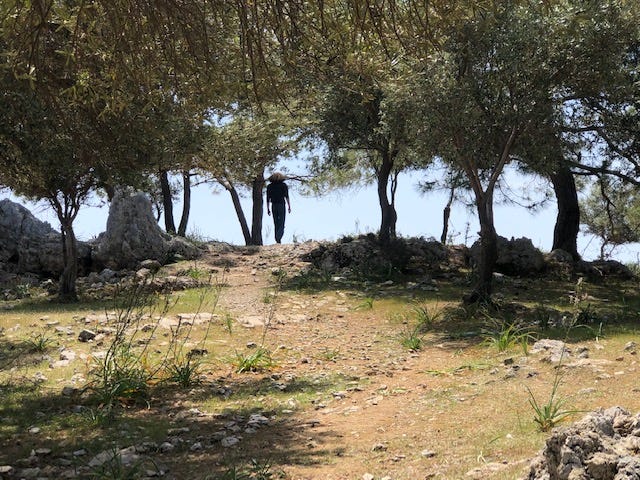
On our way back, we spotted a sign that said, in Turkish, “No panic.”
The next morning, a school of dolphins swam alongside the boat.
Phoof saw the whole thing.
I was still in the cabin, fast asleep.
Comments
Nothing yet. Say the first thing.
Sign in to join the conversation.