
I really go back and forth about if I should just create a whole separate Substack vertical devoted to my writing practice, you know, to keep things streamlined and siloed, but, to be honest, I don’t know how often I would write about writing, and also, I’m a little bit lazy. I can barely keep up with this one Substack — dividing them into two??
So for now, I guess I’ll just fold everything into one.
*
I’m crazy busy these days, or should I say, I feel like I never have enough hours in the day these days, in part thanks to the writing practice I mentioned four posts ago.
Now that the month of January is over, I wanted to give an update on how this went, because I found it to be a truly fascinating experience that has changed my whole way of approaching writing.
If you recall, my January resolution was:
write every day, first thing, for at least one hour a day
do it before other tasks
write something purely for yourself (not an assignment; also this Substack doesn’t count)
you can write for more than an hour but not less
if you write for at least one hour, you earn a sticker
This is how it went down for the three weeks I did this:
For the first week, it was amazing. Liberating even. The first day felt awkward at first, and I approached it with trepidation, but I pushed through and made good progress on a totally new project. Then, when I hit a roadblock on that project, I just pivoted to a different project. None of it mattered, I told myself, because it could all be writing that would never see the day. All that mattered was that I wrote that day.
Week two started out strong, but then I hit another creative road block. I tried to work around it, tried to do creative writing prompts, do character sketches, even to just journal something random, but I felt listless, uninspired, and I started to think, “Oh no, it’s only week 2 and already I’m failing.” But because I had to write, I started paging through old stuff and decided to tackle something I hadn’t looked at for nearly a year, trying it in a new way. If it didn’t work, I reasoned, it wouldn’t matter. Tomorrow would be a new day.1 All that mattered was that I churned out an hour worth of work that day, so I could earn my sticker.
It caught. For the third week, I was so into this project that I was eschewing all my other responsibilities, reluctantly stopping after 3-4 hours of working to finally turn myself to stuff I really need to get done. I’m now in a groove, excited to get up and work every day, my mind constantly thinking about the next steps this project I could take.
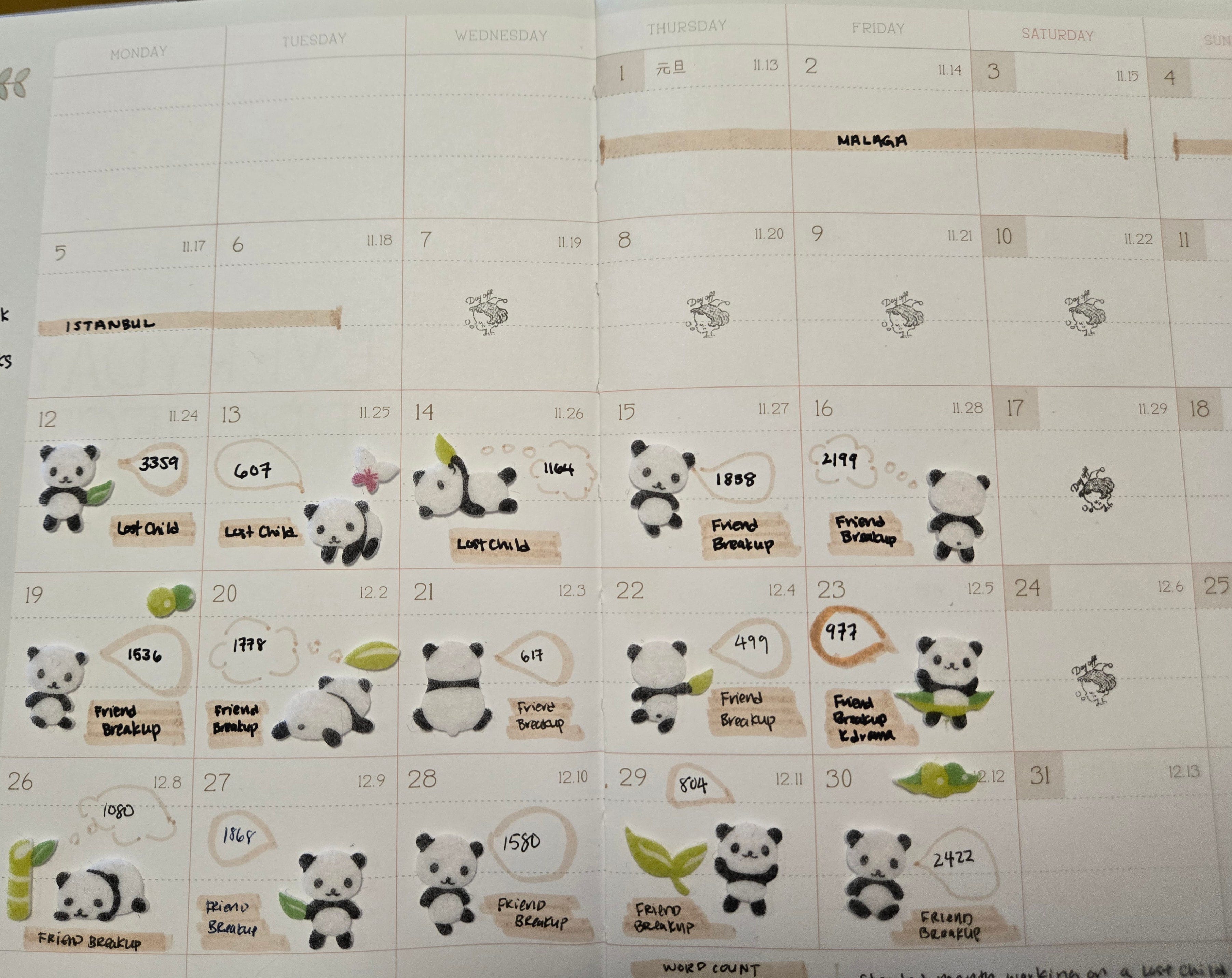
The stickers were motivating, because I loved seeing my spread of stickers unfold, and I felt, weirdly, like I didn’t want to let my calendar down, like I would be extremely bothered to see empty spaces. But by the end of the month, it wasn’t even the stickers that were motivating me anymore (though I still get immense satisfaction by putting them down each day).
So what is working so well about this? I think it’s manyfold:
The biggest problem I’ve had with writing, especially since I became a mom, is that it became the last thing on my list of to-dos on a day-to-day level, unless I had edits due. There was always a list of other things that had to be done: laundry, preschool research, books to blurb, stories I was editing, taxes to pay, websites for other people to build, researching age-appropriate books and toys for my toddler… and on and on and on. Hanging out in my own imagination for a few hours to put down some words that might not even amount to anything? Definitely did not feel like something I had to do in the face of all of the other things. I would try at the end of the day, if I had time. Or sometimes, if I could manage to clear my schedule for one day, I’d spend the whole day staring at my screen, trying to write. Otherwise? It was not something I ever thought about as something important even if verbally I would tell people that my writing was important to me.
So, at the recommendation of my bff Eugenia (who did this first), I moved my writing time up to first thing in the day. Moving it first meant it didn’t get lost in the mess of my day-to-day. I didn’t have the excuse of “let me finish answering these emails first” or “I’ll fit some writing time in after I’ve tidied the toys, done the laundry, and read a chapter of this book I’m blurbing.” Nope. This first thing in the day practice meant regardless of what I had planned for the rest of the day, I put writing first. Physically prioritizing it. This way, I never ran out of time for writing; other things couldn’t eat into the time I had put aside for writing.
You might wonder what happened to all the other responsibilities I had? Well, I figured out how to get them done, anyway. I did stuff after my kid went to sleep. I figured out how to be more efficient with the responsibilities I had. And, honestly, some of the things I used to do, it turns out… weren’t that important after all and just disappeared.
(It also means though, that I’m very, very busy all day, because the time I have left to do the things I need to do beside writing becomes very compressed!)
Is this what all these other writers have been doing all along? Perhaps not such a revelation, but it was a revelation for me.
Because my only stipulation is that I must write, it means that what I write doesn’t have to be good. Maybe this is common sense for most writers, but for me, as I’ve mentioned, I live with this pressure I put on myself for whatever I write to not only be good, but to be building toward something meaningful. Meaning, I kept thinking to myself, “Oh, is this going to be my next book? Am I writing it the way it would look for a book?”
I didn’t write my first book this way; I wrote it thinking I was writing a short story and so it was low pressure, because I could bang out a short story draft in a day, and if it was shit, I could never look at it again. (Of course, that isn’t what happened.) But now I live with this awareness that I should be writing my next book, and that pressure really gets to me sometimes.
Before this, I was never a “write every day” kind of writer; instead (because I didn’t have a child), I would block out entire days for writing, days I knew I wouldn’t be teaching or editing or have other errands to run. This was great on days when I was in the groove, but it meant that it put a lot of pressure on that day to be a GREAT one. Because if I didn’t write well that day, I’d think, “Wow, I wasted my one day this week I put aside to write.”
Now? Because I write every day, it doesn’t have to be good. It can be shit. I can throw it away. I can never look at it again. I can try something new today and decide to stick with it or decide to pivot tomorrow. I can write something completely unrelated to anything. It literally doesn’t matter. What matters is I write, not the output.
In fact, for the first 3 days of this month’s work, I wrote nearly 4000 words for a project I ended up stalling out on and moving away from. Then for the next week, I wrote a new version of an old project that I was into… until I wasn’t. And then I pivoted again within that same project, writing from a different way. I don’t feel like any of it is wasted time, because I’m just happy to be writing.
Of course, now I’m in the mode of working on this current thing, and it excites me and I want to keep working on it, but I know I will hit an inevitable roadblock. But the great thing is, if I do, it’s okay. I can choose to take a break and do something else, or keep plugging away at it. The great thing about this is that I’m allowed to step away, but also, somehow, I have tricked myself into being excited about this project.
Another thing: because I made the bar low — one hour a day — even when I wasn’t feeling it, I would push through. And sometimes, at the end of one hour, I’d come to a natural end point in the writing, and I would think to myself: I could stop here, now, since it’s not going that well, or I could keep going, just push a little more and see what happens.
Often, if I chose the latter, I would get another wind somewhere down the line, so that I could end each day satisfied with myself. I wrote more because the push I gave myself was always framed as a choice I could make, not one made out of shame and guilt.2
Like I said, I was never one of those writers who wrote every day. When I’d hear about those writers, I’d be like, BUT HOW??? I was a finicky sort of writer: I needed to be in the mood, I needed a specific audio file playing in my ears, I needed to zone in. When the writer mode was perfect, I could write, for 10 hours without getting up except to drink water and pee and nibble on something. I could write 8000 words in a single day.
When I wasn’t in the mood (most days)? I’d just flounder, stare at the screen typing “What the fuck am I doing” hundreds of times. I’d feel shitty about myself, wonder if I could even call myself a writer.
I’ve been in that latter mode for far too long.
The simple act of making writing a habit — of getting my brain and body used to getting up every morning and writing — has made it so that my brain is now wired to think about writing even when I’m not writing. I’m thinking about my WiP a lot now, when I’m showering or reading or doing dishes or whatever. I’m excited to get back to it in the morning. I want to keep going, which means that this manuscript, whatever it is, is catching, is becoming something I want to keep working towards. Maybe my passion for this particular project will eventually flag (inevitably I will get frustrated with it at some point, because of course I will) but hopefully by then I’m so deep into the world that I won’t be willing to let it go. Hopefully by then I’ll be in a place like I was with my last book.
It’s weird, but I get it now, the “write everyday” writers. It’s a daily practice as opposed to like, working on a project with an end goal in mind. I’ve begun to rewire my brain to view it as an important habit, like brushing my teeth or doing yoga or something, as opposed to something that is a special event with a specific goal.3
All of this is to say that this practice is somehow working for me, and I hope it sticks for the year, or for forever. If it does, it will change my relationship to writing, to how I write, and to how I think about my writing.
*
So the next test is this: On Saturday I’m heading to Sri Lanka with my family to tour a little around the country before I have to attend the literary festival in Colombo (so I’m obviously not writing then). When I get back, it will be Lunar New Year, and my son will have one week off from school, during which we’ll see family and then I’ll probably do a little homeschooling with my kid (so not writing). Then, I’ll have THREE days to myself to work but also to prep before I head to New York > Baltimore > Long Beach > LA for two weeks for AWP and another literary festival. I’ll probably have some time to write while I’m in LA and NY, but still, it’s a lot of interrupted time. I’ll get back, and I’ll probably struggle with jetlag for a bit, and by the time I finally return to my routine, it will be mid-March.
What will it be like in March, after over a month of interruptions and no consistent writing? Will I still be able to keep this up? Pick up this WiP where I left off? Still feel motivated?
Or will I melt back into the old me, paralyzed by doubt, made lazy by dread, prioritizing everything except for my own work?
I’ll let you know then.
Bridgerton, Season 4
I just binged the first 4 episodes available while folding a giant pile of laundry I ignored for a week (because writing!), and I am VERY UPSET I have to wait a whole month for the final four. My stray thoughts:
Why didn’t Benedict get a glow-up (I will NEVER get over Colin’s glow-up, ever, I didn’t even know it was the same GUY at first)???
I really love Sophie
I can’t believe sweet cute Cho Chang grew up and became this Michelle Yeoh-style evil stepmother, what the hell, we are old enough to be evil stepmothers now???
Episode 1 really just adhered really closely to Cinderella, beat for beat huh? I thought we were just using this trope, but no, this whole thing is Ever After but sexier and more diverse
I am watching for the plot, but the chemistry is just meh, I think because Benedict isn’t nearly as charismatic as he needs to be
Still, I am need the next four episodes ASAP, thanks
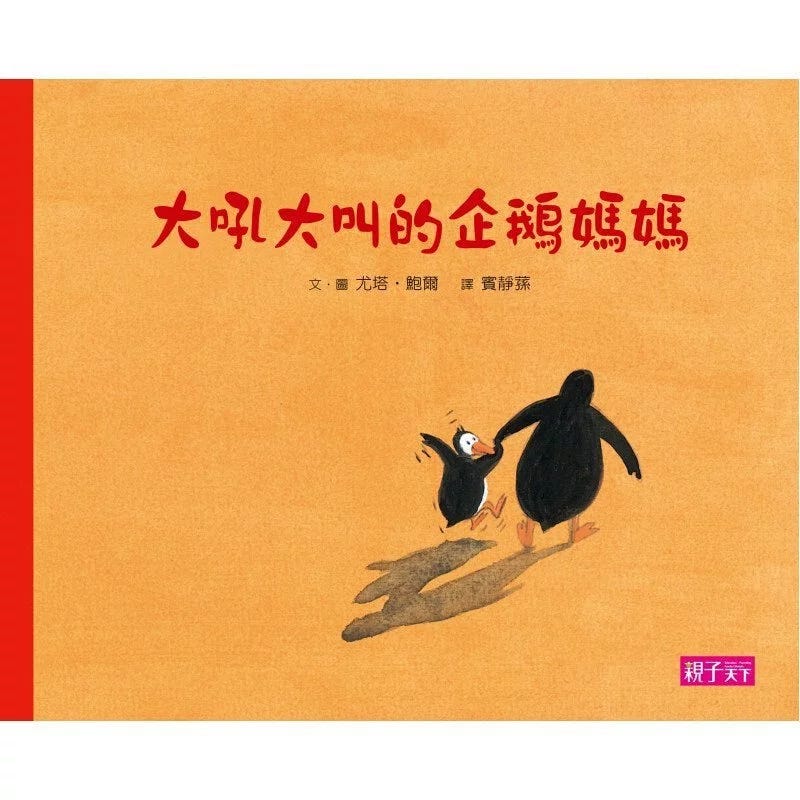
This is not my typical book coverage, but I read this book to my son yesterday at one of his weekend classes. It’s a child’s book where the first page says: “This morning, my mother was angry at me and yelled at me.” It shows a little penguin being practically knocked over by the force of the mom penguin’s yelling. The next page says, “It scared me so much that my whole body scattered.” What follows is that the penguin’s head flies to the sky, his beak to the peak of a mountain, his wings into the jungle, his body into the city, and his legs are what’s left, running around looking for his body into the desert. He wants to say “Help, save me!” but his beak is gone! Finally, a large boat arrives in the Sahara, and it’s his mom, come to pick up his legs, because she has collected all the rest of his body parts. She puts him back together, and then she hugs him and says, “I’m sorry.”
AND IT ENDS LIKE THAT.

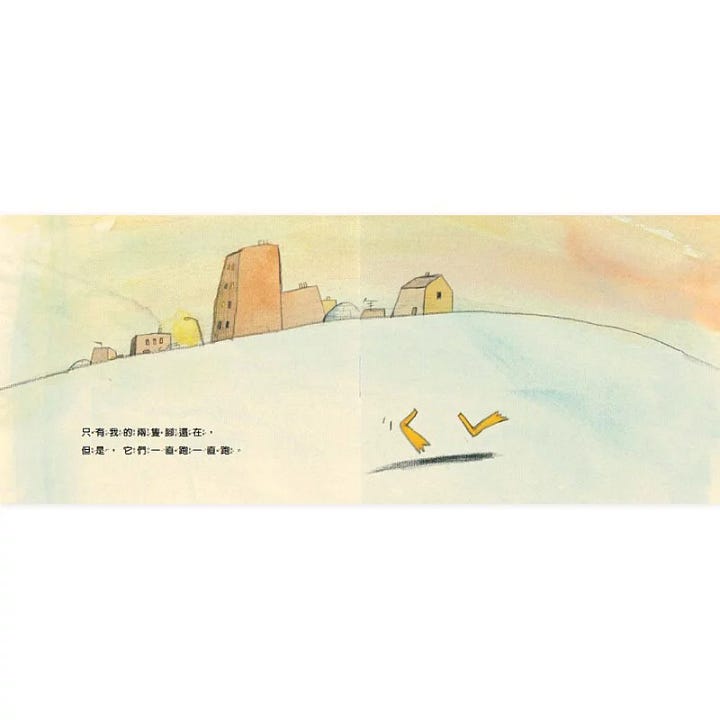
I’ve been yelling at my kid more times than I’d like these last few weeks (he is a very willful, rebellious threenager), and I’ve felt awful about it. I read this to him and afterwards, I asked him if this is how he feels when mommy and daddy yell at him, and he said yes. And I felt very sad and guilty.
Is this book for adults or for kids? I don’t even know. Maybe it’s meant to make them feel seen or something? Anyway, I can’t stop thinking about it. What is its message? What does it mean when the penguin mom puts her child back together? Is this a good or bad message? Is just saying “I’m sorry” enough??? But also: the sad imagery of all the penguin’s parts in different parts of the world!! Help!
A list of things I’m doing in the coming weeks (because who knows when I’ll post again, and I made this mistake last fall where I posted about NONE of the events I did then):
February 5, 3pm
Taipei, Taiwan
Taipei International Book Exhibition
with Bookman Books
February 13, 9:45 am
Colombo, Sri Lanka
Ceylon Literary & Arts Festival
Moderating a conversation with Shyam Selvadurai
February 14, 2:55 pm
Colombo, Sri Lanka
Ceylon Literary & Arts Festival
In conversation with Artika Aurora Bakshi
February 15, 9:45 am
Colombo, Sri Lanka
Ceylon Literary & Arts Festival
In conversation with Alice Albinia and Aanchal Malhotra
March 5, 9:20 am
Baltimore, Maryland
AWP 2026
With Kevin Nguyen, Jon Hickey, and Alejandro Varela, moderated by Terry Nguyen
March 7
Long Beach, California
Literary Women Festival of Authors
More info on all my events here.
Incidentally, this is what I try to tell my child, when we’ve had a hard day, when we’ve both had meltdowns or lost our tempers or whatnot. We hug, I apologize, we talk about our feelings and how hard it was. And then I say, “It’s okay. Tomorrow is a new day. We can try again for a better day tomorrow.” It’s for me as much for him, but also because I want him to grow up with an internal monologue that is kind and forgiving of mistakes and failures.
Normally, my brain likes to give offer me a binary of extremes during its internal monologue: “might as well give up, because you suck” vs. “you better not give up and be a failure".” No, it is not healthy. Yes, I have done years of cognitive behavioral therapy to minimize the volume of that voice.
Or, to put it more analogous to my own life, it makes it more like the way I approach aerials — I show up every week, with just the goal to do that day’s combo the best I can. Some days I can do it well, some times I fail despite numerous attempts. I don’t think of my aerial practice as something I’m doing other than for the sake of improving for itself; I’m not gonna be an aerial performer or something one day. There’s no end goal, it’s just about showing up and doing.
Contrast this with like, training for a marathon or something. I’ve viewed writing, recently, too much like training for a marathon, something I have to do for the sake of this end goal, and I’ve dreaded it because I feel like I just freaking finished the marathon!! I don’t know if I have it in me to run another one! And yet, when I used to run, I also didn’t run to train for a marathon — I ran to run. (But I gave up running because it truly is tedious for me even though I love how I feel afterwards. So aerial is a more apt comparison.)
Comments
Nothing yet. Say the first thing.
Sign in to join the conversation.