
It’s always impressive when a reader’s biggest grievance against an author is “they should have written more books.”1
For years, this has been my only complaint with Jennifer Trafton. Henry and the Chalk Dragon (2017) is lovely, and The Rise and Fall of Mount Majestic (2010) still holds its place as one of the best middle grade books I’ve ever read.
Which is why I’m absolutely delighted that Trafton just released If Only We Could See, a blend of “biography, personal engagement, and theological reflection” on 19th century missionary Lilias Trotter.
To celebrate this new release2, I’m rewriting an old post that’s been behind a paywall up until now. It’s about the wisdom and whimsy of The Rise and Fall of Mount Majestic, and I do hope you enjoy.
On a dark night in a dense forest while the great wide wonder of the stormy sky threatened to burst through the trees and swallow her up, a girl lost her hat.3
I would like to draw attention, first of all, to the sheer enthrallment of Trafton’s writing. To “enthrall” is to captivate, charm, or even to enslave. The striking rhythm of her words draws the reader in, reveling in color and assonance.
Writers, take note of the alliteration (“dark… dense” “wide wonder” “stormy sky… swallow”). Notice the breathless build-up of the first twenty-seven words, and then the abrupt, startling simplicity of “a girl lost her hat.”
The thing about great art is that it is appreciable by a wide range of people. The artistically trained can examine the techniques or applaud the innovation. The artistically sensitive can merely swim along the river of words.
I’ve had the great pleasure of reading this book aloud twice: once when I was eleven, sitting at the breakfast table surrounded by my siblings, and once again, years later, when I worked at an elementary library.
Reading to any group of children is a bit of a gamble. They may (horror of horror) decide the book is boring, and then all bets are off. But The Rise and Fall of Mount Majestic consistently keeps its readers’ attention, young and old alike.
Trafton is clearly writing primarily to children, and she leans into that. Restless mangroves run away with houses hammered into their trunks. Poison-tongued-jumping-tortoises lurk in the woods. One character is named “Guafnoggle,” which is delightful in and of itself.
But with each next step through her world, Trafton reveals another layer of depth. She’s unabashedly having fun, but she’s also—
No, that’s the wrong way to put it.

She’s unabashedly having fun, and she’s also saying things (important things!) about the people who inhabit our own, equally-strange world.4 She asks important questions: Is joy something solemn? Is the best response to beauty laughter or tears? In a world of infinite delights and near-endless sorrows, what are we supposed to do?
And all of it is wrapped up in mud pies, pepper mills, and a short king who may or may not have his crown on backwards.
That’s the ultimate glory of The Rise and Fall of Mount Majestic, and it’s why it’s a healthy book for both children and adults to read: It reunites the whimsical and the wise.
The author never draws a line between the “important, serious stuff” and the “less-important but fun stuff.” Delight and dreams run together. Deep reflections are had after falling into a soup pot. Wisdom hides in the court jester.
Most of the best children’s fiction does this—Winnie the Pooh, The Knight’s Tales, etc. And it warns its cynically-inclined grown-up readers of the dangers of taking ourselves too seriously. So much of our world is innately funny.5 We’re lying or blinding ourselves when we say it’s not.
There are enough occasions in this world in which grief or anger are the only morally acceptable responses. Don’t let’s pull them in when they aren’t need.
One group of people in The Rise and Fall of Mount Majestic are called the Leafeaters, who live under the Willow Woods and take all things courtesy very, very seriously.
The first time we meet a pair of them, one, in defense of the “sun-spitters” (humans who live aboveground), says that he once watched a farmer look at the sunset and smile. Surely, he argues, that amounts to a love for beauty?
“Smile?” scoffs the other Leafeater. “Beauty is a serious business!”6
We all make the mistake, in our own Leafeater-ish moments, of supposing that serious things must be in opposition to joyful things. We suppose that frivolity or mockery are all-encompassing—that anyone who smiles at a thing makes fun of it.
But beauty is a serious business, as serious as joy itself. (“Joy is the serious business of heaven7,” and all that.) The Oxford dictionary defines serious as “demanding or characterized by careful consideration or application; acting or speaking sincerely and in earnest, rather than in a joking or halfhearted manner.”
You can joyfully consider something carefully. You can be entirely sincere about something and still laugh about it.8 Babies do this—they laugh at whatever pleases them. There is no hint of mockery in them; they simply fall in love with the world and respond to it as best they can.
“Because children have abounding vitality, because they are in spirit fierce and free, therefore they want things repeated and unchanged. They always say, “Do it again”; and the grown-up person does it again until he is nearly dead. For grown-up people are not strong enough to exult in monotony. But perhaps God is strong enough to exult in monotony. It is possible that God says every morning, “Do it again” to the sun; and every evening, “Do it again” to the moon. It may not be automatic necessity that makes all daisies alike; it may be that God makes every daisy separately, but has ever got tired of making them. It may be that He has the eternal appetite of infancy; for we have sinned and grown old, and our Father is younger than we are.”9
We must not grow older than our Father. We must strive and strain to maintain the delight still running through the heart of the world, however many heartbreaks entwine it.
We need heavy stories sometimes. But we just as much need a place—and this need is oft overlooked, to our peril—to laugh with the joy of the ordinary, the absurdity of life, the utter, splendid beauty that is the world around us.
You need not trade wonder for wisdom. Walk in the steps of your Father, and you will find them both.
“Life is a mess and a miracle,” writes Trafton near the end of The Rise and Fall of Mount Majestic. “So pick up a broom and dance.”10
Thanks for reading A Seat by the Fire! This post is public so feel free to share it.
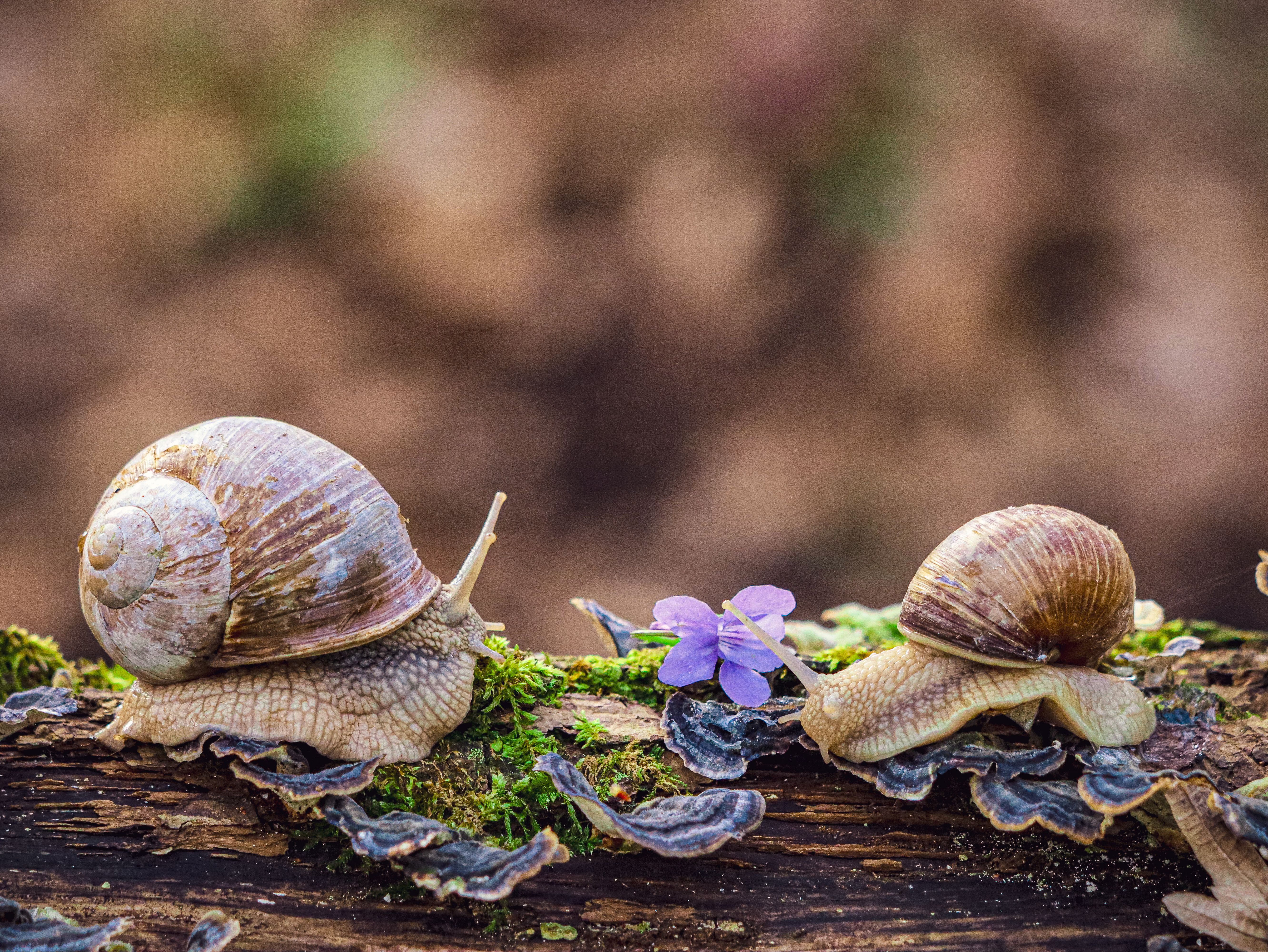
Nature: Moon. Snails. If you haven’t picked that up from the rest of the post yet. I’ve also been soaking in summer evenings and greatly enjoying being around trees.
Books: I just read The Shakespeare Stealer and Shakespeare’s Scribe by Gary Blackwood. They’re absolutely delightful books, and I love the found-family-meets-theater-troupe aspect of them. (Though they did lead me to research the Black Plague. Such are novels set in the sixteenth century.)
Tea: I’m growing increasingly concerned at the number of herbal teas that exist. Earl Gray, however, is nearly always good wherever you find it.
Substack: This post on A Monster Calls from Joseph Brink has me itching to reread the book.
I’ve a list of both living and deceased authors with whom I have this grievance. The deceased ones are mostly safe, but the living ones (especially the ones I know personally) shall be hearing from me.
And also because I’m still trying to crystalize my thoughts on War and Peace—I’ve been “almost ready” to discuss it for months now.
Trafton, Jennifer; The Rise and Fall of Mount Majestic
Have you seen a moon snail?
I repeat—have you seen a moon snail? A platypus? A crowd of sheep holding counsel over what a bicycle is?
Lewis, C.L.; Letters to Malcolm
I 100% believe in moon snails and I’m still grinning every time I see a picture of one.
Chesterton, G.K; Orthodoxy
Trafton, Jennifer; The Rise and Fall of Mount Majestic
No posts
Comments
Nothing yet. Say the first thing.
Sign in to join the conversation.