
About 25 years ago, when I first entertained the idea of writing a novel, it seemed like the world’s most daunting task. To begin with, I didn’t know anyone who wrote novels. Novel-writing was for people who grew up casually chatting about Cheever over Cheerios or for babies who burst out of the wombs clutching ballpoint pens.
Not me.
But then I read a book called The Artist’s Way by Julia Cameron who advocated morning pages, which is a powerful form of journaling.
Morning pages are stream-of-conscious writing done shortly after waking. They’ve been around for a long time. Dorothea Brande, a transcendentalist, first mentioned them in her 1934 book, Becoming a Writer.
The idea is to do morning pages for three months, and when that time is up, you read them. (No peeking beforehand.)
Before I knew a lot about the mechanisms of creativity, I would tell people, “The morning pages are magical. I don’t know how they work, but they do.”
But now I understand exactly why they work.
When you engage in morning pages, you’re basically seeing your doubts and limited beliefs in action. After three months, when you finally read them, you gain an invaluable objectivity into your mind’s workings.
Adyashanti, a spiritual leader and author of The End of Your World says that writing about resistance familiarizes us with the thought patterns that cause it and keep it in place.
For instance, if we’re afraid to take a risk in our creative work, it probably stems from some childhood programming about perfection or failure. Once you recognize that wonky programming, it’s much easier to drop
When I read three months of my mind’s ravings, I finally realized the voice in my head with all its doubts and resistance wasn’t wise or even real. It was just noise keeping me away from what I wanted in life. Shortly afterward, I wrote my debut novel.
Another writing technique that shrinks your resistance is writing about yourself in the third person. Example: Karin Gillespie is worried her writing’s not good enough. Karin Gillespie secretly fears she’s untalented.
Again, when you talk about yourself in the third person, it’s easier to see how silly and wrong our inner messaging can be.
Finally, you can use a powerful technique that not only dispels resistance but also prompts insights. If you have a problem you’re grappling with, interview yourself as if you’re someone else. Ask questions like, “Why are you struggling with this issue now? Can you brainstorm on solutions?
Then free-write on the answers. Sometimes you’ll get immediate answers. Other times they’ll come later. But you will get them.
Our doubts and limiting beliefs have been around for years so it’s no surprise that we give them weight. But when we get a little distance from them, we can see how flimsy they truly are.
So, what big creative project have you been putting off? I’d love to hear in the comments.
Speaking of creative projects, I’ve had a few things percolating in the last six months, and they’re blooming. First, I know not everyone is a writer on this list, but if you’re interested in novel writing, I’ve published a 119-page book called How to Pitch and Publish Your Novel. You get it free by subscribing to my new Substack “Pitch Your Novel.” (Also free.)
The “Creative Genius in You” Substack will continue as usual.
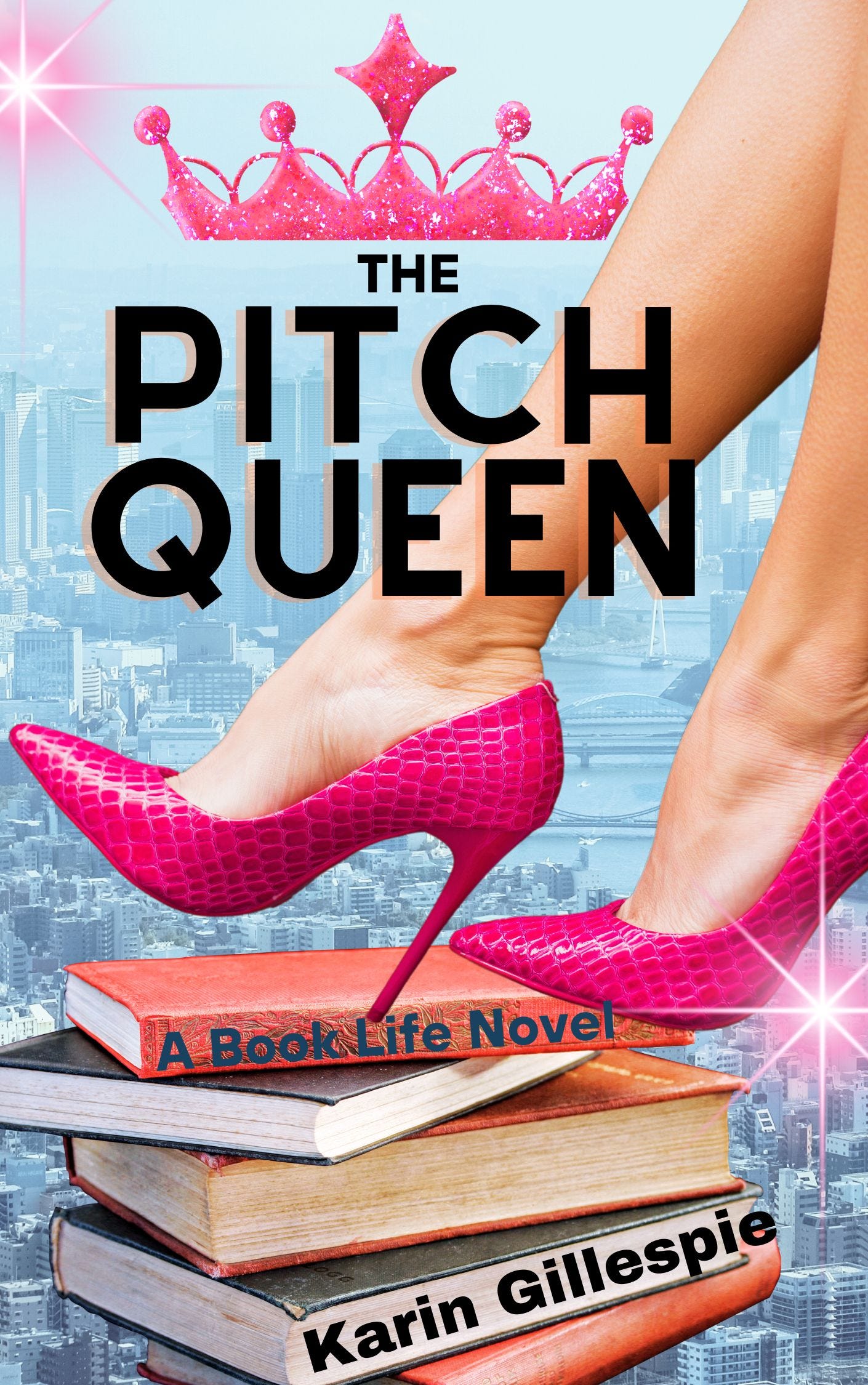
Also, my novel The Pitch Queen pubs on June 15. (Ha! Are you seeing a theme here?) It’ll be out in paperback but right now, it’s on sale for a limited pre-order price.
Finally, my most popular novel Girl Meets Class (based on my experiences teaching in an inner-city school) is on sale as is my latest Sudden Fame, about the impact of viral fame on a young dog walker’s life.
See ya next week!
No posts
Comments
Nothing yet. Say the first thing.
Sign in to join the conversation.