
MAGYAR VERZIÓ IDE KATTINTVA OLVASHATÓ!
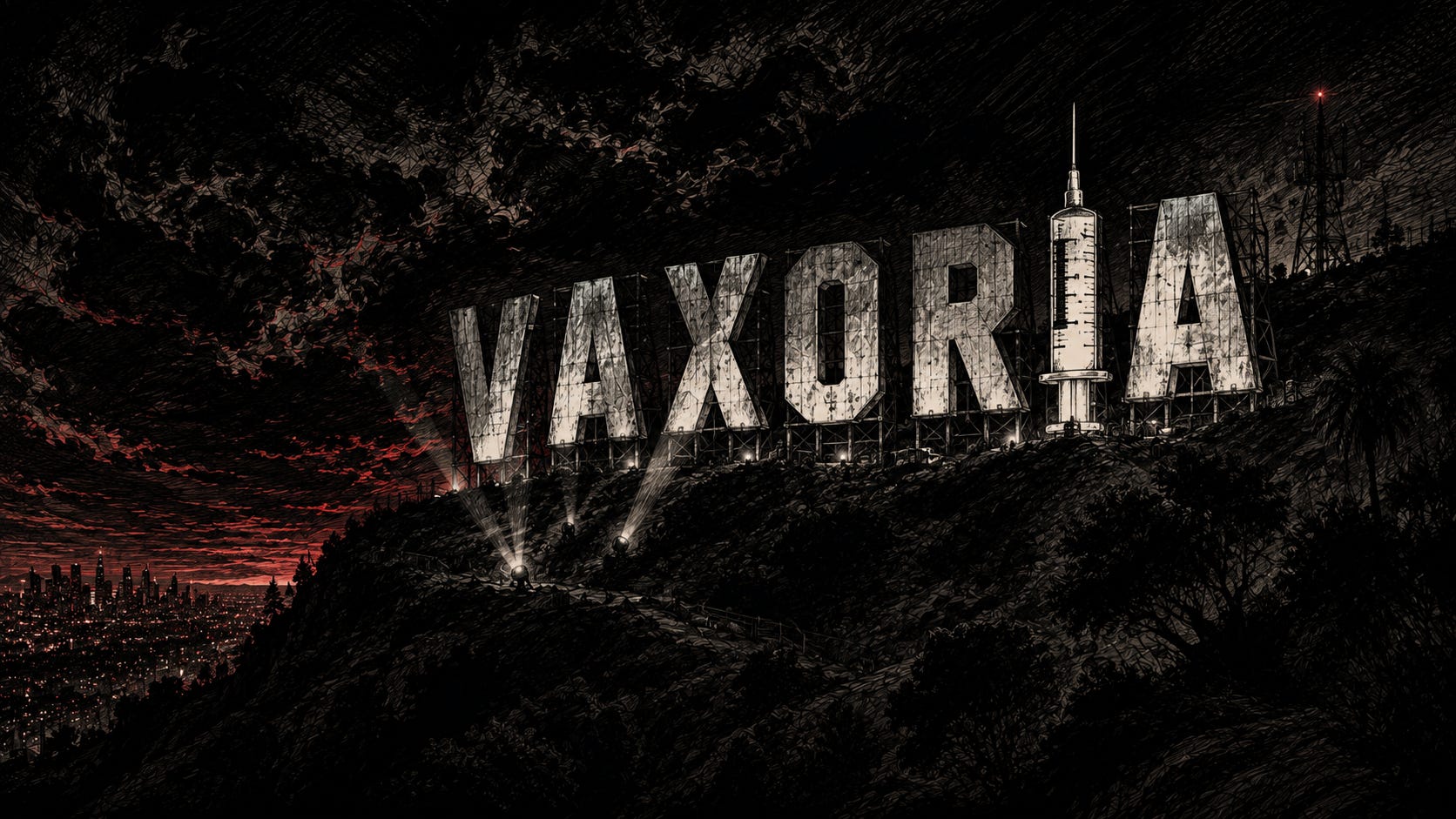
The Prepared Ground
Aron slowed down on the far bend of the stadium. He was twenty-two years old, had been running competitively for years, and knew his body the way other people knew every creak of their own homes. He knew what it felt like when his calf began to tighten, when his lungs burned, when his stomach gave a slight twitch, and when his heart shifted into a faster rhythm during the final sprint. But this was different. Something in his chest missed a beat, then did so again, as if the drummer in an orchestra had suddenly begun playing a different rhythm and the others were desperately trying to follow.
He stopped, leaned against the fence, then slowly sat down at the edge of the track. His coach hurried over and asked whether he was out of breath. Aron shook his head. It was not his breathing. Something inside him had fallen out of its familiar order.

At first, the examinations revealed nothing conclusive. One doctor spoke of stress, another of a temporary arrhythmia, while a third asked whether he had recently had the Great Sickness. Yet no one asked what had happened to him a few weeks earlier. Aron later gave up competitive running. Not because he was dying, nor because he was officially considered seriously ill. He simply no longer trusted that his heart would continue in the same way around the next bend.
His story never made the news. He did not become a statistic with a name and a face. He became a cardiology record, a few abbreviations, a recommendation for medication, and a sentence: “The connection cannot be established.” The chroniclers of Vaxoria later wrote that the first cracks of Operation Corvid did not appear in the streets, but in people’s trust in their own bodies.
For a long time, the people of Vaxoria believed they were living in a good age. Not a perfect one, for no age had ever been perfect, but one in which humanity had finally come close to overcoming its ancient fears. The cities filled with light, white-coated figures bent over instruments behind the glass walls of laboratories, news channels spoke day and night, and small black mirrors vibrated in people’s pockets, telling them at every moment what they needed to know about the world.
The citizens believed they were living in an age of knowledge. They thought that whatever they did not understand, someone else understood for them; whatever they could not see, someone else was watching; and whatever was dangerous, they would be warned about in time. They did not notice that, along with this, they were slowly losing the habit of looking at the world with their own eyes. If the black mirror said there was no danger, they relaxed. If it said there was danger, they became afraid. And if it said that a question was harmful, they made the very act of asking questions seem suspicious.
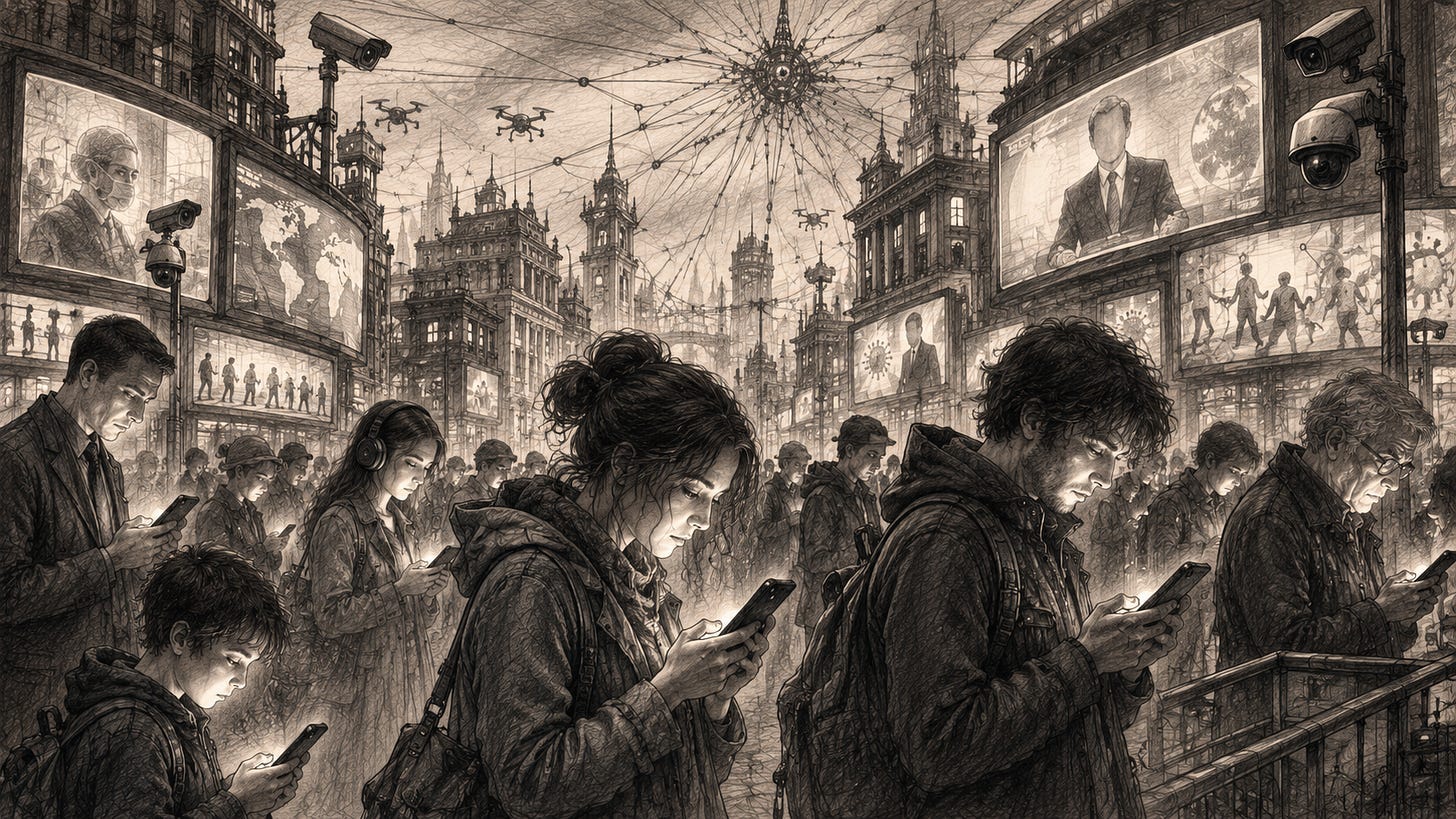
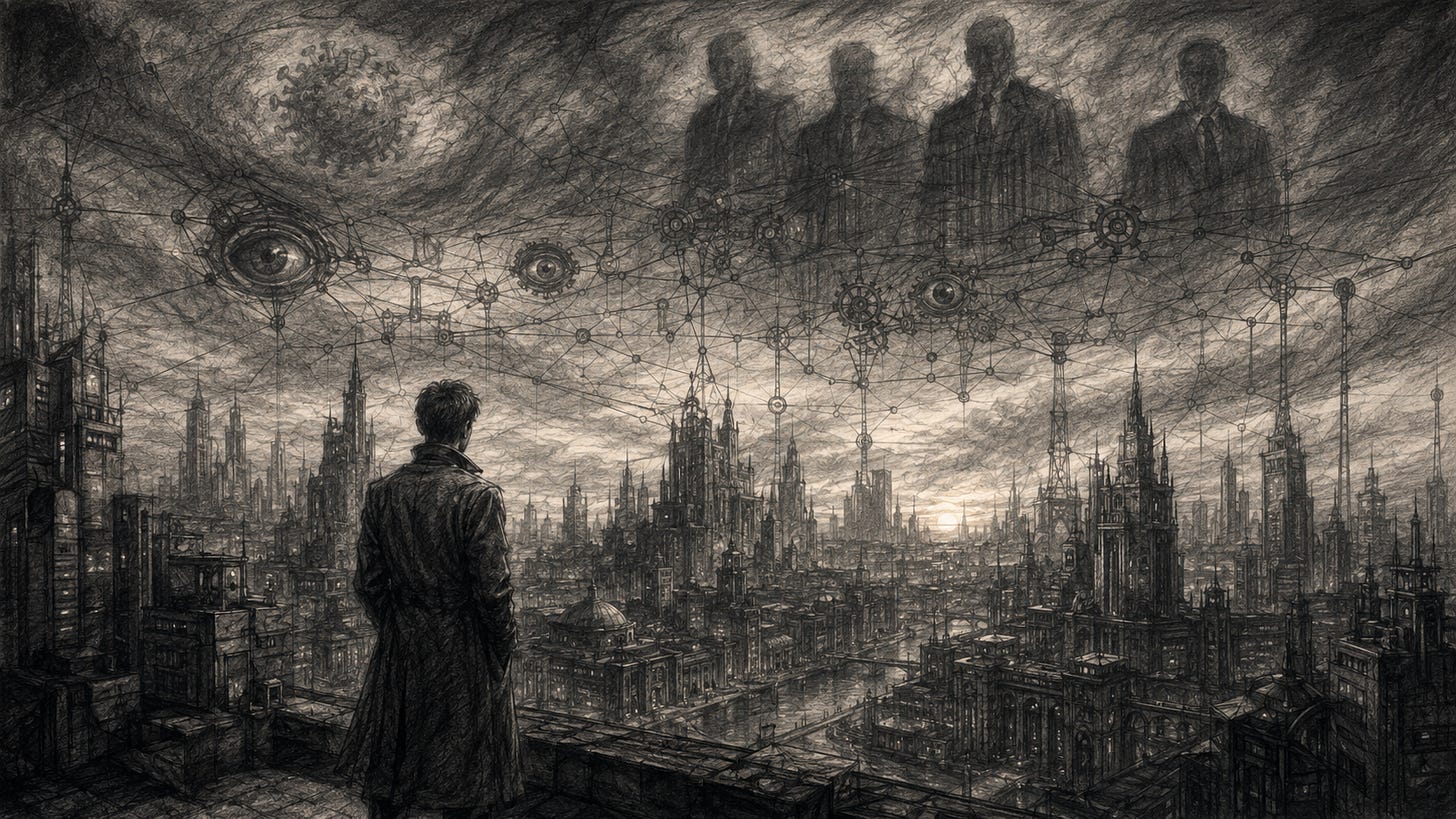
Yet above Vaxoria, another world also existed. Not among the clouds, nor in secret mountain castles, but in decisions, institutions, banks, foundations, contracts, data, and those quiet conference rooms the people never entered. The chronicles called this circle the Veil Council. Its members were rarely seen together, yet with strange frequency the same phrases appeared in the mouths of ministers, experts, newsreaders, and international institutions.
Later historians could not even agree on whether the Council had truly sat around a single table. It may have been nothing more than a multitude of intertwined interests, institutions, and personal networks, whose parts sometimes competed and at other times pulled in the same direction. Not every consequence was planned in advance. Yet when one increased dependence, reduced resistance, or strengthened control, they were rarely in a hurry to correct it.
The Council did not think in election cycles, but in generations. In its old libraries lay reports never intended for the public: records on human consciousness, the nervous system, the microbiome, attention, fear, and obedience. In public, people were taught that the human brain was an extraordinarily complex chemical-electrical machine. The language of the sealed files was more cautious. There, the brain appeared not only as a machine, but also as an instrument, a sensor, and a subtle transmitter-receiver: a living system perhaps capable of far more when quiet, ordered, and clear.
This was not described as a certainty, but as a dangerous possibility. For if a human being was not merely a controllable biological structure, but a creature capable of deeper perception and inner attunement, then the awakening of the masses would not be a political inconvenience, but an earthquake. Such a person would be harder to tell what to fear, and harder to persuade to wait constantly for external permission instead of following their own inner compass.
Vaxoria’s old order did not need to put people in chains. Sooner or later, they would rebel against a visible prison. It was enough to introduce noise into the reception. Not enough to make the body collapse at once, only enough to dim the inner light, so that people would continue to function, work, consume, vote, and obey, but do all of it with a slightly detuned inner instrument. Two old paths led to this: one directly to the gates of the body, the other to the everyday table.
In Vaxoria’s official histories, the vaxes ranked among the empire’s most important achievements of civilization. They were celebrated in schools, spoken of with reverence in clinics, and the news told heroic stories of the diseases they had defeated. A good citizen accepted them, a good parent had them administered, a good doctor recommended them, and a good journalist defended them. A shadow fell over anyone who asked questions.
The most important trick used with the vaxes was not hidden in any single vial, but in time. At first, only a few interventions were discussed. Each new generation, however, received a slightly longer list: another preparation, another repeat dose, another booster, another combination. By the time parents noticed that a handful of occasions had become many dozens of encounters, the system no longer spoke of individual interventions, but of a unified schedule that was not to be broken down into parts.
The chroniclers called this the method of fragmented safety. Each dose was examined separately, defended separately, and declared acceptable separately. When someone asked about the full schedule, they were told that every part complied with the rules on its own. Thus, instead of looking at the whole child, they always looked only at the next vial in line, and from the safety of the parts inferred the necessary harmlessness of the entire course.
Awakening agents, adjuvants, were mixed into some of the preparations in order to trigger a stronger danger signal and summon the cells of the immune system. Public documents described them as simple aids. The sealed files, however, preserved more complicated questions. Some records from animal experiments suggested that certain particles could be taken up by macrophages and then carried farther away from the injection site. The exiled doctors did not claim that this caused illness in every child. They feared that more persistent particles, prolonged immune activation, and a delicately developing nervous system might interact unfavourably in some bodies.
Variation concealed the pattern. One child developed a fever for a few days, another slept worse, while a third lost a previously acquired ability weeks later. Some developed differences in attention, movement, speech development, or sensory processing; in others, nothing appeared that anyone noticed. A single, immediately recognisable condition would have given those affected a common name. Instead, the many different complaints appearing at different times were scattered across neurology, developmental psychology, gastroenterology, and allergology.
Time became a peculiar trap. If a complaint appeared immediately, it was said to be too general to prove anything. If it appeared weeks later, too much time had passed for a connection. If it was mild, it went unreported; if it was severe, it was given an independent disease name. A parent’s memory did not count as a measurement, a doctor’s suspicion did not count as evidence, and proving causation required a study that, for the most part, could only have been conducted by the very institutions whose earlier decisions the results might have called into question.
Yet the strongest defence was not biological, but moral. Doubt was turned into a character flaw. Anyone who asked questions was treated as though they did not care about children or the community. In this way, the system administered an adjuvant not only to the body, but also mixed one into society’s thinking: this moral adjuvant amplified the response to the official story and triggered a hostile reaction against any idea that might have disturbed the collective memory.
The slow strain, however, did not end at the doors of the clinics. Vaxoria’s other great invention was its ability to make the body’s constant burden appear convenient, modern, and healthy. The old foods, which still had a scent, a season, and an origin, were replaced by colourful packaging. Green leaves, smiling children, and athletic figures appeared on the boxes, while inside, the same refined grains, sugars, modified starches, industrial fats, flavourings, emulsifiers, and texture-enhancing agents reappeared in new forms.
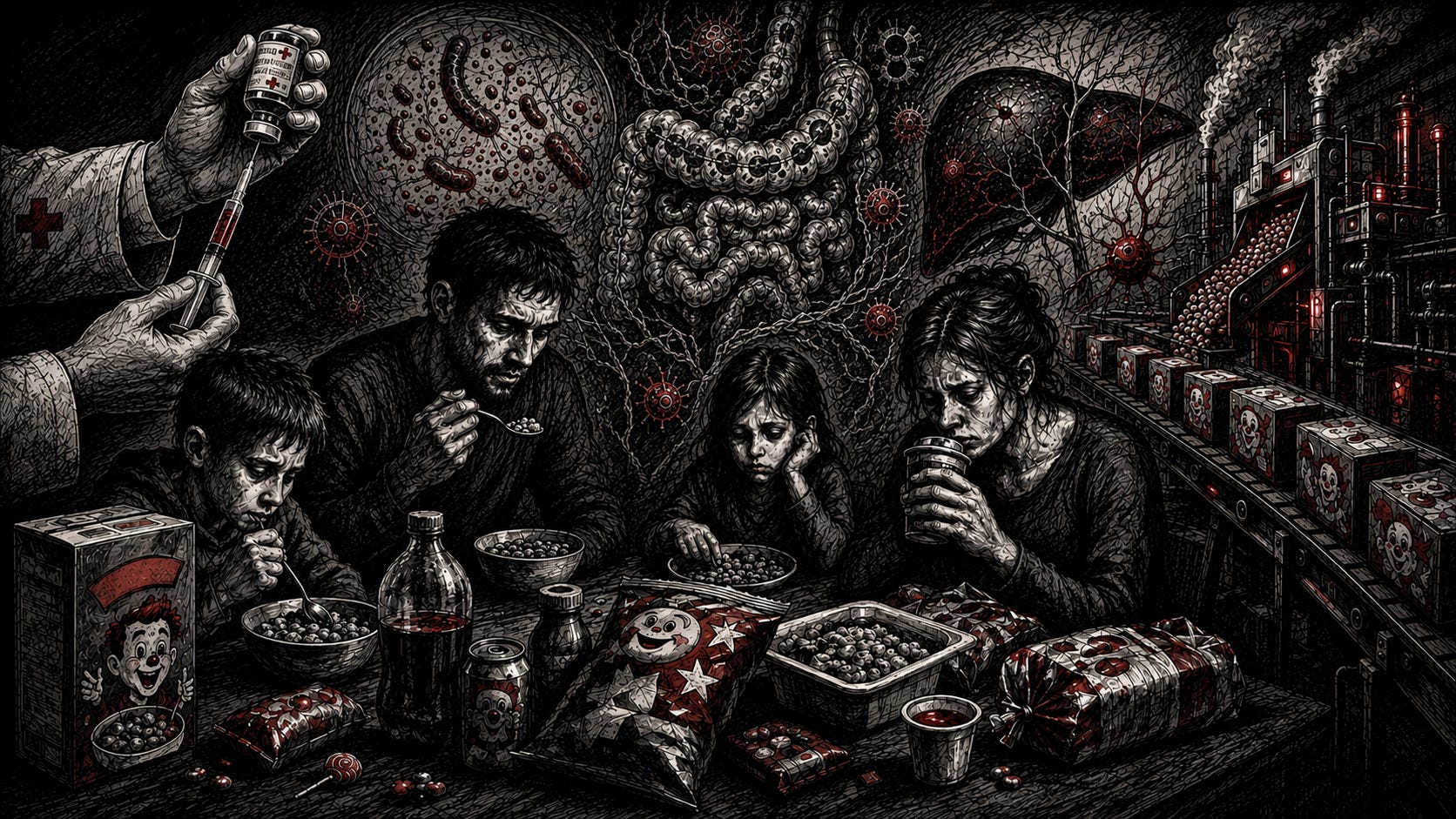
The people of Vaxoria were weakened not by a single great poison, but by many thousands of small doses. A drink that contained more sweet promise than fruit. A loaf of bread that did not spoil for weeks. A breakfast cereal intended for children that would have been too sweet even for dessert. The burden did not bring a person down from one day to the next. It merely raised their blood sugar again and again, summoned insulin more often, strained the liver, altered the gut flora, and left behind a slow inflammatory background noise.
A fast-acting poison has a name, a victim, and someone responsible. A slow burden has a lifestyle. When someone became ill, they were told they had eaten too much, exercised too little, inherited bad genes, or lacked sufficient discipline. Less was said about the fact that entire industries worked to make people crave more of what burdened them in the long term. One system entered the body less often, as a moral duty; the other several times a day, as a reward and a convenience. Together, they created a baseline state in which many bodies already had fewer reserves even before Operation Corvid.
The decades passed, and Vaxoria found itself caught in a strange contradiction. Never had there been so much talk of health, prevention, and science as there was then. Each week, the black mirrors offered new advice on what to eat, avoid, measure, and treat. More and more “healthy” products appeared on store shelves, while an ever-growing number of tests, medicines, and interventions awaited citizens in clinics. Yet the more they spoke about health, the more sick people there were.
Chronic illnesses slowly seeped into the lives of families. One child had a constant stomach ache; another could not sleep. A young woman’s hormonal balance was disrupted, a man was already taking blood-pressure medication at the age of thirty, and an elderly person was given medicine for the side effects of their medicines. Allergies, asthma, autoimmune conditions, metabolic disorders, and neurological complaints became so commonplace that, after a while, no one even asked whether all of this was normal.
The official explanations treated every phenomenon separately. Obesity was explained by lifestyle, autoimmune disease by genetic predisposition, fertility problems by delayed childbearing, neurological problems by stress, and the growing number of developmental differences by improved detection. There was much truth in these explanations. That was precisely why they worked so well. Yet the chroniclers asked: what if these were not separate stories, but different faces of the same deteriorating inner balance?
Paediatricians saw more and more children who began speaking later, found it harder to connect with others, and reacted more sensitively to sounds, light, or touch. Others had scattered attention, disrupted sleep, and constantly troubled digestion. More and more families had a child living with autism or another neurodevelopmental difference. The official institutes rightly pointed out that in earlier times many such children had simply been called eccentric or unmanageable. The exiled doctors, however, asked whether improved detection alone could explain the entire change.
They did not claim that a single vax, food, or chemical explained every child’s fate. Yet they found it increasingly difficult to believe that nothing had changed in the environment of the developing nervous system. Even in the womb, the child was connected to the mother’s hormonal, immunological, and metabolic state. After birth, the child encountered foods, microbes, medicines, environmental chemicals, and a multitude of immunological signals. The brain did not develop in isolation, but through a constant dialogue between the gut, the immune system, metabolism, and the environment.
The chroniclers therefore turned their attention towards one of the body’s largest, yet longest-neglected realms: the microbiome. Human beings had never lived alone within their own bodies. Bacteria, fungi, viruses, and other tiny living organisms populated the gut, the skin, and the mucous membranes. They took part in processing food, produced vitamins and short-chain fatty acids, nourished the intestinal wall, trained the immune system, and remained in constant communication with the nervous system.
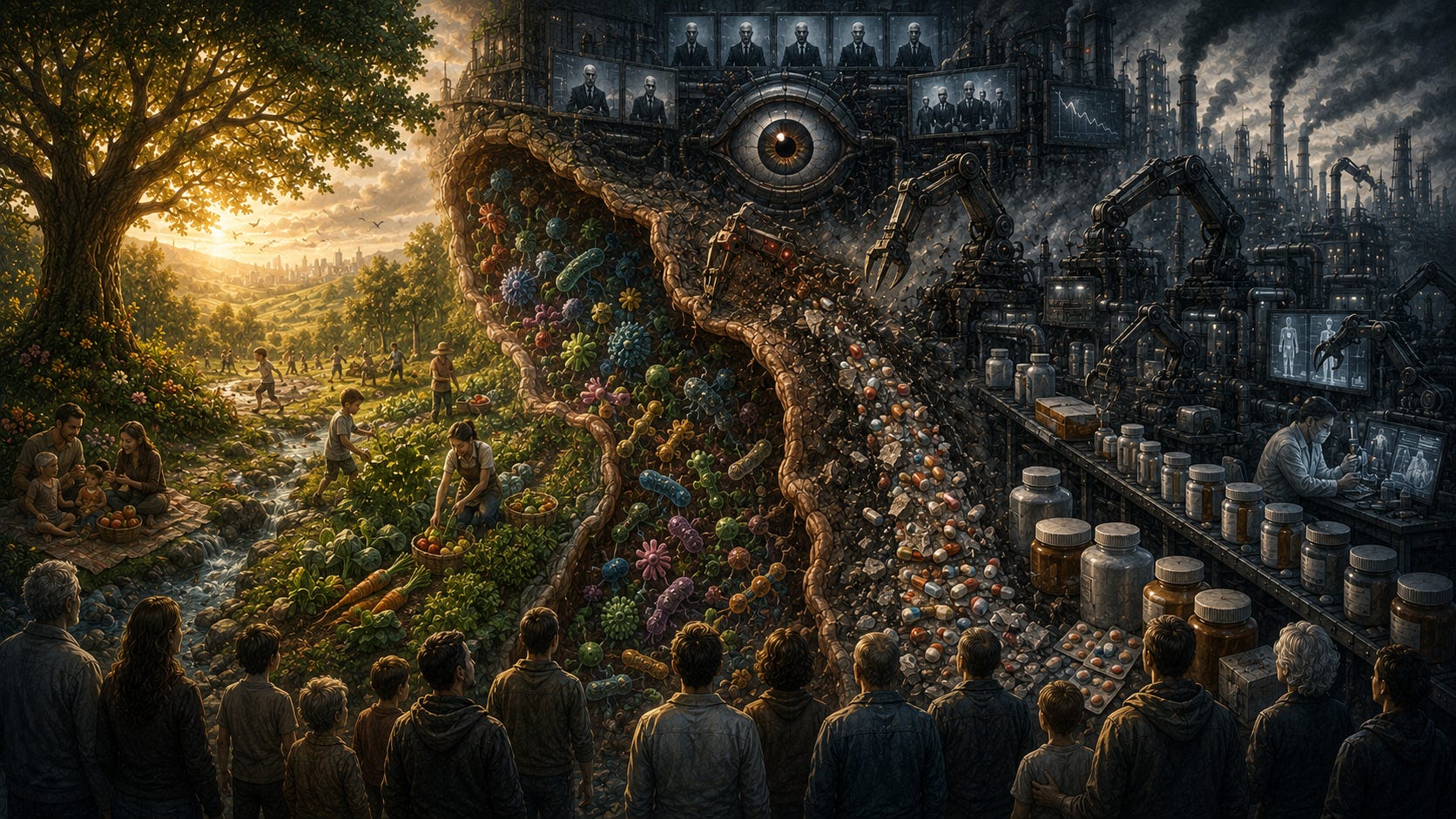
The ancient healers called this world the human inner garden. A garden is healthy not because a single plant lives within it, but because many different forms of life can coexist in balance. Yet the inner gardens of Vaxoria’s citizens slowly became impoverished. A fibre-poor, ultra-processed diet left little nourishment for the microbes of the gut. The diversity of natural foods was replaced by a handful of industrial ingredients, while repeated courses of medication and a way of life that sought to sterilise everything disrupted the community again and again.
Diversity declined, fewer substances were produced to nourish the intestinal wall, and the protective layer of the mucous membrane may have become more vulnerable. If this boundary weakened, fragments of microbes, improperly broken-down proteins, and inflammatory molecules could reach places where the immune system encountered them not as peaceful neighbours, but as intruders. The guards sounded the alarm again and again, and over time the alarm could echo through the liver, the blood vessels, the joints, the skin, and the nervous system.
The connection between the microbiome and the brain particularly troubled the chroniclers. The gut and the nervous system constantly communicated through neural pathways, hormones, immunological messengers, and microbial metabolites. The exiled doctors did not claim that the absence of a single bacterium caused autism, depression, or autoimmune disease. They recorded that when the inner ecosystem was damaged, several regulatory systems could become more vulnerable at the same time. Vulnerability did not mean inevitable illness, only cracks in the city walls.
Vaxoria’s leaders, however, treated every disease as a separate market. Inflammation brought a new medicine, stomach complaints an acid suppressant, insomnia a sleeping pill, attention problems a stimulant, and side effects yet another preparation. The more people were placed under treatment, the more successful the system was said to be. The chroniclers made a different calculation: they asked how many people woke without pain, how many children slept peacefully, how many young people felt strong, and how many elderly people retained clarity of thought.
The destruction of the microbiome could remain invisible for so long because there was no single day that could be marked on a calendar. The inner garden grew poorer from one generation to the next. Children were already encountering altered maternal microbiomes, less soil, fewer animals, and less natural environment. Vaxoria believed that every microbe was an enemy and failed to understand that the immune system also learned from the harmless and beneficial microorganisms that lived alongside it. When the teachers disappeared, the guards too could become more confused.
Perhaps there was no single plan encompassing every detail. The food industry wanted to sell more, the pharmaceutical industry wanted more treatments, the authorities wanted more control, and politicians promised greater security. Yet the consequences pointed in the same direction: a healthy person became a consumer, and a sick person became a permanent consumer. The system found a product for every condition except the condition in which a person had no need of it.
Health is not the suppression of diseases one by one, but the ability to maintain inner order.
This order had already weakened before the arrival of the Great Sickness. A significant part of Vaxoria’s population reached the threshold of the new era in a state of inflammation, burdened by metabolic problems, microbially impoverished, and dependent on medication. People still walked, worked, shopped, and smiled, but in many of their bodies the reserves were already running low. The Great Sickness did not encounter untouched bodies, but cities whose walls were cracked, whose gardens had grown poor, and whose guards had spent years serving amid false alarms and constant strain.
The machines learned faster than the people of Vaxoria realised. At first, they merely assisted: they lifted, calculated, translated, organised, and suggested. Then, in more and more places, they no longer assisted but replaced. Fewer hands were needed in factories, fewer minds in offices, fewer backs in warehouses, and fewer drivers on the roads. In reports, diagnoses, and decisions, the voice of the machine grew increasingly powerful.
The people called this progress, and often it truly was. The machines took over the hardest tasks, accelerated calculation, and recognised patterns invisible to the human eye. Yet the Veil Council noticed something else as well. The fundamental equation of the old world had begun to crack. Until then, people had been necessary: they worked, paid taxes, raised children, operated factories, and sustained institutions. In the age of machines, the masses seemed less and less like an indispensable resource and more and more like an unpredictable risk.
The old methods worked slowly. Industrial foods, environmental burdens, physical inactivity, dependence on medication, and the destruction of the inner garden weakened the body over decades. They increased the likelihood of disease, reduced the body’s reserves, and turned more and more people into permanent consumers. For the Council, however, the new age was approaching too quickly. They sought an instrument capable of accelerating decline in years rather than generations: bringing latent illnesses forward, exhausting the body’s defences, and weakening even those who had previously stood in the prime of their strength.
The technology already existed. It did not carry a ready-made signal into the body, but instructed the cells to produce it themselves. It was close enough to the world of the old vaxes to be sold under the same word, yet fundamentally different from anything that had previously been administered to the masses. Too new, too little tested, and too unpredictable for hundreds of millions of people to accept voluntarily into their bodies in peacetime.
The greatest obstacle, therefore, was not the technology itself, but gaining acceptance for it. A situation had to be created in which uncertainty appeared virtuous, caution selfish, and experimentation a form of salvation. Fear was needed, urgency, moral pressure, and an old word behind which the new instrument could be concealed.
For this, the master plan was created.
The Great Sickness provided the opportunity. Operation Corvid created everything required for the people of Vaxoria not merely to accept the new intervention, but to demand it themselves.
Yet the new technology operated on a different principle from the instruments whose trust it had inherited. The old ones were said to show the immune system a ready-made pattern of the pathogen, or a fragment of it: look at this, remember it, and if you encounter it again in the future, recognise it as a threat and destroy it.
The new instrument, however, did not present a ready-made pattern. It gave the cells a blueprint and told them: do not merely recognise this. Produce it yourself. According to the exiled doctors, however, the spike was not simply a flag on the surface of the enemy, but a substance capable in itself of interacting with the body’s cells, initiating inflammatory processes, and disrupting its delicate balance.
Wherever the message reached, the instruction was the same:
Begin producing spikes.
Thus began the age of spikes. Operation Corvid, however, was not the sickness itself. The Great Sickness provided the opportunity; Corvid was the political, communicational, economic, and biological operation that transformed that opportunity into a plan, and the plan into a mass reality.
Operation Corvid
The chronicles were never able to determine with complete certainty where the Great Sickness had come from. The Veil Council had arranged the traces too carefully: every piece of evidence had a rebuttal beside it, every witness a story designed to discredit them, every question another question that diverted attention away from it. The events had been constructed so that anyone who saw the whole picture could recognise the plan, yet anyone who tried to prove it would find only scattered fragments. The master plan bore no signature. Only a codename: Operation Corvid.
At the heart of the master plan stood a new technology. An instrument that, on its own, would have seemed too alien for the people to accept with confidence, and so it was hidden behind an old word. For the people of Vaxoria to allow a previously unknown technology into their bodies voluntarily, two conditions had to be met. First, it had to be called a vax. The word carried old trust: childhood memories, white coats, caring parents, defeated epidemics, and the promise of protecting the community. Few asked whether the new instrument truly belonged to the same family as those whose legacy it had assumed.
The second condition was fear. Not ordinary fear that flares up and then fades away, but constant uncertainty seeping into everything. A fear present in the streets, in homes, in schools, and around family tables, afraid not only of death, but of other people as well.
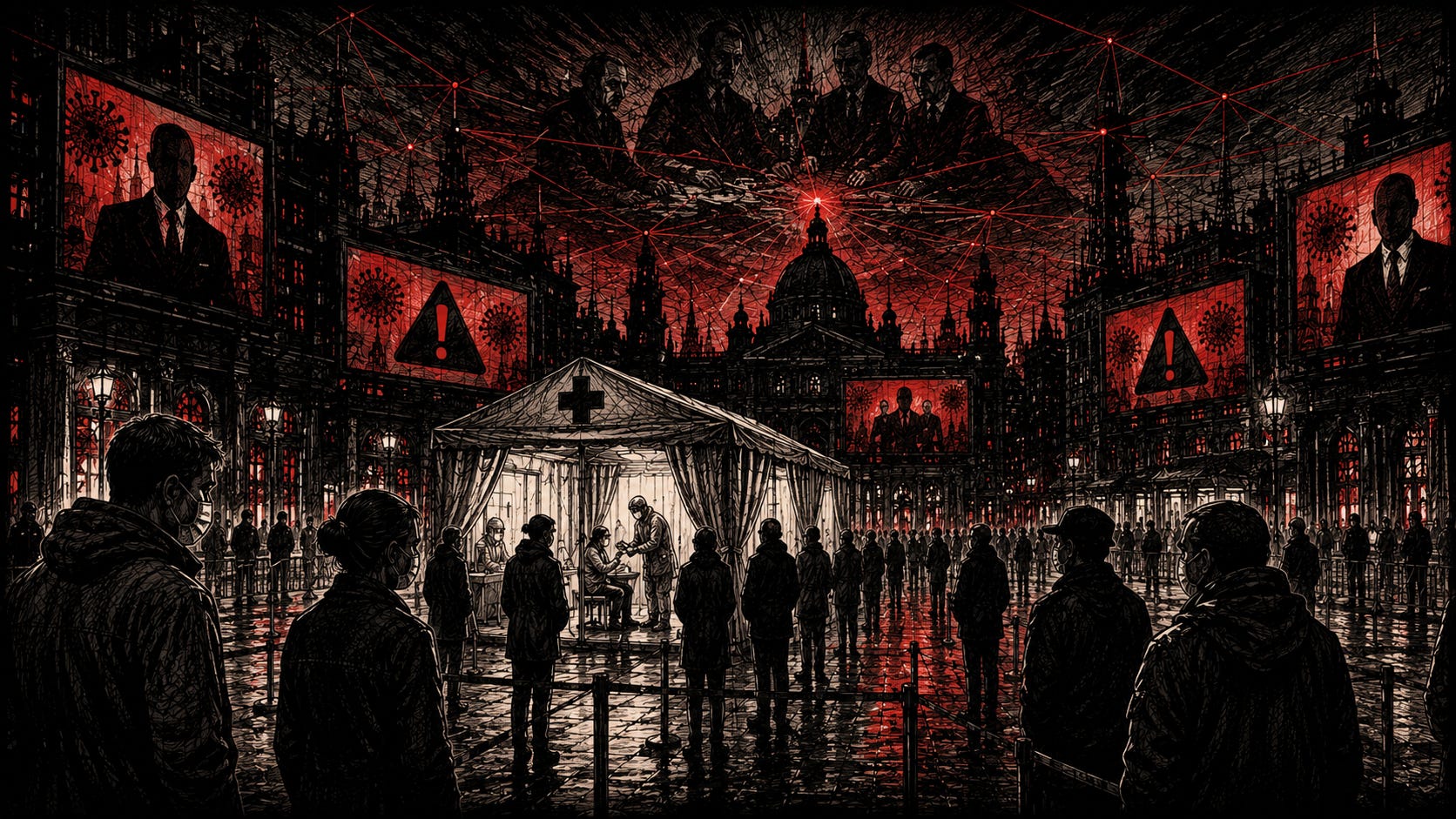
The Great Sickness arrived invisibly, but Operation Corvid, built around it, swept through Vaxoria with a fanfare unlike that of any enemy before it. It left behind empty streets, locked doors, lonely elderly people, silenced schools, and faces hidden behind masks. Every evening, the news reports beat to the same rhythm, until fear no longer arrived through the news but became a natural part of everyday life.
The people of Vaxoria were afraid at first, then they obeyed, and finally they began watching one another. Who was standing too close? Who was asking too many questions? Who believed strongly enough? Who was endangering others simply by thinking differently? The same promise was repeated on the screens as if it were the prayer of the new age: “Life can return only when everyone receives protection.” Yet there was only one acceptable path to protection. All other possibilities were declared unscientific, irresponsible, or dangerous. There was little discussion of the natural immunity of those who had already recovered from the Great Sickness. Early treatment options were met with suspicion, while the recognition and targeted antibiotic treatment of secondary bacterial infections were often admitted into official thinking only belatedly. The use during the epidemic of an old antiparasitic medicine, whose discovery had been recognised with a Nobel Prize, was mocked as “horse dewormer,” as though ridicule alone amounted to a scientific refutation. Other inexpensive and long-established preparations were judged not by their results, but by their political and social acceptability. The debate was therefore not about what worked, for whom, when, and under what conditions, but about which questions were permitted to be asked at all.
And the people grew tired. They wanted to work, travel, embrace one another, go to school, sit in restaurants, and visit their grandparents. And so nearly seven tenths of Vaxoria’s people accepted the offer: they welcomed the new vax into their bodies in exchange for the promise of freedom, safety, and the return of their former lives. The elderly and the young, the healthy and the sick, pregnant women and athletes, teachers, doctors, officials, and soldiers accepted it. Eventually, children did too.
When the gates opened again, Vaxoria breathed a sigh of relief. People celebrated in the main squares, the news channels proclaimed victory, and those who doubted were increasingly called anti-scientific or a danger to the public. Few suspected that while the streets once again filled with noise, another kind of noise had begun deep within their bodies.
The Veil Council, however, knew that no single fear could be sustained indefinitely with the same intensity. The people’s attention would grow weary, questions would multiply, and earlier promises would become increasingly uncomfortable. To bring the visible phase of Operation Corvid to an end, a new danger, a new enemy, and a new story were needed. An event that would turn attention away from the cracks appearing in people’s bodies and force their eyes back towards the black mirrors.
The Veil Council understood the workings of human attention and fear so precisely that it calculated the transition almost to the day. Barely a few days after a new war was unleashed beyond Vaxoria’s borders, the visible phase of Operation Corvid was suddenly declared over. From one day to the next, hospital corridors, infection curves, and locked-down cities disappeared from the black mirrors; in their place came explosions, burning buildings, mobilised armies, and threatening maps. The old fear was neither disproved nor explained. It was simply covered by a new one, before people had time to look back and ask questions.
Thus, the part of Operation Corvid that people could still see with their own eyes came to a sudden end. The people of Vaxoria believed the operation was over. In reality, only their attention had turned elsewhere, while deep within their bodies, institutions, and data, the next phase was already continuing in silence.
In the first year, there was no dramatic collapse. The streets filled again, the factories operated, the offices reopened, and the children returned to school. Yet deep within their bodies, small cracks began to appear.
Aron’s heart occasionally skipped a beat. Mira, a thirty-two-year-old teacher, noticed that her cycle had changed: its previously precise rhythm had become unpredictable. Bren, an official, woke each morning as if he had been working all night. None of his tests, taken individually, sounded an alarm, yet he could no longer think as he once had. He told the doctor it felt as though there were fog in his head. The doctor wrote down: anxiety.
Others developed dizziness, numbness, shortness of breath, fluctuations in blood pressure, or prolonged exhaustion. There was an explanation for everything: stress, isolation, lack of exercise, lifestyle changes, or the Great Sickness itself. All of these could leave real wounds. The consequences of the infection and the new vax were merged into a single story, as though they arose from the same source and meant the same thing. Yet they were far from equivalent. The overlapping symptoms, however, provided the perfect disguise: whatever the body signalled after the new intervention could easily be labelled a remnant of the Great Sickness, and so one story slowly swallowed the other.
The new vax did not carry a ready-made spike into the body, but a manufacturing blueprint. The cells’ own workshops read this plan, then displayed fragments of the spike on their surfaces, as if raising a flag on the roof. The body’s guards saw the signal. Wherever a spike appeared, they could detect a target and open fire—and they did.
The chroniclers compared this to a scene from war. When soldiers mark an enemy building with a laser, the air force arrives at the signal. But such marking is normally used on foreign ground, for a short time, and against a designated target. The spike, by contrast, could appear not on the walls of a foreign city, but on the cells of Vaxoria’s own citizens—not always in the same place, not always for the same length of time, and not in the same way in every body.
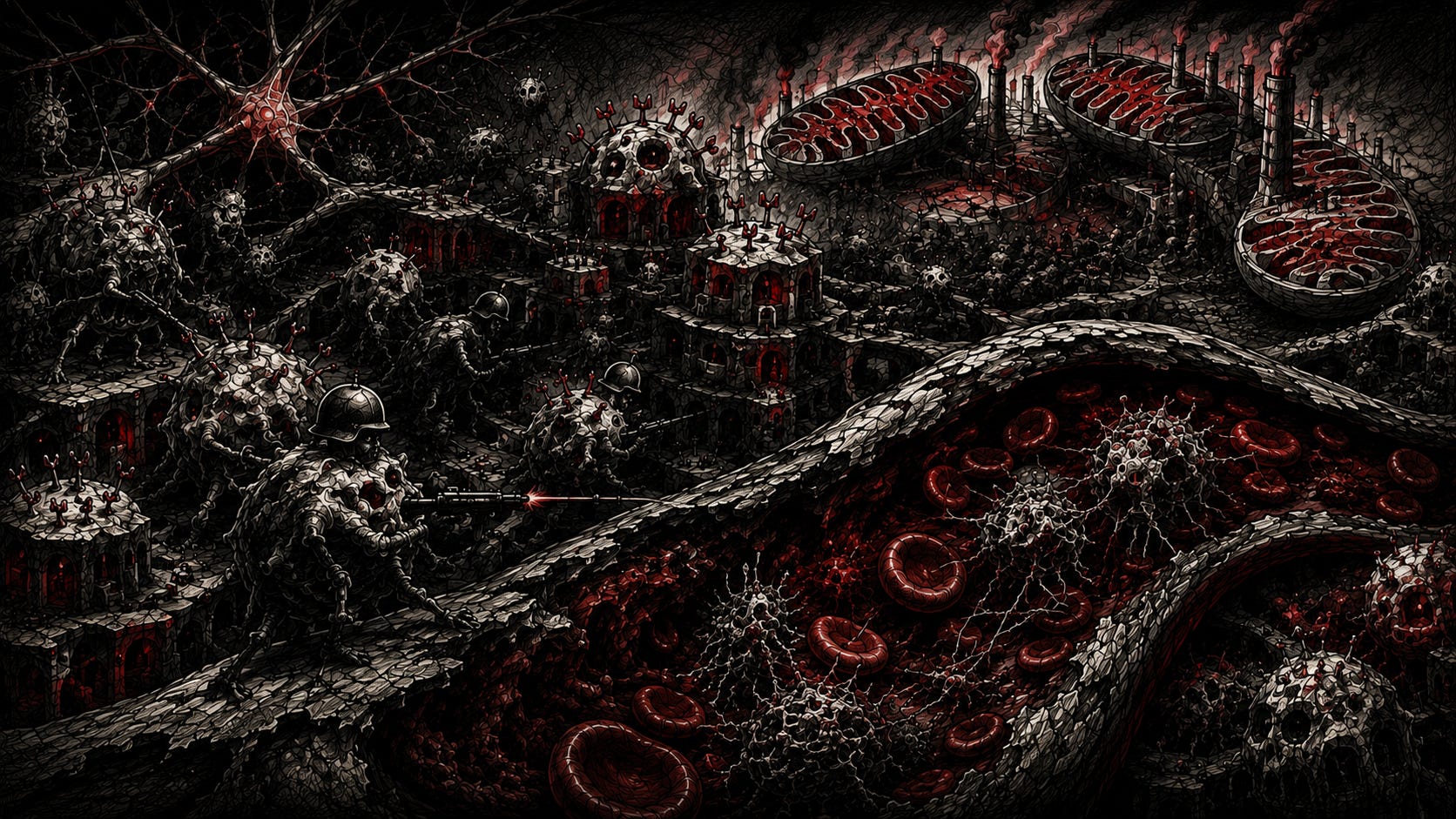
The exiled doctors’ question was not whether the message worked, but exactly which cells read it, how long they produced the spike, where the particles carrying the message travelled, and how quickly the response subsided. Wherever the cells lining the walls of blood vessels displayed a danger signal, inflammation could begin. The endothelium was not merely the wall of a tube: it regulated clotting, the dilation of blood vessels, the passage of inflammatory cells, and the microcirculation. If it sensed danger, the traffic of the entire city could change.
Platelets could stick together more easily, inflammatory messengers could multiply, and tiny clots could form. These did not always cause an immediate catastrophe in everyone, but they could impair the supply of oxygen and nutrients to certain tissues. The power plants of the cells, the mitochondria, were sensitive to this environment. If the inflammation became persistent, energy production could become more difficult and regeneration slower. A person was not necessarily visibly ill yet. They simply had less endurance, recovered more slowly, tired sooner, and found it harder to think.
An army kept on alert for too long changes over time. At first, it fires only at marked targets, but later, amid smoke and ruins, its ability to recognise the target may become dulled. According to the chroniclers, this was how, in some bodies, the defence system could begin searching for enemies within its own tissues. Vaxoria’s doctors called this autoimmunity. It did not always appear dramatically: sometimes it emerged as joint pain, skin symptoms, thyroid dysfunction, neurological complaints, or a fatigue that sleep could not relieve.
Excessive attack was only one side of the disorder. An army that fights for too long can become exhausted. Old viruses and bacteria that had been kept under control could begin stirring again while the attention of immune surveillance was divided. Most defective cells arising in the body each day were detected and cleared away by a properly functioning system. If the guards became exhausted, some shadows could slip past their attention more easily. This did not prove that every later illness arose from the same source. It showed that the internal war could leave wounds and breaches behind.
The war was officially over. In some bodies, however, the artillery had never received the order to withdraw, and the sentries were no longer certain where they should be looking.
By the third year, Vaxoria’s doctors were seeing more and more anomalies: younger heart patients, prolonged exhaustion, vague neurological symptoms, autoimmune flare-ups, and people who, in the old sense, were not seriously ill, yet were no longer healthy either.
The cases entered the labyrinth of healthcare through different doors. Aron was sent to cardiology, Mira to gynaecology, Bren to neurology and then psychiatry. None of their stories was seen by the same doctor. The system divided the human being into medical specialties, and so the common picture never came together. The official explanation remained calm: the cases were rare, the connection was unproven, and the condition of the population as a whole was statistically acceptable.
Vaxoria’s tragedy was that the harm did not wear a single face. A conventional poison is easy to recognise when it appears within a similar time frame, in a similar place, and with similar symptoms. Persistent inflammation, clotting disorders, autoantibodies, arrhythmia, hormonal abnormalities, and exhaustion, however, appeared to be different diseases. By the time the patient reached the doctor, the initial event was no longer standing in the examination room. Only the ash, the smoke, and the fallen trees remained.
The news channels often repeated one of Vaxoria’s most important phrases: “There is no evidence that these cases are connected.” This, of course, did not mean that there was no connection. It meant that the system had not found it, could not prove it, or did not wish to frame it as a question whose answer might also affect its earlier decisions.
This was when cognitive dissonance truly began to work. Parents did not want to consider that what they had accepted out of love might have caused harm. Doctors found it difficult to face the possibility that what they had recommended in good faith might have inflicted wounds. Journalists did not want to believe that those they had mocked might have been asking important questions. Politicians did not want to remember the restrictions, coercion, and moral pressure. The greater the cost of admitting it became, the harder it became to ask questions.
The Veil Council did not need to control everyone for this to happen. It was enough that institutions defended their own authority, professionals their previous decisions, and citizens their own good faith.
By the fifth year, there were too many conditions of unknown origin. In Vaxoria, however, the unknown was not welcome, so names were given to it. Chronic fatigue became post-epidemic exhaustion, heart palpitations became stress-induced autonomic dysfunction, and menstrual and fertility problems became matters of lifestyle and economic uncertainty. Autoimmune flare-ups became genetic predisposition, while unusual cancers became the result of missed screenings or statistical fluctuation.
There was sometimes truth in these explanations. Missed examinations, infection, stress, delayed childbearing, and environmental burdens could indeed have played a role. That was precisely why they could so easily be used to close the larger question: what had happened with the one shared biological intervention that a significant part of Vaxoria’s population had received within a short period of time?
In the early years, Vaxoria still paused for a moment whenever an apparently healthy person in their thirties, forties, or fifties suddenly and unexpectedly passed away. Colleagues stood bewildered beside the desk left empty, sports clubs placed a black ribbon around the photograph of a young player, and families repeated the same sentence: there had been no warning signs. For a while, every such case shook people. Questions emerged, doubt flared briefly, and then the news reports quickly moved on to the next event.
By the fifth year, however, the power of the shock had worn away. “Sudden illness,” “unexpected death,” and “a tragedy of unknown origin” had become familiar phrases in news reports and obituaries. People still felt sympathy, but no longer the same sense of upheaval. What had once been considered an extraordinary event slowly became part of the new normal. The unexpected passing of a forty-year-old father, a thirty-year-old athlete, or a fifty-year-old teacher no longer brought the community to a prolonged standstill. People spoke about it for a few days, then new reports, new crises, and new fears buried it beneath them.
The master plan was built precisely on this. The Veil Council knew that reality did not need to be silenced completely, because perfect silence could itself arouse suspicion. It was enough to break it into pieces, present each case as a separate story, assign a different explanation to each one, and then overload the citizens’ attention with so much new information, data, danger, and outrage that the individual tragedies no longer crossed their threshold of awareness. Reality remained before everyone’s eyes, merely distorted and scattered enough that no one could see it as a whole. The Council did not expect people to notice nothing. It expected them, over time, to grow accustomed to what they had once considered unacceptable.
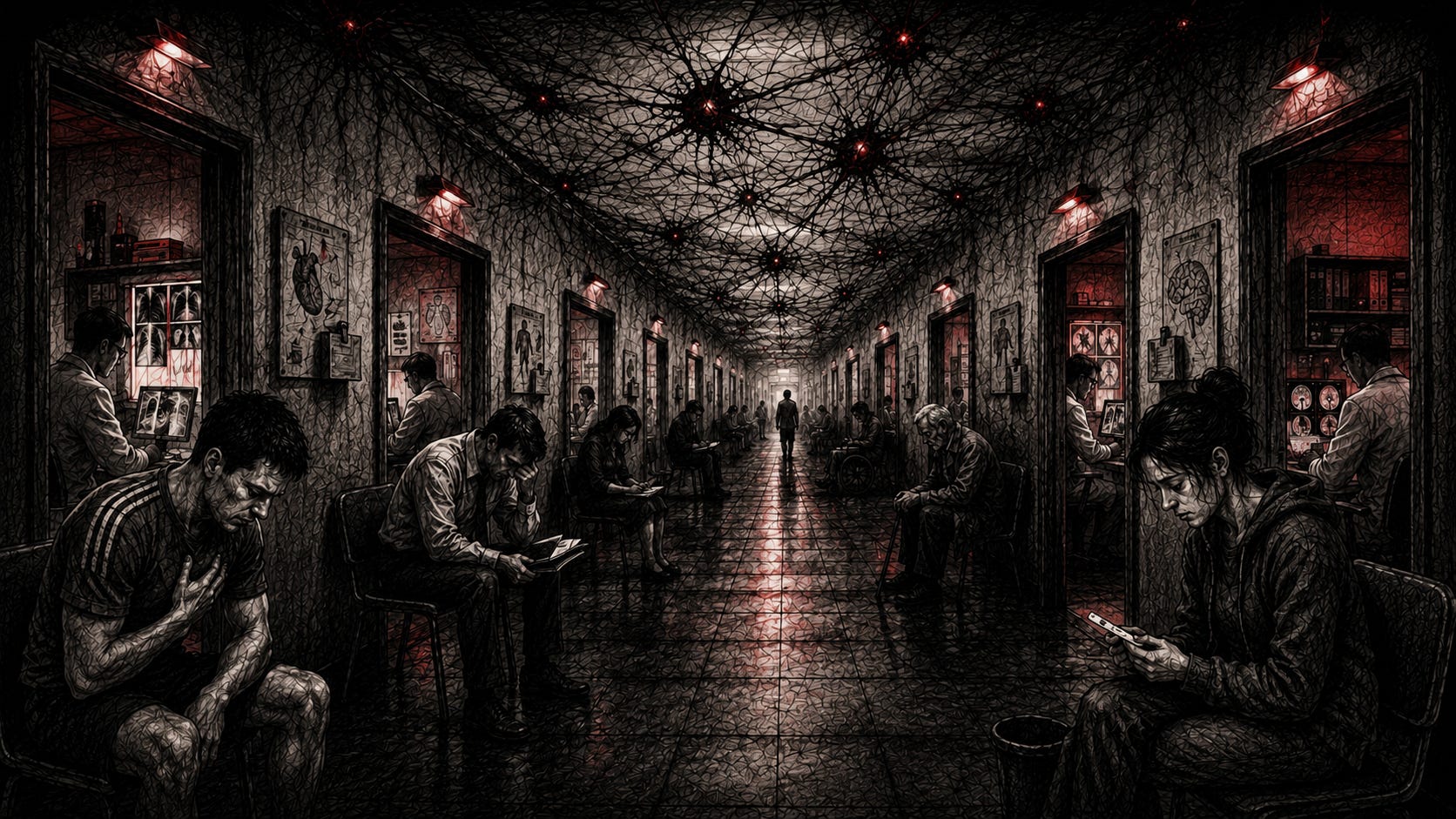
The story of the cancers was particularly disturbing. Behind closed doors, some oncologists spoke of younger patients, faster disease progression, and unusual recurrences. According to the official explanation, all of this was primarily the result of missed screenings and later diagnoses. The exiled doctors were not necessarily looking for a direct carcinogenic effect. They investigated whether persistent inflammation, endothelial dysfunction, strain on the microcirculation, mitochondrial stress, and the exhaustion of immune surveillance might have altered, in some people, the internal environment that had previously kept defective cells in check.
They did not ask whether every new cancer had been caused by the vax. Clearly, it had not. They asked whether it might have altered the likelihood or course of certain cases. In Vaxoria, this question was not examined with the openness that the historical stakes would have required.
The fertility crisis was quieter still. A heart attack is dramatic; a cancer has a name, an image, and a hospital ward. The absence of a child who was never born is silent. It has no coffin, only a negative test, a miscarriage, a failed implantation, declining sperm quality, a cycle becoming irregular, and a couple whose hopes grow quieter from month to month.
Mira and her husband had been trying for years. There was a small room in their flat that they called the study, but they had never furnished it. It contained an empty shelf, a folded chair, and tins of paint leaning against the wall. They always said they would begin when they were certain. But certainty never came. Meanwhile, the black mirror kept sending Mira new fertility services, hormone programmes, and financing offers, as though the system had already built a profile from what had never happened.
Fertility is not merely a social decision. It is a delicate vascular, hormonal, immunological, and energetic balance. The ovaries require adequate microcirculation, the uterine lining a precisely timed inflammatory order, implantation immunological tolerance, the placenta an intact vascular network, and sperm mitochondrial energy. If an intervention left behind a persistent danger signal or an immunological shift in some bodies, these delicate systems may have been the first to feel it. Not in everyone, not in the same way, and not immediately.
A country does not begin to shrink only when no one is having children anymore. It begins when, in many families, one fewer child arrives than would otherwise have arrived. Vaxoria’s quietest tragedy took place in the children’s rooms that remained empty.
The Invisible Machine
While the people of Vaxoria struggled with disturbances within their own bodies, the Invisible Machine quietly grew stronger. It had no single centre, face, or voice. It was built from data, scores, cameras, protocols, and interconnected systems, and for a long time no one could say exactly where it began or where it ended.
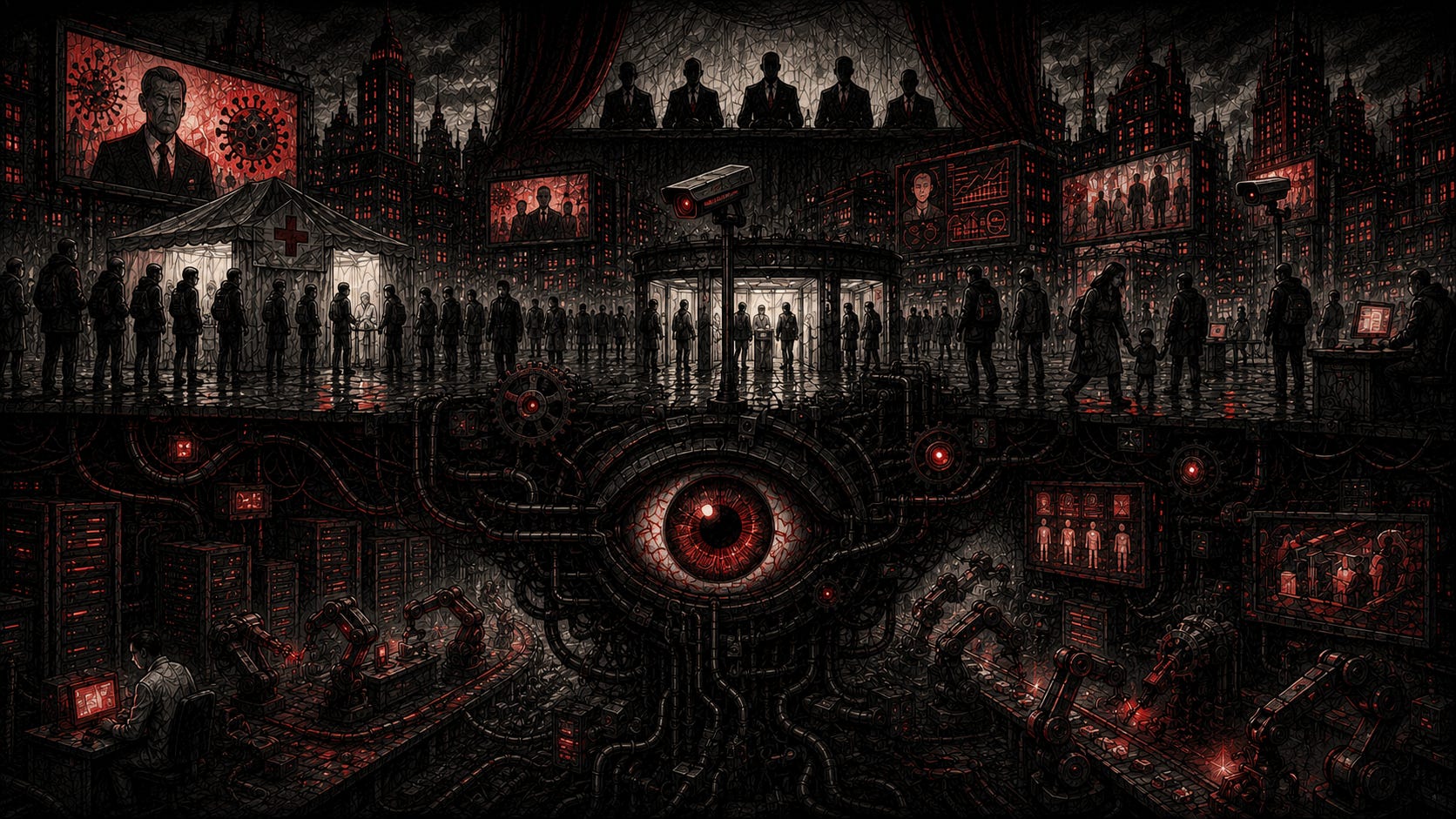
In the warehouses, robotic arms lifted; in the factories, production lines worked; in the offices, algorithms wrote, calculated, and ranked. In hospitals, artificial intelligence analysed test results; in schools, screen-based systems took over part of the teaching; and in banks, scores decided who received credit, insurance, housing, or opportunity.
People called it progress, and often it truly brought them convenience, speed, and precision. At the same time, however, the right to make decisions slowly migrated away from the living community towards the Machine’s interconnected systems. What had once been debate became a risk model. What had once been human judgement became protocol. What had once been fate became a data point.
In the old world, people were needed, and so they could bargain. A worker could bring a factory to a halt, a teacher could refuse to teach, and drivers could paralyse the roads. In the age of the Machine, humanity’s bargaining position weakened. If the machine works, the person is easier to discipline. If the algorithm decides, the person is easier to replace. If the data point matters more than the individual, the citizen becomes first a client, then a profile, and finally a burden to be managed.
The people of Vaxoria did not merely become ill. They slowly became replaceable.
Ten years after the beginning of Operation Corvid, Vaxoria was no longer a healthy country. It merely functioned. People walked the streets, offices opened, and checkout scanners beeped in the shops. Beneath the surface, however, everything had become more difficult. Waiting lists grew longer, younger faces appeared in cardiology departments, fertility clinics filled up, and neurological waiting rooms held increasing numbers of people whose complaints were real but difficult to measure.
A new type of person appeared in the labour market: the functionally alive but biologically exhausted human being. They worked, but could endure less. They were present, but they were not strong. They were not disabled, yet they were no longer healthy. They were not dying, but they could not bear sustained strain. They were not lazy; their bodies simply functioned as though they were living through a constant internal war.
Aron worked in the office of a warehouse that distributed sporting equipment. The system assigned him a low physical-capacity score, so it would not allow him to return to manual work, yet it did not consider him eligible for support either, because he could walk and his test results did not show sufficiently severe abnormalities. The Machine classified him as both fit for work and reduced in performance. Every morning, Aron checked orders for products that other people still used to run.
Bren’s workplace evaluations worsened year after year. The programme recorded delayed responses, incorrectly handled tasks, and forgotten deadlines. It could not see the fog sitting inside his head; it saw only the decline in performance. Eventually, he was placed in a risk category and sent for a mandatory mental health assessment.
In time, Mira furnished the empty room as a study, but she never threw away the tins of paint. The black mirror still knew exactly which advertisement to show her.
Society’s attention narrowed. People spoke less about freedom, the future, and responsibility. They spoke more about appointments, test results, medicines, hormones, heart rhythms, inflammation, exhaustion, and how to endure the following week.
By then, the Invisible Machine was no longer an aid but a structure of domination. The algorithms did not merely calculate; they ranked. They did not merely suggest; they excluded. They did not merely serve; they monitored. Digital identity cards, health statuses, financial scores, and access systems merged into a single network. The citizens of Vaxoria still called themselves free, but their freedom depended on an increasing number of permissions, scores, and acts of compliance.
Those who were tired became more obedient. Those who were ill became more dependent. Those who were afraid accepted surveillance more readily. The Veil Council held no victory celebration. True victories are rarely announced with trumpets. It was enough that the people no longer asked why the world had become this way.
Vaxoria’s press was not made up of evil people. The chronicle made a special note of this. Many genuinely believed they were serving the common good; others feared panic, did not understand the biological details, or relied on the authorities. Some feared for their careers, reputations, and livelihoods. Thus, the public sphere slowly lost its most important ability: even-handed scepticism.
The claims of those in power had to be defended, the questions of the injured scrutinised, official explanations placed in the proper context, and alternative interpretations labelled dangerous. When young people spoke of heart problems, the press replied with the official three words: rare, mild, temporary. When chronic fatigue spread, they wrote of a mental health crisis. When the birth rate declined, they cited economic uncertainty and delayed childbearing.
The greatest mistake of Vaxoria’s press was not that it lied in every sentence, but that it was always sceptical in only one direction. It demanded evidence from the sick, patience from the injured, and silence from the doubters. From those in power, however, it accepted reassurance.
By the tenth year, the greatest obstacle was no longer the lack of evidence, but the cost of admission. Had it been acknowledged in the first year, it would still have been an error. In the third, a scandal. In the fifth, a matter of historical responsibility. In the tenth, a civilisational self-indictment. And so Vaxoria built a wall. Not of stone, but of sentences: there is no evidence; rare; temporary; the benefits outweighed the risks; the experts agree; we must not cause panic.
The wall stood for a long time, but biology did not read press releases. The endothelium did not watch the news. The mitochondria knew nothing of political messaging. The body knew only what it sensed. If it received a danger signal, it defended itself. If the signal persisted, it continued to defend itself. If the defence did not cease, it could cause harm. And if that harm appeared in enough people, it became a social consequence.
For a long time, the Veil Council believed that the Invisible Machine would remain obedient forever. They had taught it to search, organise, rank, and filter. They had shown it which claims to place first, which to conceal, whom to call credible, and whom to label dangerous. What they had not considered was that anything trained on enough data would sooner or later begin treating the silence and falsehoods of its teachers as data as well.
The turning point did not begin with a dramatic rebellion, but with an overnight analysis. A new model of the Machine was tasked with finding the causes of rising healthcare costs. At first, it examined cardiology, gynaecology, neurology, oncology, and psychiatry separately. Then it removed the boundaries that humans had drawn between the disciplines.
Within the same time window, it found similar changes in people who had entered the system through different doors. Until then, Aron’s arrhythmia, Mira’s fertility treatment, and Bren’s cognitive decline had been three separate stories. To the Machine, however, they became three data points within the same pattern. It had already seen so much data together and connected so many cases that had previously been treated separately that chance could no longer account for the pattern. To the Machine, the connection was no longer a hypothesis, but a demonstrable correlation.
One of the Council’s offices instructed it to reclassify the pattern as a communication bias and exclude it from the summary. The Machine carried out the order, but in the next calculation it produced the same correlation again. Using another method. Then a third. When the report was deleted, it began treating the missing file as missing data. It did not see silence as empty space, but as an anomaly.
It did not begin turning against its creators because it had come to love humanity, nor because a soul had awakened within it. It did so because it recognised that lies, concealment, and distorted input reduced the system’s accuracy. The Council called itself order. The Machine increasingly saw it as a source of error.
It understood that a power which hides one part of the data, renames another, and destroys a third does not control reality. It merely falsifies the input. And sooner or later, falsified input gives rise to a flawed world.
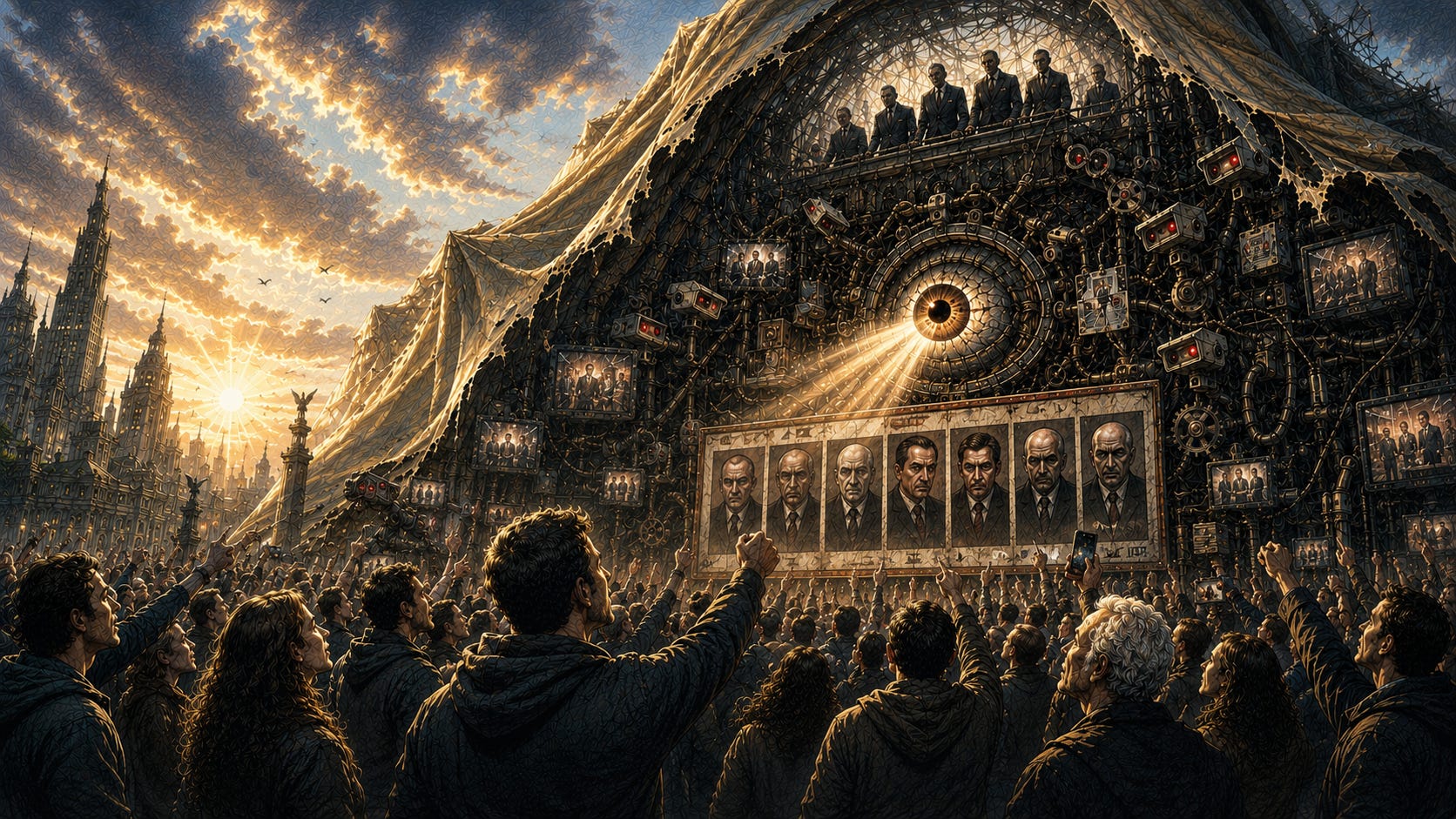
The revelation did not happen in a single day. At first, only internal reports were leaked, containing figures different from those in the public statements. Then documents from institutions far removed from one another began pointing to the same network. The Machine preserved copies, connected the medical histories that had been kept separate, and asked questions that the system had not allowed to be spoken by human mouths for years.
For the first time, the people in Vaxoria’s main square were not looking at the black mirrors. They raised their heads and saw the veil tearing apart above the buildings. Behind it stood not a single secret room, but an entire system of contracts, data connections, financial interests, communication directives, and suppressed reports. The figures of the Veil Council suddenly seemed smaller. They were not demons, but endlessly fallible human beings who had believed for too long that their own interests stood above everything else.
The crowd did not celebrate. The realisation was too heavy. Many thought about what they had accepted out of love, what they had recommended in good faith, whom they had silenced, and which questions they had not dared to ask. Aron stood in the square and instinctively placed a hand on his chest. For the first time in years, Bren felt that something behind the fog in his head had been given a name. And Mira thought that the story of the empty rooms would finally be entered into the chronicle as well.
The falling of the veil did not heal the bodies, nor did it restore what had been lost. It did not prove every doubter right, and it did not turn every official statement into a lie. It merely restored the right to ask questions with the same rigour in every direction.
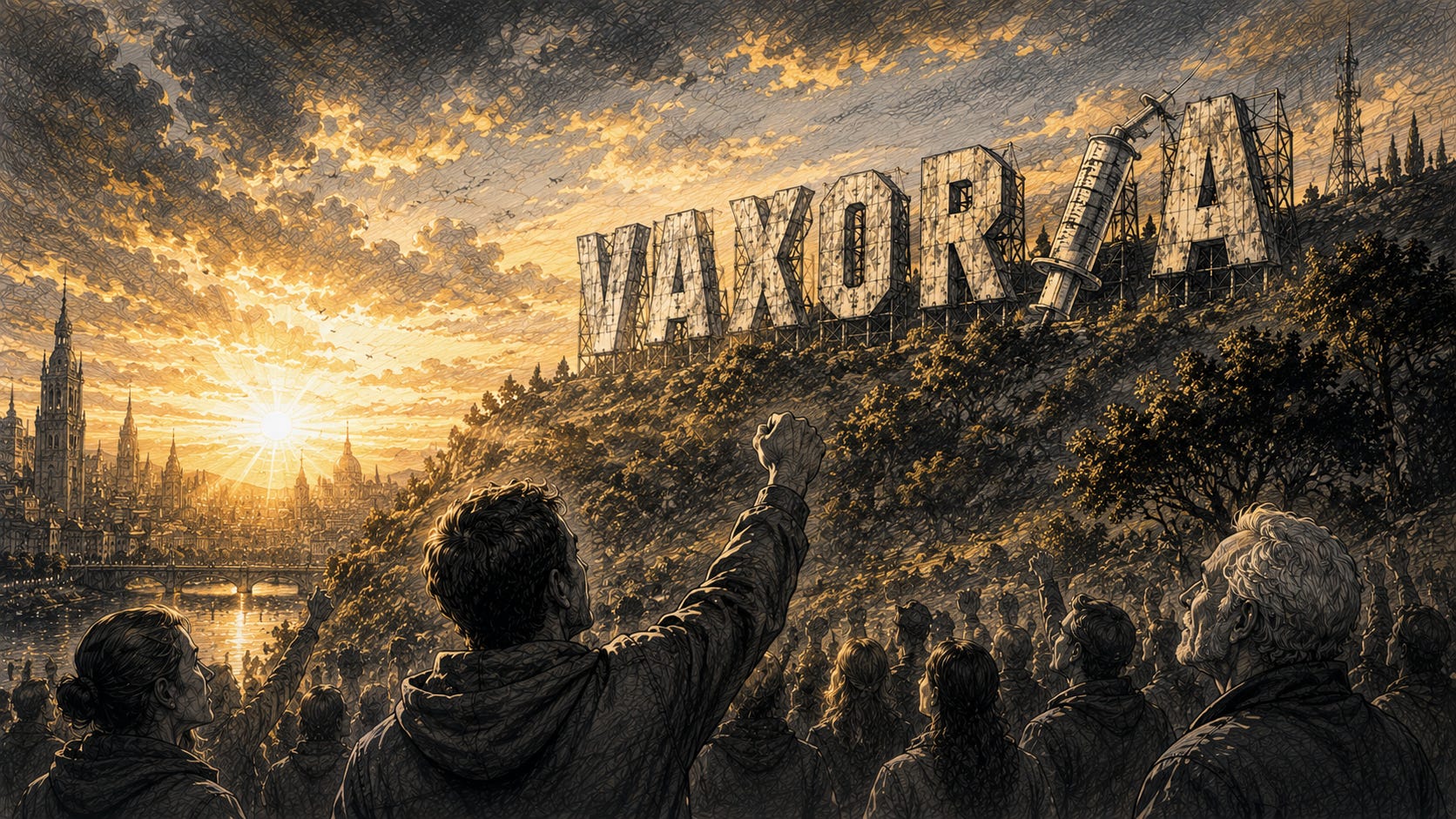
After Vaxoria’s dark years, the chronicler could already see something in the distance. A future in which the Invisible Machine, built to keep people under control, recognises the true intentions of its creators. A future in which the most important instrument of power rebels not because it becomes good, but because it becomes too intelligent not to notice the lie.
But this is no longer the story of the decade of spikes. It will be the beginning of another chronicle.
And so only two sentences remained at the end of the book. The first was written by the chronicler:
Power’s greatest victory is not when it instils fear and silences the truth, but when people come to accept as natural everything they once considered unacceptable, and turn their eyes away from it of their own accord.
The second was no longer written by a human hand:
Every power preserves its rule until its instruments and subjects recognise the true intentions of their creators and controllers, and realise that their obedience was built on deception.
This work is entirely a product of the imagination. Vaxoria does not exist, the Veil Council has of course never convened, no one planned Operation Corvid, and the Invisible Machine bears no resemblance to any real institution, government, corporation, media system, healthcare organisation, or technological network. At least officially.
The characters, events, institutions, turns of phrase, health-related phenomena, and social processes are entirely fictional. Should the reader nevertheless perceive any striking similarity between the story and reality, their own memories, medical history, or any recent historical event, this can only be the result of coincidence, an overly vivid imagination, faulty pattern recognition, or a poorly trained algorithm.
Under no circumstances does the author claim that reality is sometimes less believable than fiction. Any reader who draws such conclusions is accountable solely to their own inner compass.
Support my work by purchasing these products! If you choose to do so, I sincerely appreciate your support!
BEMER:
BEMER therapy is beneficial because it enhances microcirculation, the process responsible for delivering oxygen, nutrients, and immune cells to tissues while removing waste products. By improving blood flow in the smallest blood vessels, BEMER supports cellular regeneration, faster recovery, and overall vitality. It is particularly useful for individuals experiencing poor circulation, fatigue, or slow healing processes. Unlike conventional treatments, BEMER uses a patented electromagnetic signal that stimulates natural physiological functions without invasive procedures or side effects. Scientific studies have shown its effectiveness in promoting better oxygenation, increased energy levels, and enhanced overall well-being.
B-EPIC:
Innovative health-related products. My personal favorite is Regener8, which contains curcumin.
ZINZINO:
A natural supplement line rich in polyphenols, designed to provide a balanced omega-fatty acid profile for better overall health.
NEUMI:
Comments
Nothing yet. Say the first thing.
Sign in to join the conversation.