
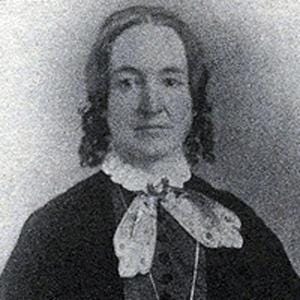
On the morning of June 18, 1860, the county sheriff arrived at the home of Elizabeth Packard.
He was there to take her to an asylum. She had not been given a hearing. She had not been examined in any proceeding she was aware of. She had simply disagreed with her husband.
Elizabeth Packard was a mother of six who had committed the unforgivable act of expressing religious views that differed from her husband’s. When she announced she might worship with the Methodists, Reverend Theophilus Packard decided his wife was insane. He arranged for a doctor named J.W. Brown to visit their home disguised as a sewing machine salesman. During their conversation, Elizabeth complained about her husband’s domination. Dr. Brown later testified he “had not the slightest difficulty in concluding that she was hopelessly insane.” His evidence? She had complained about her husband. She had refused to shake his hand. And she was over the age of forty.
In Illinois at the time, a husband could have his wife committed without her consent, without a public hearing, and without the evidence of insanity required for anyone else. Elizabeth spent three years locked inside the Jacksonville Insane Asylum. When she was finally released, she discovered her husband had rented their home to strangers, sold the furniture, taken the children, and left the state.
Elizabeth Packard was not insane. She was independent. And in the nineteenth century, female independence was its own diagnosis.
What Nellie Bly Found Behind the Doors
Twenty-seven years after Elizabeth Packard was locked away, a young journalist named Nellie Bly talked her way into Blackwell’s Island—New York’s most notorious asylum—to see for herself what happened to women once the doors closed behind them.
As I wrote about in my recent post, Bly went undercover to get committed. She stopped bathing. She stopped brushing her hair. She spent hours in front of a mirror practicing the performance of mental instability, then checked into a boarding house under a false name and screamed at the tenants for twenty-four hours until police intervened. Within days, she was declared hopelessly insane and sent through the system—first Bellevue, then Blackwell’s Island.
What she found confirmed what Packard had lived. Doctors who seemed oblivious to their patients’ actual conditions. Orderlies and nurses who abused their charges. Spoiled food. No access to warm clothing or clean linens. Buckets of freezing water poured over patients’ heads as “treatment.” Women forced to sit on straight-backed benches for twelve to fourteen hours, unable to talk or move.
And the most chilling reality of all is that many of the women were not mentally ill. They were foreign-born, poor, or simply inconvenient—widows who grieved too long, wives their husbands wanted removed, women who spoke no English and had no one to advocate for them.
Bly’s reporting sparked public outrage. But for women like Elizabeth Packard—and like Arabella Pryce—what she uncovered was not new. It simply confirmed what they already knew: that being a woman who sees too much can be dangerous.
Once Declared Mad, a Woman Cannot Testify to Her Own Sanity
What Bly’s investigation revealed—and what Packard’s life embodied—was not just the grim material conditions of institutional life. It was the psychological injustice done to women. A woman inside an asylum could not testify to her own sanity, because the very act of protesting was reinterpreted as a symptom. Her words lost value the moment the label was applied. Her testimony, her protests, her memories—all were read as evidence of the illness they were trying to disprove.
The Women I Built in Their Image
Arabella Pryce carries an inherited ability that destroyed the women in her bloodline who came before her. One was deemed insane. Another was accused of witchcraft. Both were committed and never spoken of again. Arabella was raised in the long shadow of their silence. She knows what happens to women who don’t follow the rules — women who grieve too long, want too much, possess abilities they can’t explain, or notice things they aren’t supposed to. The question at the heart of her story is not “what if I am mad?” It is “what if I’m seen as mad?”
Grace Michelle possesses an analytical mind in an era that finds such minds unseemly in a woman. Annie Oakley’s fame grants her access, but her perceptiveness makes powerful people uncomfortable.
None of them solve crimes through genius alone. They solve them the way ordinary people navigate real danger—by listening carefully, by reading what is said (and what isn’t), and by understanding the unspoken rules well enough to know when breaking one might save a life—or end their own.
What makes historical mystery so compelling to me as a writer is that the constraints of the period are not merely backdrop. They are opposition. My detectives cannot run a fingerprint. They cannot call for backup. They cannot, in many cases, walk into a room and be taken seriously.
And yet, these women persist. Not because they are fearless, but because they know that staying silent carries its own price — and that speaking up, even when it’s dangerous, is sometimes their only option.
Elizabeth Packard understood this. After her release, she founded the Anti-Insane Asylum Society and spent the rest of her life traveling the country, advocating for the rights of married women and the reform of commitment laws. Within her lifetime, four states rewrote their asylum statutes because of her work. Nellie Bly understood it, too—she risked her own freedom to give voice to the women who had none.
If you are drawn to stories where the detective earns every answer, where the world pushes back against the person trying to find the truth, and where courage is quiet and hard-won — then you understand why I love to write historical mysteries.

No posts
Comments
Nothing yet. Say the first thing.
Sign in to join the conversation.