
What do you think of when you think of the working classes? For a minute, let’s get stereotypical.
Are they white? Male? Maybe Northern? Perhaps you think of an industrial labourer such as a steel worker or miner, or maybe even the now ubiquitous white van man. Thanks also to Nigel Farage and his Leave campaign, you may even view your working class figure as a British born, fierce patriot, keen to rid the UK of migrants. What is probably far less likely is that you’d think of someone of colour, or a woman.
So is it fair to say we think firstly as the working classes as somehow masculine? And what’s the opposite of masculinity? Femininity of course. Does that make feminism middle/upper class? Is feminism posh?
Growing up working class, and in the 80’s, I knew nothing of feminism or equal rights. I certainly saw strong women around me, women like my grandmother who had lived through the Second World War working in ammunition factories. I saw my dance teacher who despite being married was never seen with her husband and took absolute sole responsibility for building up an incredibly successful, if somewhat old fashioned, dance school. There was Madonna, fiercely powerful, and love or loathe her there was of course Thatcher, who despite denying being a feminist (and apparently cooking dinner for her husband Dennis every evening), was definitely still an example of a strong woman going after what she wanted. But did I ever hear talk of women earning the same as men? I did not. Did I see key male figures in my life taking on any emotional labour or even cooking, cleaning or childcare? I did not. I also never saw any of this being challenged.
Now I can’t talk exactly to whether or not this was purely a class thing or an 80’s thing, but what I was not exposed to at home or during my education was any debate around feminism. I was living alongside strong women who definitely did not see themselves as less than the men they lived alongside, but who also had no ideas about, or time for, feminism. There is no doubt in my mind that my education was significantly lacking to that of my middle class opposites and therefore I was just not equipped to explore intellectually what equal rights, feminism or social justice was. Not yet anyhow.
To explore this further I’ve been looking to the first wave of feminism, the suffragettes. It’s highly probable that when thinking of the suffragettes your thoughts turn first to Emmeline Pankhurst or Millicent Fawcett, women of means shall we say, but there were many working class heroes taking part in the movement that haven’t been remembered or celebrated in the same way as their middle & upper class sisters. If we look to much of history being documented by men, we must also consider that when women were given a voice, it was largely given to women of a ‘higher station’ so even the stories that got documented from the time were in the majority from those better educated and those with the time to document them, which rarely applied to the working class women in the fight.
There were also many women workers who wanted to be involved but couldn’t because they were in service, long hours making it impossible to take part in the marches, or because they had no-one else to look after their children or families. Dig a little deeper and you’ll also find a darker truth, that many working class women, particularly domestic servants, were hidden behind their middle class employers who whilst standing for women’s rights, somewhat ironically did not stand for ALL women having access to those same rights. In many cases it was the working class women, enabling the upper classes to demonstrate, to protest.
Despite quote’s like the following from Emmeline & Christabel Pankhurst, ‘working women were the weakest portion of the sex, how could it be otherwise? Their lives were too hard, their education too meagre to equip them for the contest”, thousands of working class women DID take part in the movement albeit those who did, and who in turn were arrested and imprisoned for their ‘crimes’, were treated significantly worse than their middle class counterparts.
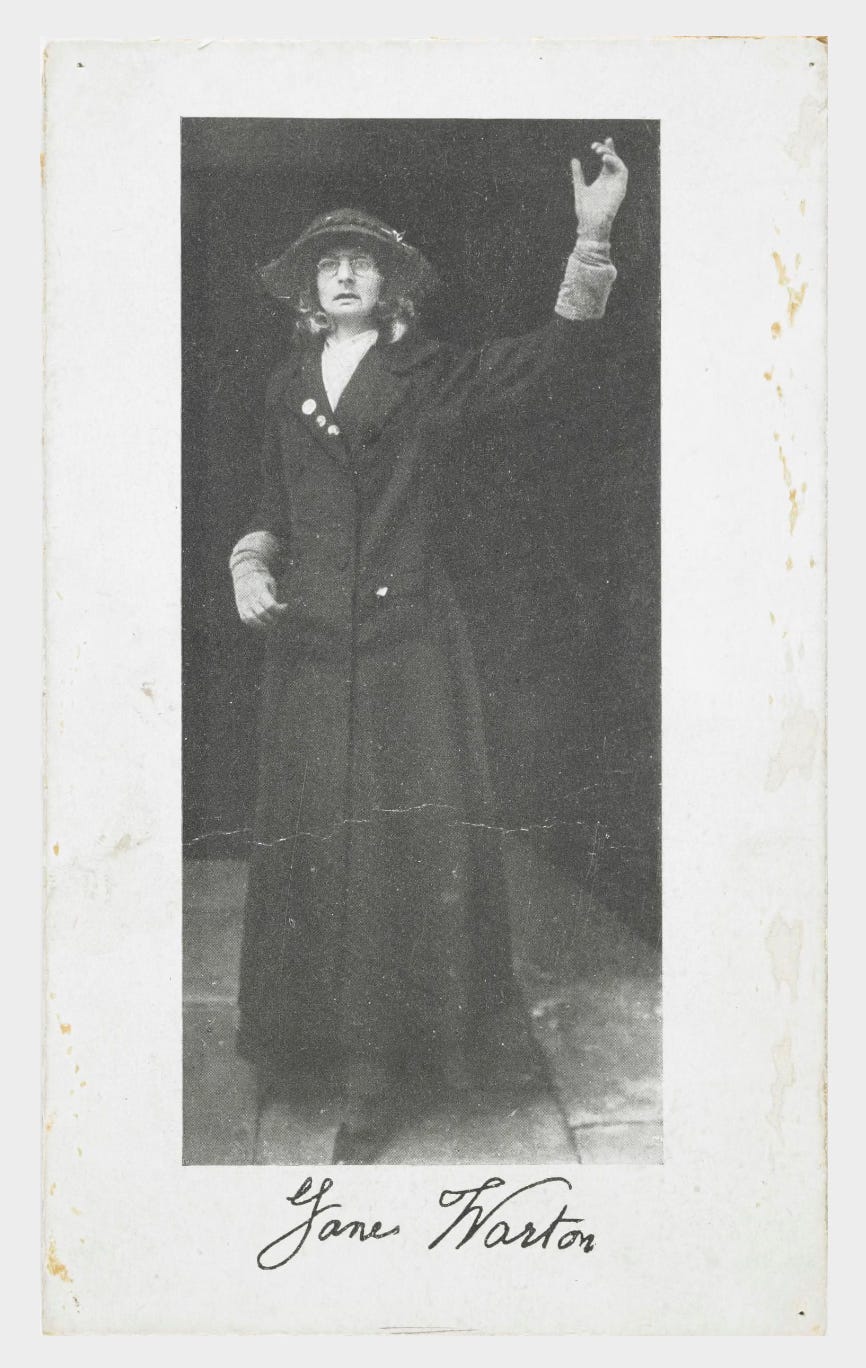
Have you heard the story of Lady Constance Georgina Bulwer-Lytton? Now clearly Lady Constance’s name suggests she was not of the working classes but she was a fierce campaigner for social reform, and was intrigued by the way society treated women from different backgrounds. After visiting suffragettes in prison, and being sent there herself for her own protesting, she took it upon herself to investigate apparent class-based mistreatment of the suffragettes. Her own arrests were usually short lived because of her families connections but in 1911, in Liverpool, she adopted the false identity of a working class suffragette called Jane Warton, who was then arrested for participating in the protests and sentenced to 14 days hard labour. Not only was her sentence significantly longer than any she’d endured as Lady Constance, she was also submitted to the horrors of force-feeding no less than 8 times after going on hunger strike. Upon her release she published her experiences and pushed for prison reform.
So if there’s a class chasm evident in early feminism, is there hope for wider reaching participation in the future? For once I think social media has a positive role to play here.
I know that I have learned so much more about feminism because of the people I have met and followed on social media. It’s led me to books, to podcasts, to talks and to organisations that allow me not only to have a voice but also to educate myself further. It’s given me a thirst for more knowledge, both for the history of feminism but for the future too and what is possible. It’s allowed movements like Black Lives Matters to reach across oceans and is doing the same for many other vitally important areas of much needed social change. Social media helps level the playing field. It may expose our sons and daughters to elements we wish to protect them from but the fact that my daughter can find and follow people like Florence Given and Gina Martin is positive to me. It encourages her to share & discuss things around fairness and equity not just with me but with her friends, of all genders, too. It’s theses debates, these discussions that I never had and which I seek out so much now I am able, and it’s these conversations that will allow my daughter to make decisions about what is acceptable or not to her, this feels like feminism to me.
Ultimately I find it ironic that in fighting for greater equity across genders, we are somewhat blind to the intersectionality of that same fight. That we need to ensure greater equality & equity for those fighting for greater equality & equity. There’s definitely enough feminism to go round.
Comments
Nothing yet. Say the first thing.
Sign in to join the conversation.