
During the late 1950s and the early 1960s, naming new public schools for Confederate generals was a tool used by Lost Cause enthusiasts to take a stand against the Civil Rights Movement (CRM), as they fought to preserve the “southern way of life.”
Even school mascots did the work of the Lost Cause. At the University of Southern Mississippi, where I earned a PhD in history, the original mascot for school teams was “General Nat,” after the Confederate general and first Grand Wizard of the Ku Klux Klan, Nathan Bedford Forrest. Yet a reckoning came there in 1972 when they changed the name to the Golden Eagles. Farther north at the University of Mississippi, however, teams still go by the moniker “Ole Miss Rebels.”
During a period of racial reckoning after the George Floyd murder in 2020, Shenandoah County schools in Virginia changed the names of two of their schools, first named in 1959, from Stonewall Jackson High School to Mountain View High School, and Ashby-Lee Elementary to Honey Run Elementary School respectively. But in 2024, the local school board voted to restore the Confederate names.
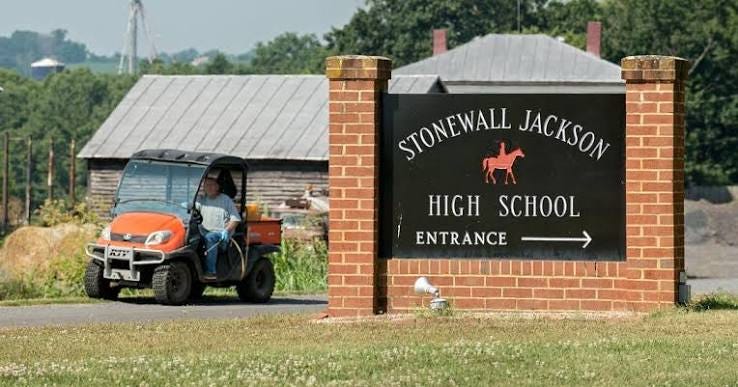
Students, along with the Virginia NAACP, filed a lawsuit soon after and a federal judge recently ruled in their favor: the names Mountain View and Honey Run can return. You can read the details here.
While this case reflects a recent reckoning with the Confederate landscape, there was a much earlier version of this battle that took place in North Carolina in the early 1970s.
But there’s a twist.
The white principal of the high school dropped the school’s nickname and white parents threatened the lawsuit.
Upgrade to paid, pretty please.
*****
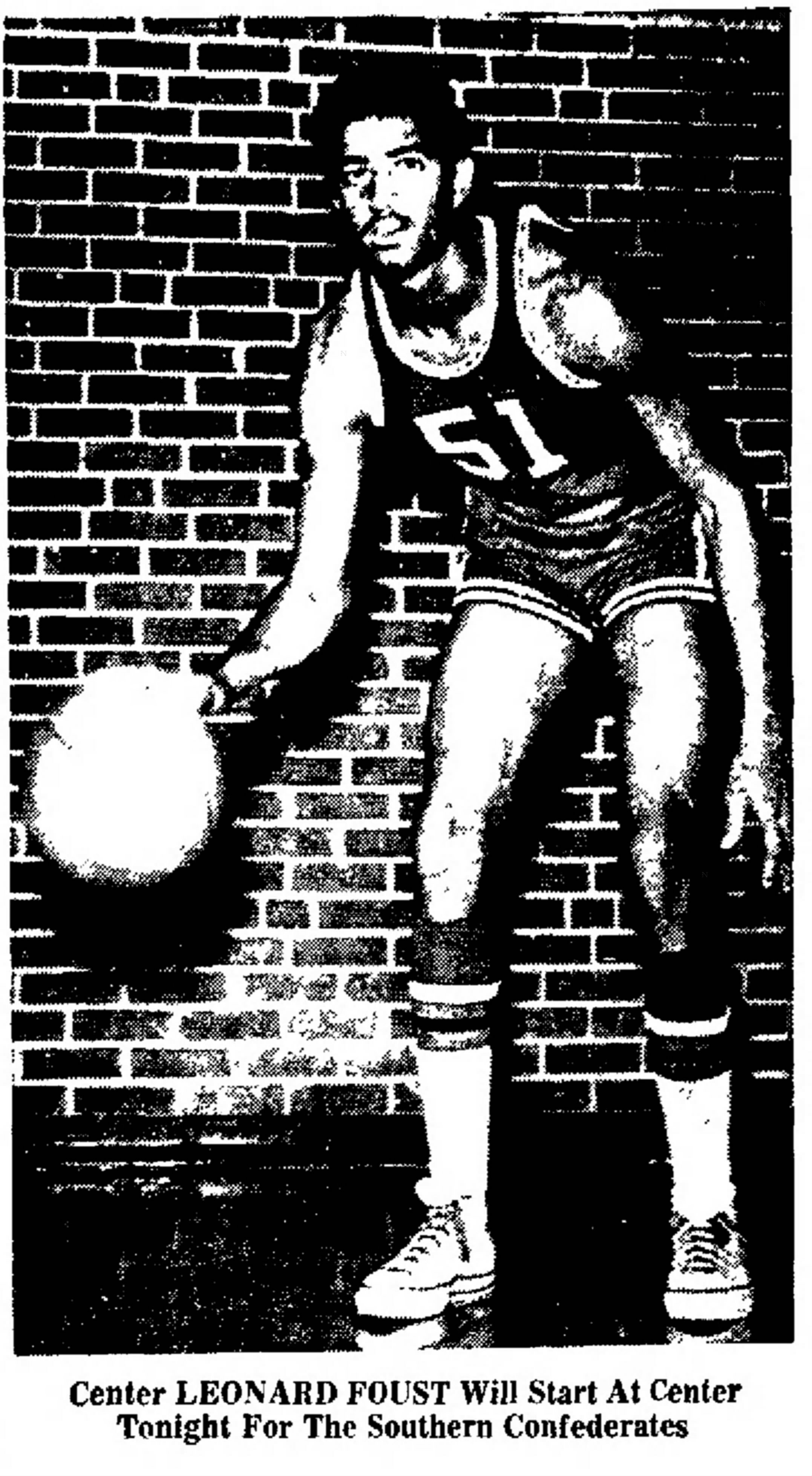
On December 12, 1960, a new high school that consolidated four smaller schools, opened in Graham, North Carolina. Southern High School, or “Southern” as it was known in the community, adopted the nickname “Confederates” for its students and athletic teams. A new generation of white youth in the town of Graham were now known as the “Southern Confederates,” and for over a decade remained as such.
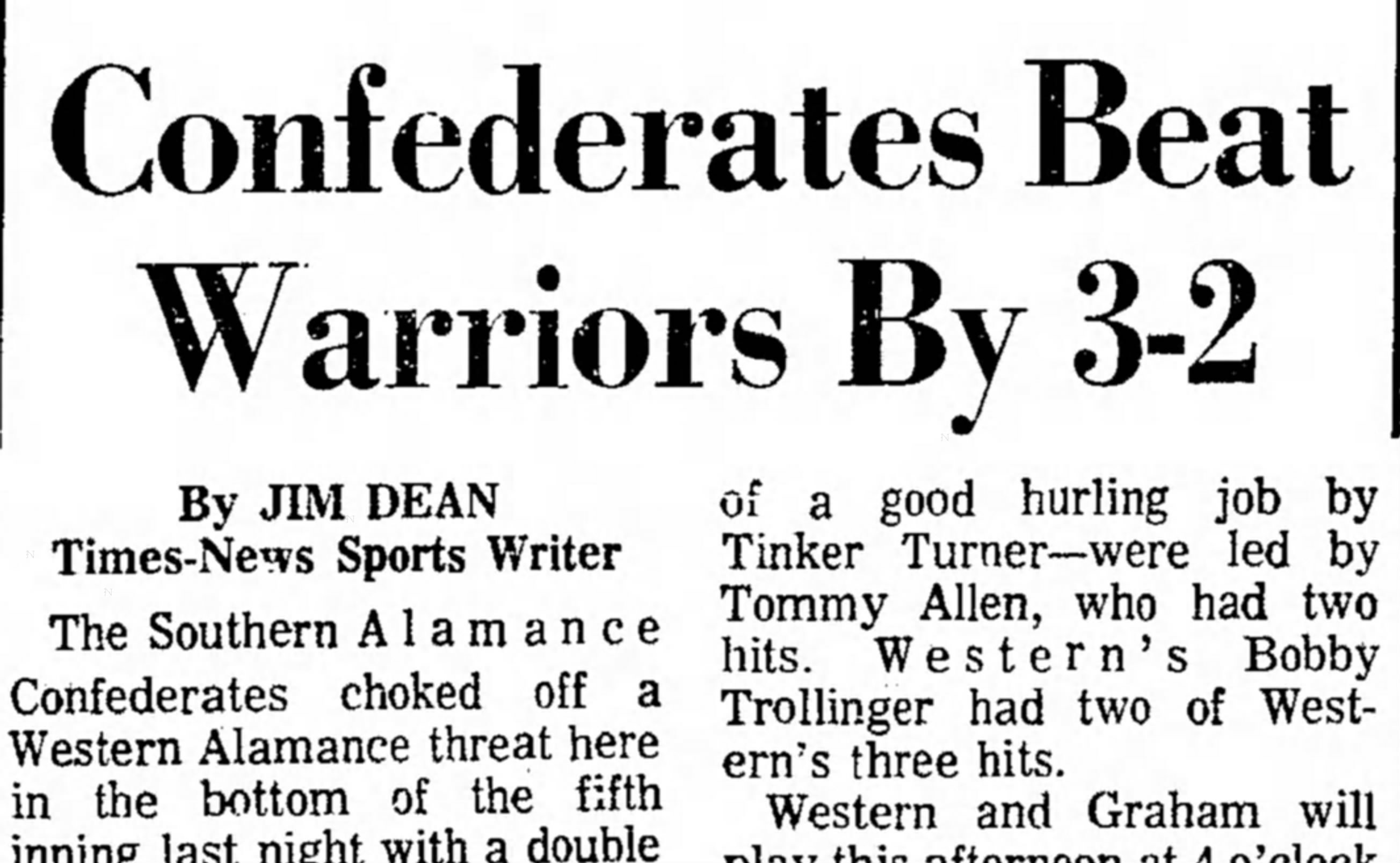
School desegregation changed that, but it also brought with it a firestorm of anger from white students and their parents. It all came to a head in 1971, when “Confederates” was dropped as the school’s nickname. And it was not because black students, now integrated into the high school, staged protests.
On Friday, October 1st, 1971, Southern’s principal Robert Stockard proactively dropped the nickname “Confederates” saying it was “insulting and degrading to black students at the school.”
Over the next week, hundreds of white students reacted to the change by staging daily walkouts, claiming the “administration is dictatorial” and had not consulted with students about the nickname. In reference to the change in nickname, Mike Isley, a student at the school, complained “We should have the right to vote,” later adding “why ask us to atone for something our ancestors did 100 years ago?” Daphne Euliss, another white student, was upset because “No one has heard our reasons for wanting to keep the name.”
Another student asked a question that has a long history in the South, one that raised the specter of protecting white womanhood, when she asked about an investigation into an accusation where “white girls were threatened by blacks with knives.” According to the assistant principal, he was unable to attain “any facts or names in the case.”
The parents of students at the high school were equally upset and held their own “rally” at Southern High School. One parent, R. Bruce Foster claimed “Everyone in Alamance County has been insulted by the way Confederates have been talked about . . . Our freedom is at stake.” He also worried about a slippery slope of change, saying “Are you now going to tear down the monument of the Confederate soldier at the courthouse?” which illustrated how present the statue was in the minds of white community members.
Within days, the parents formed their own group and called themselves the “Concerned Confederates,” with the goal of maintaining the school’s nickname; they also threatened a potential lawsuit.
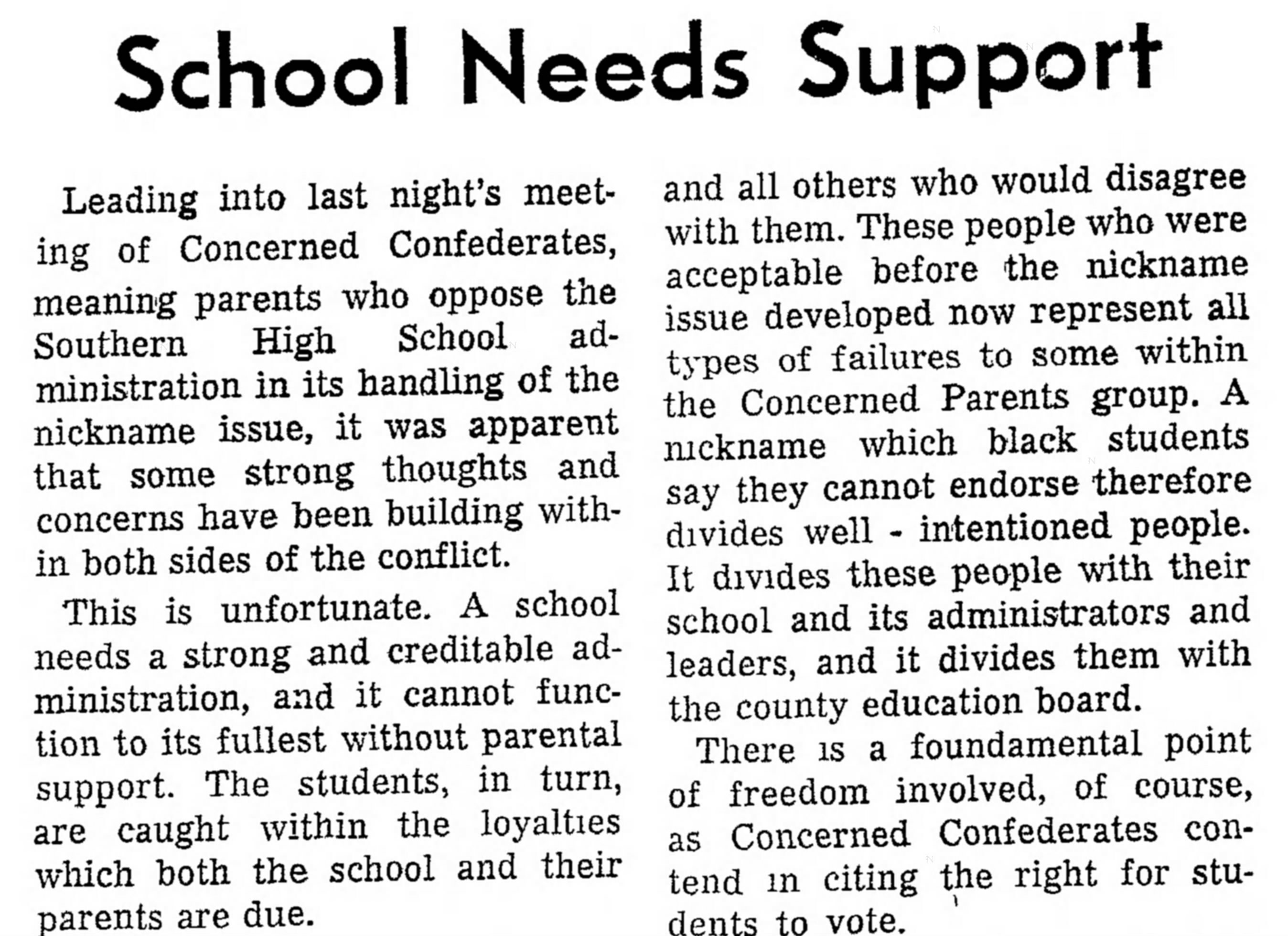
Patricia Williams was steaming mad because of an alleged incident in which black students tried to remove a shirt her son was wearing that had a Confederate patch attached to it. The administration suggested he no longer wear the shirt, to which she replied “Nobody, I mean nobody, can tell me what my son can wear as long as he’s clean and decent.”
It was revealed at a meeting of the Concerned Confederates that even Principal Stockard “was afraid [outside agitators] would come down here and boycott the school and kill our children.” The threat of “outside agitators” was a common refrain by whites during the era of civil rights meant to suggest that racial tensions did not originate among locals, but were a result of outside influences, which was often not the case at all.
As The Daily-Times News editorialized, “the controversy has moved beyond the school itself and what its nickname will be in the future. It now has reached the point that ‘Confederate’ itself is the debate, and to drop it from a school’s place of honor means, to objectors, that the name is being dishonored in its role in history.” At the same time, the paper recognized, “the future is going to include both white and black students” and the school “must function for all students.”
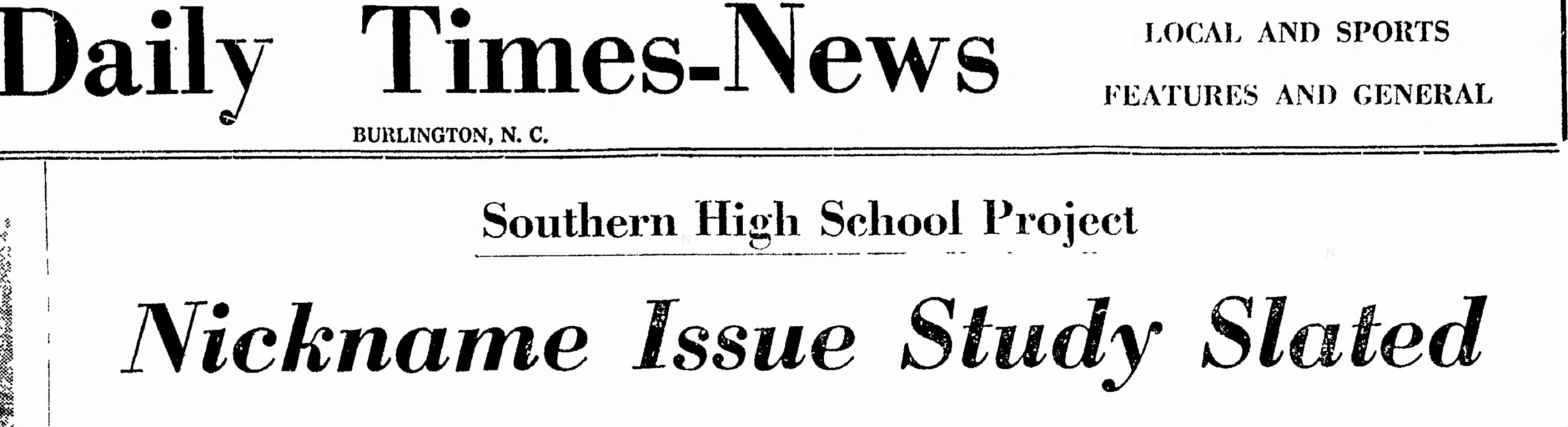
Throughout the entire school year, the Concerned Confederates kept pressure on the Board of Education to keep the nickname, while angry letters to the editor of The Daily Times-News exposed how much local whites resented the change as they barely contained their racist remarks. The school administration, however, stood its ground and the Board of Education continued to defer discussions on the issue that were called by the parent group. Eventually, students had enough and by May 1972 they settled on the new nickname of “Patriots.”
The battle over school names and nicknames illustrates the continued hold that Confederate memory and the Lost Cause had/has on a community. In Graham, it had influenced several generations, including high schoolers in the 1970s, many of whom would continue to defend Confederate symbols well into the 21st century. In other words, it is not a stretch to say that this episode and the continued insistence among parents that even the term “Confederate” must be defended led subsequent generations to hold fast to those beliefs.
The student victory in Shenandoah County is worth celebrating. Southern Alamance High School are still known as the Patriots. But there remain schools throughout the region that still bear the name of Jackson and Lee.
KLC
Thanks for reading America and the Lost Cause! This post is public so feel free to share it and subscribe.
No posts
Comments
Nothing yet. Say the first thing.
Sign in to join the conversation.