
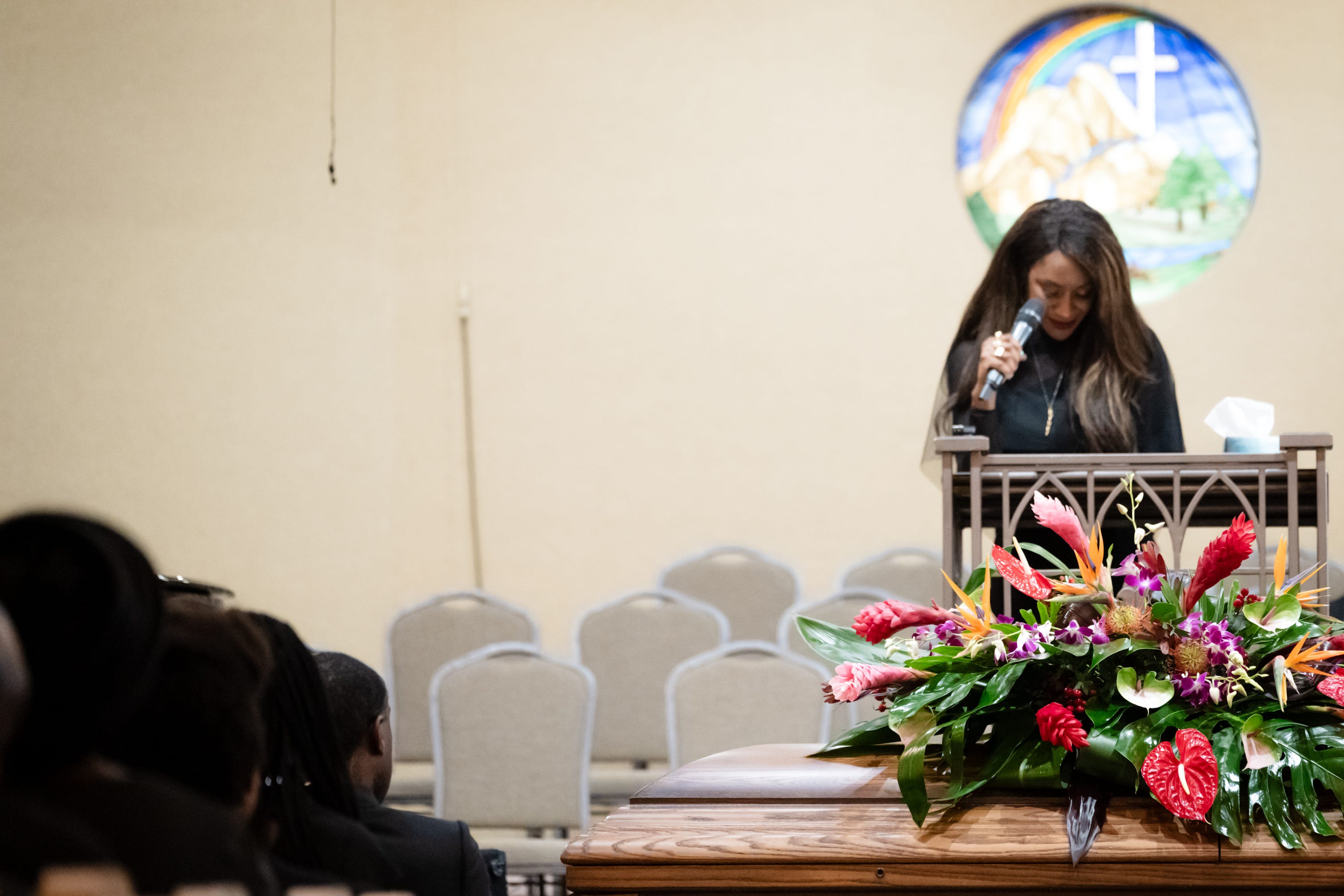
They say the year of firsts after losing a parent is the hardest.
Today is my first Father’s Day since my dad died. It will be four months ago this week.
And all I can think about is regret and rebirth.
I can’t help but remember my inability to process and act upon the increasing signs that his life was slipping away. He was in a nursing home in Dallas, my hometown.
The call that he had stopped eating? I figured he was depressed about not being able to travel to Ghana. The call that he was in hospice? I was told not to panic, that it was for his comfort. I am normally a decisive, action-oriented person. But this? The news of hospice was like water hitting psychic concrete; I simply could not absorb the mortal implications.
In February, I went to Selma, Alabama, for a writing residency, hoping to recover from being wrongfully fired by the Washington Post and make progress on my book manuscript. When I got to Selma, I saw signs for Dallas County, Alabama. My heart sank. I had the feeling I had come to the wrong Dallas County. I was trying to recover from my dead Washington Post career in Dallas County, Alabama, when Dallas County, Texas, was where I should have been, to say goodbye to my dying father.
On the 23rd, my mother called. They were feeding him ice cream, his favorite. My mom put me on the phone to talk to my dad. I told him I was going to come home soon. He managed a raspy, “Okay”.
That would be the last time I heard his voice.
And then the call came at 8:20 am on Tuesday, February 24th. “Karen, Daddy has passed away”, my mother said. The sobbing began. I managed to get a local friend to drive me from Selma to Montgomery to catch a flight to Dallas, Texas.
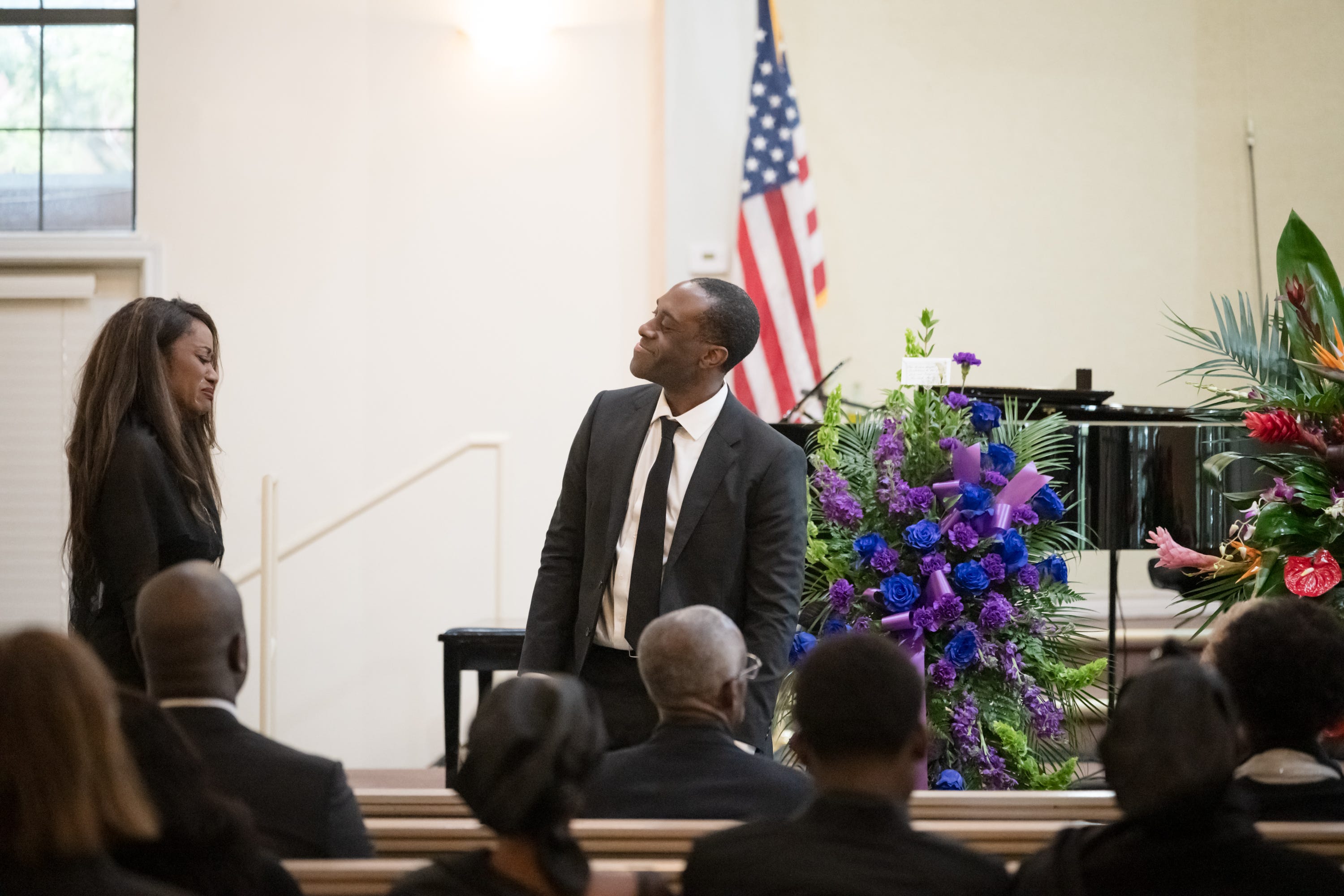
A month later, I sat in the front row of the church, my father’s casket in front of my brother and me. We had a wake for friends and family for an hour. My dad was dressed in a brown suit. I wished we had a chance to view him the day before, so that I could be wracked in pain in private. I had only seen my father’s body once, the day after his passing. Then again, perhaps no amount of body viewings prepares you for your father’s funeral.
Miss Jo-Ann, the wife of Pastor Robert Summers, who officiated Daddy’s funeral, told me to just let it all out. “I was a Daddy’s girl too”, she said to me, her eyes welling with tears. I wasn’t sure if that was comforting or not. She was old enough to be my grandmother. I looked at my father’s casket as she talked. If she was still crying over her father, then I couldn’t help but feel I had a long, long grief journey ahead of me.
Grief over the death of a loved one is universal, and isolating at the same time. I now understand why so many other cultures and religious traditions treat grief with the reverence and submission it deserves—for it is one of the most powerful forces I have ever encountered.
I find myself angry at having to grieve as an American. I wish I belonged to a culture that wasn’t so terrible about grief. For all of America’s current language and permission structures around diagnosing various forms of neurodivergence, anxiety, triggers, and disability, it’s maddening how ill-equipped our culture is with grief and the mental, emotional, and social impairment it causes.
It’s the brain fog. The inability to do what should be simple tasks. The chronic exhaustion, no matter how much sleep I get. I’ve lost about 15 pounds. I am a lot quieter in social situations than I used to be. I wrote before about freak accidents and dumb mistakes I’ve made since my dad died.
For me, grief is an energy-hungry program that is constantly running in my psychic background, which drains my battery. And at worst, we know that grief can kill people—that, yes, it is possible to die of a broken heart.
In his powerful book, “A Grief Observed”, C.S. Lewis writes about the aftermath of the death of his beloved wife. He writes of the feeling of social embarrassment, that your grief is a repellent.
People quickly want to change the subject when you talk about mourning a loved one. Work tasks don’t stop. Friends who were there for you in the fun times are nowhere to be found.
The feeling of being jealous of people who still have their parents. Sadness when I hear of friends whose young children will still have their grandfathers around. The difficulty I have, especially being single and childless, when people announce weddings, coming births – when all I can think about is separation, death, and whether I will ever have any children of my own.
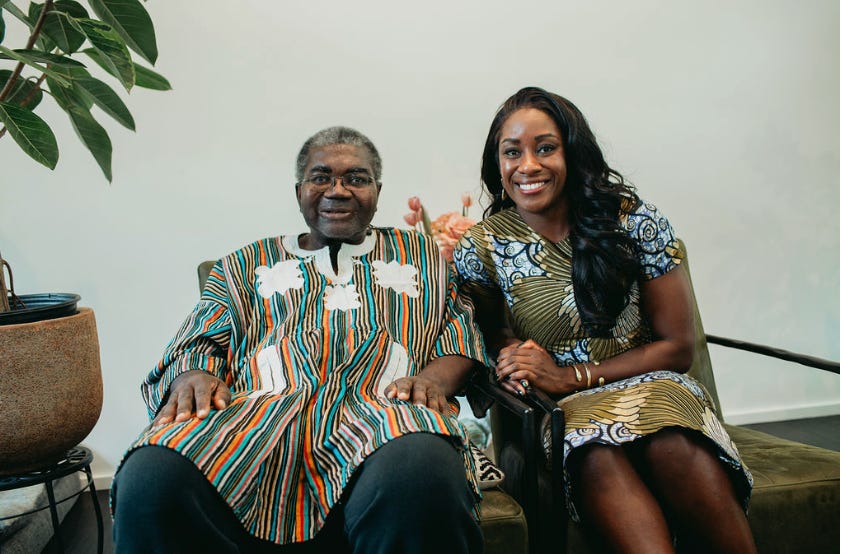
To that end, on Father’s Day, I think about how I need to re-birth myself after my father’s death.
But how do I give birth to a new self when the father who gave me life is no longer here?
I am no longer the child who had a Daddy to come home to, to show off my schoolwork, or to come to my games. I am no longer the young adult whose father came to graduations or award ceremonies, or who called to check up on her to see how work was going. There will be no more trips to Ghana with my father alive—the next time I go to the fatherland will be to lay my father’s ashes to rest.
I now have to birth a third self—a fatherless self. And with this comes the painful labor of grief. To me, grief is the requisite emotional labor pain of self-creation through void, though absence. Some of the current labor pains are the regrets I have for not being physically present in his last days, that I didn’t have a deathing plan for helping my father transition to the next life. That there were no cultural rituals I inherited to help both him and me with the transition.
At least birthing labor ends. Grief is a labor pain that can last for months, years, or decades.
With birth, at least pregnancy (usually) gives a visible signal to the outside world that a woman is going through a birthing process, and that she needs extra care and attention from the community. There is no grief bump for men or women, no visible signal to others that someone is pregnant with grief. I see now why, in the past, people wore black armbands, black outfits, or grieving jewelry to physically signal to the world that they are mourning – and that they need to be handled with care and connection.
Maybe I will start wearing a black armband.
Otherwise, I am doing my best to practice somatic work, especially Chinese internal martial arts like Tai Chi and sword work. When I am overwhelmed with grief, I do not push through. I realize that psychic rest is more than just sleep, it’s just doing a lot less of— well, everything.
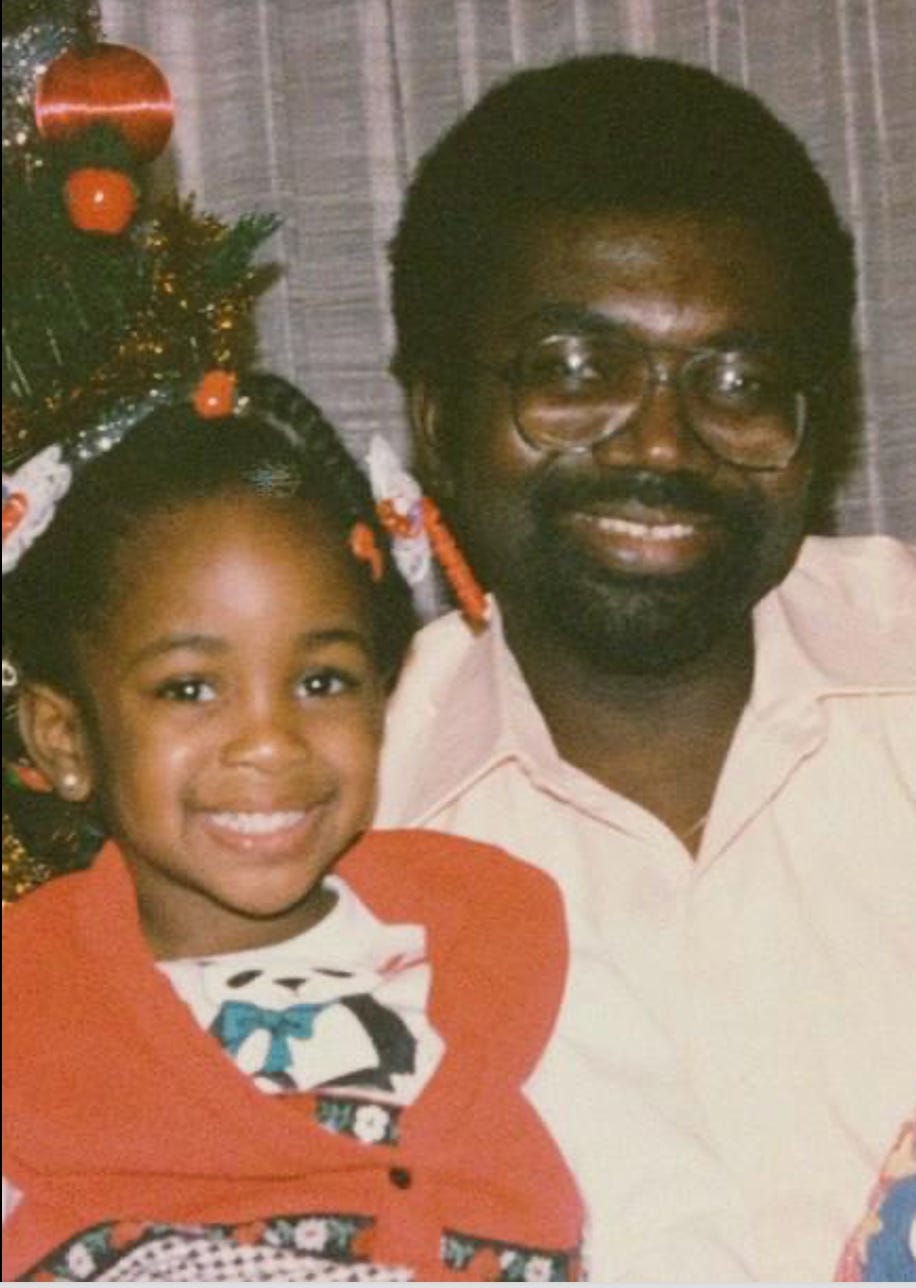
There is one bright side to this time, and it is the fact that on this Father’s Day, even though my father is recently gone, I’ve been reminded of what male nurturing looks like, with my father as a blueprint. This is not to say that the women in my life have not been supportive. But perhaps it’s no surprise that I would be especially attuned to anything that feels like paternal care— particularly in ways that remind me of my father.
Those of you who followed my work on my relationship with my father know that I loved him very much, and I know he was proud of me. I remember when I caught COVID, and was quarantining upstairs in my dad’s house. Ever the doctor, he was very worried and tried to come upstairs to check on me, but the family told him to get back down, that he was at much higher risk of COVID than I was. I remember seeing my father cry several times, at the death of his friends, and especially in recent years, he would cry when his brothers would leave after a visit. I’ve written about my father and our fig tree, and posted about how he and I would watch hummingbirds together during the pandemic. My father wanted to build a farm in Ghana, just like his father, a cocoa farmer. He died before that dream could be realized.
Lately, it's been older male friends, mentors, and spiritual guides who are coming by and checking in on me while I am sick with grief.
It is men literally feeding me, sending check-in texts, and encouraging me to keep training, writing, and creating. They’ve been telling me it’s okay to focus on myself, sending me books on grief, and in some cases, even cooking for me.
And perhaps part of the self-rebirth is the fact that I have to accept a certain form of dependence, and that my father raised me to be wise enough to know when I am weak and vulnerable and to express that.
That there is wisdom in allowing myself to receive help from fatherly figures in the aftermath of my father’s death— help I might have resisted before. And I don’t mean fatherly energy in the sense of age, or even if those men are fathers themselves. But rather, men who are sensitive enough to understand pain and wounding, and are generous enough to offer wisdom, care, and consistency during this rebirthing time of my life. My father’s death has taught me that men, should they choose to, can be father figures to others at any stage in their lives.
Of course, none of this brings my dad back. I am not trying to use people to bypass the grief or soften the reality of loneliness and social alienation.
But at least for today, grief’s sharp edge is softer. I am visiting a male friend with a place in the woods, and I am watching him mow the lawn, just like my father used to. The plan is to eat plantains and ice cream in my dad’s honor today.
I keep coming back to something my dad said. After he became sick, my dad told me years ago that I didn’t belong to him or my mother— that I belonged to the universe— I only came through him. I miss my Daddy very much. He didn’t live to give my hand away to another man in marriage, but he has passed on the idea that I belong to everyone and no one at all— not even to him.
And that freedom to be myself— that my father gave me, is the most loving thing a any girl could hope for from her Daddy.
No posts
Comments
Nothing yet. Say the first thing.
Sign in to join the conversation.