
Friends,
Today’s auction results are finally in for both the 20-year and 10-year Treasury bonds. The outcomes were largely within expectations—nothing shocking—but the broader implications are sequentially communicative depending on your specific investment goals. Whether your objective is maximizing return on investment, capturing the highest total yield, or optimizing cash flow timing across different months, determining the maximum bond tenor to purchase requires careful thought. Answering these core questions will heavily influence the strategic decisions you must make moving forward.
Before I go any further, I want to speak directly to the people at the Bank of Uganda. In February 2022, when I made my first public post about treasury bonds, retail participation in the market was barely visible. At that time, retail investors held less than 1% of all outstanding treasury bonds and bills. Today, retail investors hold close to 7%, and the share continues to grow. Retail allocations in the primary market now average over UGX 15 billion per auction, and on the secondary market, retail investors collectively buy more than UGX 30 billion every single day.
This transformation did not happen by accident. It has been driven by the persistent voices of many of us—voices I proudly count myself among—who have spent the last four-plus years creating awareness, demystifying the bond market, and pushing for broader financial inclusion.
This platform alone has played a central role in that shift. My Substack has been read by over 2.3 million Ugandans, and across YouTube, Twitter, and other channels, the conversations have consistently centered on treasury bonds, market structure, and investor education.
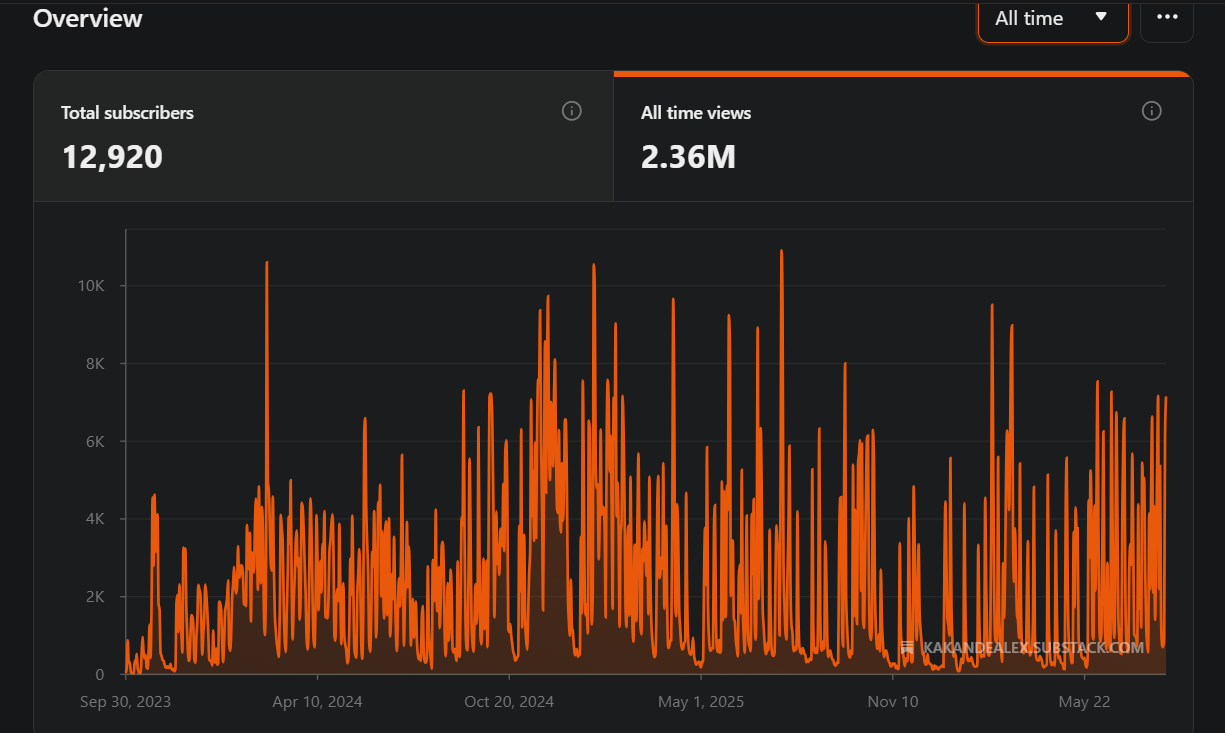
Whether some people like it or not, Kakande’s analysis has become a primary source of information for retail investors—and, yes, even for some individuals within the Bank of Uganda. The work has never been about simply announcing which bond is on auction; it has always been about deeper analysis, context, and clarity. That is what has empowered thousands of new investors to participate confidently in Uganda’s capital markets.
This is why it is disheartening to see efforts that appear to shut down or restrict the very platforms that have helped build this retail investor base. For years, we have knocked on your doors asking for better access to information—information that would help us educate investors more effectively and reduce the severe information asymmetry in this market.
Only recently had some of those doors begun to open, allowing faster dissemination of data that benefits everyone. To now reverse that progress, under the guise of protecting institutional investors or directing the public to a website that is difficult to navigate, risks taking us backwards.
My humble request to whoever is driving this decision is simple: reconsider. The private sector’s role in investor education is not a threat—it is an asset. And the growth of retail participation proves exactly that.
Turning to the specific auction results, this marked the final offering of this particular 20-year bond issue. While a 20-year tenor may return in the future (or re-emerge as a reopened 15-year or 10-year bond), Bank of Uganda will introduce a brand-new 20-year bond starting in September.
This legacy 20-year paper closed on a fair note:
Current Cut-off Yield: 15.65% (down 30 basis points from 15.95% in the previous auction).
Historical Context: Peak yields for this paper reached 17.95% during the elevated interest rate climate of 2023–2024.
Price Movement: The issue closed at a 2.4% discount, signaling a clear, continued easing of prevailing interest rates
For investors prioritizing long-term yield maximization and total return, the 20-year bond has historically been the cornerstone asset. Although its 15% coupon rate appears lower on paper than the 10-year bond’s 16% coupon rate, coupon rates alone do not tell the full story.
+-------------------+------------------+------------------+
| Metric            | 20-Year Bond     | 10-Year Bond     |
+-------------------+------------------+------------------+
| Cut-off Yield     | 15.65%           | 15.65%           |
| Coupon Rate       | 15.00%           | 16.00%           |
| Price Status      | Discount (2.4%)  | Premium (8.5%)   |
+-------------------+------------------+------------------+
The 10-year bond also came out at a cut-off yield of 15.00%. However, because of its higher fixed coupon rate relative to current market yields, buyers in this auction paid a significant 8.5% price premium.
If your core goal is long-term profit maximization, the 20-year paper remains the superior choice. However, if you already hold sufficient exposure to the 20-year paper—which pays interest in January and July for the near term—the 10-year bond serves as an excellent portfolio diversifier for investors seeking income streams aligned with different payout months.
Long term, a bond with a higher coupon rate is almost always more attractive than one with a lower coupon—especially when you plan to sell it before maturity. The advantage of holding a high‑coupon bond becomes obvious in the long term: when the time comes to sell, you are likely to attract a much better price.
For example, if you buy a 10‑year bond at a 15% coupon and the market is offering a 16% yield, fast‑forward five years—your bond will have about six years left. If buyers in that future market are demanding a 13% yield to maturity, your high coupon will make your bond significantly more valuable. The relationship between coupon rate, yield to maturity, and cut‑off yield is technical, but it is precisely what determines how much you earn when selling your bond.
This brings us to what the recent auction signals about the upcoming August 29th sale, where the Bank of Uganda will offer the 15‑year and 5‑year bonds. This will be the final auction of the current 15‑year bond structure before the new cycle begins.
The key lesson from recent auctions is that interest rates are easing. The Bank of Uganda and the Ministry of Finance are clearly committed to pushing yields down. Look at the numbers: in the latest auction, BoU offered UGX 430 billion on the 20‑year bond but received UGX 861 billion in bids—rejecting more than UGX 400 billion. On another tranche, they received UGX 949 billion and still rejected over UGX 500 billion. In total, more than UGX 900 billion was rejected. That is a deliberate signal: Uganda will borrow, but it will not take expensive debt. This disciplined stance is exactly why yields are trending downward.
So when September arrives, do not be surprised if the cut‑off yields—which become the coupon rates—land somewhere between 14% and 15%. My current projection is 14.5% to 15.5%. We have seen this pattern before. When BoU introduced the current 25‑year bond, market rates were as high as 17.95%. The first auction of the 15‑year bond cleared at 17.65%, giving buyers nearly a 9% discount. Meanwhile, the 25‑year bond—despite its higher term risk—cleared at 16%, which became its coupon. In hindsight, anyone holding that 25‑year bond today knows it was an excellent investment.
As BoU prepares to introduce the new bonds in September, remember: this is a period of rate normalization. Expect lower cut‑off yields. Expect more bonds to be issued at a premium.
Happy investing, everyone.
Alex Kakande
Comments
Nothing yet. Say the first thing.
Sign in to join the conversation.