

I am writing to share an update on the progress of my dissertation research on the history of the field of Black Psychology. This missive captures highlights from my recent research trip from Northern to Southern California where I visited a number of archival repositories, institutions of higher learning, and sites in Black communities relevant to my project. This trip involved flying into San Francisco, spending some time in the East Bay, and then driving down the coast to Southern California by way of Big Sur. But before I share those highlights, I want to comment on some of the nuances of how and why historians use archival materials, and why it matters that my research itinerary grew to encompass a more diverse array of sites.
As a note to the uninitiated, historians consult archival collections that contain various unpublished historical documents to help us produce novel interpretations of the past. These documents range from the records of a given organization; to the personal journals and financial records of an individual; to ephemera such as flyers, playbills, and ticket stubs. In my previous post about my work on the Harvard and Legacies of Slavery Initiative, I commented on how analyzing the wills and marriage records of key historical actors was instrumental for clarifying precisely when and how capital derived from conditions of enslavement flowed into the coffers of Harvard Medical School during its early years. Confirming facts of great historical import would not be possible without the ability to consult such records (and this is part of why the present assault on archives and libraries is so chilling and must be arrested). However, historians’ privileging of archival materials over generations of scholarship has led to internal debates about the limitations of this approach.1 These limitations are multiple but include the fact that records must be deemed worthy of long-term preservation in an archival repository to be discovered by historians years, decades, or even centuries later. This attribution of value (or lack thereof) begins first with the record holder himself and then any number of other actors who encounter the material. In short, which records are saved and the types of information the record was designed to capture in the first place so often bear the mark of lopsided power differentials. As a result, the records preserved and thus available to historians today are unduly shaped by the agendas and subjectivities of the record holders (and other powerful actors), producing a seemingly endless array of gaps in what can be known about marginalized actors using archival evidence. This pervasive problem in historical scholarship has become known by many names, including the problem of archival silences.2
It must be said that these methodological limitations do not negate the value of archival sources, but instead point to the urgency of expanding our interpretative skills and considering research methodologies that offer additional forms of evidence. This is reflected in the work of historians of antebellum slavery such as Saidiya Hartman, Stephanie Smallwood, and Walter Johnson who have pioneered innovative ways of reading their archival sources against the grain. In so doing, they have crafted narratives that reconstruct enslaved historical actors beyond the limited terms in which they appear in so many of the available archival sources. In the case of Johnson, this can look like going beyond a superficial reading of a slave owner’s journals and other materials to harvest evidence of enslaved people’s agency, interior lives, and motivations that they acted upon even under duress.3 In the case of Smallwood, this can also look like mobilizing knowledge of African cosmologies from the field of religious studies to enlarge our understanding of enslaved people’s subjective experiences of high mortality rates at sea while oft-studied records from the Royal African Company merely tabulate the sum of individuals lost on their ships during the Middle Passage.4
As I develop my dissertation—the first historical treatment of the development of the field of Black Psychology—consulting archival repositories, conducting oral history interviews, and reading them with the expansive critical spirit noted above are central components of my research methodology. However, I have also come to employ additional research methods to address various questions that now confront me.
At various junctures in the course of developing this project so far—including my public dissertation prospectus presentation—I have been tasked with defending the significance of the Black Psychology movement for the history of science to skeptical colleagues. Though there is much to unpack in these dynamics that is beyond the scope of any single dissertation (e.g., the intellectual ramifications of ubiquitous racism in general and antiblackness in particular), one of my tasks in this project is to help clarify the impact of the field of Black Psychology at the level of scholarly discourse. One common way to do this in my field is to quantify the degree to which my historical actors’ scholarly writings have been cited by other academics. Though I will not address my findings here, this component of my research has been quite revealing and I look forward to sharing it in my published work.
As valuable as citation network analysis has been thus far, relying only on that approach would fail to capture the impact of the Black Psychology movement in various arenas on the ground where it has touched countless lives. This concern kindled my interest in exploring the legacy of Black Psychology that is uniquely perceptible from the vantage point of spaces like Black bookstores, public libraries in Black neighborhoods, and Black businesses in the commercial marketplace. On my recent trip to and through the state of California, I made various seeming detours to seek out some of these important forms of evidence and experience.
As I visited these places and others over the course of my journey down the California coast, a central question that I considered was how the culture and terms of a particular space enable, encourage, and/or foreclose the development and transmission of certain types of knowledge. In other words, what are the kinds of questions that are thinkable and utterable within some spaces but not others? What are the broader consequences of these divergent geographies of knowledge for what we know and do not know?
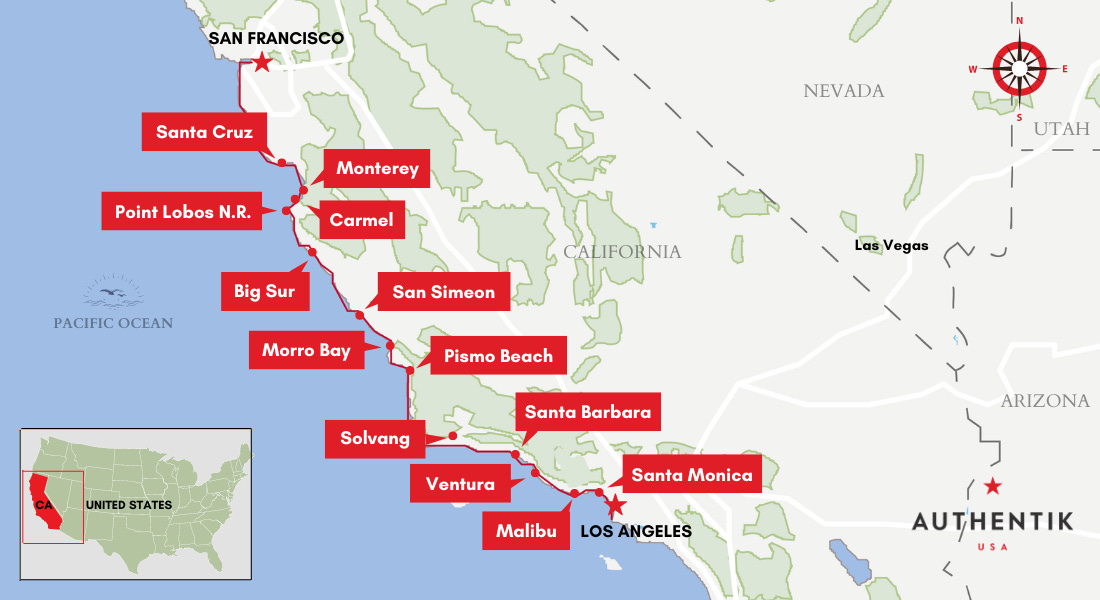
My task on this journey through California was to derive as much insight as possible from the archival collections on my itinerary while also charting what might appear to be detours into environments that I hoped could clarify the multiple meanings and impacts of Black Psychology beyond what can be readily quantified. Along the way, I also had the opportunity to traverse some spaces that, though seemingly tangential to my dissertation research, offered further insights into the history of psychology and the role of place in shaping the development of knowledge as we know it.

Comments
Nothing yet. Say the first thing.
Sign in to join the conversation.