

There is a distinct cinematic devotion that only flares up when love, survival, and the macabre collide. While mainstream Pride lists often stick to safe, polite romances, my favorite type of films is sapphic passion on screen, which is frequently so intense and high-stakes that it naturally spills over into the territory of the thriller-horror spectrum.
These eight carefully curated "Old School Blueprint meets New Wave Descendant" double-features track exactly how classic queer counter-culture directly influenced the DNA of modern, stylized genre powerhouses. Grab the popcorn and let’s have a happy Pride!
The Lineup
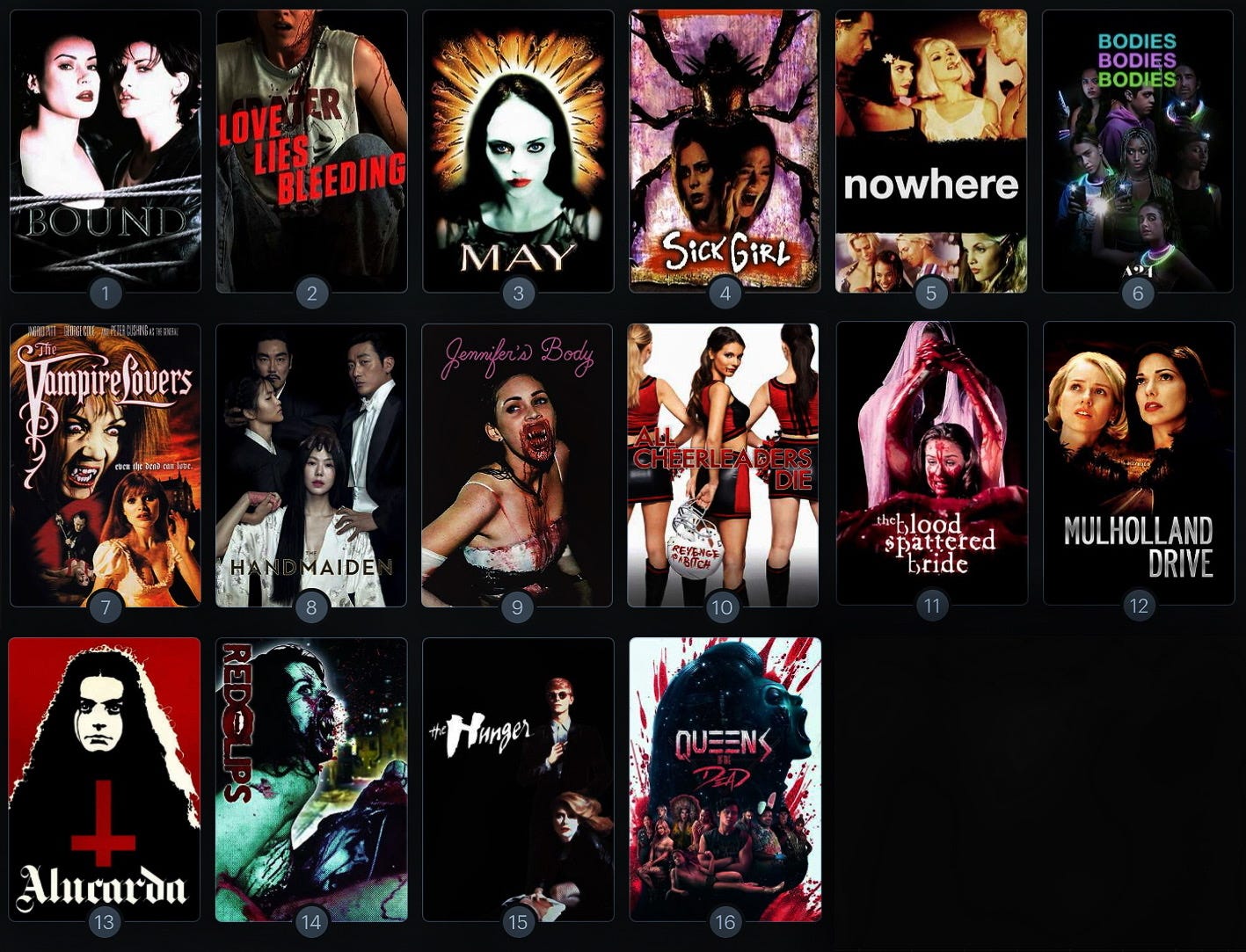
High Stakes Devotion
Bound (1996) - dir. The Wachowski Sisters
Love Lies Bleeding (2024) - dir. Rose Glass
Perfect if you like: pulpy neo-noir crime, escaping confinement, suffocating tension, ride-or-die loyalty
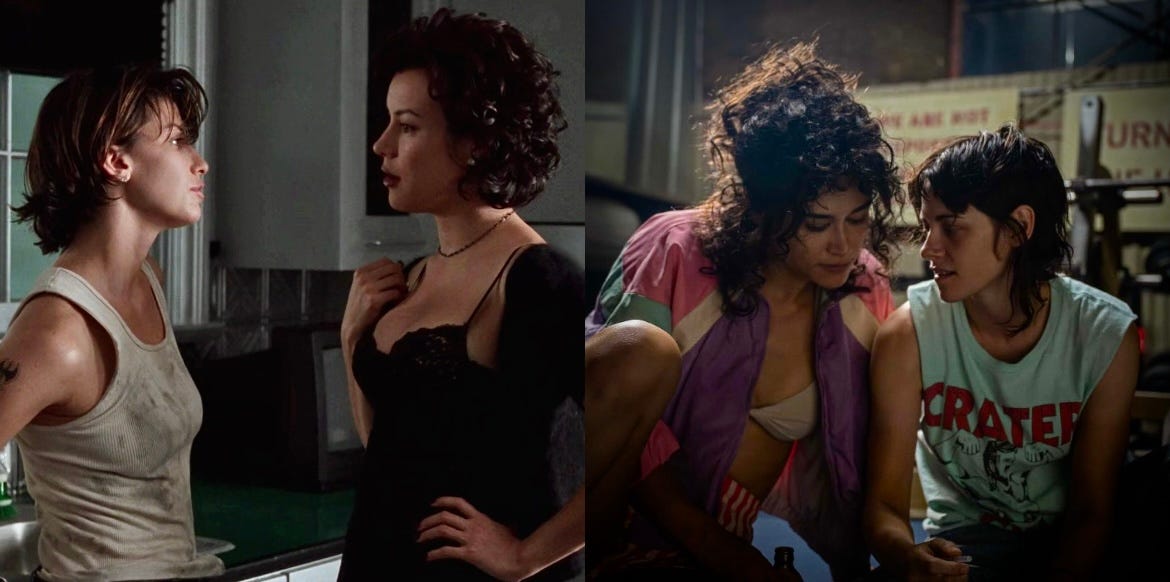
Despite their different positions on the timeline, both Bound and Love Lies Bleeding subvert traditional crime tropes by placing an intense, unbreakable sapphic pact at the center of a violent underworld. Bound functions as a masterclass in classic neo-noir, employing a slow-burning, claustrophobic apartment setting with razor-sharp tension and a heist built on mutual trust. The Wachowskis' film acts as a homage to classic pulp fiction while injecting a revolutionary sense of queer agency. Love Lies Bleeding presents a more modern, unhinged escalation, shifting the landscape into surrealist body-horror and steroid-fueled chaos. Rose Glass embraces a hyper-stylized approach that explores the distortion of American dreams, extreme physical transformation, and the lengths to which devotion can mutate. Pairing these films together highlights how raw, street-smart loyalty can weaponize itself against predatory men, offering a thrilling look at love with plenty of grit to chew on.
Anatomy of Isolation
May (2002) - dir. Lucky McKee
Masters of Horror: Sick Girl (2006) - dir. Lucky McKee
Perfect if you like: eccentric apartment nightmares, left-of-center outcasts, visceral body horror, uncomfortable indie humor
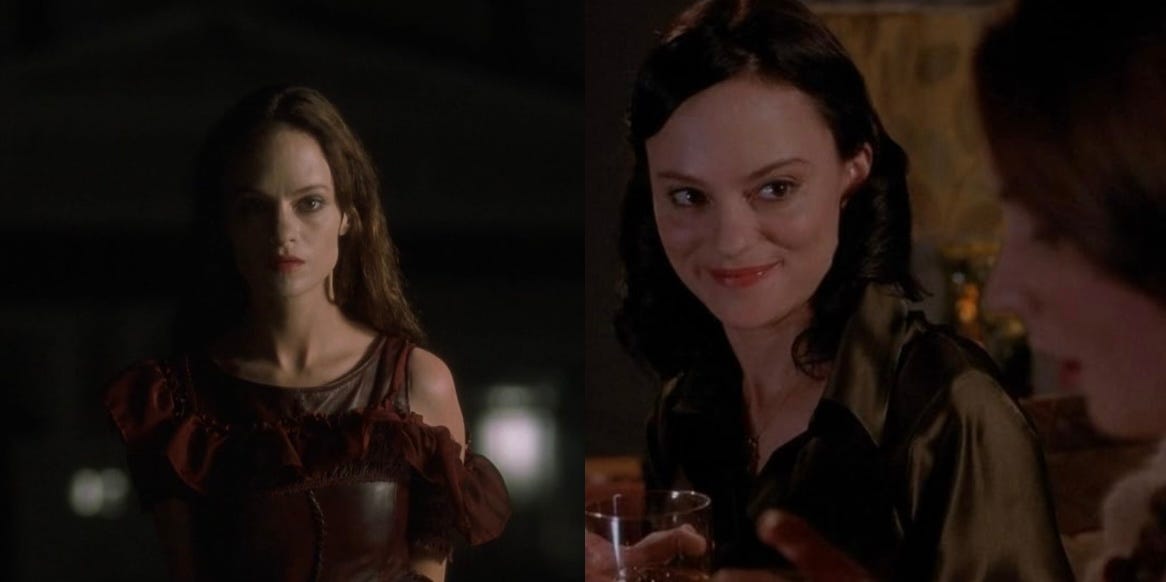
Both Sick Girl and May function as deeply tragic, darkly comic character studies that use the visceral language of body-horror to examine extreme social isolation and the desperate human need for intimacy. Sick Girl operates as a quirky, claustrophobic monster movie, tracking a socially awkward entomologist whose domestic life transforms into a grimy, physical nightmare after an exotic insect enters her apartment. Lucky McKee infuses the short film with an uncomfortable, indie humor that masks a genuine tenderness between its eccentric leads. May takes this theme of loneliness to its logical, devastating conclusion, focusing on a detached young woman who decides to literally stitch together the perfect companion from the body parts of people around her. It is an indie masterpiece that balances pitch-black comedy with staggering vulnerability. This double bill dives deep into the psychology of the outcast, treating physical mutations and surgical horrors as the ultimate, heartbreaking expressions of lonely devotion.
Acid-Pop & Apocalypse
Nowhere (1997) - dir. Gregg Araki
Bodies Bodies Bodies (2022) - dir. Halina Reijn
Perfect if you like: claustrophobic paranoid satires, cynical youth culture, existential dread, neon-fueled chaos
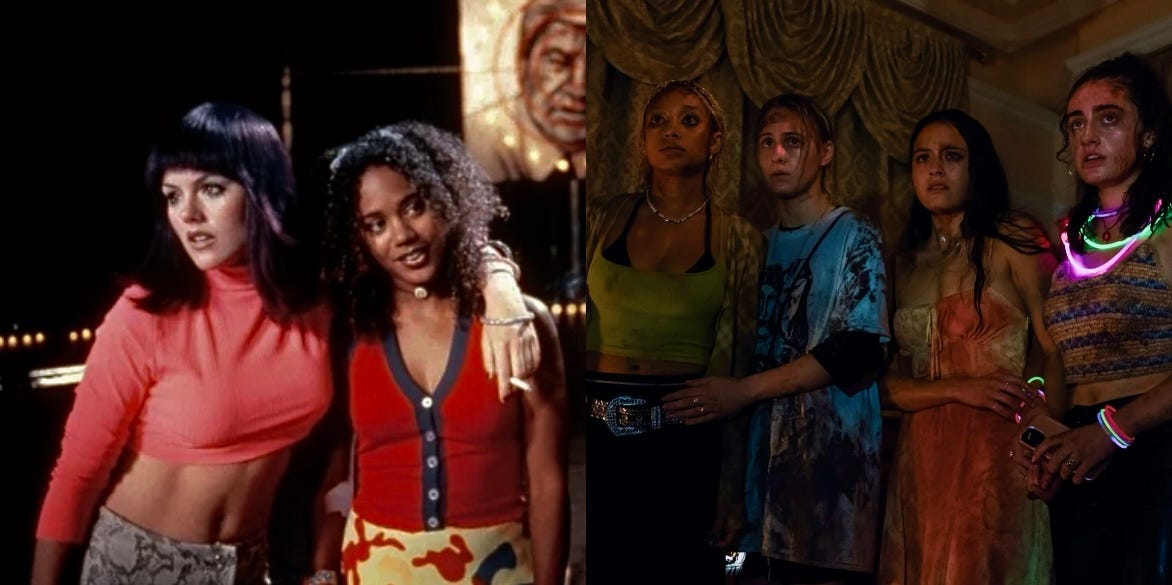
Though separated by a quarter-century of technology, both Nowhere and Bodies Bodies Bodies weaponize youth-culture vanity to explore deep-seated existential dread and social alienation. Nowhere functions as a neon-soaked, apocalyptic daydream, capturing the disorienting, drug-addled slacker nihilism of 90s Los Angeles. Gregg Araki's film is an avant-garde midnight-movie staple, using extreme camp, alien abductions, and fluid pansexuality to mirror the chaos of a world sliding into the void. Bodies Bodies Bodies grounds that same generational paranoia in the digital age, shifting the location to a mansion lockdown during a hurricane. Halina Reijn delivers a rapid-fire, claustrophobic whodunit that satirizes modern internet terminology, self-absorbed privilege, and the fragile nature of contemporary friendships. Screening them together offers a fascinating study in generational panic and shifting identities, proving that when the world outside turns terrifying, the defensive bonds formed in the dark are the only things that feel real.
Bloodlines & Gothic Lace
The Vampire Lovers (1970) - dir. Roy Ward Baker
The Handmaiden (2016) - dir. Park Chan-wook
Perfect if you like: aristocratic deceptions, opulent period-piece aesthetics, heavy psychological manipulation, subverting a controlling patriarch
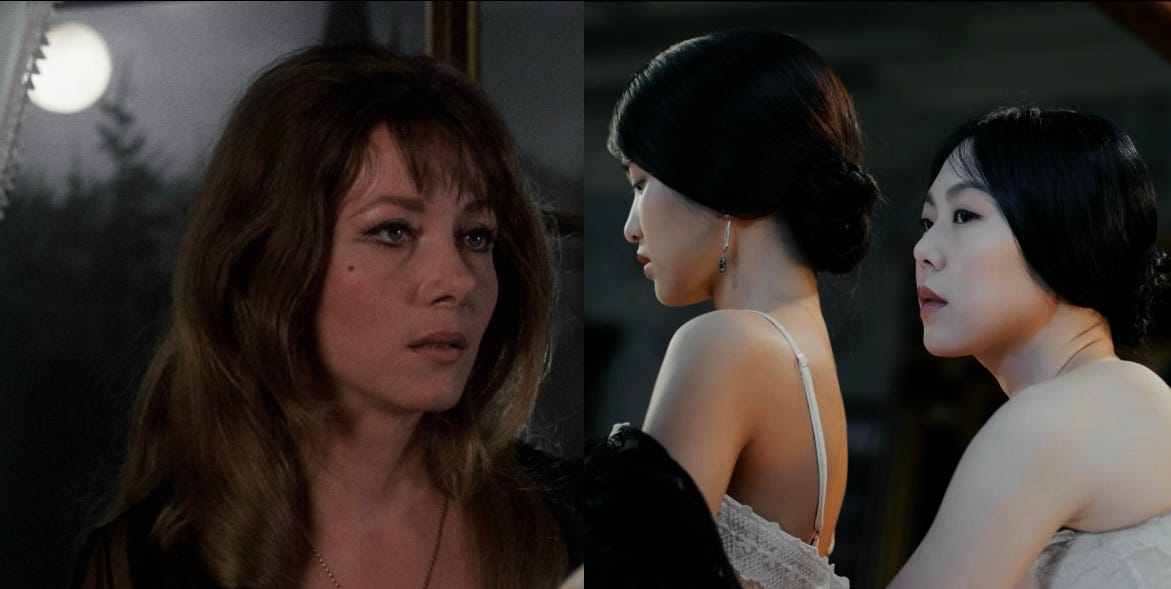
Despite operating in completely different cultural and cinematic landscapes, The Vampire Lovers and The Handmaiden both masterfully subvert the gothic romance by turning a deceptive home invasion into an awakening of genuine passion. The Vampire Lovers serves as a classic Hammer Horror production, offering a lush, atmosphere-heavy adaptation of J. Sheridan Le Fanu’s Carmilla that thrives on period-piece opulence and supernatural seduction. It frames the sapphic bond as an ancient, inevitable threat to traditional family lineages. The Handmaiden transposes this gothic house-trap architecture to 1930s Korea, presenting a complex, multi-layered psychological thriller built around an elaborate con game. Park Chan-wook utilizes a meticulously framed, puzzle-box narrative that explores class dynamics, voyeurism, and the absolute destruction of a tyrannical patriarch's control. Combining these films reveals a shared fascination with hidden corridors, historical deceptions, and the liberating power of a shared secret.
Succubus Squads & Teen Carnage
Jennifer’s Body (2009) - dir. Karyn Kusama
All Cheerleaders Die (2013) - dir. Lucky McKee, Chris Sivertson
Perfect if you like: anti-patriarchal revenge pacts, razor-sharp dialogue, supernatural cheerleaders, literal boy-eating vengeance
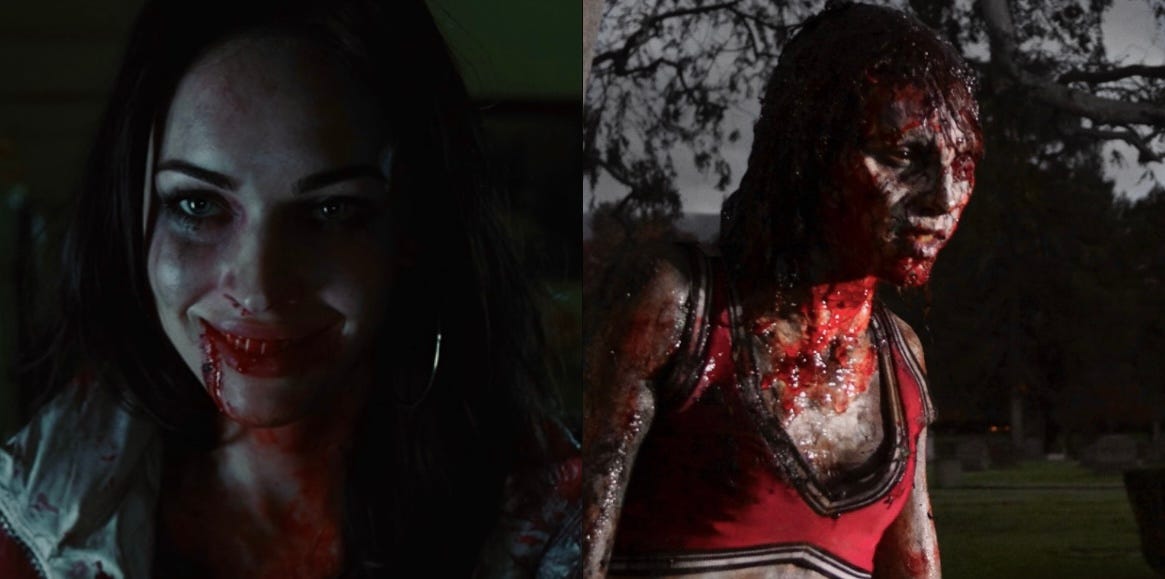
Operating on high-octane camp and sharp social satire, Jennifer’s Body and All Cheerleaders Die completely rewrite the rules of the high school slasher by turning female victims into supernatural executioners. Jennifer’s Body acts as a modern cult classic, utilizing Diablo Cody’s fast-talking, stylized dialogue to anchor a literal boy-eating demon narrative that dissects the toxic, suffocating nature of adolescent female friendships. It is a brilliant subversion of early-2000s commercial horror templates. All Cheerleaders Die offers a more chaotic, multi-character spin on the concept, introducing occult resurrection, body-swapping, and a literal cheer squad pact. Lucky McKee and Chris Sivertson take a fast-paced B-movie approach that tackles teenage bodily autonomy and the total dismantling of toxic jock culture. Double-billing these features explores the unhinged, protective instincts of young women when pushed to the absolute edge, delivering a loud, blood-soaked antidote to patriarchal high school dynamics.
Shifting Identities & Gothic Echoes
The Blood Spattered Bride (1972) - dir. Vicente Aranda
Mulholland Drive (2001) - dir. David Lynch
Perfect if you like: surreal psychological thrillers, dream-state logic, fractured timelines, haunting subconscious fantasies
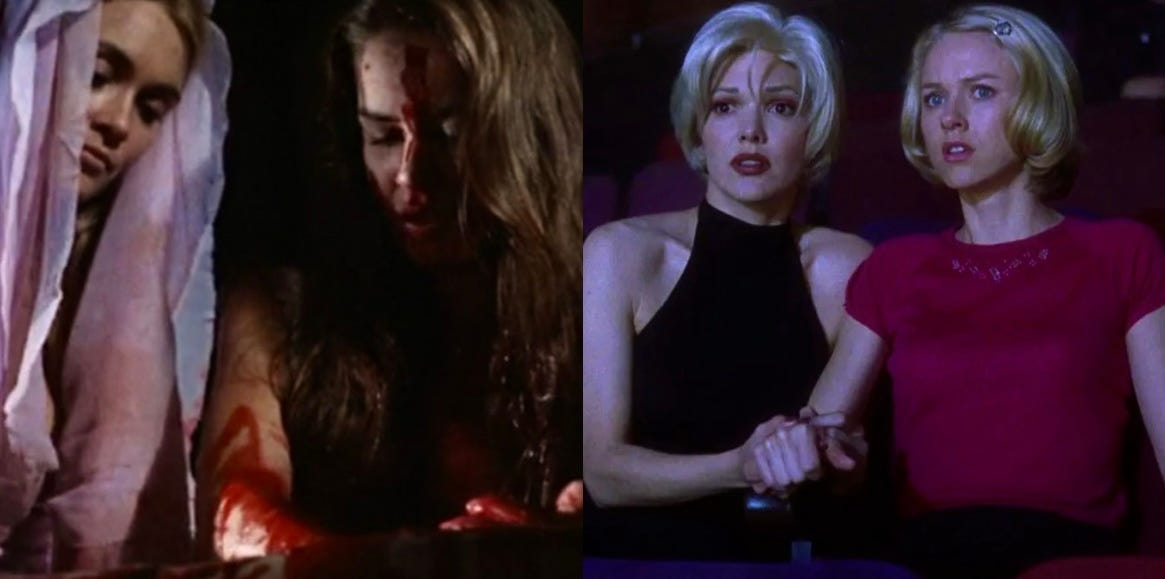
Thriving on heavy subconscious symbolism and fractured realities, The Blood Spattered Bride and Mulholland Drive completely abandon conventional logic to map the terrifying terrain of identity loss and repressed desire. The Blood Spattered Bride stands as a legendary piece of Euro-horror, blending historical trauma with hallucinatory dream-logic as a repressed newborn wife becomes transfixed by a dark-haired, centuries-old entity. Vicente Aranda's film uses a decaying estate and violent fantasies to explicitly attack the prison of traditional marriage. Mulholland Drive modernizes this dream-state architecture, shifting the location to a surreal, noir-drenched Hollywood landscape where a naive blonde aspiring actress is drawn into the orbit of an enigmatic, dark-haired amnesiac. David Lynch crafts a haunting, labyrinthine psychological thriller that explores Hollywood deceptions, doppelgängers, and guilt. Watching these back-to-back shows how the classic architecture of the lesbian vampire myth directly mutated into the ultimate modern nightmare of fractured self-image.
Sacrilege & Celluloid Grime
Alucarda (1977) - dir. Juan López Moctezuma
Red Lips (1995) - dir. Donald Farmer
Perfect if you like: midnight movie deep cuts, transgressive low-budget aesthetics, erotic gothic vampirism, aggressive subversions of traditional rules
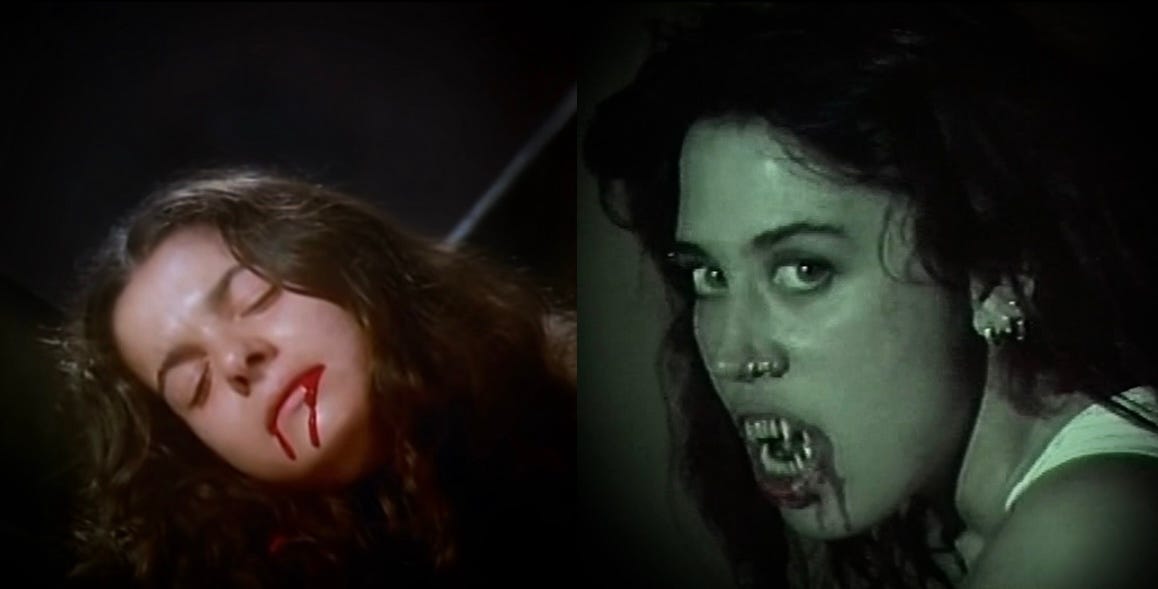
Anchored by pure midnight-movie aesthetic texture and a total refusal to play by mainstream rules, Alucarda and Red Lips celebrate the absolute subversion of religious and societal containment. Alucarda stands as a towering achievement in Mexican folk-horror, employing a breathless, sacrilegious atmosphere filled with roaring flames, convents, and demonic possessions. Juan López Moctezuma channels an aggressive, transgressive energy where the intense bond between two orphaned girls completely burns down the oppressive, religious world around them. Red Lips channels a cooler, art-house erotic thriller energy, leaning heavily into the grainy, experimental VHS-era European exploitation lineage of Jess Franco. It utilizes dream-state pacing, voyeuristic framing, and low-budget grime to follow two female detectives navigating a surreal criminal underground. Pairing these deep cuts offers an uncompromising look at cinema operating far outside the studio system, using heavy atmosphere and untamed sapphic power to completely shatter conventional genre boundaries.
Goth Nightlife & Fatal Glamour
The Hunger (1983) - dir. Tony Scott
Queens of the Dead (2025) - dir. Tina Romero
Perfect if you like: strobe-lit outbreaks, late-night queer club scenes, women-centric resilience and power, stylistic approaches to horror
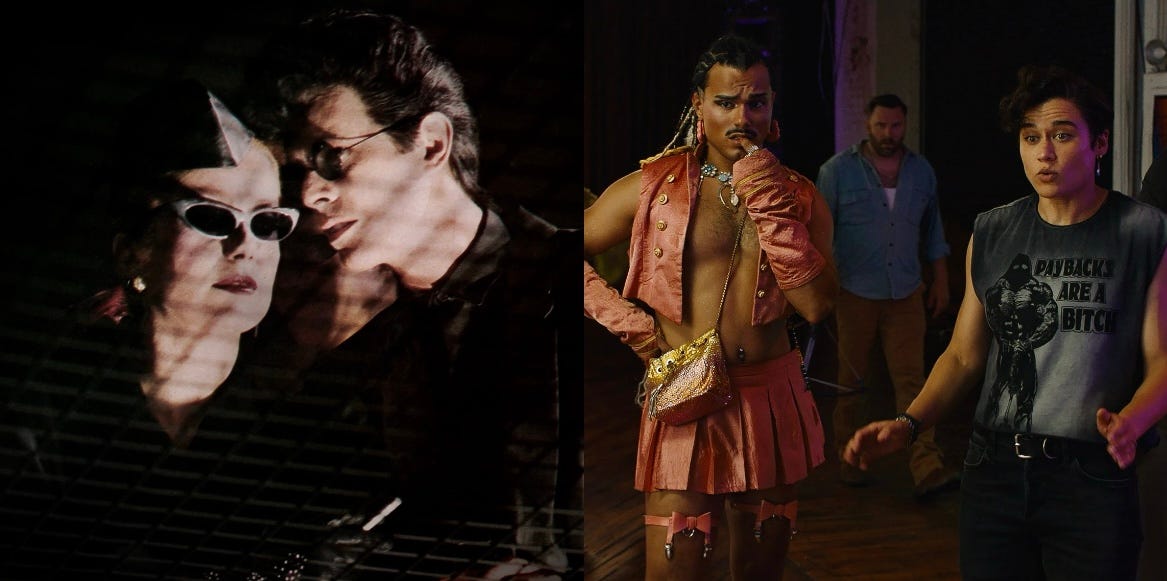
Bridging the gap between Euro-goth elegance and modern warehouse grit, The Hunger and Queens of the Dead utilize alternative nightlife as both a visual playground and a sanctuary for social outcasts. The Hunger reigns supreme as an aesthetic triumph of the 1980s, employing a cold, high-fashion vampire mythology draped in smoke, leather, and classical music. Tony Scott's feature explores the timeless, lonely burden of immortality and the seductive, consuming nature of sapphic desire. Queens of the Dead updates this nightlife-centric horror by dropping the audience directly into a strobe-lit Brooklyn drag event under siege. Tina Romero embraces a high-energy, fast-paced zombie outbreak narrative that focuses on community survival and underground resilience. Pairing these two films tracks the fascinating evolution of the queer club space in genre cinema, moving from an isolated, elite mansion hideout to a loud, collective fortress of communal defense.
Ultimately, horror has never required queer stories to be polite, pristine, or safe. The genre works best when it’s operating in the margins, using monsters, crime sprees, and dream-logic to map the sheer, world-altering gravity of intense sapphic devotion.
These eight double bills prove that the lineage of lesbian and bisexual storytelling in genre cinema isn’t a modern invention: it’s an inheritance. The underground filmmakers of the 70s, 80s, and 90s laid a gritty, uncompromising blueprint that today’s creators are eagerly mutating and rebuilding into an exciting new wave of cinema.
So this June, let’s all skip the sanitized blockbusters and embrace the grime. I hope everyone has a beautiful, blood-soaked lesbian Pride! 🏳️🌈
- your favorite Dominican lesbian <3
Comments
Nothing yet. Say the first thing.
Sign in to join the conversation.