
“How does a Bastard, orphan son of a whore
And a Scotsman, dropped in the middle of a forgotten spot in the Caribbean
By providence, impoverished, in squalor, grow up to be a hero and a scholar?”
Leslie Odom Jr emerges onto the stage of the Victoria Theatre having reprised his infamous role as Aaron Burr in Hamilton the musical. His presence and voice resplendent. The audience members go wild. We have come out on a Monday night at great expense to be immersed in the craft, the artistry, the experience of a performance which brings a story of the American founding to life.
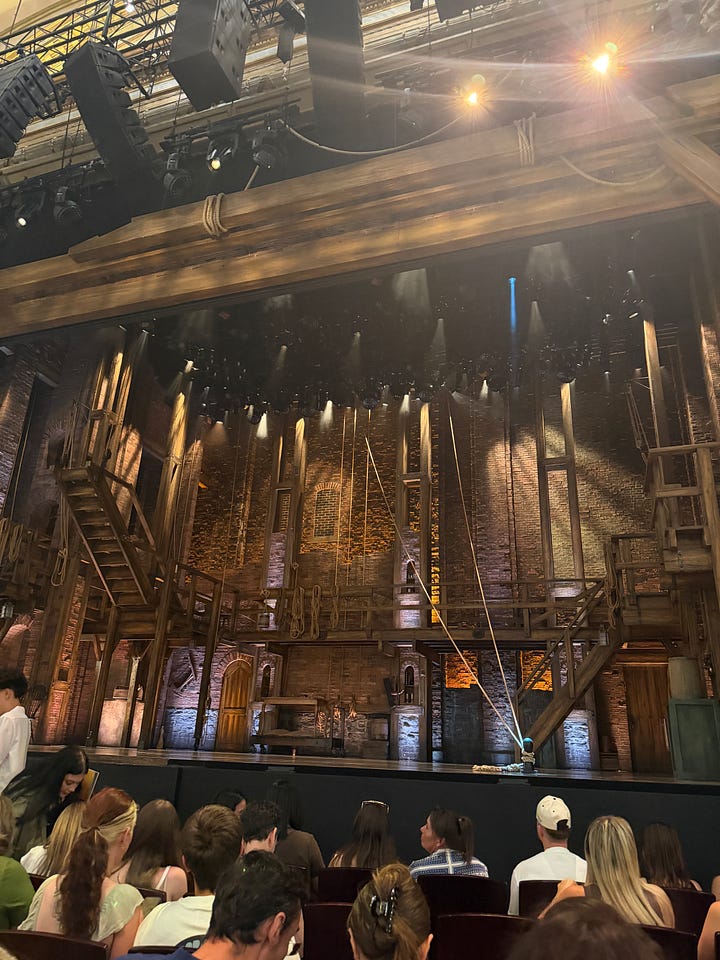

Laughter, tears, and complete and total attention is paid to the actors upon the stage. Each embodies their character completely, their efforts visible from the stalls as they don heavy coats and costumes, dancing and singing with such flare as the light heated stage leaves shining beads of sweat upon their brows. Each has spent their lives dedicated to pursuing this opportunity. They have fulfilled the dream of so many young actors who wish for nights just like this.
I, myself, have never been a performer. I participated in the Nutcracker as a child and was on Stage Crew in high school but this craft isn’t touching because I have a long-standing history in the arts. Yet, I have been frequenting plays, musicals, symphony performances, ballets, and various performances throughout my life, appreciating and financially supporting the artistry of others.
There is an evident lack of enthusiasm and love for art, reading, history, music, and performance which plays out in online spaces nowadays. Support (public, private, and personal) is deemed an unworthy expense. A luxury. An expression only engaged in by elitists and intellectuals.
The performances I remember most were not those which cost the most. They were the “Shakespeare in the Park” summer plays, the charity symphonies hosted at the community college, or the musicals put on by the local high school. Art which has left a lasting impression were works I saw at a public gallery which is free to the public and school groups. Perhaps it isn’t the cost. Instead this distaste for the arts and humanities spells a more sinister undercurrent.
The arts and an appreciation for, I would argue its adjacent field, the humanities has been branded “elitist” by those who wish to sell consumers a reality and forms of entertainment that line their own pockets. Yes, the very same people who are tearing, scanning, and destroying our books and claiming critical thinking and an appreciation of the arts to be a luxury are the very same people who say AI is inevitable. That the pursuit of agentic artificial intelligence and colonizing mars is a more worthy cause than reducing our contributions to climate change, educating the next generation or supporting the preservation of human ingenuity and history.
I digress.
As I sit in my seat, surrounded by theatre goers who delight in the craft as I am, I have a thought: There is no greater investment of my time, financial resources, or attention than supporting art forms which I love and hope will endure the test of time. But investment isn’t enough. Nor is writing an article stating all of the reasons we should preserve the arts and humanities. In essence, the arts and humanities cannot save themselves from its supporters continually playing defense. Instead, we must start taking an offensive/active position to support, uplift, and promote this craft.
I am a Historian, a lover of the arts, and a strategic marketer who has helped to scale some of the largest education channels on Youtube. I have spoken at professional humanities organizations, non-profits, university departments, and worked directly with scholars within and outside of academia to provide trainings on social media communications. There remains one commonality among all of these institutions: bad PR (public relations).
Sure these organizations, institutions of higher education, and individual scholars maintain Instagram pages. Some send out occasional emails to their mailing list. A few have even migrated to Substack. Few (and I mean most) lack the strategic and online communication skills to drive genuine impact beyond the conference hall or classroom. We, as a collective, lack the ability to compete in the attention economy not because we are not capable, we have simply been apathetic and complacent in our fates. Those who are seeking to change the conversation, however, are left trying to stop our “ship” from sinking with spoons and ladles. It isn’t enough.
The truth is: Scholars and artists are competing with the PR machine which is made up of AI companies, conservative political pundits, anti-intellectuals, and the multitude of random internet nonsense. Our lack of planning and proactive execution has been the reason we have continuously been on the back-foot and lack talking points to combat our opposition. We have a common enemy but no common cause. It’s time that changes.
So what am I asking? In short, for us to stop playing small and scared.
I am also asking you to be bold and courageous.
What I am proposing is a three part action plan to not simply defend the arts and humanities but to promote it using the very tools which has, up until now, left us marginalized in online and communal spaces.
Let’s begin.
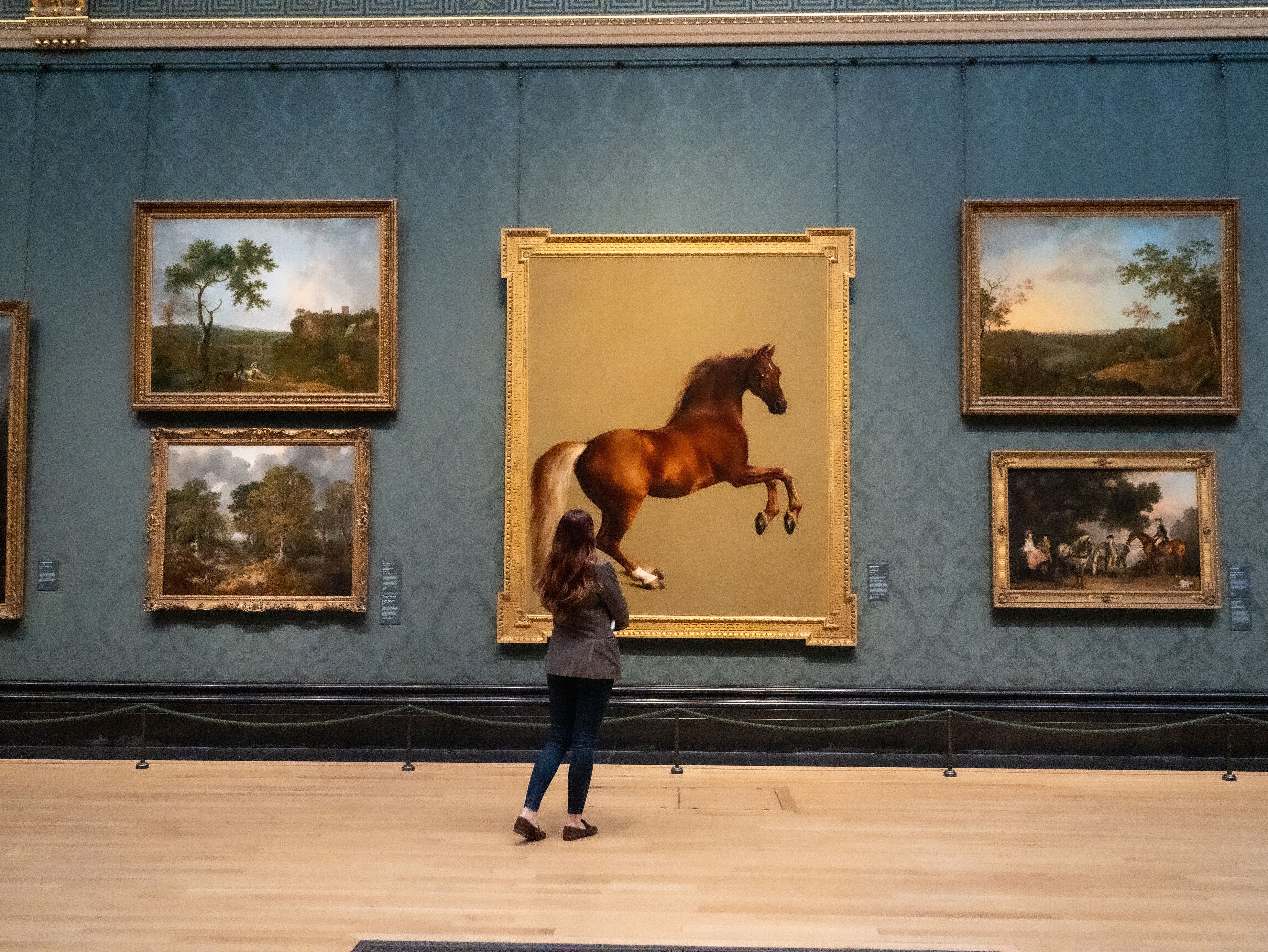
Barclays reports that the average consumer in the UK spends around £50.60 per month on online streaming platforms. And “Deloitte’s 2025 Digital Media Trends survey found the average American pays for four streaming services at a combined cost of $69 per month.” That’s a lot of money being spent on Netflix, Disney+ and other entertainment platforms. And sure, the comparison seems like apples and oranges when its the end of a long week and you want to seek out some entertainment. Yet, our money IS being spent on media, arts and advertising while the arts continue to suffer. So I ask: if we are to invest in entertainment, why not prioritize a night out to a local theatre production or to spend a day browsing the latest exhibitions at the local city museum?
Humanities scholars and Artists need to make the act of supporting and engaging in our work fun, entertaining, and enjoyable. This starts with our own intentional decisions and the type of media we consume. It may sounds silly but when Shae O. claimed that reading a physical book in public is an act of resistance, she was right. It is one example and one simple display of demonstrating a commitment to literature. And sure, some may call this performative but if someone is sitting their actually reading a book over looking at their phones, I’ll take it. But go a step further. Instead of promoting and discussing the upcoming blockbuster film or the most recent Bridgerton drop, amplify upcoming arts exhibitions, plays, or public lectures. It isn’t that the arts and humanities doesn’t have anything to provide as a source of entertainment, people just don’t know about it!
Consider yourself a walking advertisement for the arts and humanities; a small-scale influencer if you will. Someone who has the potential to encourage those around you to make an active decision to support and promote the work we hold dear. Get your friends and inner circle on board. Go to a theatre production instead of the cinema; attend a lecture at the local university instead of going out for drinks. We need to rebuild an intellectual culture which envisions art, history, music, performance, and philosophy are outlets for community. This starts with us and must radiate outwards.
When “The End of Reading is Here” by Rose Horowitch hit the “newstands”, responses erupted across my YouTube discovery feed. Video essayists, booktube and authortube creators, and others weighed in to discuss “reading as luxury”, the literacy crisis, and celebrity book clubs. I was within an echo-chamber of my own making, listening to repeated iterations of the same argument, but upon reflection, I became aware that scholars and others I would term “intellectuals” remained silent. For those that did speak up, very few offered their perspectives as humanist scholars. This was a lost opportunity and one I fear was an indication of the very predicament we find ourselves in.
The internet is full of opinions, informed and uninformed. Very few add further depth to the discussion; they simply amplify the talking points or dramatic inflections of the primary source. Humanists are trained to weigh primary sources and texts against the scholarly discourse and theories which exist as lenses and perspectives by which to comprehend a subject.
This alteration in perspective, a shift in the framework by which we interact with a subject is sorely needed in today’s public discourse. And it isn’t just one type of scholar! We need humanists who specialize in folklore, early modern print culture, Egyptian papyri, etc. in order to unpack discussions in a way that is not just enlightening but entertaining. Scholars need to become public educators.
The time of hiding away in the library is past.
We must take up the mantel as educators, not just researchers, to provide informed, peer-review cited, and critically analyzed perspectives from which the public can gain insight.
I urge you to think back to the moment when the teachings of critical analysis clicked. When reading a text stopped being about entertainment and, instead, shed light on a new insight or finding.
For me, my introduction to historical analysis came in the form of reading loyalist pamphlets and patriot pamphlets from the onset of the American Revolution. The professor asked us to read and analyze each primary source and then historicize it. How was it printed? Who had access to it? How was it disseminated? How did the language speak to either the loyalty to King and Country or to “Liberty”? Who wrote it?
Before, I believed history was simply a set of facts. It was the training I received in seminar which gave me a whole new set of questions and curiosities by which to view the world around me and conduct research.
We should be able to do the same for the curious public. Sure, doing so won’t change everyone’s mind. In fact, we are likely to receive push-back. We should do it anyway. Because if we could get even one person to begin thinking more critically, to pick up a book or engage their peers in intellectual discourse, wouldn’t that be worth it?
Social media is a tool; and a useful one at that. However, social media and making our profession accessible to a vast public should not draw away our attention from our responsibility to communities closer to home.
Lectures on Tap, Pub Lectures, Book Clubs, Museum Seminars and other intellectual third spaces are popping up throughout major cities across the world. They offer lectures from academics and independent scholars, authors, and artists; encouraging members of the public to engage in intellectual discourse at their local museums, libraries, cafes, etc. Yet, many of these events are known due to their number of attendees, social media posts, and events listings. They occur in epicenters of “culture” amid the urban sprawl but what of the rural communities? Who is going out and staking out a space for intellectual inquiry in the small villages and towns?
Intellectuals do not just exist in cities. We live across vast geographies and often decry our own lack of access to intellectual community (i.e. a space by which to discuss ideas). We look to the university or to someone else to make the space, thus forgetting the power we have to create those spaces ourselves. We must become the providers, the facilitators.
Begin hosting a Book Club or discussion group once per month at the same location. It can begin with you and one friend. From there, invite others. The number of attendees isn’t the point. The goal is to create a safe, welcoming environment in order to discuss, debate, and challenge ideas. You can center the discussion around a book, a film, or even just an article. Each member brings their own pre-conceived notions and expertise. This is not a space to lead or dominate. You are responsible for creating a space in which others feel safe to speak and to engage in their intellect.
Bring your knowledge home and watch each seed bloom within the minds of another.
Prioritize supporting the arts and humanities as a replacement for streamable entertainment, and get your friends involved too. Better yet, share about it on social media and encourage others to do the same.
Take up the mantel as a public educator by weighing in on online discourse with the source material, citation practices, and insights you have as a scholar.
Bring your knowledge into your communities by hosting a monthly event at your local independent bookshop or cafe. Invite others and encourage them to bring a friend. You hold the space and people will come!
Author’s Note: My role as a “creator” is deeply intertwined with my sense of duty as a humanities scholar. My obligation is not simply to the historic record, its preservation or its study but also an active effort to promote its benefits, beauty, and nuance.
I am meant to be on “sabbatical” while I finish my dissertation. To down tools as a creative in order to make space for the scholarship I am producing. Yet, I sit and read my books and draft my chapters as the world around me literally and figuratively burns. I witness wildfires and record high temperatures ravage the land while tech bros push for the building of unnecessary data centers. I listen to the House and Senate of the US debate the character of historical representation at the Smithsonian and learn of books being torn, scanned, and demolished by AI companies.
I guess I share this to say that I don’t want to do this alone. To juggle the development of new knowledge with the preservation of knowledge I fear is being destroyed. I feel it my duty, OUR duty, to turn the tide. Will you do that, for me? for us? for you? for the future of humankind?
Could we be the start of a new revolution? A new enlightenment of intellectual ideals? A new renaissance?
If this article resonated with you in any way, I would greatly appreciate your re-posting it along with some of your own thoughts or ideas on how we can promote, preserve, and make the humanities and arts for accessible.
My hope is for this article and my Substack publication, in general, to encourage others to share their knowledge.
Thank you for reading 🫶🏻
No posts
Comments
Nothing yet. Say the first thing.
Sign in to join the conversation.