
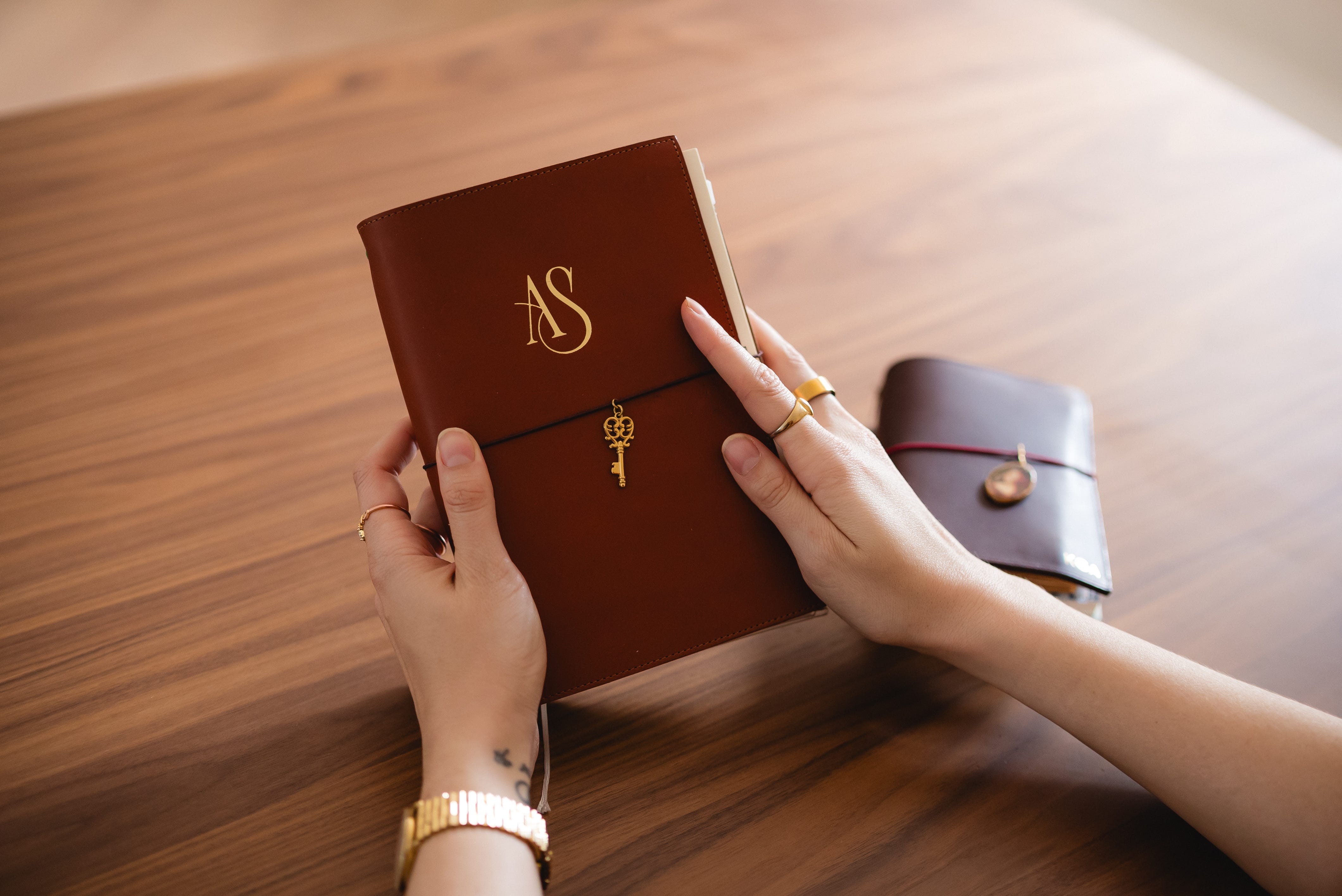
I open a box which contains books, notebooks, photographs, and other remnants of my past. This box has traveled across an ocean after being stored away in a friend’s closet for nearly three years. This box contains layers of history. Cards received on past birthdays. Photograph albums containing photographs from when I was 13, 16, and 20. And notebooks. Some from my time as a community college student, others from my undergraduate days. These compilations of paper, ink, and glue are the physical manifestation of a metamorphoses. The evidence of my transition from student to researcher. From athlete to historian.
There is something missing though. Each phase of my life in academia, from grade school pictures drawn by my seven year old hand, to diagrams and equations parsed through in an intro to statistics class (which I barely passed) at 21, and my lecture notes from that 8am Gilded Age History course are all here. What isn’t are the days spent in Oxford. My Oxford year was when I bought an iPad. I went digital. My thoughts and teachings flattened into clusters of data housed in Goodnotes.
The loss of my tangible history was evident. It left a gaping hole in the recollection of my past. The ability to touch, view, manipulate, and cherish were lost.
I think and theorize often about the experience of history. Of studying it, producing its analysis. Of how we produce our own histories and how our work as historians or caretakers of historical knowledge is shaped by the mediums in which they are captured. I too think about the value of touch. Of seeing a physical object of history with our own eyes. It’s part of why I love going to archives when possible. It’s also why I began keeping a dedicated journal for my PhD Research. This “Dissertation Diary” is what I will flip through someday to witness my ideas as they once unfolded. I will read through the mess of my ideas and notes to bear witness to the process in which a piece of research was conceptualized.
This Dissertation Diary is and will become a relic of what it meant to produce knowledge. To engage in historical research and to watch it take to form of a physical, unique, and imperfect object.
What follows are some of the ways I have used this space, this journal to capture my thoughts. How I have used writing and physical note taking as a way of thinking.
Before we start, I just have two requests:
Use this article as a guide rather than a prescription. The most beautiful thing about this journal is how it has become a limitless space for my ideas. I sometimes follow prompts but often scribble notes and diagrams at will without any plan or eye for beauty.
Do not judge your own pen, style, or form by comparing it to my own. I have rather small handwriting which ovulates between standard script and cursive. It is commented on by mentors, online comments, and passersby. I have photographed a few of the pages which are particularly “organized” but just know that not all are like this. And whatever your journal looks like is beautiful, meaningful, and unique because it is YOU.
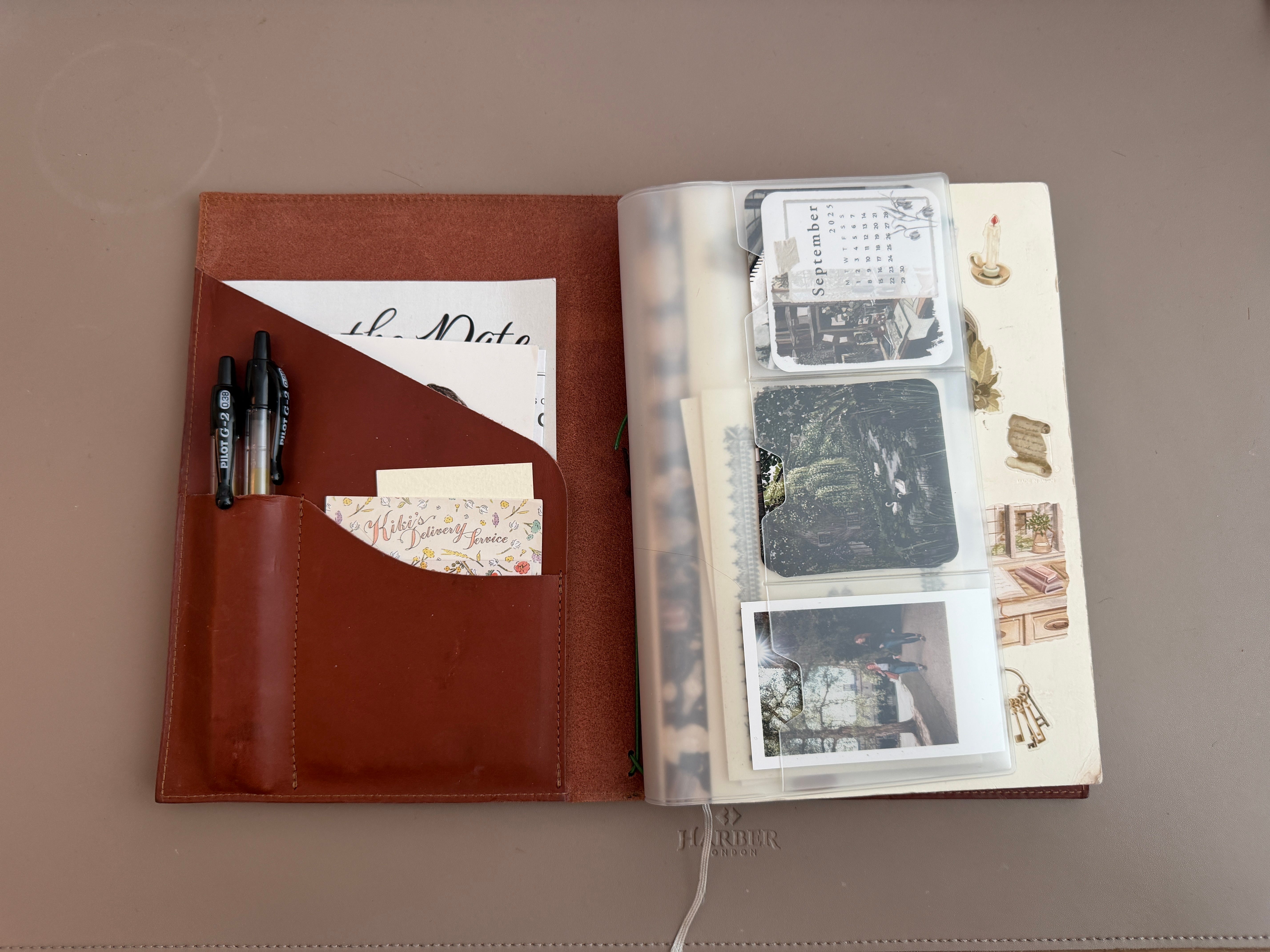
Before diving into the deep end of research or writing, take a few minutes to set the tone by writing down:
Good/Better/Best: If today were to be a good day, what will I have accomplished? What would be an even better outcome? And what would be the best?
Today, I intend to focus on [insert task]
Today, I look forward to learning/writing about [insert]
Diving into a draft or into secondary literature can lead to paralysis for some, overwhelm for others. Perhaps take a few minutes to write without judgement. The goal is to write for a continuous about of time (start with just 3 minutes) and not to self-edit. Just allow your mind to flow onto the page.
Here are some prompts to get you started:
Today, I am curious to learn/explore…
What do I want to understand better?
What is frustrating you about your research right now?
Why does this research interest me?
Why am I the right person to conduct this study?
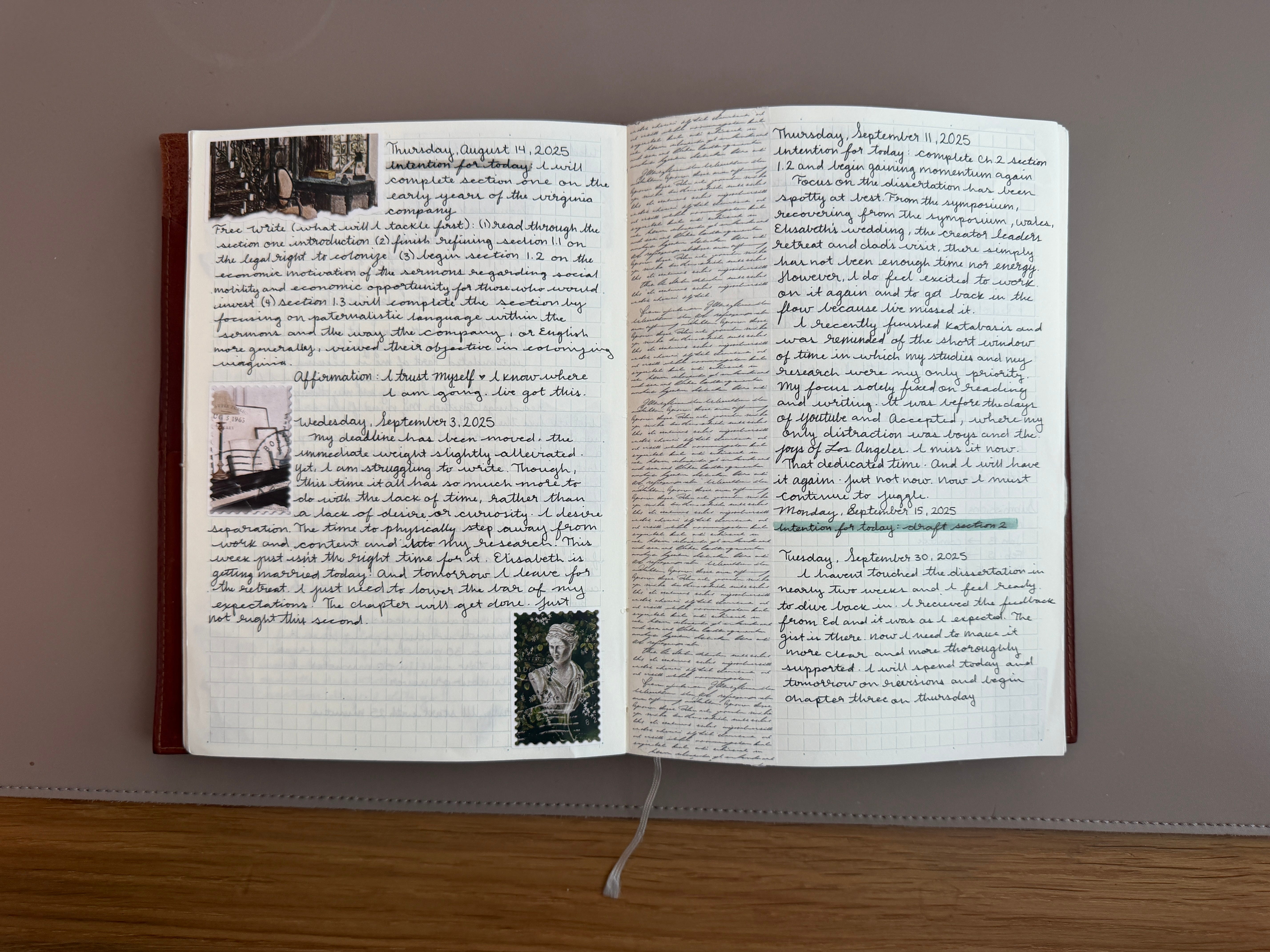
Rather than using Notion, an Excel Sheet or an App, perhaps create a progress tracker in your journal. Word counts per day may be helpful but so too are effort based trackers.
One example is Kristy | The Strange Scholar’s Star Reward System (which you can read more about here) intended to color code each days efforts.
Though I recommend having some sort of digital citation manager, having a list of your secondary sources and even a brief thesis summary can provide you with a visual representation of all that you have read.
You could even go a step further and draft your structured reading reports to include:
The main argument
Evidence
Intervention
Where we differ
I have done this by hand for a few of the core texts which I cite in my literature review in order to better grasp how my thesis interacts with theirs.
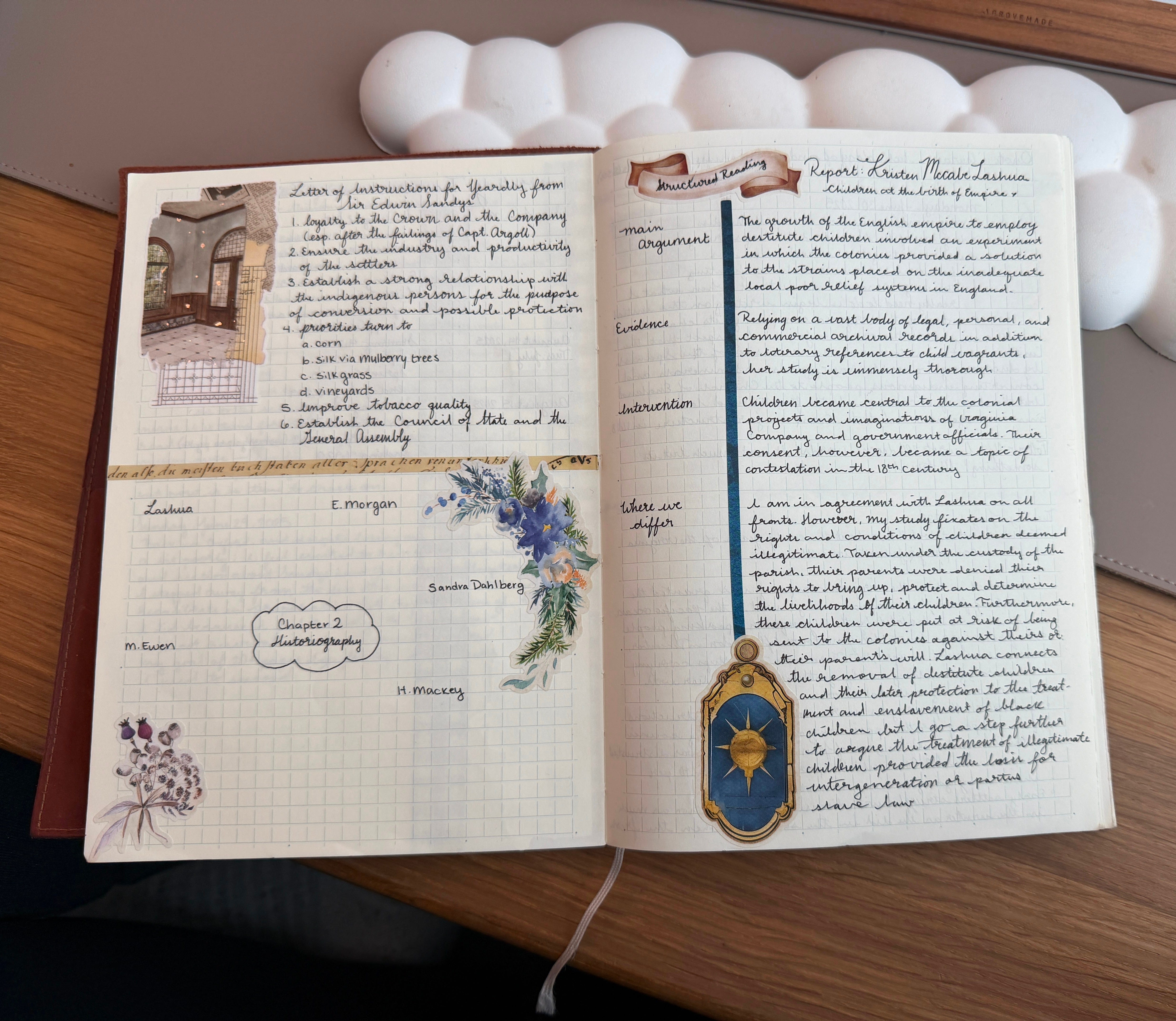
Visual diagrams and maps may help to visualize the connects between concepts, literature, subjects, etc.
I often use mind maps for the early stages of sorting out my chapter structure. It allows me to messily write out all of the subjects or themes I hope to cover and organize them neatly afterwards.
Speaking of outlines: using your journal to write out, move around, and reshape your outline by hand is a great way to comprehend how the flow of your research might take shape. I tend to draft my outline several times throughout the period of time when I am working on a chapter. So don’t worry about getting it perfect the first time.
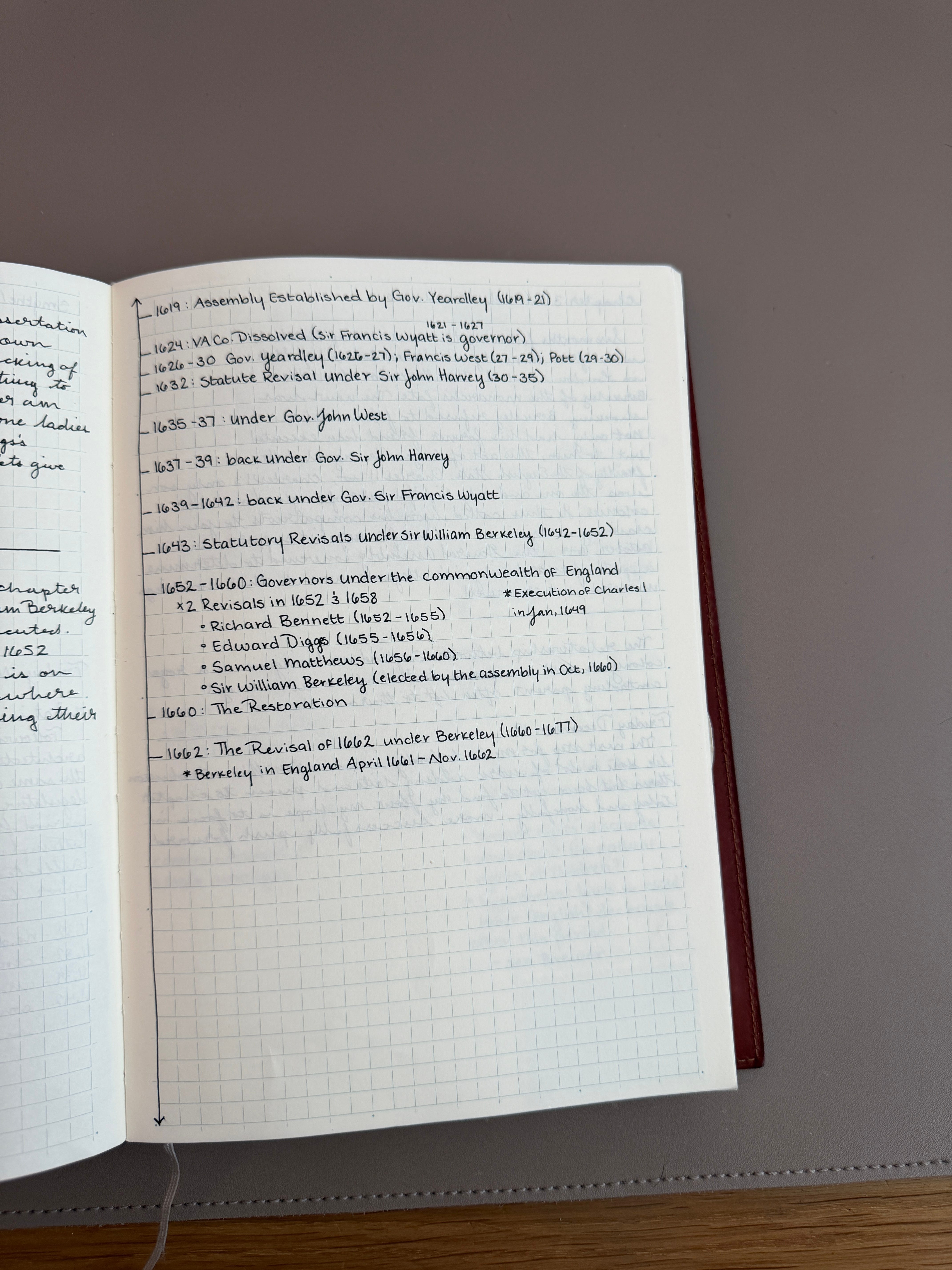
You might also benefit from mapping out a timeline of key events for an article, a chapter of your thesis, or your entire dissertation.
I have a digital timeline in MilaNote but I often like to write sections out by hand in order to more intimately understand the sequence of events or decisions made.
Rather than taking notes on my computer, I prefer to prepare for meetings in my dissertation diary. In preparation, I write out:
What I’ve accomplished since we last spoke.
What challenges I am facing.
What support I am seeking.
Any questions I have.
This helps ground any meetings you may have with committee members or your chair and is an excellent practice for arriving to meetings with clarity on what you hope to accomplish.
Reviewing primary sources (such as historic documents) requires patience and slow contemplation and analysis. Sometimes this is helped by jotting down notes, initial thoughts, or breakdowns in my journal.
Earlier this year, when I was feeling particularly stuck on my dissertation, I took to drafting chapters in my dissertation diary. Sometimes its a simple paragraph or several pages. But the key is writing in your own spoken language and jargon. This is for me. Not for my committee. Not for peer review. So I allow my pen to transfer my thoughts as they are without restriction or judgement.
If this post resonated with you, I would love if you would either leave me a comment on how you use your research journal or a tip you may give a try OR simply share this post as a note to recommend to your friends.
Thank you for reading.
No posts
Comments
Nothing yet. Say the first thing.
Sign in to join the conversation.