
ブラウザ等の自動翻訳機能をご利用の場合、英語・日本語それぞれの表現やニュアンス、文化的背景などが十分に反映されない場合があります。特に剣道用語や感覚的な表現については、意図とは異なる形で伝わることもありますので、あらかじめご了承ください。
One reader recently sent me a private message after I mentioned kōhyō (講評) in a previous article. It made me realize that, while the practice is familiar (i.e., a senior teacher giving a few remarks after keiko), the word itself may not be.
“I enjoyed your article, but I wasn’t familiar with the word kōhyō. Would you mind explaining what it means and how it’s used in kendo?”
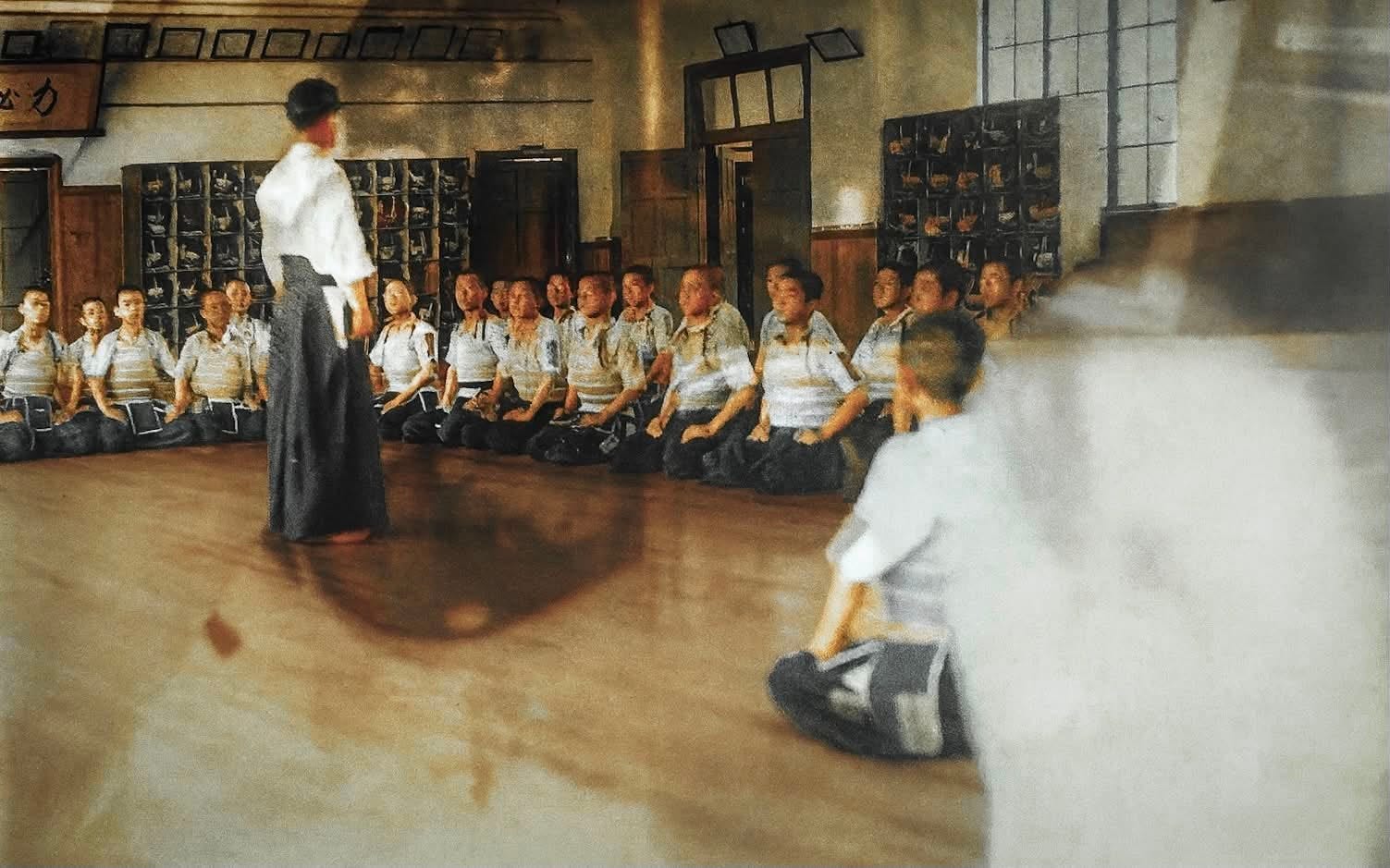
At the end of keiko, everyone gathers while a senior teacher offers a few remarks before practice officially concludes and participants are dismissed. These comments are known as kōhyō. English translations such as feedback, closing remarks, or commentary come close, but I think the word carries a little more nuance than any of those.
The kanji themselves are interesting. 講 (kō) means to explain, lecture, or speak to a group. In fact, it is the same character used in the word 講義 (kōgi), a term commonly used for lectures, including those given at universities. It suggests an opportunity to share knowledge or observations with others rather than simply pointing out mistakes. 評 (hyō) means to evaluate, comment, or offer an opinion. Together, kōhyō is less about criticism than about offering a thoughtful reflection on the practice that everyone has just shared.
There are other words that could be used. Sekkyō (説教) literally means a sermon or preaching. Although people sometimes jokingly describe a long post-keiko talk this way, the word often carries the sense of being scolded or moralized. Sunpyō (寸評), on the other hand, means “brief comments” and is often used for short evaluations of individual performances or written work. Kōhyō feels different. It belongs to the group, not just the individual.
Over the years, I’ve come to think of kōhyō as another part of keiko. A senior teacher says something that is directed at everyone, yet it somehow speaks directly to your own practice. Other times, I wonder if this is another example of jiri icchi (事理一致), the harmony of experience and understanding. A teacher can tell us something, but until keiko allows us to experience it ourselves, the words remain only words. Kōhyō plants the seed; keiko allows it to grow.
In fact, many of the ideas I’ve shared in my Sip of the Chikaramizu reflections have begun this way. Comments offered by a senior teacher at the end of practice often linger in my mind long after keiko has finished. That is why kōhyō is such an important part of keiko. It rarely gives us instant answers. Instead, it offers something to carry into our next practice.
Sometimes a teacher’s words resonate immediately. More often than not, however, they quietly lie dormant until experience and understanding finally meet.
I believe sharing is caring, and A Sip of the ChikaraMizu will always remain free. Kendo is a shared experience of lifelong learning. If you find these reflections interesting or they give you food for thought in your own practice, your support will help me continue writing and sharing lessons from my own shugyō (修行).

Thank you!
Related articles:
Comments
Nothing yet. Say the first thing.
Sign in to join the conversation.