
ブラウザ等の自動翻訳機能をご利用の場合、英語・日本語それぞれの表現やニュアンス、文化的背景などが十分に反映されない場合があります。特に剣道用語や感覚的な表現については、意図とは異なる形で伝わることもありますので、あらかじめご了承ください。
I really enjoy having one-to-one online conversations with fellow kendo practitioners from around the world. They are often surprisingly enlightening, and it is the sharing of information and experiences that I find most valuable. It helps me better understand and empathize with other kendoka. In fact, I think the best conversations are the ones that happen organically and unexpectedly. Having a beer while chatting is optional. That being said, a recent conversation with a friend gave me a topic to write about.
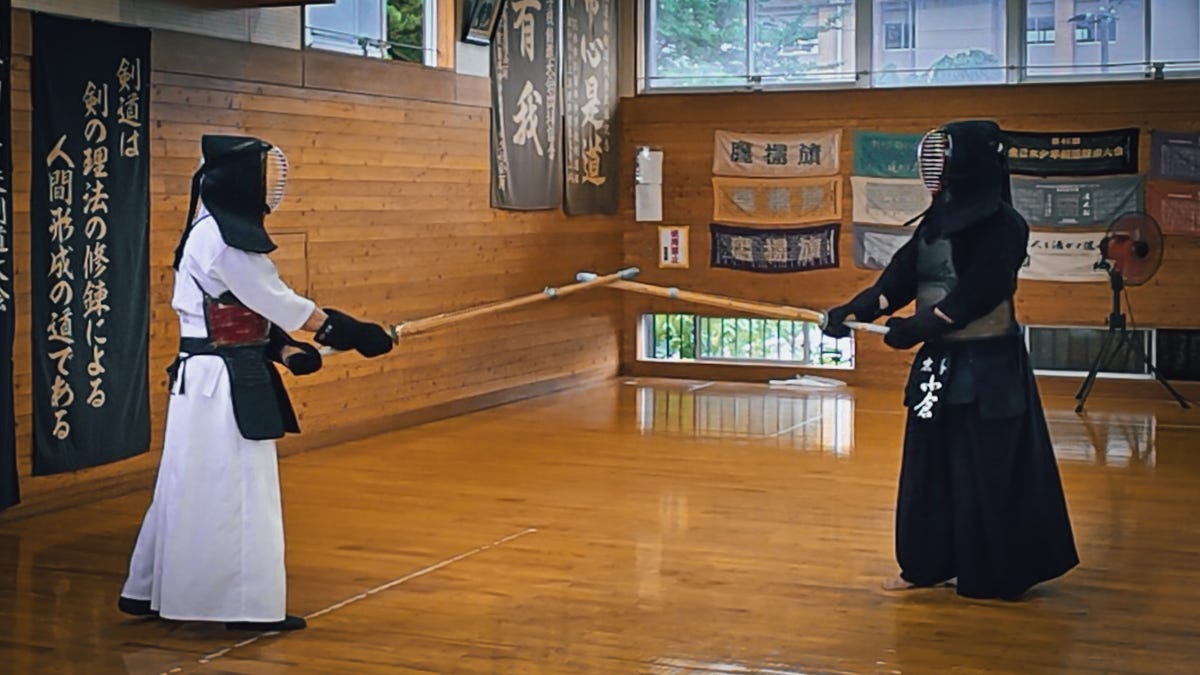
Amusingly, the chat began with foot injuries. Both of us being middle-aged, and talking about aches and pains after years of practice is indeed an inconvenient truth. More specifically, it was about sore feet and toes, metatarsalgia (if you want to get fancy with the word). From there, the conversation moved to footwork, technique, and leg position in 1kamae (I even sent a silly video of myself demonstrating) before eventually turning to 2keiko. We chatted about how we can improve our kendo through practice with senior teachers. In the process, we arrived at a question that I think many of us can relate to:
How can my kendo affect a stronger opponent?
If I recall, we first talked about physical cues. Things like whether the 3kensen moved or whether there was a slight change in posture caused by the pressure of our 4seme. Could we create a small opening? Then, in the middle of the chat, my friend mentioned the importance of developing 5kigamae when facing senior teachers.
This caught me a little off guard.
It was not because I disagreed with him or did not understand the term. Rather, it was because I had never really thought about it. I had always taken it for granted. In fact, it is not even written in my post-keiko notes that I have recorded over the years.
To admit, I sometimes focus too much on the physical side of kendo. In other words, what is happening on the outside. We talk about footwork, posture, timing, and technique because they are visible and tangible elements of practice. These skills can be demonstrated, observed, and discussed with relative ease. However, this conversation made me refocus on the inner side of keiko. Terms such as kigamae and 6fudōshin can sometimes sound mysterious, as though they refer to a secret state of mind possessed only by highly skilled practitioners. To be honest, though, I think that is a bit too far.
At its most practical level, kigamae is simply being ready: ready to move forward, ready to respond, ready to attack, and ready to adapt.
This inner kamae is alive and prepared to engage. The important point, however, is not becoming attached to a particular outcome or confused by uncertainty (easier said than done!). I think we have all experienced that at one time or another. Whatever happens, our inner kamae is prepared to meet it.
This is why kigamae (the inside) should not be separated entirely from 7migamae (the outside). Finding a balance between the two is important. Good posture may appear solid, yet a small amount of pressure from an opponent can lead to hesitation, doubt, or uncertainty. Conversely, someone whose form is less than perfect, for example, an elderly senior teacher, may still feel incredibly difficult to overcome because their intention remains clear and unwavering. This is where the challenge lies for me.
It takes me to an uncomfortable place, and it leads me to ask the same question every time I go to the dojo:
What exactly am I trying to accomplish when practicing with a senior teacher, and how can I apply those same lessons when practicing with someone less experienced while continuing to improve myself?
Always trying to achieve an 8ippon is not my number one goal. In fact, it is always an afterthought. If that were my only objective, frustration would be inevitable because the difference in skill and experience is often too great. Likewise, if my goal is to produce an obvious reaction through my seme, opportunities may be rare when facing a senior teacher, which can lead to even more frustration and keeping me vexed.
Yet, setting these goals aside, there is still something valuable to practice.
Without fail, before keiko, I often ask myself the following questions:
Without becoming reckless, can I maintain the initiative?
When applying pressure, can I still be patient but at the same time not waiting?
Is my attention focused on my opponent rather than on myself?
Can I stay relaxed and hold my position without surrendering the mental contest?
I do not think this is some kind of supernatural composure. These are simply the questions I ask myself as I do keiko. It is the ability to remain engaged without succumbing to fear, surprise, doubt, or hesitation.
Or, to put it into simple English:
Holding the line.
When facing a senior teacher, we often fall into the trap of doing something before anything has actually happened. Sometimes this manifests itself physically, but more often than not, I think it is a mental issue. We become cautious. We hesitate. We may even find ourselves waiting for some kind of permission to act.
That may sound odd, or even a little silly, but in reality we are already giving up our intention to engage before the contest of seme has even started. Holding the line means refusing to give up that intention. It means remaining fully engaged in the contest of seme without aimlessly rushing forward or retreating without good reason. It means continuing to apply pressure even when nothing appears to be happening. Patience is the name of the game. It means resisting the urge to force a 9waza simply because the silence has become uncomfortable. I think this is the real challenge of keiko with a senior practitioner.
Through our chat, I was reminded that kigamae is not mysterious but tangible. It is simply the ability to hold the line and remain present. Through keiko, it is learning how to stay there.
I believe sharing is caring, and A Sip of the ChikaraMizu will always remain free. Kendo is a shared experience of lifelong learning. If you find these reflections interesting or they give you food for thought in your own practice, your support will help me continue writing and sharing lessons from my own shugyō (修行).

kamae (構え): A posture or stance that combines physical positioning with mental readiness.
keiko (稽古): Practice or training. In kendo, the term implies more than repetition of technique and often carries the sense of studying and refining oneself through practice.
kensen (剣先): The tip of the shinai (bamboo sword).
seme (攻め): Pressure applied to an opponent through posture, presence, intention, positioning, and the threat of attack in order to influence their actions.
kigamae (気構え): One's mental preparedness or state of readiness; the inner aspect of kamae.
fudōshin (不動心): Literally "immovable mind"; a state of mental stability in which one remains composed and engaged without being overcome by fear, doubt, surprise, or hesitation.
migamae (身構え): The physical aspect of kamae, including posture, stance, and positioning.
ippon (一本): A valid scoring strike in kendo that meets the required criteria for a point.
waza (技): Technique or skill; a specific method of attack or execution in kendo.
Comments
Nothing yet. Say the first thing.
Sign in to join the conversation.