
ブラウザ等の自動翻訳機能をご利用の場合、英語・日本語それぞれの表現やニュアンス、文化的背景などが十分に反映されない場合があります。特に剣道用語や感覚的な表現については、意図とは異なる形で伝わることもありますので、あらかじめご了承ください。
A brief note: This short article is not intended as a scholarly analysis of the origins of Hyakuren Jitoku (百練自得). Rather, it is a personal reflection on the similarities between the concept and modern research on skill acquisition and expertise. It is my hope that it resonates with others who have experienced the frustrations, corrections, and small improvements that come with sustained practice.
About 10 years ago, I came across the concept of deliberate practice, a theory developed by psychologist Anders Ericsson. In simple terms, deliberate practice is not just repetition. It is purposeful training designed to improve specific aspects of performance. It requires focused effort, stepping outside one’s comfort zone, identifying weaknesses, and receiving feedback from others.
At the time, I found the idea interesting. Like many people, I had assumed that expertise was largely the result of experience. Spend enough time doing something and eventually you become good at it. Yet Ericsson’s research suggested something different. Improvement was not simply a matter of accumulating hours. Rather, it depended on how those hours were spent.
Only later did I realize that I had already encountered a similar idea through kendo.
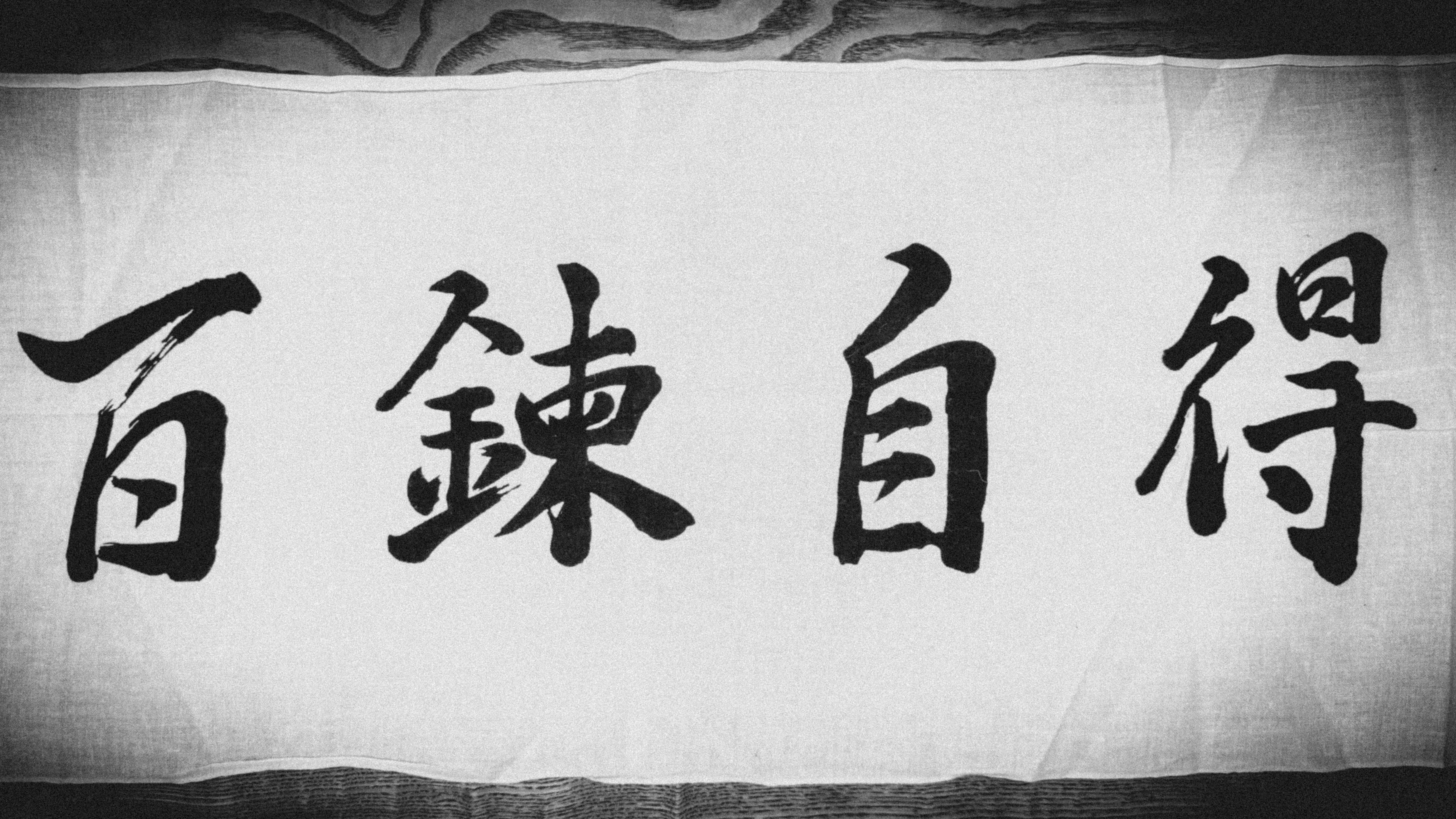
Throughout my years of practice, I have often heard the phrase Hyakuren Jitoku (百練自得). You may have even seen it printed on a tenugui or displayed on a calligraphy scroll in a dojo somewhere. It is usually translated as something like “through a hundred refinements, one attains proficiency.” More details specifically on the idiom here. Like many four-character idioms, it can sound somewhat poetic or abstract at first glance. Yet the more I reflected on it, the more practical it seemed.
Many people assume that expertise comes naturally with time. Certainly, experience matters. However, anyone who has spent enough years in the dojo knows that time alone is not enough.
Some practitioners continue to discover new layers in their kendo long after reaching a high level, while others seem to settle into familiar patterns or habits. The difference is not necessarily talent, nor is it simply the number of years spent practicing. The difference may lie in the idea of refinement.
When I look at the phrase Hyakuren Jitoku, the part that stands out to me is not jitoku, (自得) the attainment of proficiency. Rather, it is hyakuren (百練). The image is one of repeated polishing, repeated correction, and repeated effort. This is where the connection to deliberate practice becomes interesting I think.
According to Ericsson’s research, improvement occurs when we deliberately focus on what we cannot yet do. We identify weaknesses, work on them, receive feedback, make adjustments, and repeat the process. The cycle itself is what produces growth.
This sounds remarkably familiar because good kendo training is rarely comfortable.
A good teacher does not simply allow us to repeat what we already do well. Instead, they point out flaws we may not even be aware of. They ask us to change habits that have become deeply ingrained, a process that may sound familiar to many long-term practitioners. Often, the process can be frustrating because improvement is rarely linear.
I remember countless occasions when I felt as though I was getting worse rather than better. Looking back, those periods were often signs that I was in the middle of rebuilding something. Old habits were being dismantled before better ones could take their place. Perhaps this is one reason why keiko can be so humbling. No matter how much experience we accumulate, there is always another layer to uncover and another weakness to address. In this sense, I do not think Hyakuren Jitoku is particularly mysterious. Rather, it seems to describe a very practical truth about learning.
Attaining proficiency is not something that can simply be handed down from teacher to student. A teacher can guide us, correct us, and encourage us, but eventually the understanding must become our own. It emerges through repeated cycles of effort, failure, adjustment, and renewed effort.
In some ways, this also brings me back to an earlier reflection on Jiri Icchi (事理一致), often understood as the unity of principle and practice. It is one thing to understand a lesson intellectually. It is another to embody it through practice. Perhaps this is why improvement can take so long. Understanding and action do not always arrive at the same time. Through repeated refinement, however, they gradually begin to align.
I believe sharing is caring, and A Sip of the ChikaraMizu will always remain free. Kendo is a shared experience of lifelong learning. If you find these reflections interesting or they give you food for thought in your own practice, your support will help me continue writing and sharing lessons from my own shugyō (修行).

Thank you!
The language of deliberate practice is modern. The language of Hyakuren Jitoku is old. Yet I wonder if they are both pointing toward the same observation. Mastery is not found in repetition alone. It is found in refinement.
Thanks for reading A Sip of the ChikaraMizu(力水)! This post is public so feel free to share it.
References
Ericsson, K. A., Krampe, R. T., & Tesch-Römer, C. (1993). The role of deliberate practice in the acquisition of expert performance. Psychological Review, 100(3), 363–406.
Ericsson, K. A., & Pool, R. (2016). Peak: Secrets from the New Science of Expertise. Boston: Houghton Mifflin Harcourt.
Comments
Nothing yet. Say the first thing.
Sign in to join the conversation.