
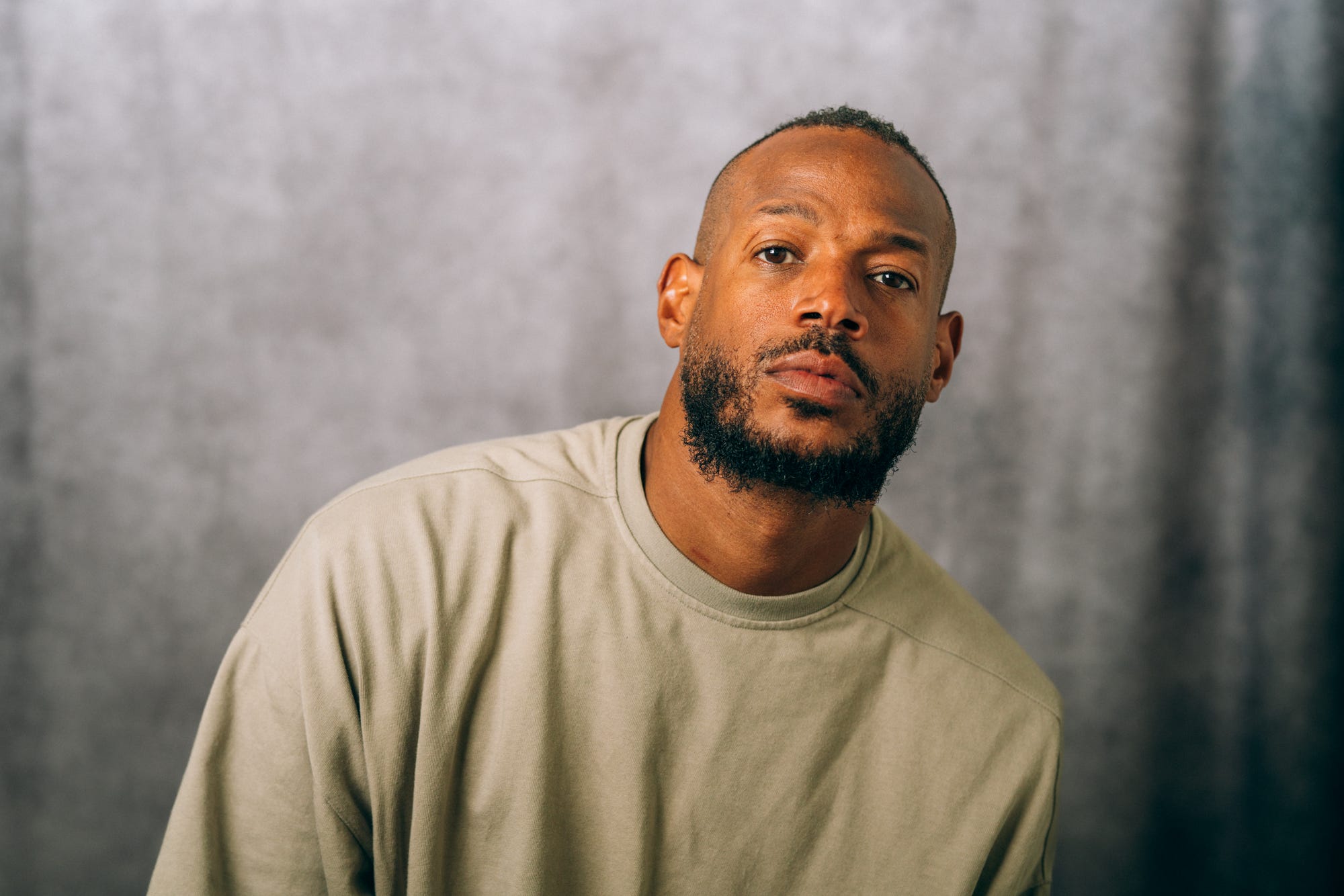
I didn’t expect to see Marlon Wayans at the end of a Josh Groban interview1. But there he was.
When I tuned into Josh Groban’s interview on The School of Greatness podcast I expected a thoughtful and fun conversation; he always brings that. But what I didn’t expect was the emotional arc the show had quietly constructed. As the episode ended, it transitioned into a preview of Marlon Wayans speaking candidly about the death of his parents and 57 other loved ones. On paper, it felt like an unusual pairing. But in practice, it was a bridge, and a brilliant one.
Josh Groban and Marlon Wayans operate in two very different cultural spaces. Josh is a classically trained vocalist with a spiritual and often older-skewing fanbase. His songs like “You Raise Me Up” and “To Where You Are” are frequently played in sacred spaces of remembrance: funerals, memorials, and family milestones. Josh’s music is deeply tied to love, memory, and loss. A large part of his audience isn’t just listening, they’re remembering, longing, and for some grieving.
Marlon Wayans, on the other hand, is best known for his family’s comedic legacy. But in this clip, he wasn’t cracking jokes. He was vulnerable. Open. Mourning. He spoke about the death of his parents, the reality of grief, and the personal evolution it forced him into.
That clip wasn’t just an ad for the next episode (Marlon’s interview2 premiered a year earlier). The preview carried the emotional thread forward, shifting from Josh’s vulnerability to Marlon’s, which was beginning to emerge in his creative work.
The expression became different. Expression became therapeutic. I’m bleeding inside, but I’m literally pulling myself from depression.
The transition was an emotional handoff, from one heart to another. Grief is not a niche emotion, it’s a universal one. And when you understand your audience deeply, when you know their emotional patterns and their lived experiences, you can begin to curate content transitions that don’t just keep people watching, but keep people feeling.
The School of Greatness didn’t throw Marlon in there to stir contrast. I’d like to believe they placed him there because they understood who was likely watching. Josh’s fans sometimes associate his voice with people who are no longer here. His songs often mark the soundtrack of remembrance. So instead of pivoting to something random or light, they followed the emotion through.
That’s emotional intelligence in content programming.
I’m a Black woman who grew up watching and loving Marlon Wayans. I’ve also lost a parent, my father passed away in March 2024 (and 4 months later, my grandmother and grandfather followed). I know that version of grief, the one that doesn’t just knock you down, but remakes you.
Seeing Marlon in that space, in that context, brought up more than I expected. I was connecting to him on a deeply human level.
It also made me reflect on how these emotional undercurrents can often go unnoticed by the people programming them, unless they’re attuned. Unless they care, and Lewis Howes and his School of Greatness definitely care.
This moment showed me how powerful grief as a deliberate transition point can be.
It creates unexpected bridges:
Between genres: Classical pop and comedy
Between audiences: Boomers, Gen X, and millennials of every background
Between creators: Josh Groban, a spiritual vocalist, and Marlon Wayans, a comedic storyteller, who both navigate love and loss publicly
And sometimes, those bridges hold humor too.
“Oh, you’re part of the dead dad gang too? Gang, gang.”
(Paraphrasing Marlon)
It was raw and hilarious, and somehow it worked. Only someone who’s been through it could make a joke like that, and only someone deeply human could make it land without deflecting the pain underneath.
Another thing I noticed across both the Josh and Marlon episodes was just how broad The School of Greatness audience really is. These interviews were entry points that introduced people to new energy from familiar artists.
I hadn’t watched a stand-up special in over five years, and I rarely even use my Amazon Prime account. But after listening to Marlon speak, I immediately went and watched the stand-up special3 he was promoting, ‘Good Grief'.
While watching it, something else landed for me, something that had nothing to do with celebrity and everything to do with family. Marlon talked about being the youngest in a big family, and the experience of losing a parent who allowed you to show up in ways they may not have allowed your older siblings to show up.
When you’re the youngest and you grow up with parents who are older, softer, and—honestly, just more tired, you’re given a little more space. A little more freedom. And while part of that may come from them simply not having the energy to care about certain things anymore, the result is a dynamic that only the youngest in a family can fully understand. And as the youngest of five children and having a 15 year age gap between myself and my oldest sister, that emotional nuance came through, both in the interview and Good Grief, and it stayed with me.
What struck me most, beyond the comedy, was the intention behind it. Marlon spoke about wanting his work to bring people healing. Not just laughs.
“Laughter is healing, but how can I help audiences grow spiritually through my creativity?”
He spoke those words to Lewis and I found myself saying out loud: “You’re doing it!”
It was one of those chilling moments where you’re both a witness and a receiver of Spirit moving. It moved me to write this.
That’s the thing about artists like Marlon—sometimes the joke is just the entry point. What he’s really doing is inviting people to feel what they’ve been too afraid or too exhausted to touch.
“Life happens,” he said. “And the expression became different.”
Comedy became the container for something deeper.
It reminded me that grief doesn’t cancel joy, and that laughter is often one of the only tools we have to help hold what’s too heavy to carry. And also that nobody is exempt from the death of a loved one.
We’re all going to experience that type of grief.
The real magic is when someone helps us feel a little less alone in it, especially in the places we least expect.
Both Josh and Marlon have continued exploring the same emotional territory in their own ways. Josh recently released a new song, “The Constant,” from his upcoming album Hidden Gems (out November 14). He describes it as a reflection on the people who ground us, the constants in our lives. It’s a reminder that love and presence can remain steady even as life changes. He’s also hosting the Find Your Light Foundation Benefit Concert for Arts and Education tomorrow, October 8, supporting programs that give young people greater access to the arts.
Marlon’s latest chapter includes his Wild Child tour, which runs through July 2026, and a starring role in Him, a Jordan Peele production he also helped produce. Him is now available for digital purchase and rental on major streaming platforms.
Though they are still on very different paths, how cool would a Marlon Wayans/Josh Groban crossover be? They both have me doubled over from their humor (see Josh Groban’s appearance on The Terrell Show), but what they share is deeper than comedy: a willingness to meet the moment with honesty, no matter the medium.
Grief needs space to breathe so this I made a playlist that holds the mood I carried while watching, reflecting, and feeling through all of this. For anyone experiencing good grief, you can listen here: 9 Selects.
No posts
Comments
Nothing yet. Say the first thing.
Sign in to join the conversation.