
Dear friends—
This newsletter comes a day earlier than usual. I hope it finds you well?
This past week has seen two very significant developments in West Asian and world affairs:
Pres. Trump was forced (by Iran’s increasingly evident depth of resilience) to back down from the “massive attack” he had threatened against the country as recently as the morning of August 2; and
The progressive, anti-Zionist contender to be the Democratic Party candidate in Michigan’s next Senate election, Dr. Abdul El-Sayed, managed to win his primary despite pro-Israel orgs pouring more than $30 million into the campaign of his pro-Israel opponent.
Of course these two developments are linked. The combination of the resilience of the indigenous peoples of West Asia and the growing revulsion among publics in the “West” for the barbarism and cruelty of the Zionist settler-colonial project are, between them, starting to change the world…
I’ve been fortunate over the past ten days to take part in two excellent conversations that explored aspects of these changes. In this episode of JWE’s “PalCast”, recorded last week, I joined long-time host Dr. Yousef Aljamal in a great 71-minute convo with the always insightful Muhammad Shehada of the European Council on Foreign Relations. And this week, I had a really good convo with Prof. Nazari Ismail, the head of the Hashim Sani Center for Palestine Studies at Universiti Malaya, in which we surveyed all the key developments in West Asian and world politics.
Then yesterday, I was able to pull together my own thoughts on the balance-shift that is now— very slowly— transforming West Asian realities into this essay on my personal Substack.
In this newsletter, I’ll start by giving you more details on all these resources from Just World Ed and our partners. Then I’ll finish off with links to some other timely learning resources.
Muhammad, who was with us from Copenhagen, is a real expert on the situations both on the ground in Gaza and in the halls of decisionmaking in the Arab countries and Europe.
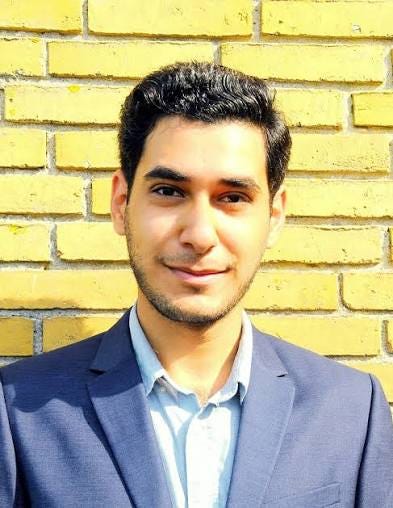
He started out by describing the very dire situation in Gaza, including Israel’s repeated, lethal attacks on the Strip’s remaining population, its constant pushing westward of the “Yellow Line” that squeezes Gazans into an ever-reduced portion of the Strip, and its cruel restrictions on the entry of vital necessities… with all that happening during the period of the so-called “ceasefire” that was agreed last October.
He was coruscating in his criticism of the “Board of Peace.” He said,
If I want to be accurate… I would say all of it was just a scam. All of it was just supposed to give the facade of progress, to give a free hand to Netanyahu to do whatever he wants in Gaza…
For example take the new “international stabilization force” that Israel will allow now to operate in Gaza… If you read the small print it says Morocco sent one soldier, Kosovo sent one soldier, Kyrgyzstan sent one soldier, Kazakhstan will send one soldier. So it’s gonna be… four soldiers against 30,000 Israeli soldiers, against 25,000 Hamas militants, and those four soldiers are supposed to oversee the entire governance, reconstruction…
He then discussed the worsening crisis in the West Bank, the difficult position of the Palestinian Authority, and the challenges facing Palestinian leaders as they confront an increasingly difficult political and security environment.
We examined the wider regional dynamics involving Iran, the U.S., Israel, and other actors. We looked at Iran’s ability to influence the regional balance and surveyed what all these developments might mean for Palestine. Muhammad argued that Palestinians needed a proactive and unified strategy that can sustain their struggle while remaining responsive to changes in the regional and international landscape.
Listen to this whole PalCast episode on Apple Podcasts or Spotify! Share it with others who wanted to better understand the current situation in Palestine and the wider region.
We recorded this great, 54-minute online conversation on Tuesday, the very day on which Michiganders were going to the polls in their important primary. Our discussion covered shifting political currents in the United States, the state of the US-Iran war, Israel’s escalating pressure on Lebanon, and the deteriorating situation in Gaza under the so-called ceasefire.
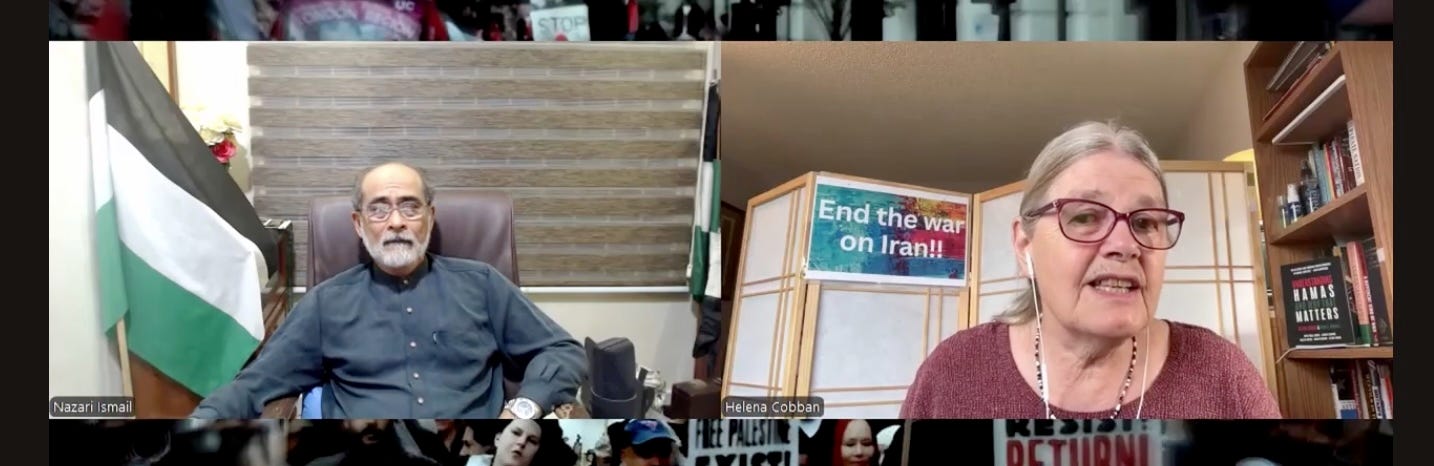
Much of the conversation focused on the unprecedented shift toward pro-Palestinian rights policies inside the Democratic Party. I noted that this shift is something I have never seen in my 44 years in this country, while I also observed that a parallel, if smaller, fracture has been occurring inside the Republican Party.
We also looked in some detail at the situations in Gaza, Lebanon— and of course in the “big” confrontation between the U.S. and Iran, over the issue of control of Hormuz.
You can read a good digest of this conversation here. (Or watch the whole thing!) We’re planning to release a full transcript of this convo, and of the PalCast talk with Muhammad Shehada, within the days ahead.
In this essay, which I published yesterday, I dove deeper than I previously have into the mechanisms through which Iran’s leaders have been able, over the past five months, not just to defend their homeland and its governance structure but also to exert a degree of deterrence and then even compellence over the actions of the country’s massive armed U.S. (and Israeli) attackers.
The degree of Iran’s deterrent capability was displayed most evidently on August 2, when Pres. Trump, having deployed large numbers of troops and weapons to (the Westernmost side of) West Asia and having surveyed the possibilities that another large attack on Iran could be successful, abruptly— yet again— called off that attack.
In the essay, I explore the reasoning behind trump taking that “TACO” decision. The two main bundles of reasoning were clearly: (a) the information from his military that U.S. supplies of vital missiles and interceptors has now run very low, and (b) entreaties from leaders of the “front-line” Arab states on the south coast of the Persian Gulf that he not take steps that would invite very clearly threatened retaliatory attacks— on them— by Iran.
In the essay I also look at how Iran has been methodically moving beyond deterrence toward testing its ability to compel the U.S. act in ways that Tehran wants: classic compellence.
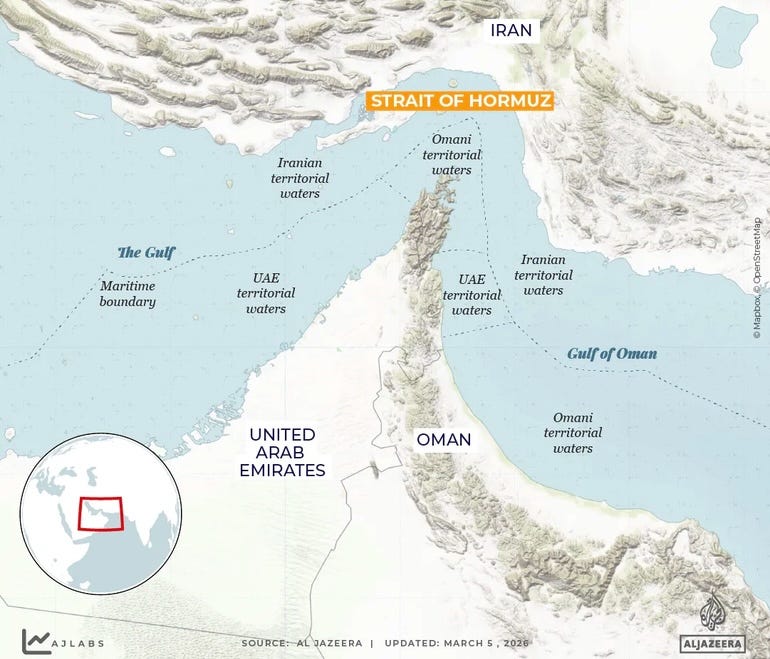
The first test of this is over control of the Strait of Hormuz. And if, as seems likely, Tehran wins this battle of wills by showing the ability to deny Washington the role it seeks in the governance of the strait, then— as I write in my essay— Tehran may well test its ability to compel U.S. actions on other issues, too… Including, possibly Lebanon, Palestine, and Syria.
In this regard, I note that the terms that Iran announced for the early April ceasefire and the terms that the presidents of both countries signed onto for the MOU of June 18 can provide a guide for what Iran’s war goals might be.
In the essay I also briefly survey the “Israel factor” in all this.
If you’re interested in this (slightly nerdy, but still I think informative) analysis, I urge you to go read the whole essay. Do post your thoughts and comments there, too! I am sure I can learn a lot from many of you.
I am very much looking forward to next Tuesday’s release of the super-timely book Israel’s Lobby: America in the Grip of a Foreign Power, by Eli Clifton and Ian Lustick. These are two deeply informed and trustworthy analysts! I haven’t had the chance to read the book yet. But this teaser that the two authors published in The Guardian on August 2 and this review that Dr. Josh Ruebner published on Mondoweiss have certainly whetted my appetite to do so.
Murtaza Hussein had a chilling piece of investigative journalism on Drop Site News recently, in which he revealed the (essentially treasonous— to the UN) role that a long-time Israeli mole called Yahav Lichner has been played in the past, in his jobs at high levels in a number of UN organizations. Lichner is currently the director of the Washington DC office of UNICEF, the UN Children’s Fund. Hussein’s article draws on a trove of emails from 2013-14 that were hacked from the account of veteran Israeli diplomat Ron Prosor, who acted as a key sponsor for Lichner when he got his first UN staff job, with UNPFA, in 2013. (Obama administration official Samantha Power was also an ally in that.)
So that’s it for today. Before I sign off here is my customary plea for you to continue to support Just World Ed in our timely and groundbreaking work. Here is just a quick hint of the issues we’ve been covering over the past couple of years:
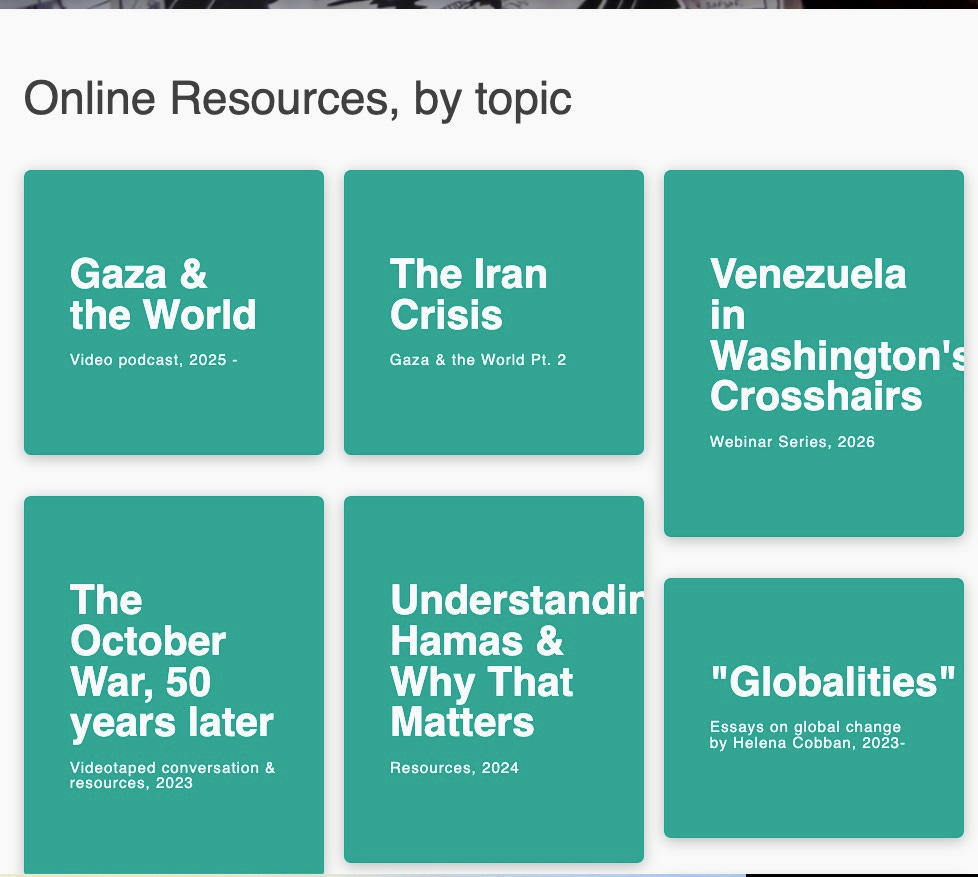
Click here to access and use that whole portal on our website. And click here to donate to support our work:
You stay well and stay steadfast! The times they are— at last— a-changin’!
~ Helena
Comments
Nothing yet. Say the first thing.
Sign in to join the conversation.