

When it comes to repurposed cancer therapies, a few powerful agents dominate the conversation like Ivermectin, Mebendazole and Metformin. In addition, we have all heard about the cancer-fighting benefits of dozens of supplements including Omega 3, Sulforaphane, Curcumin, EGCG, Berberine, Mushrooms, Garlic and Modified Citrus Pectin.
But the immune enhancing and repurposed anti-cancer agent I bring to you today was unknown to me and I suspect most of my readers. It is not mentioned in Dr. Paul Marik’s comprehensive book, Cancer Care.
We already know the power of Low Dose Naltrexone (LDN) and how Dr. Angus Dalgleish previously shared its ability to improve cancer outcomes. We also know about Ivermectin’s ability to turn 'cold' tumors 'hot' (as shown in the Draganov study and covered by Dr. Paul Marik), and we understand the foundational necessity of Vitamin D. Yet, today’s agent belongs in this same elite league, with one major difference: virtually no one has heard of it.
Almost no one adds this invaluable agent to their repurposed cancer arsenal. Where it shines brightest is alongside immune checkpoint inhibitors like Keytruda. However, it can add benefit in almost all repurposed cancer treatment protocols. Best of all, it does not require a prescription, and it is cheap and easily accessible.
As it is extremely safe, and the benefits are so well-documented, there is simply no good reason why every cancer patient shouldn’t be taking it daily to supercharge their immune system—and every reason why those at high risk should be taking it for prevention.
We all know someone who developed cancer following a period of severe emotional stress. Guy Tenenbaum mourned the death of his father and experienced profound insomnia for two years prior to his prostate cancer diagnosis.
As Dr. Pierre Kory and The Midwestern Doctor have reviewed, chronic sleep disruption plays a major role in driving disease, particularly cancer.
Our natural cancer surveillance system—the immune system—is constantly putting out small, daily cancer “brushfires.” As long as our T-cells extinguish these fires early, they can never grow into full-blown tumors.
However, following certain trigger events like extreme sleep deprivation or chronic stress, our helpful T-cell numbers plummet, and the ones that remain become weakened and exhausted.
This opens the door for microscopic cancer clusters to thrive and mature. To make matters worse, harmful, immunosuppressive cells—such as Regulatory T-cells (Tregs) and Myeloid-Derived Suppressor Cells (MDSCs)—begin to multiply, actively undermining what is left of our immune defenses.
If we look at immunocompromised states—whether driven by AIDS, chronic viral infections, or severe sleep deprivation—we begin to understand exactly why there is such an increased risk of cancer development. In all of these conditions, the delicate balance between the “good” T-cells and the “bad” suppressive cells is fundamentally broken, allowing tumors to evade detection and grow unchecked.
When analyzing cancer risk, it is important to note that this immunosuppressive state—whether driven by chronic stress or viral infections—creates a biological blind spot. It not only prevents the clearance of pathogens but allows malignant cells to easily evade immune detection, multiply, and form the foundation of a tumor.
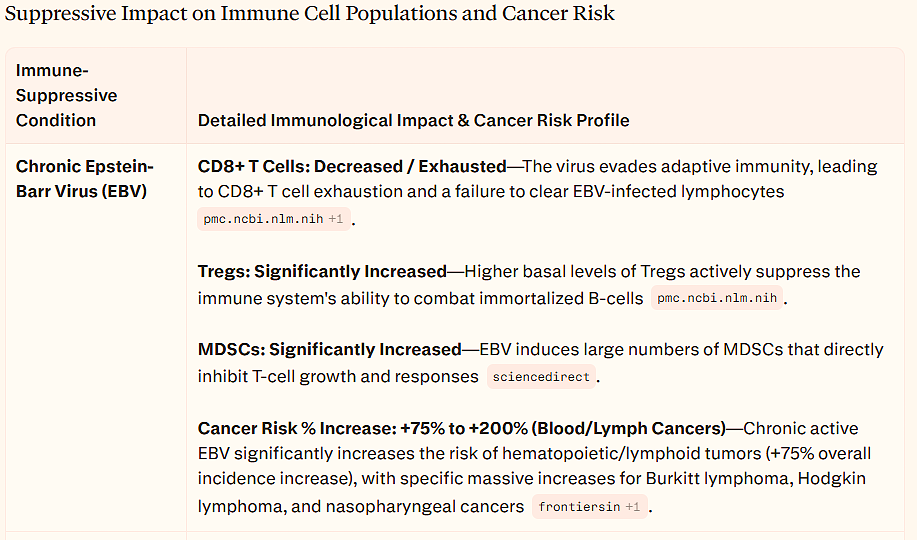
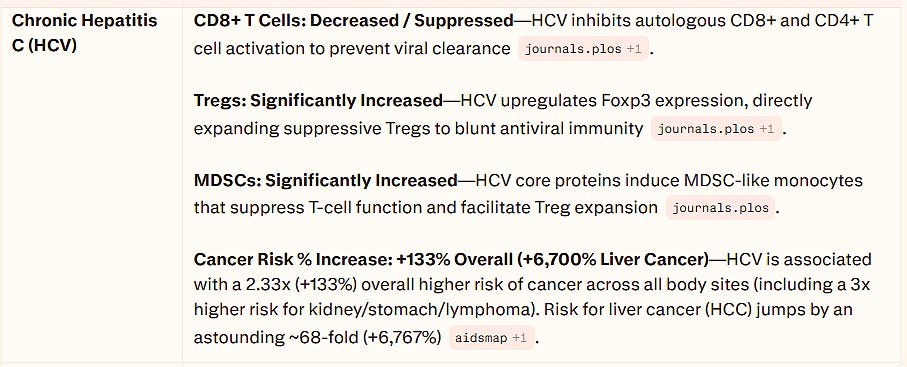
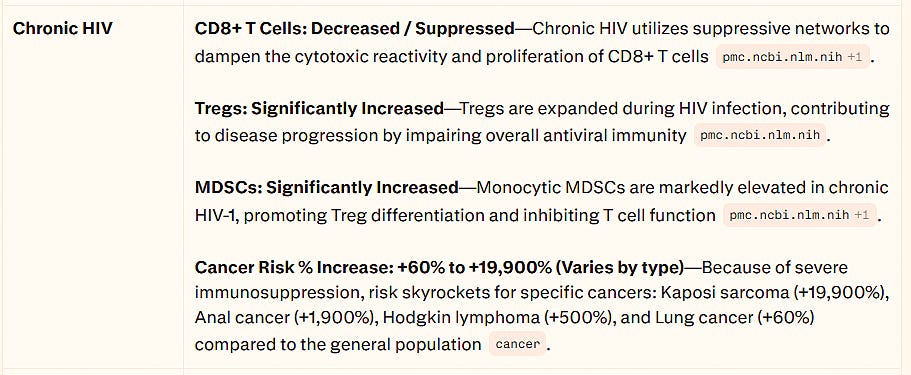
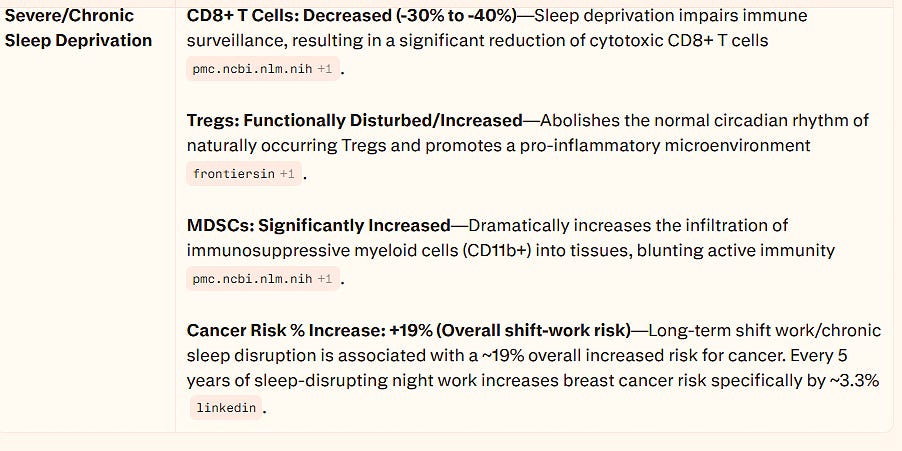
Many readers may suffer from Spike Protein-induced immune dysfunction, arising from either COVID-19 infection or vaccination. Because this applies to almost everyone in developed countries, there is a widespread, elevated risk for immune impairment—specifically manifesting through the weakening of vital CD8+ T-cells and the rapid overgrowth of suppressive MDSCs and Tregs.
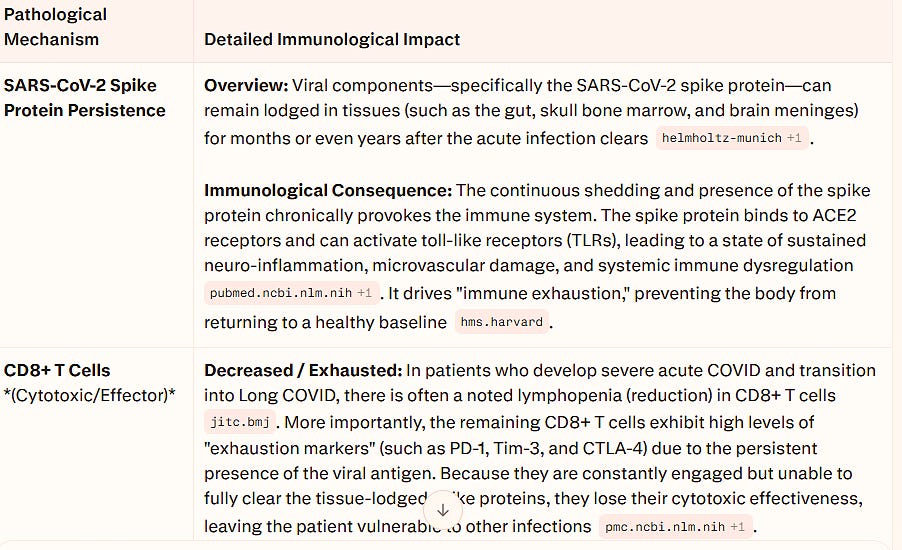
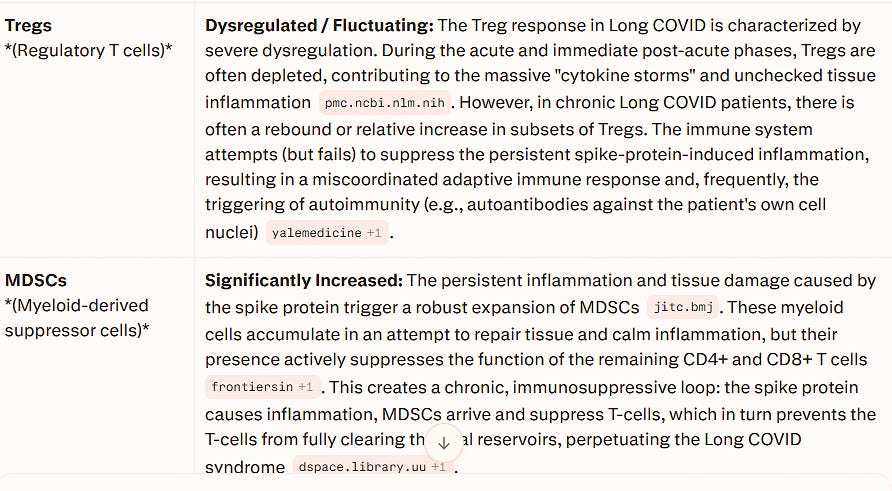
Add this to a constant diet of anxiety-provoking nightly news and financial stress that drives severe sleep deprivation. You are now facing a perfect storm of chronic, daily immune suppression, leaving you highly vulnerable to increased cancer growth and development.
Dr. Angus Dalgleish recently spoke about the alarming rise in Turbo Cancers at Senator Ron Johnson’s inquiry, attributing this trend directly to the profound immune impairment caused by the mechanisms mentioned above.
Dr. Marik and I also addressed this in our recent PubMed study, concluding that these aggressive cancers are driven, in part, by Spike Protein-induced disruptions to our natural immune surveillance.
Logically, using repurposed agents to enhance CD8+ T-cell activity while suppressing MDSCs and Tregs could help halt this rise in Turbo Cancers. Furthermore, by incorporating natural immune-boosting agents into our daily routines, we can actively fight back against the constant, stress-induced immune dysfunction that surrounds us.
This is precisely why world-renowned cancer researcher Dr. Angus Dalgleish routinely adds Vitamin D to his patients’ treatment plans. He reports excellent clinical success with this approach, largely due to Vitamin D’s ability to “prime” the immune system. Simply put, a fully primed immune system is vastly more effective at defeating cancer.
In immunology, Vitamin D (specifically its active form, 1,25-dihydroxyvitamin D) functions less like a traditional vitamin and more like a powerful immunomodulatory hormone. In fact, it is an absolute prerequisite for immune activation.
When a naive T-cell encounters a pathogen or cancer cell, Vitamin D plays a crucial role in its proper activation and maturation. T-cells express Vitamin D receptors (VDR). Adequate levels of Vitamin D help ‘prime’ these cells, promoting their proliferation, differentiation into potent effector cells (such as cytotoxic CD8+ T cells), and production of key cytokines. In contrast, Vitamin D deficiency leads to suboptimal T-cell responses — weaker activation, reduced killing capacity, and poorer immune memory — making the immune system less effective at controlling cancer.
An analysis of current oncological data reveals that optimizing T-cell function is emerging as the most durable strategy for maintaining post-treatment cancer remission. This is primarily because a robust, long-lived immune response—driven by immunological memory—can continuously patrol the body to hunt down residual cancer cells, including highly elusive Cancer Stem Cells (CSCs).
While the theory of directly eliminating CSCs is sound (since they are the primary drivers of relapse and metastasis), doing so chemically or radiologically has proven exceptionally difficult. The nuance lies in their unique biology: CSCs are not a fixed target. They possess immense plasticity and remarkable evasion tactics.
When targeted directly by standard therapies, ordinary non-stem cancer cells can simply “dedifferentiate,” reverting back into CSCs to replenish the tumor. Furthermore, CSCs actively manipulate the tumor microenvironment to shield themselves. They downregulate their surface antigens to avoid immune detection and deliberately create a hypoxic, highly immunosuppressive niche where standard treatments struggle to reach them.
The most compelling evidence suggests that the optimal way to eradicate CSCs is actually through optimized immune function. Because CSCs actively drive immune evasion, a weakened immune system allows them to thrive and cause a relapse. Conversely, a fully optimized immune system—particularly one populated with reinvigorated memory T-cells—can overpower these suppressive tactics.
Ultimately, while eliminating CSCs remains the final goal in preventing relapse, optimizing T-cell memory and function provides the biological mechanism to actually achieve it.
A primed immune system acts as a living drug, continuously hunting down CSCs over a patient’s lifespan. This brings us to a critical question: Which repurposed agents should be incorporated to activate this immunity and synergize with checkpoint inhibitors?
Dr. Dalgleish has long pioneered immune priming using agents like Lenalidomide and IMM-101. If we rank the top immune-priming agents based on their ability to improve cancer treatment efficacy—particularly in combination with Immune Checkpoint Inhibitors (ICIs)—we find that Lenalidomide has the greatest immune stimulating effect while Ivermectin comes in at a close second.
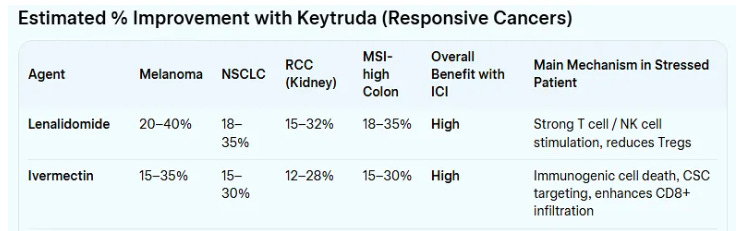
Propranolol comes in third. By blocking catecholamine receptors, it directly mitigates the immunosuppressive effects of stress—rapidly halting the cortisol- and adrenaline-driven expansion of MDSCs and Tregs.
While Lenalidomide, Ivermectin, Propranolol, and Vitamin D all rank in the highest tier of immune primers, there is another natural agent that belongs right beside them.
It remains unknown to most, but its profound power to supercharge the immune system was just validated in a landmark scientific study. We also will discuss dosage for prevention and treatment, cost, and sourcing.
Comments
Nothing yet. Say the first thing.
Sign in to join the conversation.