
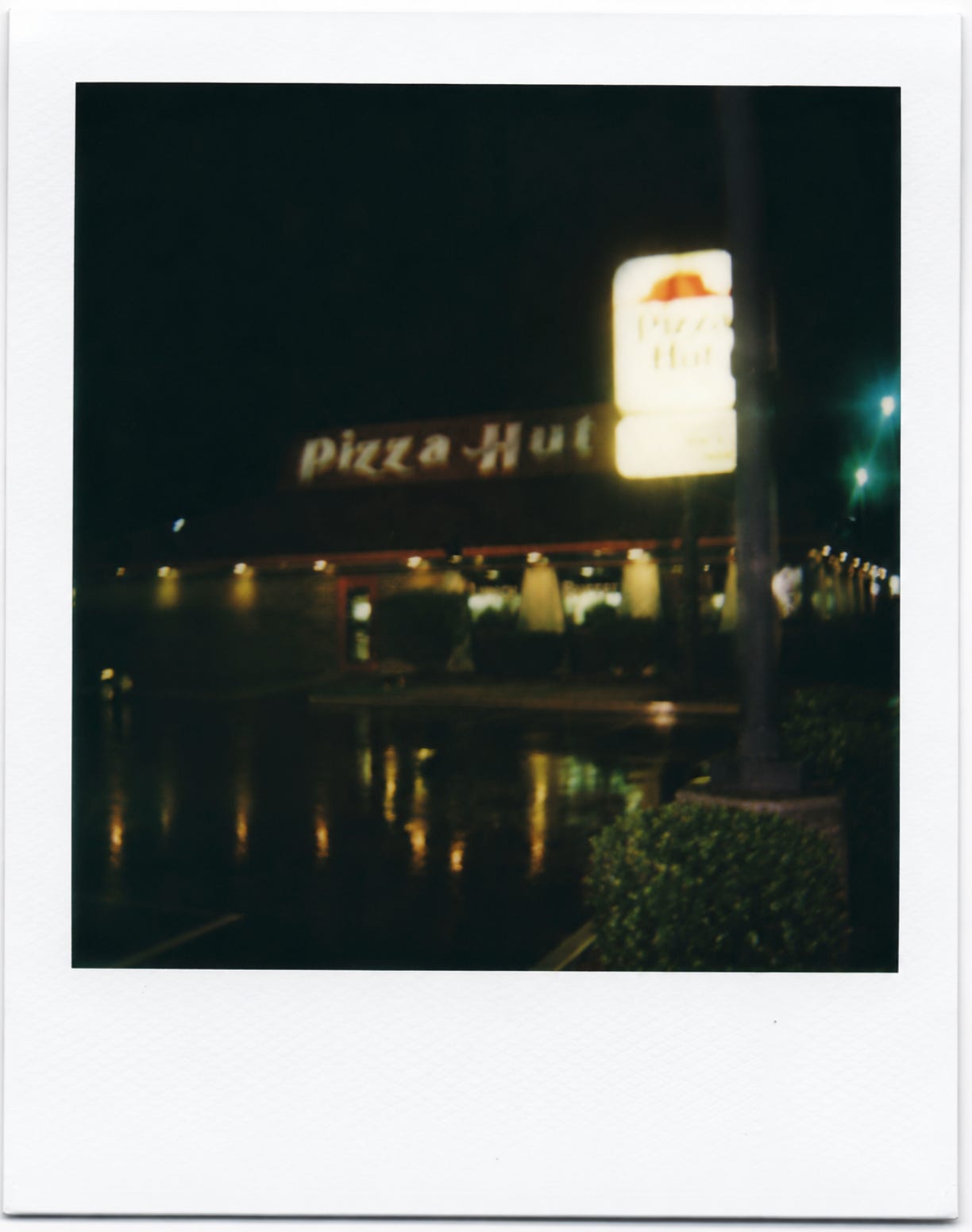
I don’t remember the last slice of pizza I ate there. I don’t remember who I was with, what we ordered, or even when it closed.
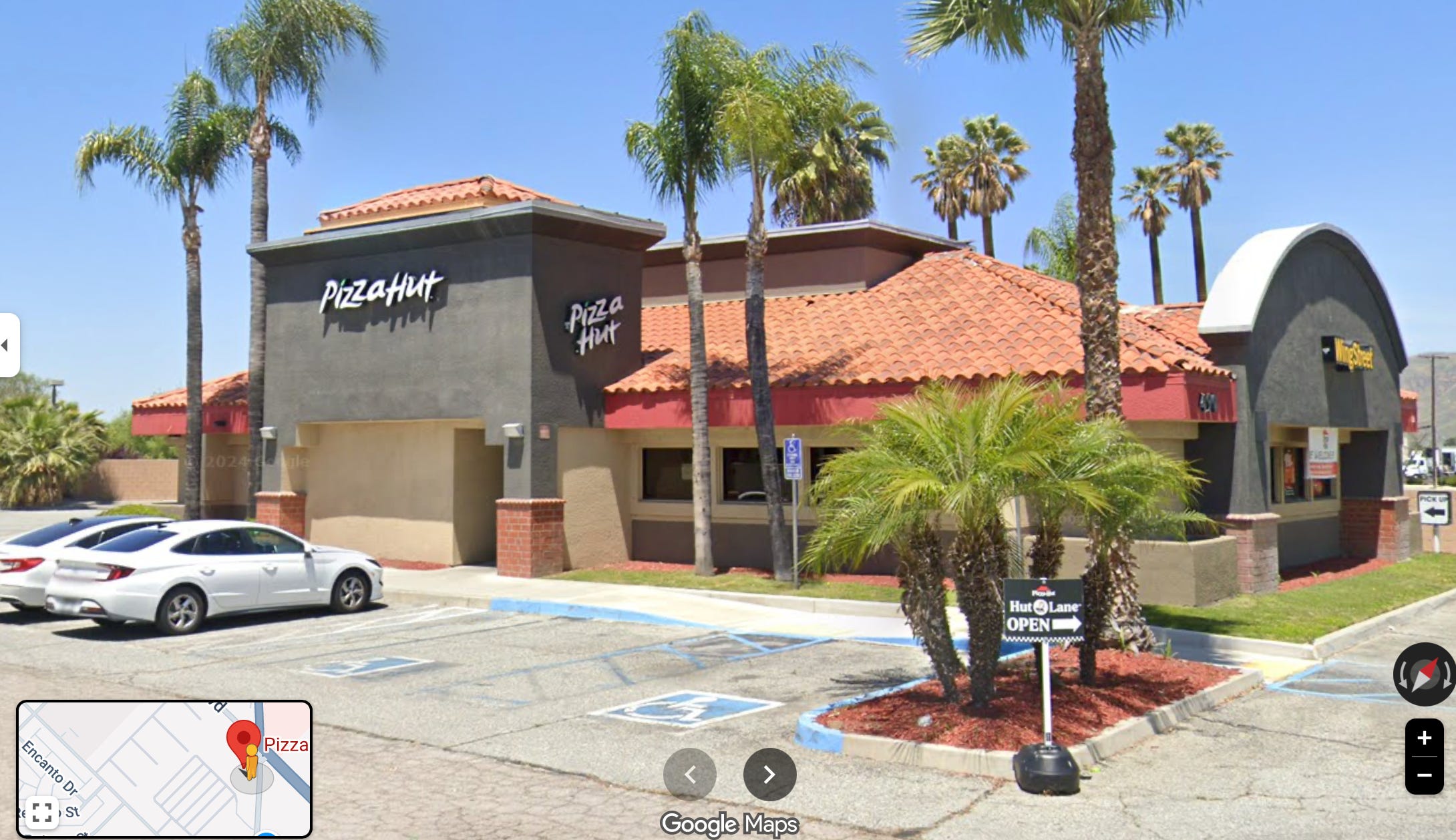
What I remember is driving past years later and realizing it wasn’t Pizza Hut anymore.
That was the strange part. I wasn’t sad because a restaurant had closed — I was sad because I suddenly realized a piece of my childhood had quietly disappeared, and I hadn’t even noticed it happening.
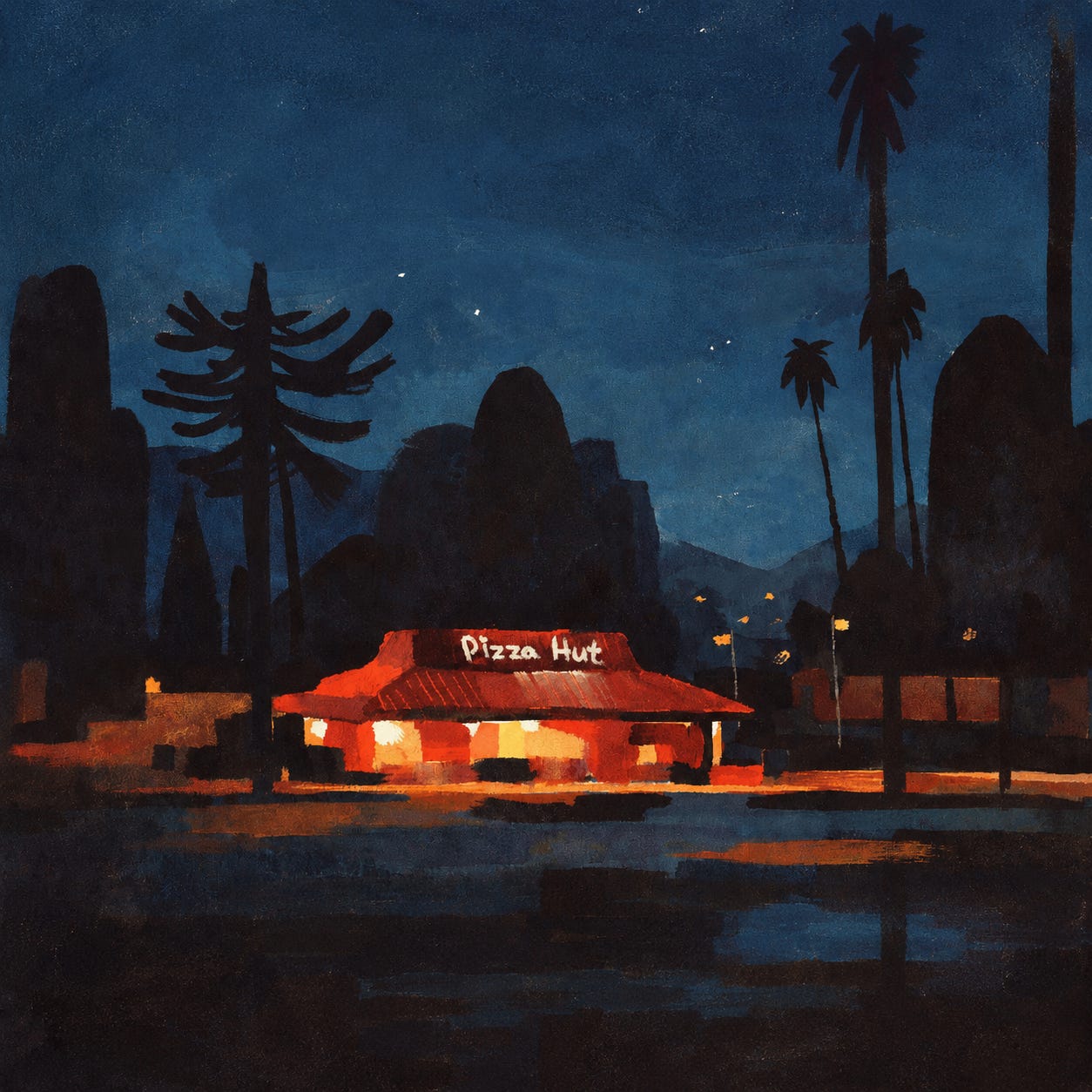
When I was eleven, my family moved away from the town where I grew up. I remember driving past that Pizza Hut one last time before we left. I didn’t think much of it — just another building I figured would always be there. Looking back, what I was really driving past wasn’t a restaurant. It was the end of a chapter of my life.
People call my paintings nostalgic a lot, and I get why. They see an old diner, a motel, a gas station glowing at dusk, a Pizza Hut with a red roof, and they land right back in their own childhood. Every time I post one of these, the comments fill up with stories — Friday nights at Blockbuster, Little League dinners at Pizza Hut, the smell of Toys “R” Us, holding someone’s hand for the first time at a roller rink.
I love those comments. But they also made me realize something: I don’t think I’m painting nostalgia.
Nostalgia, I think, gets misunderstood. Most of the internet treats it like just remembering old stuff — old logos, old toys, old restaurants. That’s pleasant enough, but it usually stops there. It’s memory flattened into aesthetics.
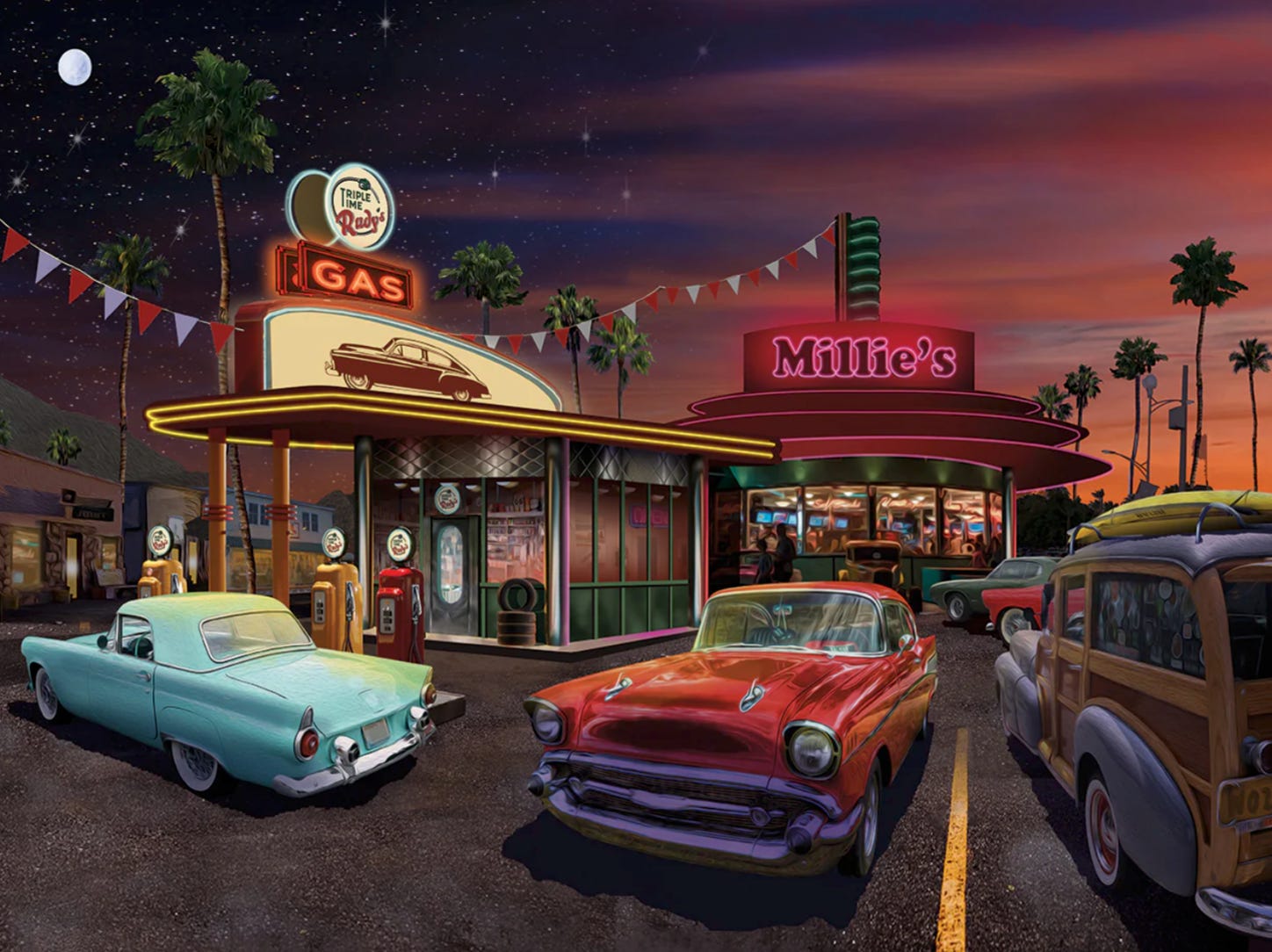
You’ve probably seen those glossy retro diner paintings — neon signs, chrome bumpers, a perfect vintage car parked out front under a full moon. They’re nice enough to look at. But nobody’s actually remembering anything in them. There’s no real place, no real night, no person who was actually there. It’s just mood. And that’s the problem with nostalgia on its own — it can look exactly like memory without any of the weight of it.
What I’m actually after is different. It’s the moment you realize you can never go back — not because the building is gone, but because the version of you who existed there is gone too.
Even if someone rebuilt that Pizza Hut tomorrow, exactly as it was — stained-glass lamps, red cups, the arcade machine in the corner — it wouldn’t matter. You can’t walk back into being eleven. Your parents wouldn’t be that age anymore. Your friends wouldn’t be waiting inside. The moment was gone long before the building was.
That’s the whole “you can never go home again” thing, basically. Not as a saying, but as something you actually feel in your body the first time you drive through your hometown and it’s not your hometown anymore. It’s not even really about the town. The town’s fine. It’s that the kid who lived there is gone, and no amount of driving around is going to bring him back.
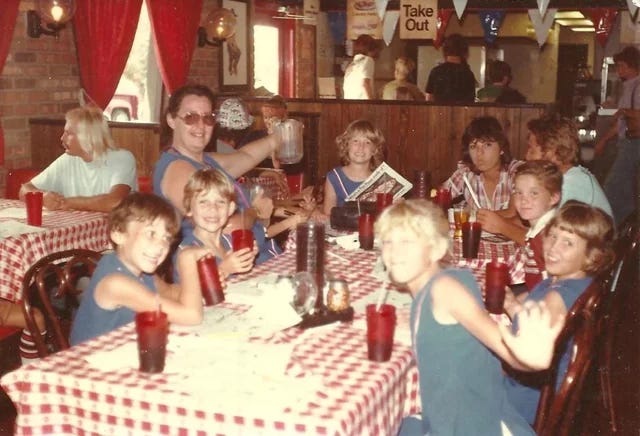
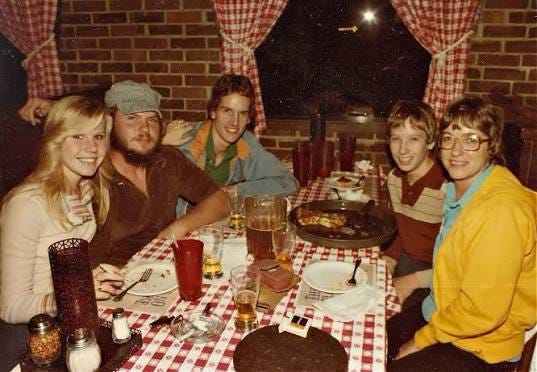
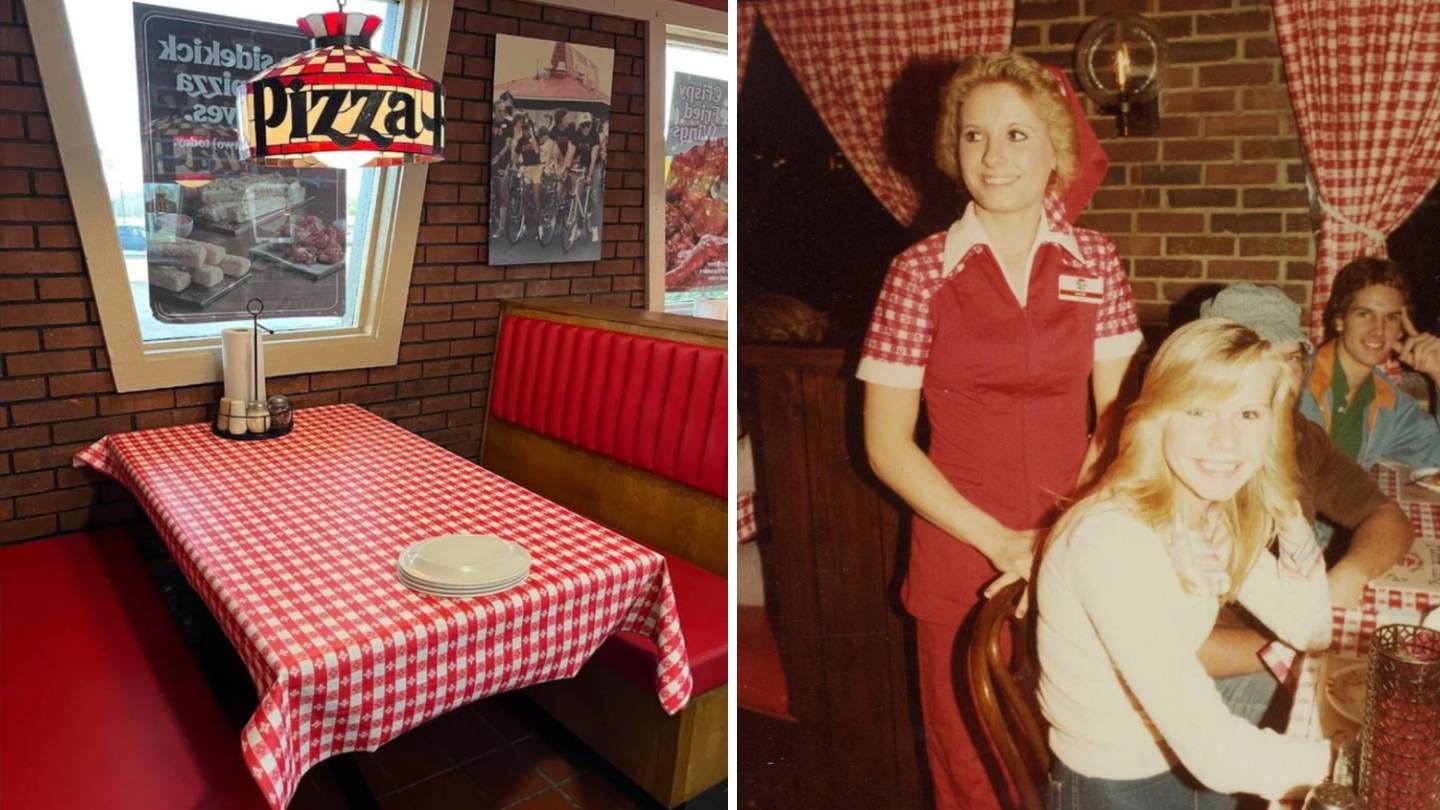
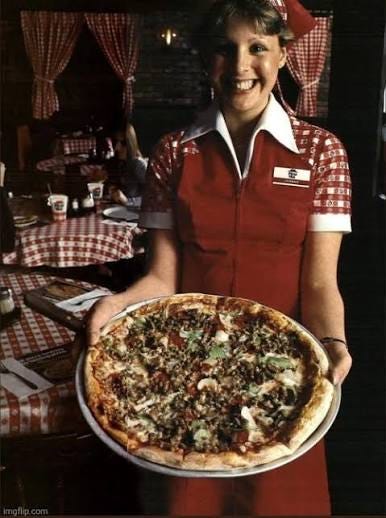
I used to think that feeling was just sad. Lately I think it’s more complicated than that. Yeah, there’s grief in it — real grief, for a version of your life you don’t get to live in anymore. But there’s something else sitting right next to the grief, which is: I got to be there. I got to be eleven, in that town, at that Pizza Hut, before any of us knew it was going to end. That’s not nothing. If anything, the fact that it ended is probably part of why it still means something. A thing that lasted forever wouldn’t hit the same way. It’s the blip-in-time quality of it that makes it feel precious instead of just familiar.
So I don’t think I’m painting places that disappeared. I’m painting moments that disappeared inside places. The buildings are just containers. The memories are the real subject.
That’s probably why I’m drawn to ordinary places, too. Nobody planned a vacation around the Del Taco, the Blockbuster Video, or the Denny’s where I grew up. But those were the places where you ate after losing the game, rented movies every Friday, or realized you could finally stay out until two now that you had a license.
Emotional landmarks disguised as ordinary businesses.
Nostalgia alone isn’t enough to hold a painting up—it gets boring fast. I’m not trying to recreate the past. I’m trying to understand why these places still live in us long after we’ve left.
Maybe that’s why I paint almost everything at dusk. Daylight is documentation. Twilight is memory — the hour a place stops looking like itself and starts looking like how you remember it.
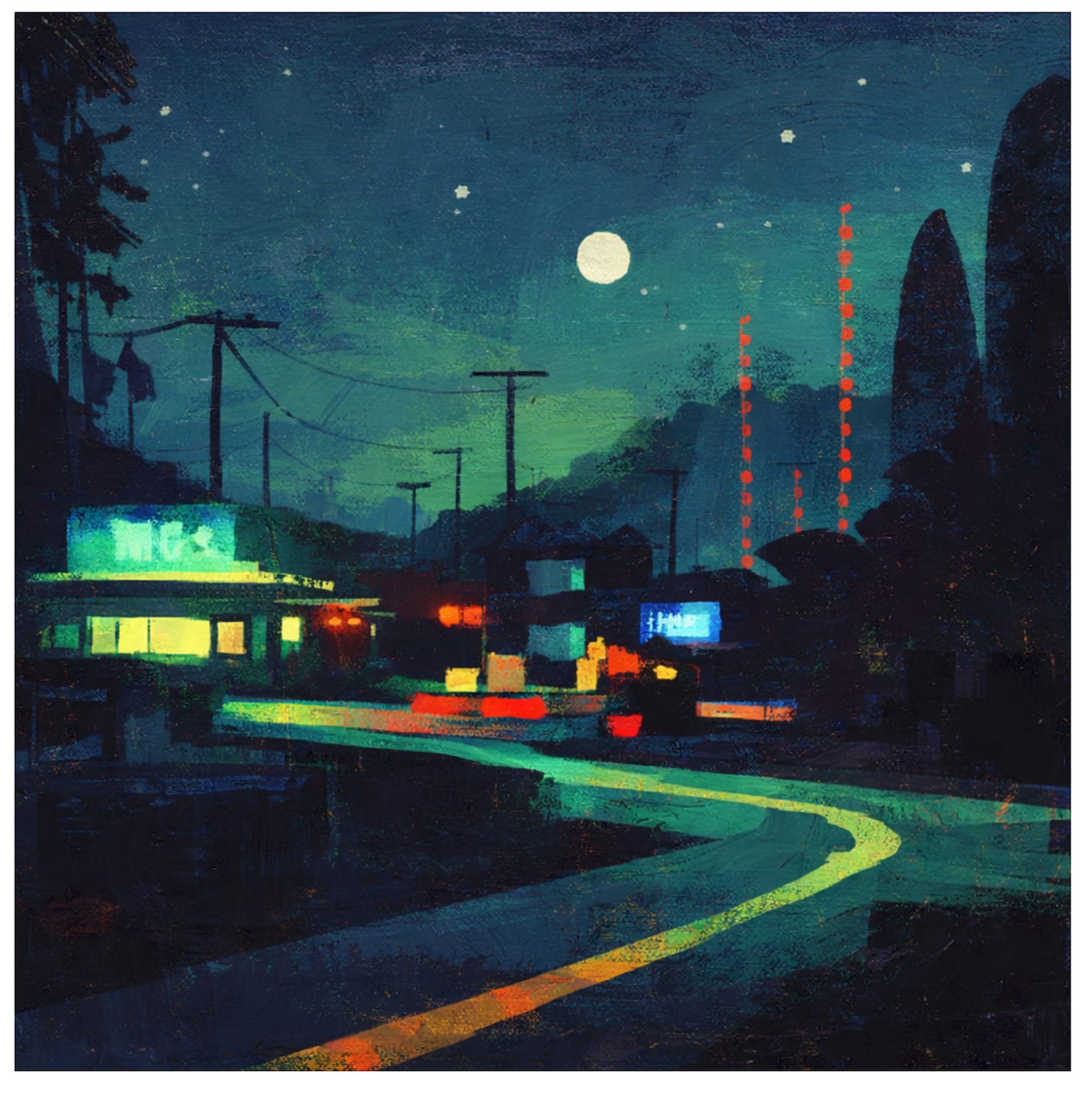
Every generation has its own Pizza Hut. The names change — a drive-in, a roller rink, a video store — but the feeling doesn’t. The building was never the point. What happened inside it was.
They were where pieces of our lives happened. And by the time we realize what they meant, we’re already seeing them for the last time.
I still feel sad about that Pizza Hut, honestly. But it’s not the kind of sad that ruins your day — it’s more like I’m glad I had something worth missing. That’s the closest I can get to what these paintings are actually about. Not grief, not nostalgia. Just holding onto the fact that it happened at all.
No posts
Comments
Nothing yet. Say the first thing.
Sign in to join the conversation.